Published: 15 October 2025. The English Chronicle Desk. The English Chronicle Online.
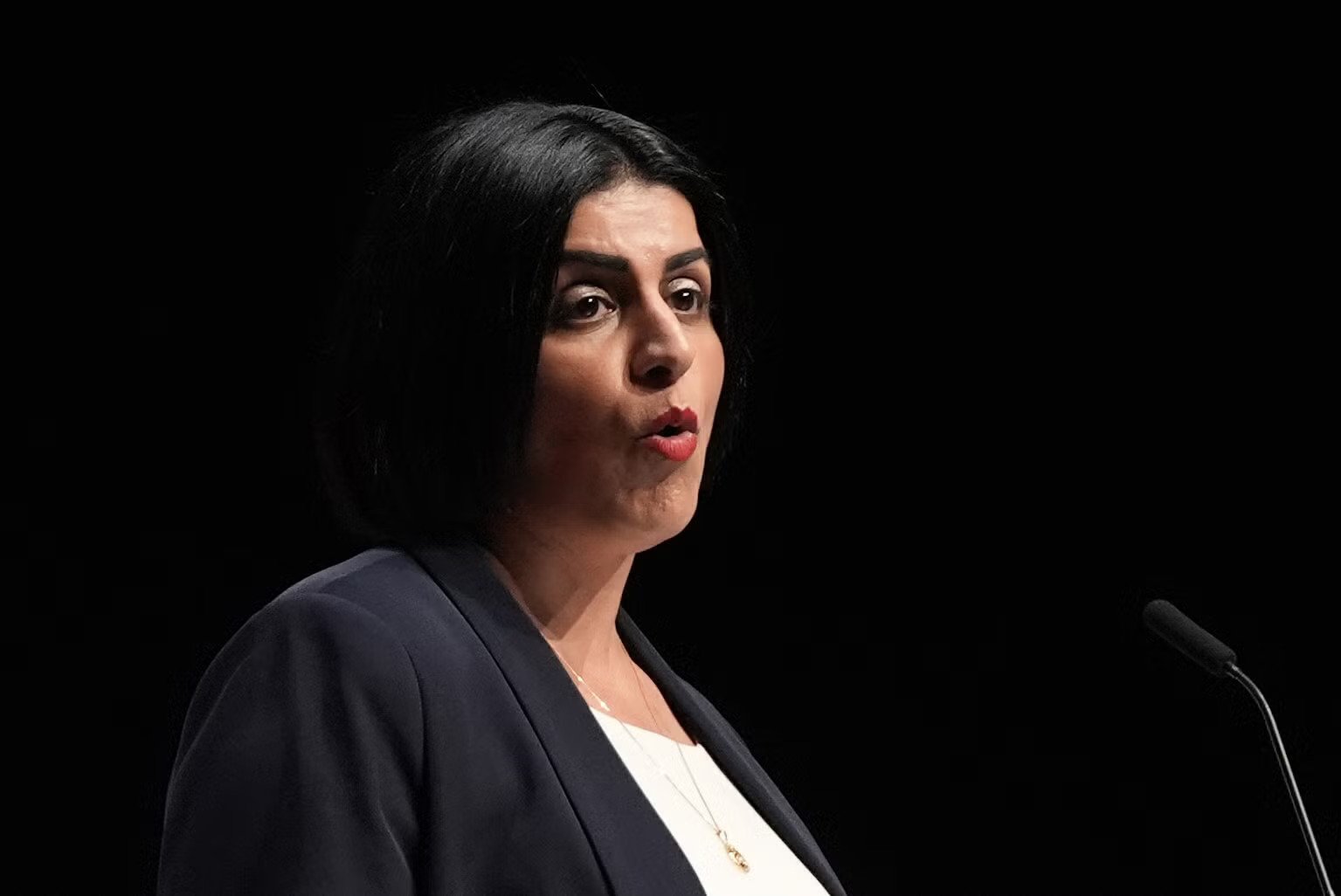
The failure to maintain effective border controls across Europe is undermining public trust in politicians and the very concept of the nation state, Home Secretary Shabana Mahmood has warned. Speaking ahead of a high-level summit in London, Mahmood emphasised that international cooperation is essential to tackling irregular migration and restoring confidence in governments’ ability to protect their citizens.
Mahmood is hosting interior ministers from the western Balkans and other European allies on Tuesday, aiming to foster new agreements to curb illegal migration through the increasingly critical Balkan transit routes. She warned that without coordinated action, citizens may lose faith in both political leaders and the credibility of the state itself.

“The public rightly expects that their government will be able to determine who enters their country, and who must leave,” Mahmood said. “Today, in this country, and I know in many if not all of yours, that is not the case. And the failure to bring order to our borders is eroding trust not just in us as political leaders … but in the credibility of the state itself.”
Mahmood is also expected to criticise Reform UK leader Nigel Farage and his party for advocating inward-looking approaches to migration. “Illegal migration is a shared threat which requires a strong, joined-up international response,” she said. “To those who think the answer to the challenges that we face is to turn inwards, or back away from international cooperation, I say that in coming together as we are today, we will make all of our borders and our countries stronger.”
The western Balkans—comprising North Macedonia, Montenegro, Serbia, Albania, Bosnia and Herzegovina, and Kosovo—has become a vital focus for efforts to manage migration across Europe. According to the Home Office, the region has emerged as a major transit corridor for people smugglers and networks trafficking drugs across borders. In 2024 alone, about 22,000 people were reportedly smuggled along Balkan routes by organised gangs.
The London summit is expected to explore ways to disrupt these criminal networks. Measures under discussion include enhanced cooperation between British and European border authorities, intelligence sharing, and joint operations targeting human traffickers and drug smugglers. Graeme Biggar, director general of the National Crime Agency, is attending to outline the UK’s work on dismantling gang supply chains. A session focusing on combating violence against women and girls is also scheduled.
Mahmood’s warning comes amid a backdrop of political debate in the UK over migration and border security. Conservative critics said her comments were “rich” given the government’s perceived difficulties in controlling the country’s own borders. Chris Philp, shadow home secretary, argued that recent months have seen record numbers of illegal crossings of the English Channel. “The first nine months of this year have been the worst in history for illegal immigrants crossing the Channel,” he said.
Philp added that the Conservatives would seek to leave the European Convention on Human Rights (ECHR), allowing for the immediate removal of all illegal arrivals. “Then the crossings would soon stop,” he claimed, framing the policy as a decisive alternative to current measures.
The Home Secretary’s focus on the western Balkans highlights a growing European concern about irregular migration. In addition to smuggling networks, countries in the region are facing pressure from both refugee flows and economic migrants seeking passage to wealthier nations. Coordinated responses, Mahmood argued, are critical to preventing human suffering and maintaining order.
European partners at the summit are expected to discuss several initiatives, including tighter border checks, shared databases on criminal networks, and enhanced training for border officers. Mahmood has emphasised that tackling illegal migration is not solely about enforcement; it also requires diplomatic engagement, investment in regional stability, and measures to disrupt criminal profiteering from human trafficking.
Observers note that the UK’s leadership role in such discussions is significant. As one of Europe’s largest destinations for migrants and refugees, Britain’s approach can influence broader EU and Balkan strategies. Mahmood’s framing of migration as a shared challenge reflects a recognition that unilateral approaches are insufficient in a region with porous borders and well-established smuggling networks.
Experts have also highlighted the reputational stakes for national governments. Trust in state institutions, including law enforcement and border agencies, is linked not only to security outcomes but to citizens’ confidence in governance more broadly. By failing to manage migration effectively, governments risk political instability and public disillusionment, a concern Mahmood emphasised in her address.

The summit comes at a time when migration is a polarising issue in UK politics. While the Home Office and its European partners advocate for coordinated, multilateral responses, populist parties argue for isolationist policies that focus on national sovereignty over international cooperation. Mahmood’s warning reflects the government’s position that only joint action can ensure both security and legitimacy in the eyes of the public.
By convening ministers from across Europe, the UK hopes to strengthen partnerships, improve intelligence sharing, and implement new agreements aimed at reducing illegal crossings while protecting vulnerable populations. Mahmood stressed that tackling these challenges requires sustained commitment from all participating countries, rather than short-term measures that fail to address the root causes of irregular migration.
As the summit unfolds, attention will also focus on the wider implications for crime prevention, regional stability, and humanitarian obligations. Coordinated efforts in the western Balkans are seen as crucial to ensuring that migration is managed safely, humanely, and efficiently, preventing criminal networks from exploiting vulnerable people and maintaining public confidence in national governments.
Related News:
 Ministers Accused of Defamation Over Palestine Action Ban and Mass Arrests
 Charlie Kirk Killing Used to Mobilise UK’s Largest Far-Right Rally in Decades
 Jailed Georgian Opposition Leaders Warn UK of Iranian Links to Ruling Party
 Johnson Approved China’s London ‘Super-Embassy’ in 2018
 Trump Administration Dismisses 17 Immigration Judges, Sparking Debate Over Judicial Independence
 UK Must Act with Courage and Clarity on Israel-Palestine Conflict, Says Foreign Affairs Committee Report
 Tasers Introduced in UK Prisons to Combat Rising Violence and Protect Staff
 MPs Call on UK Government to Delay Biometric Visa Checks for Gaza Students Amid Humanitarian Crisis
 Radioactive Leak at UK’s Nuclear Warhead Base Sparks Outcry Over Safety and Secrecy
 Mutual Inconvenience: Why Alaska Was Chosen for the Trump-Putin Summit on Ukraine
 “I Don’t Expect to Live a Normal Life”: How a Leeds Teenager Became the Target of a Chinese Bounty
 David Lammy Faces Possible Legal Challenge Over Foreign Office Secondment Scheme
 Police Advised to Disclose Ethnicity of Suspects in High-Profile Cases
 Sally Rooney Pledges BBC Royalties to Support Palestine Action Despite UK Terror Ban
 Government Signs Deal with Iraq to Return Illegal Migrants in Latest Bid to Deter Small Boats
 Is the UK Ready to Put Boots on the Ground in Ukraine? Assessing Military Capacity and Challenges
 Angela Rayner Admits Underpaying Stamp Duty on £800,000 Seaside Flat
 Angela Rayner Faces Scrutiny as Stamp Duty Row Deepens
 Tanni Grey-Thompson Faces Abuse Over Opposition to Assisted Dying Bill
 Protests Expected as Israeli Arms Firms Join Global Defence Trade Fair in London
 UK Immigration Figures: Separating Facts from Perceptions
 First “One In, One Out” Deportation Flight Departs Without Migrants Amid Legal Challenges
 Hillsborough Law to Hold Public Officials Accountable, Promising Jail for Serious Misconduct
 Thousands Gather in London to Protest Donald Trump’s Second UK State Visit
 Trump Urges UK to “Call Out the Military” to Secure Borders Amid State Visit
 Corbyn and Sultana Clash Over Membership Portal as Divisions Surface in New Leftwing Party
 Commons Speaker Warns UK Parliament Vulnerable to Foreign Espionage After China-Linked Case Dropped
 Mahmood Pledges Reform of Modern Slavery Laws After Court Blocks Deportation Appeal
Trump’s UN Speech Criticises London and UK Policies, Draws Far-Right Attention
Mahmood Pledges Reform of Modern Slavery Laws After Court Blocks Deportation Appeal
Trump’s UN Speech Criticises London and UK Policies, Draws Far-Right Attention
 UK Fighter Jet Purchase Could Breach Nuclear Treaty, Warns CND
 Migrants in UK May Need to Contribute or Face Removal, Home Secretary Signals
 A Third of EU Citizens in UK Report Discrimination by Public Bodies Post-Brexit
 Russia repeatedly targets UK military satellites, warns Space Command chief
 Pro-Palestine March to Proceed in London Despite Calls to Cancel After Manchester Attack
 MPs’ pay watchdog seeks to give public greater voice in how politicians are funded
 UK Universities Warn Students Ahead of 7 October Pro-Palestine Protests
 Digital ID Plans Ignite Debate Over £600m Treasury Tax Boost and Privacy Concerns
 Public Trust in SNP Hits Historic Low Amid NHS Concerns
Boris Johnson Breached Rules on Post-Office Business Contacts
Public Trust in SNP Hits Historic Low Amid NHS Concerns
Boris Johnson Breached Rules on Post-Office Business Contacts
 Johnson Suggests Mandelson Linked to China Spy Controversy
 UK Extradition Law Change Sparks Fears Among Hong Kong Dissidents
 Witness statements reveal the CPS China spy row collapse in the UK
 Large scale Chinese spying in UK sparks political storm
 Nigel Farage Calls Vladimir Putin ‘A Very Bad Dude’
 Rachel Reeves signals welfare reform ahead of key budget
 Kosovo agrees to host Britain’s refused asylum seekers
 Lucy Powell urged ministers to reconsider costly legal case for Labour donor’s firm
 Starmer Accused of Creating ‘Toxic Downing Street’
 Plaid Cymru Triumphs in Caerphilly, Ending Labour Century-Long Hold
 UK Gamer Recruited by Wagner Group Found Guilty of Arson
 Rachel Reeves to lead UK trade push in Saudi Arabia amid rights debate
 British Woman in Iran ‘Losing Hope’ Amid Ongoing Detention
 BBC Journalist Held and Interrogated in Vietnam
 Phillipson urges careful review of gender recognition guidance
 Just Stop Oil Protesters Convicted Amid Climate Defence Row
 China-critical UK academics face ‘extremely heavy’ pressure from Beijing
 Met Police Culture Makes Racial Harm ‘Inevitable’
 British Grandmother to Return Home After Death Sentence in Bali
 Remaining rebel Labour MPs have whip restored
 Tim Davie resigns as BBC director general amid bias claims
 BBC director-general and news chief resign amid bias row
 Palace to reinstate hyphen in Andrew’s surname
 New review urges UK to repatriate Shamima Begum, others from Syria
 Victims’ commissioner Baroness Newlove dies aged 63
 Peers Flood Assisted Dying Bill with 942 Amendments
 US Justice Department Files Lawsuit Against California Over Partisan Voting Maps
 UK Unveils Fast-Track Deportation and Asylum Overhaul
 Trump Deploys DHS to Charlotte in Major Arrest Operation
 UK Asylum Overhaul Sparks Debate Over Human Rights and Deportations
 UK Asylum Reforms: Temporary Refugee Status and Faster Deportations
 Mahmood Defends Tough Overhaul of UK Asylum System
 Westminster Advances Legacy Bill Amid Criticism
 Minister Defends Tough New Asylum Reform Plan
 Congress Approves Release of Epstein Files, Trump Expected to Sign
 Rama Rebukes Mahmood for Targeting Albanian Families
 Russian Vessel Used Lasers on RAF Pilots, UK Claims
 Texas Governor Faces Lawsuit From CAIR
 Peers Get Extra Time to Debate Assisted Dying Bill
 Chinese & Japanese Boats Clash Near Disputed Islands
 Putin Meets US Envoy Amid Key Ukraine Peace Talks