Published: 30 October 2025. The English Chronicle Desk. The English Chronicle Online.
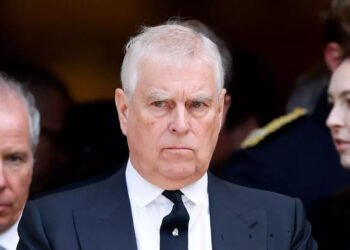
Parliament’s spending watchdog has intensified scrutiny over Prince Andrew’s living arrangements, questioning whether the current lease of the Royal Lodge represents “value for money” for the public. The King’s brother has been under sustained pressure to vacate the residence, which he occupies at what has been described as a “peppercorn” rent, amid ongoing controversy surrounding his past ties to the late financier Jeffrey Epstein.
On Wednesday, the Public Accounts Committee (PAC) formally wrote to the Treasury and the Crown Estate, seeking clarity on the rationale behind the lease arrangements for Royal Lodge. PAC chairman Sir Geoffrey Clifton-Brown emphasised that the Crown Estate has a legal and fiduciary duty to manage its properties in a manner that achieves the best possible return for the taxpayer. In his letter, he noted that recent developments in Prince Andrew’s personal and public responsibilities warranted a reassessment of whether the lease terms remain appropriate.

Sir Geoffrey highlighted that the Crown Estate must ensure its land is “managed according to the best consideration of money or money’s worth which in their opinion can be reasonably obtained.” The PAC expressed concern that, given the controversies surrounding Prince Andrew and the apparent reduction in his public duties, the current lease may no longer provide the public with adequate value. The letter requested a detailed explanation of the lease terms, including the decision-making process behind allowing the Duke of York to reside at Royal Lodge under such favourable conditions.
Prince Andrew’s residence at Royal Lodge has long been a point of discussion among politicians and media commentators, particularly due to his ongoing legal and reputational challenges. The property, situated on the grounds of Windsor Great Park, has been associated with the Duke for many years. Traditionally, members of the royal family residing in Crown Estate properties contribute rent, though the terms often vary according to precedent, duties, and personal arrangements with the Sovereign.
The current scrutiny comes at a time when public interest in royal finances and property usage has intensified. Prince Andrew’s connections to Jeffrey Epstein have remained a source of controversy even after the financier’s death, with new information emerging from court proceedings and published memoirs by his accusers. In particular, Virginia Giuffre’s posthumous memoir has drawn renewed attention to the Duke, describing alleged interactions that Prince Andrew continues to deny. The juxtaposition of these ongoing allegations with the preferential lease arrangement has amplified calls for accountability and transparency regarding his use of publicly owned properties.
Members of Parliament and campaigners argue that any property occupied by a royal at a nominal rent should reflect the individual’s public role and responsibilities. Given Prince Andrew’s reduced public engagements and absence from royal duties following his withdrawal from official work in 2019, questions have arisen as to whether the “peppercorn” rent arrangement remains justified. Critics note that even symbolic financial contributions should align with broader public expectations of fairness, particularly when the property is part of the Crown Estate, whose profits are returned to the Treasury.

The PAC’s inquiry is expected to include a detailed review of the lease, its historical context, and whether the terms reflect the Duke’s current responsibilities. It will also examine how other members of the royal family who reside in Crown Estate properties contribute financially, providing a benchmark to assess whether Royal Lodge is being managed in accordance with best practice. The committee’s findings could have implications not only for Prince Andrew but also for broader policy regarding the management of Crown Estate properties occupied by members of the monarchy.
Sir Geoffrey Clifton-Brown’s letter underlines the principle that the Crown Estate must operate in the public interest, balancing tradition with modern expectations of accountability. “We are therefore concerned as to whether the lease arrangements for Royal Lodge are, in light of recent developments and changes in the responsibilities of Prince Andrew, achieving the best value for money,” he wrote, calling on officials to provide a comprehensive response.
The public debate surrounding Prince Andrew’s residency is further fuelled by media coverage of his legal challenges and ongoing allegations. Although he has denied all accusations, the publication of new material has kept the issue in the spotlight. Some commentators suggest that vacating Royal Lodge would be a symbolic step to demonstrate responsibility and address public concern over the use of Crown Estate properties. Others, however, argue that any decision must respect historical precedent and the discretion of the Crown Estate in managing its assets.
Royal commentators have noted that the scrutiny of Andrew’s lease is part of a wider trend towards greater transparency regarding royal finances and property usage. In recent years, the public and Parliament have taken an increasing interest in how Crown Estate assets are allocated, leased, and managed, particularly as part of efforts to ensure that public funds are used appropriately. The case of Royal Lodge represents a high-profile example of the tension between tradition, privilege, and public accountability.
The Duke of York has resided at Royal Lodge for decades, with the property providing accommodation and security in line with his position as a senior royal. However, following his withdrawal from public duties, questions have arisen regarding the appropriateness of continuing this arrangement at minimal cost to him personally. Critics emphasise that public scrutiny is particularly important given the backdrop of legal claims and ongoing investigations into his conduct, suggesting that maintaining favourable terms without reassessment could undermine public confidence in the management of Crown Estate assets.
The PAC’s inquiry into Royal Lodge comes alongside broader discussions in Parliament about transparency and value for money across all public assets, including those associated with the monarchy. There is a growing expectation that arrangements, even those rooted in historical precedent, should be periodically reviewed to ensure alignment with contemporary standards and public interest. This approach reflects the principle that Crown Estate properties, while traditionally linked to royal occupancy, remain publicly owned assets.

Prince Andrew’s situation underscores the complex intersection of royal privilege, legal accountability, and public scrutiny. While the Duke continues to reside at Royal Lodge, his past and ongoing controversies have intensified debate over the propriety of his lease arrangements. As Parliament awaits a response from the Crown Estate and Treasury, the outcome may influence future policy on the management of royal residences, balancing heritage with public accountability.
The PAC’s action also signals that MPs are prepared to hold the Crown Estate and the monarchy to account for perceived discrepancies in value for money, particularly where public perception and taxpayer interests are concerned. The findings of this inquiry could lead to adjustments in how royal leases are structured, potentially setting a precedent for increased scrutiny of all similar arrangements.
As the inquiry unfolds, it remains to be seen whether Prince Andrew will be asked to adjust his residency arrangements or contribute more financially to Royal Lodge. Meanwhile, the ongoing public debate highlights the broader challenges faced by the monarchy in maintaining transparency, public trust, and fiscal responsibility in the modern era.
Related News:
 Second world war veterans honoured as King leads Remembrance Sunday
 Farage appointee to lead Reform youth accused of anti-British views
 Palace to reinstate hyphen in Andrew’s surname
 William Steps Up Over Prince Andrew Palace Response
Prince Andrew Hosted Epstein Days Before Arrest
William Steps Up Over Prince Andrew Palace Response
Prince Andrew Hosted Epstein Days Before Arrest
 British Woman in Iran ‘Losing Hope’ Amid Ongoing Detention
 BBC Journalist Held and Interrogated in Vietnam
 Prince Andrew Stripped of Title: Giuffre Family Hails Historic Moment
 Green Party Surges Past Labour in Latest UK Poll
 Celebrities and Charities Demand UK Government Act on Child Poverty
 Sultana says new party is aiming to ‘run government’
 Reform Councillor Defects to Tories Over ‘Uncomfortable’ Policies
 FBI Director Kash Patel Defends Girlfriend Amid Government Jet Claims
Trump Speaks on Prince Andrew’s Royal Scandal Fallout
FBI Director Kash Patel Defends Girlfriend Amid Government Jet Claims
Trump Speaks on Prince Andrew’s Royal Scandal Fallout
 Phillipson urges careful review of gender recognition guidance
 Prince of Wales showcases volleyball skills on Brazil visit
 Rachel Reeves Set to Break Labour Pledge and Raise Income Tax
 Prince William Plants Trees with Brazil’s Nature Heroes
 Thinktanks Urge Rachel Reeves to Reform UK Tax System
 Who is Rama Duwaji? What Zohran Mamdani’s wife has said about Gaza and ICE as he’s elected NYC mayor
 Meghan ‘to return to acting’ after eight-year hiatus
 Oprah enjoys Meghan’s jam on English muffins
 Lancashire council plans to close care homes and day centres
MPs Press Rachel Reeves to Hike Gambling Taxes
Lancashire council plans to close care homes and day centres
MPs Press Rachel Reeves to Hike Gambling Taxes
 Met Police Culture Makes Racial Harm ‘Inevitable’
 Nicola Sturgeon Urges SNP to Oppose New Oil Fields
 Eleven Arrested After Pro-Palestine Protest at Villa Match
 Labour Falls to Fourth in Poll, Faces Historic Election Loss
 Boris Johnson accused of undermining BBC leadership
 Remaining rebel Labour MPs have whip restored
 Cuts to home insulation funding threaten UK climate goals
 King Charles to Lead Nation in Remembrance Sunday Service
 Tim Davie resigns as BBC director general amid bias claims
 ‘Reckless’ cuts to victims’ services will cost more than they save
 BBC director-general and news chief resign amid bias row
 Starmer Faces Growing Dissent as Labour MPs Weigh Leadership Challenge
 BBC Faces Backlash as Reform UK Withdraws from Film
 The Debate Over Princess Beatrice and Eugenie’s Royal Status Intensifies
 Tim Davie Defends BBC Amid Bias Scandal Storm
 Donald Trump threatens BBC over edited speech
 Politics latest: Starmer ‘will fight any leadership coup’ as Streeting denies attempt to oust Labour PM
 Thai King Embarks on Historic China Visit After 50 Years
 Peers Flood Assisted Dying Bill with 942 Amendments
 England’s Special Needs Support Faces Breaking Point
 MoD warned over Excel risks before Afghan data breach
 Princess Anne Takes the Controls in Airbus Flight Simulator
 UK Unveils Fast-Track Deportation and Asylum Overhaul
 UK Asylum Overhaul Sparks Debate Over Human Rights and Deportations
 UK Asylum Reforms: Temporary Refugee Status and Faster Deportations
 UK Candidate Moved to Safe House After Election Threats
 Mahmood Defends Tough Overhaul of UK Asylum System
 Scottish Ministers Express Alarm Over UK Asylum Reforms
 UK Warns China After MI5 Issues Espionage Alert
 Westminster Advances Legacy Bill Amid Criticism
 Minister Defends Tough New Asylum Reform Plan
 UK Net Migration Falls Sharply After ONS Revisions
 UK Vulnerable to Attack, Defence Committee Finds
 Labour Faces Historic Decline in Wales
 Rama Rebukes Mahmood for Targeting Albanian Families
 Russian Vessel Used Lasers on RAF Pilots, UK Claims
 PM Shares Emotional Letter to Son on Men’s Struggles
 MP Offers Seat to Help Burnham Challenge Starmer
 PM Highlights UK Business at G20 in South Africa
 Boris Johnson Oversaw Toxic No 10 Culture, Covid Inquiry Finds
 Kate Forbes: Motherhood Harder Than Politics
 Welsh Government Christmas 2020 Lockdown Criticised
Reeves to Crack Down on Benefit Fraud While Lifting Two-Child Limit
Welsh Government Christmas 2020 Lockdown Criticised
Reeves to Crack Down on Benefit Fraud While Lifting Two-Child Limit
 BBC to Expand Standards Panel and Create Deputy Director Role
 Most Tories Expect to Support a Farage-Led Government
 Catherine urges end to stigma around addiction
 Labour MP claims devolution bill is ‘blatant discrimination’ against Cornwall
 English Mayors Set to Introduce Tourist Taxes
 Ex-Classmate Accuses Farage of Dishonesty on Racism Claims
 Millions Face Higher Taxes Under Reeves New Budget
 Peers Get Extra Time to Debate Assisted Dying Bill
 Planned Palestinian Flag Raising at Belfast City Hall Faces Delay Amid Legal Concerns
 Ex-Brexit MEP Rejects Claim of Pro-Russia Payments
 Government righting decades-old injustice for miners
 UK refugee resettlement under UN schemes drops sharply in one year
 UK delays ruling on China embassy plan until January