Published: 12 November 2025. The English Chronicle Desk. The English Chronicle Online
It was perhaps inevitable. After years of free meals, glowing posts, and endless ring lights, restaurants are finally beginning to rebel against the very machine they helped create. Like Frankenstein’s monster, the influencer economy was assembled piece by piece by the hospitality industry itself — nurtured, fed, and celebrated — until it grew too large, too entitled, and too uncontrollable to contain.
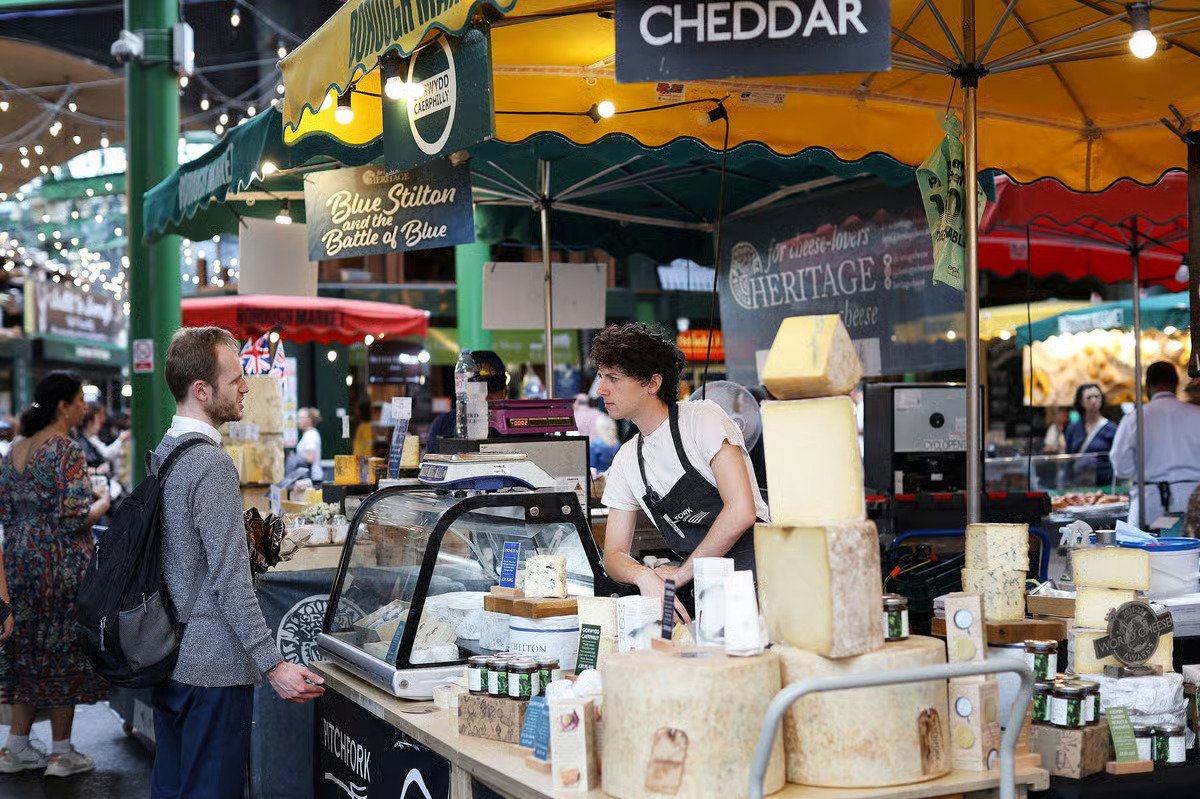
The flashpoint arrived last week at London’s iconic Borough Market, where a food vlogger was removed mid-recording. The incident, captured on video, spread rapidly across social media. In the clip, Gerry del Guercio, one half of the food review duo Bite Twice, is seen sampling an apple and cinnamon crumble with his friend when a security guard interrupts to stop their filming. Del Guercio appears bewildered. “Are we being kicked out of Borough Market?” he asks, his confusion caught on camera.
The video, filmed earlier this year using only a smartphone, shows none of the trappings typically associated with influencer production — no ring lights, no microphones, no brand deals. Just two friends chatting about their dessert. But it sparked a fierce debate about whether Borough Market had gone too far, or whether influencers themselves had finally worn out their welcome.

In response, Borough Market clarified that it has not imposed a blanket ban on filming. Instead, it enforces long-standing rules requiring prior permission for any commercial recording — a policy that covers social media creators as well as professional film crews. Anyone planning to record content for promotional or monetised purposes must apply for approval in advance and carry written consent while filming. Weekend filming is prohibited altogether due to safety and congestion concerns, as the market sees around 55,000 visitors a day.
From the market’s perspective, the rule is as much about practicality as control. Tripods, gimbals, and crowded aisles filled with sizzling food and hot oil pose a real hazard. But for many online viewers, the sight of a vlogger being stopped mid-bite symbolised something larger — a tension between creative freedom and commercial regulation, between the public character of the market and the private authority that governs it.
Traders themselves are split. In interviews following the controversy, some voiced frustration at the flood of influencers who come more to film than to buy. “A lot of people just come here to extract from the market,” one trader told the Evening Standard. “If people are genuinely here to contribute, buy produce, and interact with traders, that’s great — but not everyone is.”
Others, however, see influencers as a necessary part of modern business. A well-placed TikTok video can drive a surge of customers in days. Yet the reality on the ground is often messy — crowded stalls, obstructed customers, and performers chasing content at the expense of courtesy. A few traders reportedly declined to comment at all, wary of alienating either side of the divide.
This is not the first time hospitality venues have drawn the line. Dorian, a well-known Notting Hill restaurant, has famously refused to accommodate influencers altogether, rejecting offers of “exposure” in exchange for free meals. Across the Atlantic, cafes in New York and Paris have implemented similar bans after complaints about flashing lights and endless monologues performed for the camera.
The backlash marks a cultural shift. Just a few years ago, being featured on TikTok was considered a golden ticket to viral fame — a moment that could transform a small business overnight. Now, that exposure can just as easily provoke ridicule or resentment, particularly when influencers appear entitled or intrusive.
The irony is unmistakable. The influencer phenomenon didn’t emerge in a vacuum. The hospitality industry itself laid the groundwork, inviting content creators into kitchens, designing dishes to be “Instagrammable,” and even structuring interior decor around the perfect selfie angle. Restaurants traded ambience for aesthetics, mystery for visibility. They built their fame on social media’s appetite for spectacle — and now they are discovering that the spectacle has its own appetite.
At its core, the Borough Market dispute raises a question that goes beyond one video or one venue: who owns the experience of dining? Once you’ve paid for your food, do you not have the right to document it? Restaurants and markets live in a paradox — they thrive on being seen, yet they also crave control over how they are seen. In an era when nearly everyone carries a high-definition camera in their pocket, those boundaries have all but dissolved.
Technology has blurred the line between diner and documentarian. A decade ago, influencers were a niche group. Today, anyone with a smartphone and an account can reach thousands, even millions, with a few seconds of footage. A short clip of a cheesemonger slicing Comté or a baker glazing croissants might seem harmless — but at scale, that content fuels a billion-dollar digital ecosystem.
The deeper question is whether the hospitality industry can coexist peacefully with the culture it helped spawn. Restaurants and markets depend on attention. They need to be talked about, photographed, and shared to survive in a hypercompetitive city like London. But the unfiltered chaos of social media — with its unpredictable virality and relentless demand for new content — can undermine the very atmosphere that makes these spaces special.

Many venues are now experimenting with middle-ground solutions: designated filming zones, limited time slots, or simple requests for respect and discretion. Others have taken the opposite route, banning filming altogether to reclaim a sense of privacy and calm. Neither approach fully resolves the dilemma, because the modern customer is also a broadcaster.
For now, Borough Market insists that it remains open to creators — provided they follow the rules. Yet the incident has ignited a broader conversation about the balance between openness and order, authenticity and spectacle. As the influencer economy matures, hospitality may need to reinvent its relationship with visibility, learning to set boundaries without alienating the very audience it depends on.
After all, as Mary Shelley’s cautionary tale reminds us, every creation comes with consequences. The hospitality industry’s digital “monster” — once a source of fame and fortune — now walks on its own, ring light in hand, searching for the next viral bite.
Related News:
 CMA Flags Concerns Over Greencore-Bakkavor Merger
 150-Year-Old Arctic Beer to Be Reborn in Scotland
 London bagel shop tops Deliveroo’s global orders list
 Oprah enjoys Meghan’s jam on English muffins
 Troubled drinks giant Diageo names former Tesco boss to lead turnaround push
 Tories Push to Dilute Labour’s Workers’ Rights Bill
 Derby Bounce Centre to Close Amid Car Park Dispute
 P.Louise Christmas Event Cancelled in Manchester
 Reeves Faces Setback as Labour May Miss Homes Target
 The diet that can significantly ease symptoms of IBS
 UK Small Business Owner to Challenge L’Oréal in Tribunal
 Trump’s UK Ambassador Urges North Sea Drilling to Strengthen US Ties
 Court Hears Challenge Over Water Bills Funding Sewage Fixes
 ABF May Split Primark from Food Division Amid Tough Market
 Rachel Reeves Set to Break Labour Pledge and Raise Income Tax
 UPS Cargo Plane Crash in Kentucky Kills Seven
 Thinktanks Urge Rachel Reeves to Reform UK Tax System
 Gopichand Hinduja, UK’s Wealthiest Business Leader, Dies
 M&S Profits More Than Halve After Cyber-Attack
 Company linked to Michelle Mone owes £39m in tax
 Tony Blair think tank warns Rachel Reeves must cut taxes if manifesto broken
MPs Press Rachel Reeves to Hike Gambling Taxes
Tony Blair think tank warns Rachel Reeves must cut taxes if manifesto broken
MPs Press Rachel Reeves to Hike Gambling Taxes
 NHS Takes Over Nuffield Hospital in ‘Windfall’ for London Care
 North Sea oil workers must lose weight or face job loss
 Cuts to home insulation funding threaten UK climate goals
 Warning as Britons prepare to spend £4 billion this Black Friday
 Millionaires group urge Reeves to introduce wealth tax to ‘lift kids out of poverty’
 Taylor Wimpey Sales Drop Amid Budget Uncertainty
 UK toy market enjoys bumper year as ‘kidults’ fuel demand
 Reeves’s Tax U-Turn Triggers Fresh Jitters in UK Markets
 Global markets drop amid tech sell-off and China slowdown
 PM Highlights UK Business at G20 in South Africa
 Eurotunnel Investment Halted as UK Rates Soar
 Mossmorran Plant Closure Hits Cowdenbeath Hard
 UK Energy Bills to Rise Slightly in January
 UK Government Borrowing Higher Than Expected
 UK Taskforce Unveils Plan to Streamline Nuclear Reactor Rules
 Chef Skye Gyngell, Slow Food Pioneer, Dies Aged 62
 Steel billionaire Lakshmi Mittal reportedly leaves UK
 Minister Denies Budget Leaks Have Harmed UK Economy
 11 Best Supermarket Wines Chosen by Experts and Sommeliers
Budget 2025: Reeves Drops Economic Growth Reference
11 Best Supermarket Wines Chosen by Experts and Sommeliers
Budget 2025: Reeves Drops Economic Growth Reference
 Expanded Version – Black Friday Shoppers Warned Over ‘Dud Deals’
 The 20 best Christmas markets in the UK, from Bath to Edinburgh
 Best Supermarket Sourdough Loaves to Try in Your Weekly Shop
 English Mayors Set to Introduce Tourist Taxes
 Black Friday Footfall Falls as UK Shoppers Hold Back Amid Economic Concerns
 Starmer Says Labour’s Economic Plan Needs Years to Deliver
 Virgin Media Fined £23.8m Over Telecare Safety Failures
 Rising Water Bills Lift Troubled Thames Back to Profit
 Chancellor Rachel Reeves Pushes for Sweeping Changes to Environmental Protections to Accelerate Development
 Inflation Latest: Cost of Living Expected to Rise Again in Key Figures Released Today
 Shein UK Faces Allegations of Shifting Majority of Profits to Singapore to Reduce UK Tax
 Jaguar Land Rover Extends Production Halt Following Cyber-Attack
 Great Britain’s Energy Operator Commits to Strengthening Grid to Prevent Blackouts
UK House Price Growth Slows as Buyers Exercise Caution Ahead of Autumn Budget
Great Britain’s Energy Operator Commits to Strengthening Grid to Prevent Blackouts
UK House Price Growth Slows as Buyers Exercise Caution Ahead of Autumn Budget
 Kemi Badenoch Unveils ‘Golden Rule’ to Halve Spending Cuts for Deficit Reduction at Tory Conference
 New V-Level qualification to transform post-16 education
 Real living wage set to rise nearly 7% for UK workers in 2026
 M&S and Morrisons Lead Christmas Supermarket Taste Test
 Peterborough Mosques Tighten Security After Attack
 Virgin Trains Moves Closer to Challenging Eurostar Monopoly
 Kate Winslet to Narrate Film Highlighting King’s Environmental Mission
 Ryanair Chief UK Economy ‘Doomed’ Under Labour
 French Taxi Driver Cleared in David Lammy Theft Case After Fare Dispute
 UK Bans Fake Numbers: Scammers Lose Their Trick
 Kent village told to remove flags before Christmas lights go up
 Patients to Test Health at Home to Ease NHS Winter Pressure
 From Lego to Pokémon: How Adults Are Driving UK Toy Market Growth
 New laws to bolster UK’s defences against cyber attacks on NHS, transport and energy
 Son Reveals UK Couple in Iran Resort to Hunger Strike for Help
 Peers Flood Assisted Dying Bill with 942 Amendments
 Former Lion Heskey Warns of Shortage of England Strikers
 Mother Watches in Horror as Teen Daughter Dies on Tracks
 ‘Traumatic Wait’: Northern Ireland Women Face Breast Cancer Delays
 Serial Rapist and Former Cop Found Guilty Again
 Most Tories Expect to Support a Farage-Led Government
 Bill Murray Terrified Wes Anderson but Became His Closest Collaborator
 Karen Carney Stuns on Blackpool Week, Deserves Strictly Final
 Fibromyalgia Patients Struggle as NHS Fails to Provide Care