Published: 13 November 2025. The English Chronicle Desk. The English Chronicle Online.
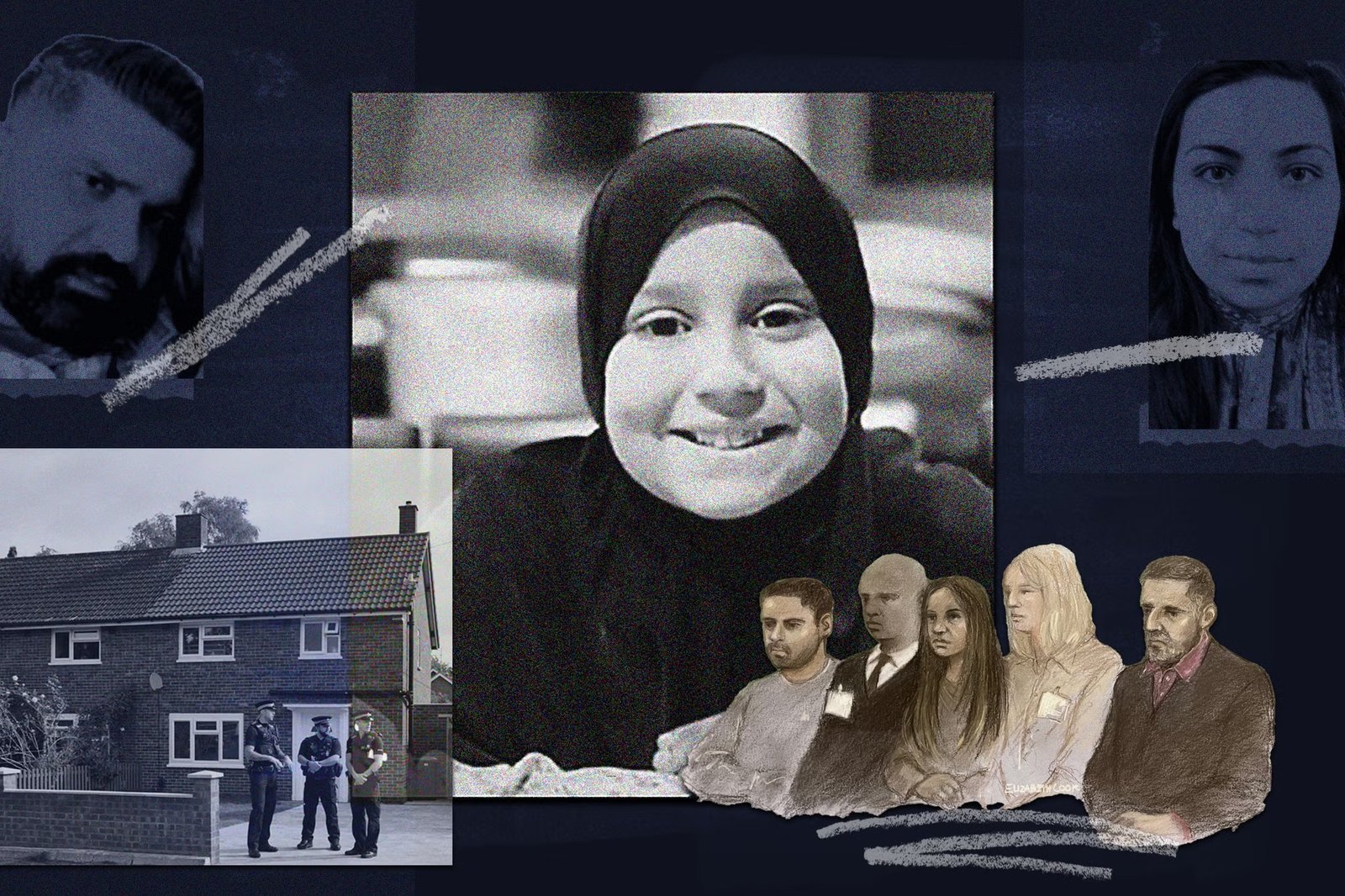
The heartbreaking story of 10-year-old Sara Sharif exposes a chilling pattern of abuse and systemic failure. In her red notebook, Sara had scribbled, “Our family is the best in town. We spread love all around the world,” suggesting she once enjoyed moments of happiness within her Woking household. Yet other writings hinted at fear and discipline so strict it left little room for normal childhood joy. In a letter to her father apologising for “answering back,” she wrote: “Please forgive me I am so, so sorry,” a glimpse into the oppressive environment in which she lived.
Nothing, however, could have prepared jurors for the shocking extent of violence Sara endured. On 8 August last year, she succumbed to her injuries, which included a traumatic brain injury, 25 fractures, an ulcerated burn to her buttocks, and scalding to her ankles. Evidence presented in court revealed repeated beatings, burns, and bites inflicted over months by the two people entrusted with her care.
Her father, Urfan Sharif, his partner Beinash Batool, and Sharif’s brother, Faisal Malik, fled to Pakistan following Sara’s death, prompting an international manhunt. They later returned to the UK to face charges. In a trial that gripped the nation, Batool and Sharif were found guilty of murder and face life sentences, while Malik was convicted of causing or allowing her death.

Yet the tragedy was not sudden; warning signs had been present for years. Social services, police, and the family courts were all aware of past allegations against Sharif, but these warnings failed to prevent him from gaining custody of Sara. Neighbours reported frequent screaming and shouting in the household, alongside the use of obscene language directed at the girl. Teachers also noted bruises and approached Batool, yet no decisive action was taken when Sara was removed from the classroom and homeschooled.
Disturbingly, Batool shared images of Sara’s injuries with her sisters, yet the child remained powerless. Reports indicate she was regularly subjected to beatings with a cricket bat, belt, and metal pole. Authorities’ prior knowledge of Sharif’s violent tendencies did little to protect Sara, highlighting a failure of the safeguarding system designed to prevent such outcomes.
Sharif had a history of allegations of abuse stretching back more than a decade. Police records show multiple complaints from ex-partners, including Sara’s mother, Olga Sharif. In December 2007, an 18-year-old named Angelika accused him of false imprisonment, theft, criminal damage, and common assault. Sharif denied these allegations, suggesting instead that he had been the victim. Further complaints followed in 2009 and 2010, including reports of suspected assaults and false imprisonment. In some cases, complaints were withdrawn, and he was not convicted. In 2013 and 2014, another child connected to him suffered burns and bites, though Sharif was not directly implicated.
Despite this troubling history, Sharif was awarded custody of Sara after separating from her mother. The girl moved in with him and Batool, where the abuse escalated. Neighbours Chloe Redwin and Rebecca Spencer provided testimony about the household’s environment. Redwin, who lived above the Sharif family between November 2022 and April 2023, recounted “smacking and a gut-wrenching scream” from the property. She described hearing Batool shout phrases such as “shut the f*** up” and “shut the f*** up you c***s” in response to Sara’s cries.
Spencer, who lived nearby from 2018 to 2020, also described frequent crying, screaming, and slamming doors. On one occasion, she said the noise reached “fever pitch,” prompting her to ask if everything was alright. Batool replied “yes” before slamming the door. Despite considering making a formal report, Spencer ultimately decided against it, leaving Sara without a lifeline outside her home.
Teachers, too, had noted injuries before Sara was homeschooled in April 2023, just four months before her death. In June 2022, a bruise was recorded under her left eye, followed by another on her chin and a dark mark on her right eye in March 2023. The school contacted the Children’s Single Point of Access, which recommended a social services referral. Yet even with these steps, no intervention occurred that could have protected her. Sara’s teacher, Helen Simmons, described her as “a happy child” who could be “sassy” at times, a stark contrast to the hidden suffering the girl endured.
The case has shone a light on systemic failures in child protection, demonstrating how repeated red flags – domestic violence histories, visible bruising, and reports from neighbours and teachers – can fail to trigger timely and effective safeguarding responses. Experts have emphasised that intervention should be proactive rather than reactive, particularly in households with known risk factors.
Sara’s death has prompted reflection on the responsibilities of agencies tasked with child protection. The case illustrates the limitations of current protocols, including how custody decisions are made and how domestic abuse histories are factored into those decisions. It also raises questions about the oversight of homeschooling arrangements, which may obscure signs of abuse.
The consequences of inaction in Sara’s case are stark. While her parents and uncle face justice, the tragedy underscores a broader need for vigilance and accountability across social services, the police, and the family courts. Advocates argue for improved information-sharing, better training for educators and social workers, and a system that prioritises the welfare of children over procedural or administrative hurdles.

Sara’s story has resonated nationally because it reveals the human cost of failures in safeguarding systems. Her brief life, punctuated by moments of love and joy but dominated by fear and violence, represents a warning of what can happen when warning signs are ignored. Her death has led to calls for reforms to ensure no child in the UK faces a similar fate.
As jurors absorbed the details of her injuries and the circumstances leading to her death, the case served as a chilling reminder of the vulnerabilities children can face, even when those around them appear attentive or caring. It highlights the crucial role neighbours, teachers, and authorities play in identifying and acting on signs of abuse, and the profound consequences when they fail to do so.
The Sharif case also underlines the importance of monitoring individuals with histories of domestic violence. While past allegations do not automatically indicate future harm, they provide context and risk factors that must be considered in custody and child welfare decisions. The lessons of Sara Sharif’s life and death are therefore both tragic and instructive, pointing to areas where systemic reform is urgently needed.
Ultimately, Sara Sharif’s death is a grim illustration of the intersection of domestic violence, neglect, and institutional failure. The small, bright life of a 10-year-old ended in the most tragic circumstances, but her story has sparked national conversations about child protection, accountability, and the urgent need to safeguard vulnerable children from preventable harm.
Related News:
 Mother dies after black market weight loss injection
 Peterborough Mosques Tighten Security After Attack
 Five More Prisoners Freed by Mistake in Essex Week
 Nearly 48,000 Zombie Knives Removed from UK Streets in a Year
 Prince Andrew Stripped of Title: Giuffre Family Hails Historic Moment
 UK Anti-Islamophobia Head Reports Being Refused Service Over Faith
 Afghan man charged with murder after west London knife attack
 Reform Councillor Defects to Tories Over ‘Uncomfortable’ Policies
 Metal Detectors at Stations ‘Would Make Life Impossible,’ Says Minister
 FBI Director Kash Patel Defends Girlfriend Amid Government Jet Claims
Trump Speaks on Prince Andrew’s Royal Scandal Fallout
FBI Director Kash Patel Defends Girlfriend Amid Government Jet Claims
Trump Speaks on Prince Andrew’s Royal Scandal Fallout
 Man Charged Over Cambridgeshire Train Stabbing
 Pregnant UK Teen to Be Freed from Georgian Jail
 French Taxi Driver Cleared in David Lammy Theft Case After Fare Dispute
 UK Bans Fake Numbers: Scammers Lose Their Trick
 Just Stop Oil Protesters Convicted Amid Climate Defence Row
 Company linked to Michelle Mone owes £39m in tax
 Lammy ‘misinformed’ over Wandsworth prisoner releases
 Met Police Culture Makes Racial Harm ‘Inevitable’
 Southport Inquiry: Killer’s Parents Must Face Accountability
 British Grandmother to Return Home After Death Sentence in Bali
 Eleven Arrested After Pro-Palestine Protest at Villa Match
 Jailed UK climate protesters face extremist-style restrictions
 Bar Council urges legal aid for all domestic abuse family cases
 How to get help when a child goes missing – call 999 urgently
 ‘Reckless’ cuts to victims’ services will cost more than they save
 Madeleine McCann Suspect Forced into Woodland Hideout After Release
 Judges to Decide Fate of Chief Constable Guilty of Contempt
 British state supplied victims to ‘worst sex offender in history’
 How age progression images help trace missing people
 ‘Fake Admiral’ Sparks Outrage at Remembrance Event
 Criminal Gangs Pose as Truckers to Hijack UK Supply Chains
 UK Candidate Moved to Safe House After Election Threats
 Paralegal Fired After Exposé on Illegal Worker Scam
 Dan Wootton Rejects Catfishing Allegation in Court
 Mother Watches in Horror as Teen Daughter Dies on Tracks
 Serial Rapist and Former Cop Found Guilty Again
 Podcaster Faces Abuse Charges Over Controlling Behaviour
 Police Name Woman Who Died in Swindon as Murder Probe Continues
 Swindon Counsellor Dies; Teen Arrested and Released
 Gardener Guilty of Brutal Attack on Teacher Partner
 Ex-Classmate Accuses Farage of Dishonesty on Racism Claims
 15-Year-Old Arrested After Sheffield Shooting Leaves Teen Critical
 Inquiry Opens Into Disgraced Surgeon Eljamel Scandal
 Sudanese Family Vows to Stay After Racist Graffiti
 Ex-Brexit MEP Rejects Claim of Pro-Russia Payments
 Man Arrested Over Manchester Synagogue Terror Attack
 Twelve Prisoners Released in Error, Two Still Missing
 Targeted Attack in Bury Sparks Murder Investigation as Community Awaits Justice
 Merseyside Police Helicopter Crew Cleared After Low-Altitude Pursuit of Suspect
 No Evidence Found to Substantiate Alleged Rape in Oxfordshire Churchyard, Police Confirm
 Massive London Poundland Fire Engulfs High Street
 Paedophile Singer Ian Watkins Dies After Prison Attack
 Reeves Faces Setback as Labour May Miss Homes Target
 Kate Winslet to Narrate Film Highlighting King’s Environmental Mission
 Trump’s UK Ambassador Urges North Sea Drilling to Strengthen US Ties
 M&S Profits More Than Halve After Cyber-Attack
 Kent village told to remove flags before Christmas lights go up
 Patients to Test Health at Home to Ease NHS Winter Pressure
 Palace May Restore Hyphen to Andrew Mountbatten-Windsor’s Name
 Millionaires group urge Reeves to introduce wealth tax to ‘lift kids out of poverty’
 Shouting Works Best to Deter Gulls, UK Study Finds
 Reeves rejects £1bn plea for NHS redundancy payouts
 Northern Lights may illuminate UK skies this week
 PM Condemns Leaks, Vows Loyalty to Ministers and Stability
 Peers Flood Assisted Dying Bill with 942 Amendments
 Former Lion Heskey Warns of Shortage of England Strikers
 Global markets drop amid tech sell-off and China slowdown
 New Evidence Emerges in Haditha Family Killings
 Mum Calls for New Licence Rules After Teen Road Death
 Charlotte Raids: 130 Arrested in Major Immigration Sweep
 ‘Traumatic Wait’: Northern Ireland Women Face Breast Cancer Delays
 Venezuela Threatens Nobel Winner Machado with Fugitive Status
 Most Tories Expect to Support a Farage-Led Government
 Bill Murray Terrified Wes Anderson but Became His Closest Collaborator
 Karen Carney Stuns on Blackpool Week, Deserves Strictly Final
 Two National Guard Soldiers Critically Injured Near White House
 Southern Lebanon reels as Israeli strikes shatter communities
 Fibromyalgia Patients Struggle as NHS Fails to Provide Care
 Virgin Media Fined £23.8m Over Telecare Safety Failures