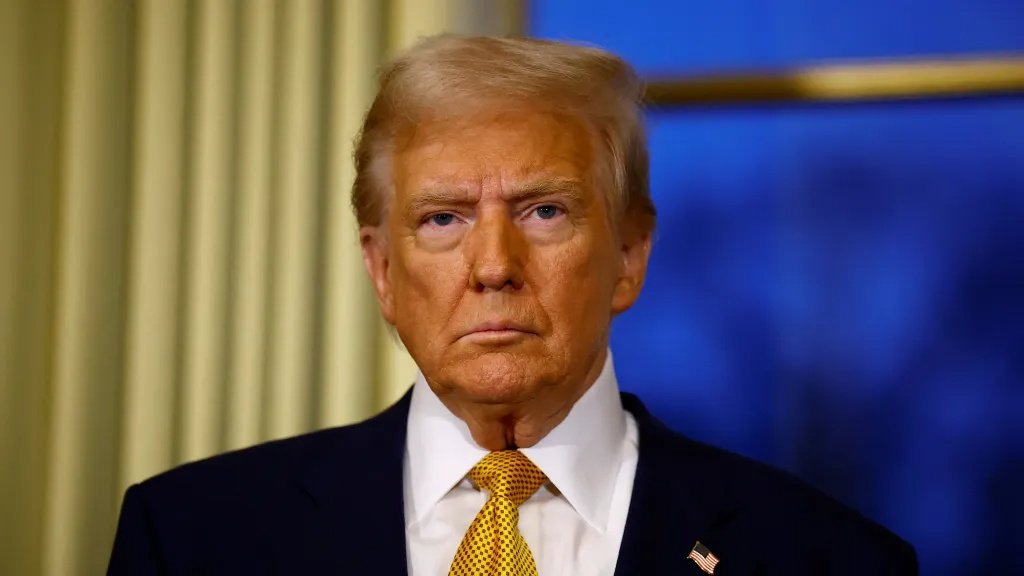
Published: 14 November 2025. The English Chronicle Desk. The English Chronicle Online
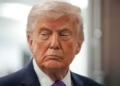
The long, uneasy relationship between former US President Donald Trump and the British Broadcasting Corporation reached a dramatic new chapter this week, as the BBC issued an apology over a controversial edit of Trump’s speech from 6 January 2021 — but firmly refused to pay the $1 billion compensation demanded by his legal team. What began as a dispute over journalistic framing has expanded into a global conversation about media accountability, political power, and the fragility of public trust in an age shaped by viral clips and partisan narratives.
The BBC’s apology, published in its Corrections and Clarifications section, was unusually direct. It acknowledged that a Panorama documentary from 2024 had placed two non-consecutive fragments of Trump’s speech side by side, creating what the broadcaster described as an “unintended impression” that the former president issued a more explicit call to action than what he actually said in sequence. The edit, a mere twelve seconds in an hour-long programme, had nonetheless set off a chain reaction that now spans multiple countries, legal teams, and political spheres.
For Trump, the issue has become both a legal battle and a symbolic one, a chance to highlight what he has repeatedly described as unfair treatment by mainstream media outlets. His lawyers wasted no time, threatening to sue the BBC for $1 billion unless it issued a full retraction, a comprehensive apology, and financial compensation for what they claimed was extensive reputational damage. They imposed a strict deadline and suggested that the broadcaster’s credibility was now on trial.

Within the BBC’s headquarters in London, the fallout was swift and severe. Director General Tim Davie and BBC Head of News Deborah Turness resigned on Sunday, a move that signalled the gravity of the internal reckoning. Their departures came amid not only the Panorama controversy but a string of editorial criticisms outlined in a leaked internal memo, which raised concerns about the corporation’s handling of several politically sensitive topics. Trust, once the organisation’s most formidable currency, suddenly seemed fragile.
The BBC has since clarified the sequence of events and the motivations behind the edits. In its letter to Trump’s lawyers, the corporation argued that the programme was intended to summarise an extraordinarily long speech that ran for more than an hour. Producers, it said, attempted to condense key moments rather than misrepresent them. The BBC insisted there was no malice involved and that the clip was not framed to mislead audiences. Instead, it was meant to function as a shorthand within a wider narrative that included voices supportive of Trump.
The broadcaster’s defence emphasised that the clip had not been distributed in the United States and was at one point geographically restricted on BBC iPlayer to UK viewers only. They also argued that Trump had not suffered material harm, citing the fact that he was re-elected shortly after the documentary aired — a point the BBC considered central to its rejection of the compensation claim. According to its lawyers, any assertion of defamation must demonstrate tangible damage, something they believe cannot be proven in this case.

Despite the apology, the BBC made clear that it would not be issuing any financial compensation. The corporation said that while mistakes were made, the legal bar for defamation, especially in the United States where protections for political speech are exceptionally strong, had not been met. Insiders have revealed that there is confidence within the organisation that its legal position remains robust, noting that political speech is afforded significant latitude under both UK and US law. BBC Chair Samir Shah also sent a personal letter to the White House expressing regret for the error but reiterated that the corporation does not consider itself liable for damages.
Yet what transformed a single editorial mistake into a fully fledged media firestorm was the revelation of a second, earlier edited clip — this one broadcast on Newsnight in 2022. The Daily Telegraph uncovered the footage, which again spliced together segments of the same January 2021 speech. This edit, though slightly different from Panorama’s, produced a similar impression by placing distant sections of the speech side by side. The sequence was presented alongside a voiceover by presenter Kirsty Wark asserting that Trump supporters did indeed “fight” after the president’s call.
Former White House Chief of Staff Mick Mulvaney, appearing on the original 2022 broadcast, pointed out the splicing during the programme itself. Mulvaney, who became critical of Trump after describing the 6 January riot as an “attempted coup”, had nonetheless expressed unease that Newsnight’s edit compressed the order of the speech in a way that made it appear more inflammatory. The resurfacing of that moment has prompted new internal reviews and renewed criticism from Trump’s allies, who now claim a pattern of defamatory editing.
Trump’s legal team quickly seized on the new revelation. A spokesman told the Telegraph that it was “now clear that BBC engaged in a pattern of defamation against President Trump”, adding fuel to the growing legal and political storm. Trump himself, speaking to Fox News, said his speech had been “butchered” and “defrauded” viewers, framing the BBC’s actions as evidence of media bias that he has long campaigned against. His team insists that the broadcaster must now answer not only for one flawed edit but for a systemic failure of editorial standards.
Within the BBC, however, the mood is mixed. While there is frustration and anxiety over the crisis, there is also a strong belief in the core principles of the corporation. Several staff members privately indicated that they worry about the broader implications, both for future editorial decisions and for the organisation’s relationship with political figures worldwide. Some fear that even minor errors may now be weaponised in efforts to undermine journalistic independence. Others express hope that increased scrutiny will lead to better internal guardrails, renewed transparency, and a reaffirmation of the values that once made the BBC one of the most trusted news institutions in the world.

The reaction from the White House, so far, has been restrained. When contacted by the BBC, officials did not comment on the matter. The broader political context, however, is impossible to ignore. Relations between Trump and traditional media remain fraught, and the BBC, as an international public broadcaster with significant global influence, occupies a unique place within that dynamic. Its mistakes are magnified, its accountability expectations heightened.
Behind the scenes, the Panorama documentary that triggered the crisis has already been withdrawn from circulation. The BBC says it will not be shown again. The decision underscores the seriousness with which the organisation is approaching the issue and reflects a growing recognition that editorial errors, however unintentional, can have far-reaching consequences. In today’s political landscape, where narratives often matter as much as facts, even the smallest lapse in presentation can shape public perception.
The debate surrounding media responsibility has intensified as well. Critics argue that the BBC’s edit, though inadvertent, reflects a growing tendency across media to condense and dramatise political content for audiences with shrinking attention spans. By shortening Trump’s long speech, they say, the broadcaster inadvertently created a sequence that aligned too neatly with an existing political narrative. Supporters of the BBC counter that condensation is a natural and necessary part of journalism, especially in documentaries where time is limited and context crucial. The question, they argue, is where the line lies between summarising and misrepresenting.
The dispute also highlights the complexities of modern political communication. Trump’s 6 January speech remains one of the most scrutinised addresses in contemporary American history, dissected by courts, journalists, scholars, and the public alike. The phrases “walk down to the Capitol” and “fight like hell” have become imbued with symbolic significance, debated endlessly as evidence of incitement or, conversely, as rhetorical flourishes common in political speeches. The BBC’s edits inadvertently collapsed those debates into a single, tightly framed visual moment — and ignited controversy as a result.
For journalists and editors across the UK and beyond, the BBC-Trump dispute serves as a cautionary tale. It underscores how vulnerable even established media institutions can be when errors intersect with political flashpoints. It also demonstrates that trust, once lost, is difficult to reclaim. At the same time, the corporation’s willingness to publicly acknowledge its mistake — and to do so promptly — stands in contrast to the opaque responses that often follow editorial failures. Whether this transparency will mitigate the long-term impact remains to be seen.

As the deadline set by Trump’s legal team approaches, the question now shifts to what comes next. If Trump decides to proceed with legal action, the case could become one of the most high-profile media lawsuits in recent history. It would test not only the BBC’s defences but the broader boundaries of political speech protections under American law. Defamation cases involving public figures in the United States face extraordinarily high legal thresholds, requiring proof of actual malice — an intentional or reckless disregard for the truth. The BBC insists that the edit was a mistake, not a malicious act, and legal experts have suggested that proving otherwise would be extremely challenging.
Still, the political theatre surrounding the dispute carries its own implications. For Trump, the confrontation with the BBC reinforces a consistent campaign narrative: that he is a victim of media distortion and partisan attacks. For the BBC, the controversy is a stark reminder of the heightened scrutiny that accompanies coverage of polarising political figures.
Ultimately, this story is not only about one documentary or one edited clip. It is about the evolving relationship between politics and media in a world where trust is both essential and fragile. It is about the power of narrative, the responsibility of journalists, and the expectations of audiences who increasingly demand precision even in compressed storytelling formats. It is also about the pressures faced by public institutions navigating an environment where every editorial decision, however small, can become the subject of global attention.
As the BBC reviews its editorial processes once again and Trump weighs his next move, the dispute continues to reverberate across newsrooms, political circles, and digital platforms. For now, the broadcaster has apologised but refuses to concede liability. Trump remains unsatisfied, convinced that the damage is real. And the public — divided, watchful, sceptical — is left to interpret the story not only as a controversy over an edit, but as a reflection of the deeper tensions shaping our information age.
Related News:
 Tories Push to Dilute Labour’s Workers’ Rights Bill
 It’s time to come clean on the China spy case
 Rachel Reeves Admits Renting Home Without Required Licence
 Experts Question HMRC Over Possible Child Benefit Privacy Breach
 Phillipson urges careful review of gender recognition guidance
 French Taxi Driver Cleared in David Lammy Theft Case After Fare Dispute
 Met Police Culture Makes Racial Harm ‘Inevitable’
 Remaining rebel Labour MPs have whip restored
 Tim Davie resigns as BBC director general amid bias claims
 Palace to reinstate hyphen in Andrew’s surname
 Major Rent Reform Ends No-Fault Evictions in England
 Peers Flood Assisted Dying Bill with 942 Amendments
 Your Party Turmoil Deepens Over Withheld Donations
 UK Unveils Fast-Track Deportation and Asylum Overhaul
 UK Asylum Overhaul Sparks Debate Over Human Rights and Deportations
 UK Asylum Reforms: Temporary Refugee Status and Faster Deportations
 Mahmood Defends Tough Overhaul of UK Asylum System
 Scottish Ministers Express Alarm Over UK Asylum Reforms
 Westminster Advances Legacy Bill Amid Criticism
 Minister Defends Tough New Asylum Reform Plan
 UK Net Migration Falls Sharply After ONS Revisions
 Peers Get Extra Time to Debate Assisted Dying Bill
 Tasers Introduced in UK Prisons to Combat Rising Violence and Protect Staff
 Police Advised to Disclose Ethnicity of Suspects in High-Profile Cases
 Angela Rayner Faces Scrutiny as Stamp Duty Row Deepens
 Tanni Grey-Thompson Faces Abuse Over Opposition to Assisted Dying Bill
 Corbyn and Sultana Clash Over Membership Portal as Divisions Surface in New Leftwing Party
 Mahmood Pledges Reform of Modern Slavery Laws After Court Blocks Deportation Appeal
 Migrants in UK May Need to Contribute or Face Removal, Home Secretary Signals
 Jailed Georgian Opposition Leaders Warn UK of Iranian Links to Ruling Party
 Digital ID Plans Ignite Debate Over £600m Treasury Tax Boost and Privacy Concerns
 British Woman in Iran ‘Losing Hope’ Amid Ongoing Detention
 Johnson Approved China’s London ‘Super-Embassy’ in 2018
 BBC Journalist Held and Interrogated in Vietnam
 Green Party Surges Past Labour in Latest UK Poll
 Celebrities and Charities Demand UK Government Act on Child Poverty
 Afghan man charged with murder after west London knife attack
 Trump’s UK Ambassador Urges North Sea Drilling to Strengthen US Ties
 FBI Director Kash Patel Defends Girlfriend Amid Government Jet Claims
 Just Stop Oil Protesters Convicted Amid Climate Defence Row
MPs Press Rachel Reeves to Hike Gambling Taxes
Just Stop Oil Protesters Convicted Amid Climate Defence Row
MPs Press Rachel Reeves to Hike Gambling Taxes
 Newcastle United Lifts Ban on Fan Over Gender-Critical Views
Boris Johnson accused of undermining BBC leadership
Newcastle United Lifts Ban on Fan Over Gender-Critical Views
Boris Johnson accused of undermining BBC leadership
 King Charles to Lead Nation in Remembrance Sunday Service
 ‘Reckless’ cuts to victims’ services will cost more than they save
 Government urges schools to ban phones to curb classroom disruption
 Millionaires group urge Reeves to introduce wealth tax to ‘lift kids out of poverty’
 Starmer Faces Growing Dissent as Labour MPs Weigh Leadership Challenge
 Reeves rejects £1bn plea for NHS redundancy payouts
 Farage appointee to lead Reform youth accused of anti-British views
 Politics latest: Starmer ‘will fight any leadership coup’ as Streeting denies attempt to oust Labour PM
 Pop Stars Call on UK Government to Cap Resale Prices for Fans
 PM Condemns Leaks, Vows Loyalty to Ministers and Stability
 England’s Special Needs Support Faces Breaking Point
 US Justice Department Files Lawsuit Against California Over Partisan Voting Maps
 MoD warned over Excel risks before Afghan data breach
 Trump Deploys DHS to Charlotte in Major Arrest Operation
 UK Candidate Moved to Safe House After Election Threats
 Paralegal Fired After Exposé on Illegal Worker Scam
 South African Detained After Neo-Nazi Rally in Australia
 UK Warns China After MI5 Issues Espionage Alert
 Federal Court Blocks Texas Republican Maps Over Racial Bias
 Only One Republican Opposes Mass Release of Epstein Files
 UK Vulnerable to Attack, Defence Committee Finds
 Labour Faces Historic Decline in Wales
 Rama Rebukes Mahmood for Targeting Albanian Families
 Russian Vessel Used Lasers on RAF Pilots, UK Claims
 Serial Rapist and Former Cop Found Guilty Again
 PM Highlights UK Business at G20 in South Africa
 Kate Forbes: Motherhood Harder Than Politics
 Welsh Government Christmas 2020 Lockdown Criticised
Reeves to Crack Down on Benefit Fraud While Lifting Two-Child Limit
Welsh Government Christmas 2020 Lockdown Criticised
Reeves to Crack Down on Benefit Fraud While Lifting Two-Child Limit
 Most Tories Expect to Support a Farage-Led Government
 Labour MP claims devolution bill is ‘blatant discrimination’ against Cornwall
 Millions Face Higher Taxes Under Reeves New Budget
 Planned Palestinian Flag Raising at Belfast City Hall Faces Delay Amid Legal Concerns
 Government righting decades-old injustice for miners
 Virgin Media Fined £23.8m Over Telecare Safety Failures
 Chinese & Japanese Boats Clash Near Disputed Islands
 UK delays ruling on China embassy plan until January