Published: 14 November 2025. The English Chronicle Desk. The English Chronicle Online
As France commemorates the tenth anniversary of the Bataclan attacks, the nation is confronted once again with the enduring reality of jihadist threats. The memory of that horrific night in November 2015 remains vivid, not only in the minds of survivors and the families of victims but also in the consciousness of a country that continues to grapple with the possibility of future attacks. Recent developments serve as a stark reminder that the enemy has not vanished.
Authorities arrested a 27-year-old French woman, identified only as Maëva B, on suspicion of plotting her own violent act. She is a convert to Islam and is known to have had a close association with Salah Abdeslam, the only jihadist to survive the November 2015 attacks. Abdeslam, 36, is serving a life sentence in a Belgian prison following his conviction in 2022. French authorities discovered that he had used a USB key containing jihadist propaganda, which investigations traced back to face-to-face meetings with Maëva B.
Further searches of her personal devices, including her computer and telephone, revealed additional evidence suggesting she may have been preparing for a jihadist attack. On Monday, she was placed under judicial investigation along with two alleged associates. This arrest comes as France reflects on the ten-year mark of its deadliest modern terror attack, focusing attention on a threat that remains persistent despite efforts to combat it.
Interior Minister Laurent Nuñez confirmed that six plots had been foiled so far this year, illustrating the ongoing vigilance required to counter domestic terrorism. The level of threat remains high, and French authorities continue to emphasize the unpredictability and persistence of extremist networks. President Emmanuel Macron, speaking at the inauguration of the Jardin du 13 Novembre 2015 memorial garden in Paris, underscored the country’s determination. “Unfortunately, no one can guarantee the end of attacks,” he said. “But we can guarantee that for those who take up arms against France, the response will be uncompromising.”
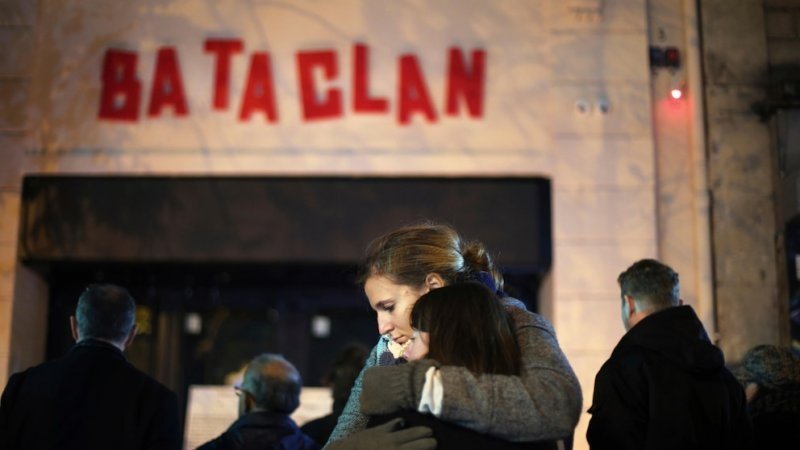
The events of 13 November 2015 remain etched in the national memory. Coordinated attacks across Paris began outside the Stade de France during an international football match, where three suicide bombers detonated explosives. Simultaneously, gunmen opened fire at bars and cafés near the Bataclan concert hall in eastern Paris. At the Bataclan, American rock band Eagles of Death Metal were performing when three armed jihadists stormed the auditorium, taking hostages and shooting indiscriminately. They detonated explosives as police intervened.

In total, 130 people were killed, including 90 at the Bataclan, and over 400 were treated in hospitals for injuries. Many others continue to suffer from long-term psychological trauma. The term “Bataclan” has since become synonymous in France with extreme Islamist violence, much like “9/11” does in the United States, representing both the scale of the attack and its symbolic significance.
Subsequent attacks, such as the Nice lorry massacre in July 2016 and the murder of teacher Samuel Paty in October 2020, while devastating, have not matched the sheer coordination and brutality of the November 2015 attacks. The scale and meticulous planning behind the Bataclan massacre set it apart as a watershed moment in French history, fundamentally reshaping national security policies and public consciousness about terrorism.
A decade later, the global context of terrorism has shifted. The decline of the Islamic State as a territorial power in Syria and Iraq has reduced the capacity to orchestrate large-scale, complex attacks abroad. Yet the danger has evolved rather than disappeared. Experts note that the contemporary threat is often home-grown, younger, and decentralized, relying on social networks and personal relationships rather than formal hierarchies. This makes detection and prevention more complex, as the radicalization process is now more informal and intimate, facilitated by social media and peer influence rather than by direct orders from established terrorist organizations.
Additionally, events in Gaza and Israel have had a “traumatic effect” on some French citizens, creating fertile ground for the spread of extremist narratives. Radical actors exploit these events to recruit and incite violence, emphasizing grievances and framing them in ideological terms. The ongoing political challenges in France, including a fragmented parliamentary landscape and tensions between competing factions, are also seen as factors that may exacerbate social divides, potentially enabling extremist ideologies to gain traction.
Commemorations for the tenth anniversary of the Bataclan attacks are being held throughout Paris and beyond, with ceremonies scheduled at all major attack sites. A new memorial garden, the Jardin du 13 Novembre 2015, has been inaugurated in central Paris to honor the victims. As night falls, the Eiffel Tower will be illuminated in the red, white, and blue of the French flag, a symbolic tribute to resilience and unity in the face of terror. French media outlets are running extensive coverage of the anniversary, featuring personal accounts from survivors and the families of victims, reflecting on how their lives have been irrevocably altered.

In an unexpected development, Salah Abdeslam has indicated through his legal representatives that he would be willing to participate in discussions on “restorative justice,” a procedure whereby victims and perpetrators meet to discuss the impact of a crime. While some families of victims have expressed interest in such dialogue, many remain firmly opposed. Laurent Sourisseau, the cartoonist known as Riss, who was shot during the Charlie Hebdo attack a few months before the Bataclan massacre, described the proposal as “perverse.” He argued that terrorism is categorically different from ordinary crime and that any attempt to normalize it under restorative justice frameworks risks diminishing the gravity of the offenses committed.
The French authorities continue to grapple with the dual challenge of commemorating past tragedies while remaining vigilant against ongoing threats. Security measures have been heightened at all commemorative events, with police and intelligence services monitoring potential risks. These measures reflect the lessons learned from past attacks, as well as the recognition that terrorism has not been eradicated.
The legacy of the Bataclan attacks has had profound social, cultural, and political effects. Survivors and their families have become vocal advocates for enhanced security measures, mental health support, and community resilience programs. Schools, workplaces, and public venues have been increasingly fortified, and emergency preparedness protocols have been updated to reflect lessons learned from November 2015. In addition, France has invested heavily in counterterrorism intelligence, surveillance, and international cooperation, recognizing that modern threats are transnational and complex.
Experts note that the evolving nature of jihadist threats, including smaller-scale, more sporadic attacks carried out by lone actors or small networks, poses distinct challenges for law enforcement. Unlike the coordinated operations of 2015, current threats are less predictable, harder to track, and often motivated by localized grievances or ideological radicalization facilitated online. The Maëva B arrest illustrates this trend, highlighting how relationships, communications, and seemingly innocuous social interactions can become conduits for planning violent acts.

For the French public, the tenth anniversary of the Bataclan massacre is both a moment of reflection and a reminder of vigilance. While much has been done to prevent similar tragedies, the enduring presence of jihadist ideology and the potential for radicalization within domestic networks underline that security cannot be taken for granted. President Macron’s remarks emphasize both the limits of preventive measures and the certainty of a firm response to any attacks.
In commemorating this somber milestone, France confronts the tension between remembrance and resilience. The new memorial garden, media retrospectives, and public ceremonies serve not only as tributes to those lost but also as symbolic affirmations of national unity in the face of ongoing threats. Survivors’ narratives continue to shape public understanding of terrorism’s human impact, reminding citizens that the consequences extend far beyond immediate physical harm.
The enduring presence of radicalized actors and ongoing arrests underscore that, despite the passing of a decade, vigilance remains imperative. Security services, policymakers, and civil society must continue to adapt strategies to counter both traditional and emerging forms of terrorism, balancing preventive measures with civil liberties and public trust.
In conclusion, as France marks the ten-year anniversary of the Bataclan attacks, the country reflects on the lives lost, the resilience of survivors, and the persistent nature of jihadist threats. Recent arrests, the evolving domestic terrorist landscape, and commemorative initiatives together highlight a society striving to honor its past while remaining alert to dangers in the present and future. The events of 13 November 2015 are etched indelibly into the nation’s memory, shaping contemporary French policies, public consciousness, and the ongoing struggle against extremism.
Related News:
 British Grandmother to Return Home After Death Sentence in Bali
 Mali’s Daily Life Cripples Under Jihadists’ Fuel Blockade
 Seven Conditions That Automatically Qualify You for a Free Bus Pass
 Fog Aids Russian Forces in Deep Push into Pokrovsk
 Meny Godard Identified as Israeli Hostage Body Returned by Hamas
 US Justice Department Files Lawsuit Against California Over Partisan Voting Maps
 Israel Confirms Returned Hostage as Meny Godard
 UK Asylum Reforms: Temporary Refugee Status and Faster Deportations
 Congress Approves Release of Epstein Files, Trump Expected to Sign
 Court to Hear Challenge to Wimbledon Expansion Plan
 Senedd Suspends Politician Over Offensive Racial Slur
 South African Women Call Purple Protest Over Gender Violence
 Texas Governor Faces Lawsuit From CAIR
 Video shows Israeli troops kill Palestinians after surrender
 Man Arrested Over Manchester Synagogue Terror Attack
 Second homes curbs quashed in Gwynedd legal ruling
 Tokyo court rules Japan’s same-sex marriage ban constitutional
 Chinese & Japanese Boats Clash Near Disputed Islands
 Hong Kong Orders Probe Into Deadly 151-Death Fire
 Putin Meets US Envoy Amid Key Ukraine Peace Talks
 UK Criticises Gaza Aid Delays as Tents Arrive After Year
 Indonesia to Repatriate Two Dutch Drug Convicts
 Trump Administration Dismisses 17 Immigration Judges, Sparking Debate Over Judicial Independence
 Northern Ireland Family of Three Shot Dead in Maguiresbridge Home Incident
 Lisbon’s Historic Funicular Turns to Tragedy: The Elevador da Glória Derailment
 Hospice Cuts Raise Alarm Across England Amid Funding Crisis
 World Whisky Tour: 9 Global Gems
 Just Stop Oil Protesters Convicted Amid Climate Defence Row
 Newcastle United Lifts Ban on Fan Over Gender-Critical Views
 Britain deploys RAF specialists to assist Belgium with drone threats
 US Senate Passes Funding Bill to End Historic Shutdown
 BBC’s Tim Davie to Address Staff Amid Trump $1bn Threat
 From Lego to Pokémon: How Adults Are Driving UK Toy Market Growth
 Shouting Works Best to Deter Gulls, UK Study Finds
 PM Condemns Leaks, Vows Loyalty to Ministers and Stability
 Son Reveals UK Couple in Iran Resort to Hunger Strike for Help
 Hitler’s DNA Confirms He Truly Had Only One Testicle
 Oklahoma Governor Grants Last-Minute Clemency to Death Row Inmate
 Trump Deploys DHS to Charlotte in Major Arrest Operation
 Delhi Car Bomb Arrest: Suspect Linked to Deadly Attack
 UK Asylum Overhaul Sparks Debate Over Human Rights and Deportations
 Orban Says Ukraine Has ‘No Chance’ as EU Support Continues
 Mother Watches in Horror as Teen Daughter Dies on Tracks
 Irish Hero Parrott Says Goal Brought First Tears in Years
 South African Detained After Neo-Nazi Rally in Australia
 Seven Countries, One Winner: Europe’s Best Christmas Market
 Israeli Strike Kills 13 Near Palestinian Camp in Lebanon
 Zelensky Meets US Envoy in Turkey to Push Ukraine Peace Talks
 Only One Republican Opposes Mass Release of Epstein Files
 Commuters warned as yellow snow and ice alert hits Northern Ireland
 Haiti Qualifies for World Cup Despite Coach Never Visiting Country
 Rama Rebukes Mahmood for Targeting Albanian Families
 Serial Rapist and Former Cop Found Guilty Again
 Man Charged Over Attempted Murder of Senior Officer
 Woman Meets Boy Whose Life She Saved with Kidney
 Two Officers Injured After Van Deliberately Rams Patrol Car
 Pentagon Officials in Ukraine to Discuss War End
 Vietnam Battles Deadly Floods as Rains Continue
 Raccoons Could Become America’s Next Pet
 Venezuela Threatens Nobel Winner Machado with Fugitive Status
 At Least Three Dead in Bangladesh Earthquake
 Vicki Fears Losing Motability Car
 Israel Confirms Hamas Returned Dror Or’s Body
 Trump Envoy to Discuss Ukraine Peace at Kremlin
 Twenty-Four Nigerian Schoolgirls Freed After Abduction
 Peers Get Extra Time to Debate Assisted Dying Bill
 Planned Palestinian Flag Raising at Belfast City Hall Faces Delay Amid Legal Concerns
 Two National Guard Soldiers Critically Injured Near White House
 Residents Face £3.6m Bill for Unsafe Kirkby Flats
 Mbappe Scores 4 as Real Madrid Edge Olympiakos
 Man City Lose, Champions League Risk
 Singapore Women Acquitted After Pro-Palestine March
 Sri Lanka Floods Leave 56 Dead, Dozens Missing
 India’s Labour Law Overhaul Sparks Fierce Debate
 Scotland Gains 33 New Towns – Life in Growing Communities
 Machynlleth High Street Left Without Christmas Lights
 A Colourful Cultural Escape in Mexico’s Querétaro
 Search underway for British man overboard off Tenerife
 Virgin Media Fined £23.8m Over Telecare Safety Failures
 Pavarotti statue frozen in Italian ice rink sparks backlash