Published: 21 November 2025 Friday. The English Chronicle Desk. The English Chronicle Online
A tragic bus accident in central Cambodia has claimed the lives of at least 16 people and left more than two dozen others injured after a night bus plunged off a bridge into a river, authorities and local reports confirmed. The incident has cast a spotlight on road safety concerns in the country, particularly on long-distance night routes that are frequently used by commuters and tourists alike.
The bus, carrying 37 passengers, was en route from Oddar Meanchey province in northern Cambodia to the capital, Phnom Penh. According to Camboja News, the vehicle had made a stop in Siem Reap, Cambodia’s top tourist destination and home to the world-renowned Angkor Wat temple complex, approximately six hours from Phnom Penh. The crash occurred just after 3am local time (20:00 GMT) on Thursday in Kampong Thom province.
Local police reported that the bus was manned by two drivers who were alternating shifts on the overnight journey. Preliminary investigations suggest that the driver operating the vehicle at the time of the crash may have been asleep, though authorities have not confirmed whether the driver is among the deceased. “We are still determining the exact circumstances, but fatigue may have been a factor,” a police spokesperson said.
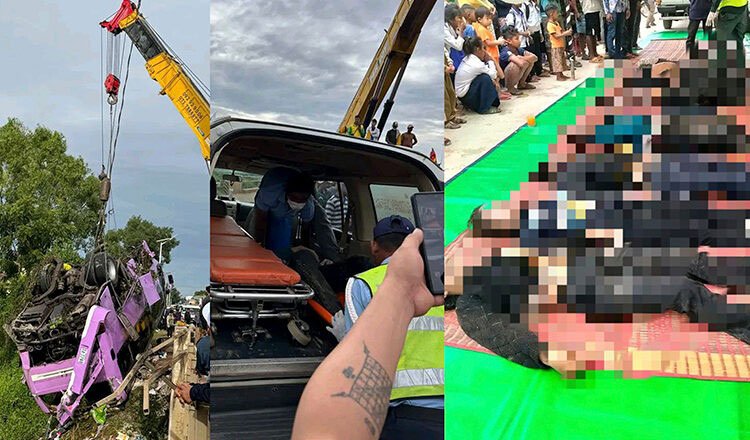
Photos shared by Interior Minister Sar Sokha on Facebook show the bus partially submerged in water while being lifted by a crane, highlighting the severity of the accident. Rescue teams worked through the early hours to recover passengers, and the death toll rose from 13 to 16 after officials completed their search of the river. Those injured were taken to a provincial hospital in Kampong Thom for treatment, while the bodies of the deceased were transferred to their families via ambulances.

The bus was carrying only Cambodian nationals, officials confirmed. Authorities are conducting detailed interviews with survivors to understand the sequence of events leading to the crash. Eyewitness accounts suggest that the bus veered off the bridge unexpectedly, plunging into the river below. Many of the injured suffered broken bones and lacerations from the impact, while some experienced minor injuries while escaping the partially submerged vehicle.
The accident has reignited discussions on road safety in Cambodia. The National Road Safety Committee recently reported nearly 700 road fatalities in the first half of 2025, a decrease from the nearly 800 recorded during the same period last year. Despite this slight improvement, long-distance bus travel at night remains a significant risk due to driver fatigue, road conditions, and lack of strict enforcement of safety regulations.
Cambodia’s bus network is vital for both residents and tourists, connecting remote provinces with major cities. Overnight buses are particularly popular because they allow passengers to travel while sleeping, avoiding daytime traffic and reducing overall travel time. However, incidents like this highlight the vulnerabilities of long-haul night travel, especially on roads with bridges, narrow lanes, and limited lighting.
In addition to human tragedy, the accident underscores broader infrastructure challenges in Cambodia. Many rural and provincial roads, while essential for connectivity, are prone to accidents due to poor maintenance, lack of signage, and inadequate safety measures on bridges and riverside routes. Authorities have repeatedly emphasized the need for better regulation, driver training, and vehicle inspections to prevent similar disasters.
The Cambodian government has pledged to investigate the crash thoroughly. Officials are reviewing driver schedules, bus maintenance records, and traffic safety protocols to determine if negligence or preventable errors contributed to the disaster. Survivors and witnesses are being interviewed as part of a broader effort to piece together the exact timeline of events.
Public reaction has been swift, with citizens expressing shock and grief on social media. Many highlighted the need for stricter oversight of long-distance bus services, particularly those operating overnight. “This is a tragedy that could have been prevented,” wrote one social media user. “Authorities must ensure that drivers are properly rested and that buses are maintained to the highest standards.”
For the families of those affected, the accident has been devastating. Emergency services have worked to provide immediate support, including medical care, transportation of the injured, and assistance with funeral arrangements. Local officials are coordinating with hospitals and community organizations to ensure that survivors receive psychological and medical support during this difficult time.

Experts in transportation safety note that fatigue is a leading cause of night-time bus accidents worldwide. Long stretches of monotonous driving, coupled with inadequate rest, can significantly impair reaction times and decision-making. In Cambodia, where regulations on working hours and driver rest periods are not always strictly enforced, these risks are particularly pronounced.
This incident also highlights the importance of public awareness. Passengers are encouraged to inquire about driver schedules, bus conditions, and company safety records before boarding long-distance night services. Road safety campaigns in Cambodia have aimed to educate both drivers and passengers, but tragedies like this indicate more comprehensive enforcement and oversight may be required.
As investigations continue, the authorities are expected to release a full report detailing the causes of the crash. Meanwhile, the accident serves as a sobering reminder of the hazards associated with long-distance travel in developing countries, where infrastructure and regulatory oversight are still catching up with rising demand for transport services.
While the nation mourns the loss of life, this tragedy may prompt stronger enforcement of safety protocols, better driver training, and improvements in road infrastructure to prevent future incidents. For now, Cambodia grapples with grief, reflection, and a renewed focus on the critical need for road safety measures to protect its citizens and visitors alike.
Related News:
 UK Charters Emergency Flights to Evacuate Britons from Jamaica
 China’s Youth Save, Not Spend, Amid Job and Housing Worries
 Shouting Works Best to Deter Gulls, UK Study Finds
 A Local Chef’s Guide to Iconic Boston Clam Chowder
 Thai King Embarks on Historic China Visit After 50 Years
 British Doctors Arrested in India for Unauthorized Border Crossing
 Seven Countries, One Winner: Europe’s Best Christmas Market
 Israeli Strike Kills 13 Near Palestinian Camp in Lebanon
 Hong Kong Wang Fuk Court Fire Leaves Dozens Dead
 Singapore Women Acquitted After Pro-Palestine March
 Thousands Homeless After Massive Fire in Dhaka Shantytown
 Sri Lanka Floods Leave 56 Dead, Dozens Missing
 India’s Labour Law Overhaul Sparks Fierce Debate
 Video shows Israeli troops kill Palestinians after surrender
 Scotland Gains 33 New Towns – Life in Growing Communities
 Fury After Hong Kong’s Deadliest Fire in Decades
 ICC to Rule on Duterte’s Provisional Release
 Southeast Asia floods claim 241 lives, rescue efforts continue
 Search underway for British man overboard off Tenerife
 Chinese & Japanese Boats Clash Near Disputed Islands
 Hong Kong Orders Probe Into Deadly 151-Death Fire
 Putin Meets US Envoy Amid Key Ukraine Peace Talks
 Maxwell withdraws from IPL 2026 after 13 seasons
 Indonesia to Repatriate Two Dutch Drug Convicts
 Singapore Corruption Scandal: Details Emerge on Iswaran’s Luxury Flight and Ties to Tycoon Ong Beng Seng
 Manchester Airport Faces Delays After EasyJet Planes’ Wings ‘Clip’ on Runway
 Access to Iconic Cornish Beach Cut Off by National Trust Amid Safety Concerns
 Xi, Putin and Kim Display Unified Front at Massive Beijing Military Parade
 India Triumph in Dubai Amid Unexpected Twists
 Gen Z Uprising in Asia: How Social Media and TikTok Fuel Anti-Corruption Movements
 Hospice Cuts Raise Alarm Across England Amid Funding Crisis
 Tragedy on Lizard Island: Cruise Passenger Dies
 The Lowry Hotel: Manchester’s Iconic Five-Star Retreat
 Britain deploys RAF specialists to assist Belgium with drone threats
 US Senate Passes Funding Bill to End Historic Shutdown
 From Lego to Pokémon: How Adults Are Driving UK Toy Market Growth
 Mary Earps’s Manchester United Return Faces Mixed Reception
 PM Condemns Leaks, Vows Loyalty to Ministers and Stability
 Son Reveals UK Couple in Iran Resort to Hunger Strike for Help
 TalkTV Fires Mike Graham Over Racist Facebook Post
 US Justice Department Files Lawsuit Against California Over Partisan Voting Maps
 Saka Solidifies Role as Tuchel’s Key England Lieutenant
 Former Lion Heskey Warns of Shortage of England Strikers
 Japan Tourism Stocks Slide Amid China-Taiwan Row
 December Run-Off in Chile as Election Produces No Winner
 How Cultures Interpreted the Aurora Through History
 Zelenskyy Signs Fighter Jet Deal Amid Russian Drone Attacks
 Orban Says Ukraine Has ‘No Chance’ as EU Support Continues
 Stroke Patient Mistaken for Drunk, Care Delayed
 Mother Watches in Horror as Teen Daughter Dies on Tracks
 Van Dwellers Face Eviction After Park Misuse Sparks Outcry
 Shadow Fleet at Sea: Europe’s Battle Against Illicit Oil Shipping
 Commuters warned as yellow snow and ice alert hits Northern Ireland
 Haiti Qualifies for World Cup Despite Coach Never Visiting Country
 US Judge Says Meta Did Not Hold Illegal Social Media Monopoly
 Deadly Russian Strikes Hit Western Ukraine, 20 Killed in Ternopil
 Snow and Ice Cause Travel Chaos in North Yorkshire
 Serial Rapist and Former Cop Found Guilty Again
 Pentagon Officials in Ukraine to Discuss War End
 Ukraine Peace Plan: Zelensky Ready for Dialogue
 Vietnam Battles Deadly Floods as Rains Continue
 Director Michael Caton-Jones Reflects on Career and Beginnings
 Scottish Families Take Legal Action Over School CO Leak
 India’s COP30 Delay Raises Global Climate Concerns
 Venezuela Threatens Nobel Winner Machado with Fugitive Status
 Clifftop Lodges Spark Fears Over Jurassic Coast Stability
 The 20 best Christmas markets in the UK, from Bath to Edinburgh
 Vicki Fears Losing Motability Car
 Israel Confirms Hamas Returned Dror Or’s Body
 Millions Face Higher Taxes Under Reeves New Budget
 Peers Get Extra Time to Debate Assisted Dying Bill
 Two National Guard Soldiers Critically Injured Near White House
 Delhi’s Toxic Air Crisis Leaves Children Sick and Vulnerable
 Southern Lebanon reels as Israeli strikes shatter communities
 Mbappe Scores 4 as Real Madrid Edge Olympiakos
 Machynlleth High Street Left Without Christmas Lights
 Jordan Bardella: France’s Young Presidential Contender
 AI Actress Creator Says Tilly Norwood Won’t Replace Actors
 Pavarotti statue frozen in Italian ice rink sparks backlash
 Barcelona, Atletico set for decisive La Liga showdown