Published: 18 January 2026. The English Chronicle Desk. The English Chronicle Online
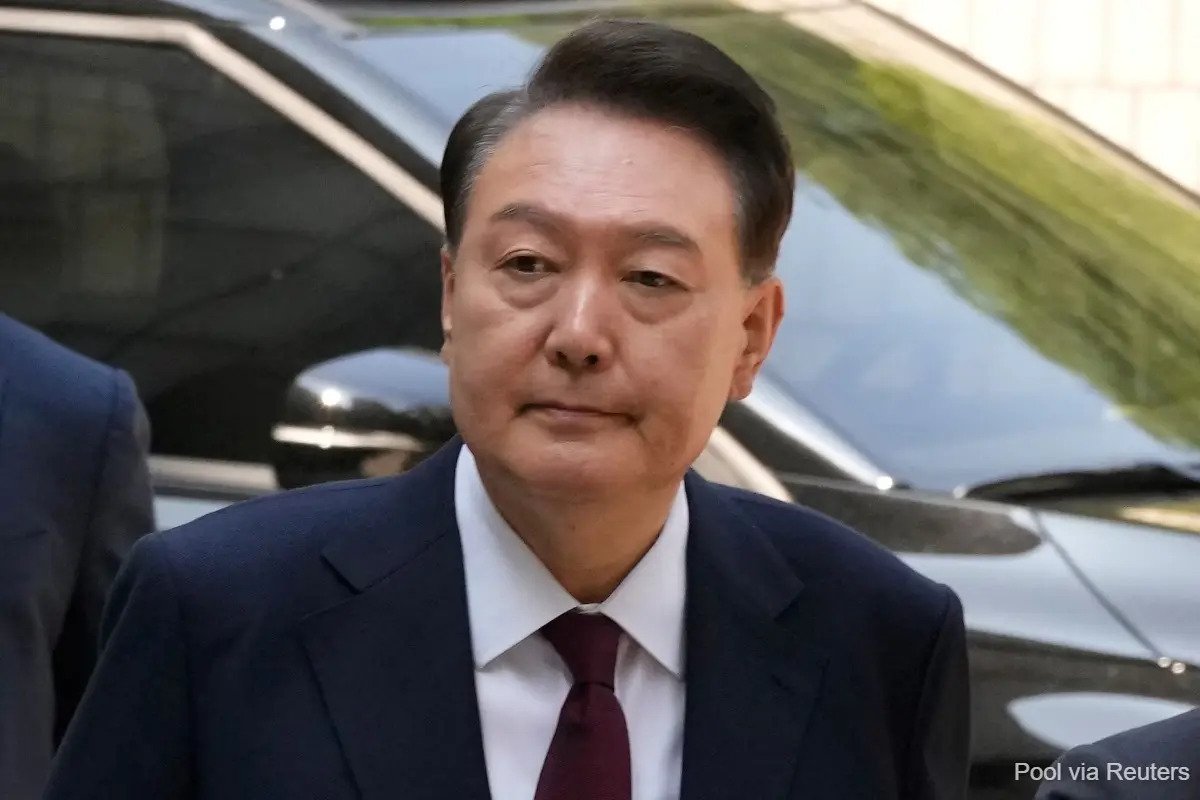
A South Korean court has sentenced former president Yoon Suk Yeol to five years in prison, marking the first judicial verdict arising from the dramatic and unprecedented events surrounding his failed declaration of martial law in December 2024. The ruling, delivered by the Seoul central district court, found Yoon guilty of mobilising presidential security forces to obstruct his own arrest, abusing his authority and falsifying official documents. It represents an extraordinary moment in the country’s modern democratic history, as a former head of state is held criminally accountable for actions taken while in office.
The conviction is separate from Yoon’s far more serious insurrection trial, which is still under way and could ultimately result in a life sentence or even the death penalty. Earlier this week, prosecutors formally demanded capital punishment in that case, with a verdict expected next month. Together, the proceedings amount to the most sweeping legal reckoning ever faced by a former South Korean president.

In Friday’s ruling, the presiding judge, Baek Dae-hyun, delivered a stinging assessment of Yoon’s conduct. He said the former president had “disregarded the constitution” and demonstrated no remorse for actions that struck at the heart of the rule of law. “The defendant deserves condemnation,” Baek said, adding that Yoon had abused the immense power of the presidency to place himself above the law. Yoon’s legal team immediately indicated that he would appeal against the sentence.
The charges stem from events that unfolded in the weeks after Yoon’s shocking late-night declaration of martial law on 3 December 2024. The announcement stunned the nation, reviving painful memories of South Korea’s authoritarian past and triggering an immediate constitutional crisis. Acting under Yoon’s orders, police units and armed troops were dispatched to the National Assembly in Seoul, with the apparent aim of preventing lawmakers from convening.
In scenes broadcast live across the country, legislators scrambled to reach the assembly building, some climbing fences to bypass security cordons. Within hours, a majority managed to enter the chamber and voted to override the martial law decree, as permitted under the constitution. After just six hours, Yoon backed down, rescinding the order in the face of overwhelming political and public resistance.
What followed was a cascade of investigations into whether the former president had attempted an insurrection. Prosecutors allege that Yoon sought to use military force to paralyse the legislature, detain political opponents and seize control of the National Election Commission, effectively dismantling democratic governance. Those allegations form the basis of the main insurrection trial, in which Yoon stands accused alongside former defence minister Kim Yong-hyun and former police commissioner Cho Ji-ho.
The five-year sentence handed down this week relates instead to Yoon’s conduct after the collapse of martial law. In January 2025, investigators from South Korea’s corruption investigation office moved to arrest him on insurrection-related charges. According to the court, Yoon refused to comply with a court-issued arrest warrant and barricaded himself inside his official residence. He ordered hundreds of Presidential Security Service officers to form human chains and vehicle barricades, effectively sealing the compound and preventing investigators from carrying out their lawful duties.
Judge Baek was unsparing in his assessment of those actions. “The defendant abused his tremendous influence as president to obstruct lawful warrant execution,” he said, describing how state security officials sworn to protect the republic were turned into what amounted to “personal troops”. Such behaviour, the court concluded, constituted special obstruction of official duties and an egregious abuse of power.
The court also examined Yoon’s actions in the hours leading up to the martial law declaration itself. Evidence showed that he had deliberately convened a late-night cabinet meeting attended only by ministers considered loyal to him, excluding nine other cabinet members who would ordinarily have been required to participate. This, the court found, was done to ensure rubber-stamp approval without meaningful debate.
Even more damning was the finding that Yoon later signed backdated documents to create the false impression that proper cabinet deliberation had taken place. Judge Baek emphasised that the constitutional requirement for state council approval exists precisely to prevent unilateral presidential action. “Emergency martial law should only be declared in the most exceptional circumstances, when no other means exist to resolve a national crisis,” he said. “The constitution specifically requires deliberation to prevent arbitrary abuse of power.”
For many South Koreans, the verdict has reinforced confidence in the resilience of the country’s democratic institutions. The rapid mobilisation of lawmakers to overturn martial law, followed by independent investigations and prosecutions, has been widely cited as evidence that the system ultimately held firm, despite the severity of the challenge it faced.
Yet the legal saga is far from over. Yoon faces seven additional criminal trials, some brought by separate special prosecutors. Among the most explosive allegations are claims that he ordered drone incursions into North Korean airspace, allegedly in an attempt to provoke a response that could be used to justify the imposition of martial law. Prosecutors argue that such actions, if proven, would represent a reckless endangerment of national security for domestic political ends.
The insurrection verdict, scheduled for 20 February, is expected to be the most consequential of all. That case centres on whether Yoon and his closest allies deliberately orchestrated the deployment of armed troops to the National Assembly with the intent of nullifying legislative authority. A conviction could see Yoon sentenced to life imprisonment or death, penalties that remain on the statute books for crimes of insurrection in South Korea.
The former president’s legal troubles extend beyond his own cases. His wife, Kim Keon Hee, is due to receive a verdict on 28 January on charges of stock manipulation and bribery. Prosecutors are seeking a 15-year prison sentence and a fine of 2bn won, or about £1m. Meanwhile, former prime minister Han Duck-soo is scheduled to be sentenced on 21 January on charges of aiding insurrection, further widening the scope of accountability stemming from the December crisis.

Together, these cases amount to an unprecedented reckoning with power in South Korea. While the country has a long history of prosecuting former leaders for corruption, the scale and gravity of the current proceedings are without parallel. They touch not only on personal wrongdoing but on the attempted subversion of constitutional order itself.
As Yoon prepares to appeal his five-year sentence and await the outcome of the insurrection trial, the nation is left to reflect on the fragility and strength of its democracy. The events of December 2024 exposed how quickly democratic norms can be threatened, even in a consolidated democracy. But the courts’ actions since then have also demonstrated the capacity of institutions to respond, assert independence and uphold the rule of law.
Whether history ultimately judges Yoon Suk Yeol as a cautionary tale of presidential overreach or as the central figure in a defining democratic crisis, one conclusion is already clear. The sentence handed down this week signals that, in South Korea, even the most powerful office offers no immunity from accountability.
Related News:
 Trump Administration Dismisses 17 Immigration Judges, Sparking Debate Over Judicial Independence
 Ministers Accused of Defamation Over Palestine Action Ban and Mass Arrests
 Father’s Tip Leads to Arrest in Charlie Kirk Murder Case
 Charlie Kirk Killing Used to Mobilise UK’s Largest Far-Right Rally in Decades
 Jailed Georgian Opposition Leaders Warn UK of Iranian Links to Ruling Party
 UK Extradition Law Change Sparks Fears Among Hong Kong Dissidents
 Shabana Mahmood Warns Border Failings Are Eroding Trust in States
 Johnson Approved China’s London ‘Super-Embassy’ in 2018
 China-critical UK academics face ‘extremely heavy’ pressure from Beijing
 Trump Urges Herzog to Grant Netanyahu Full Pardon
 US Justice Department Files Lawsuit Against California Over Partisan Voting Maps
 Trump Deploys DHS to Charlotte in Major Arrest Operation
 Congress Approves Release of Epstein Files, Trump Expected to Sign
 Texas Governor Faces Lawsuit From CAIR
 Chinese & Japanese Boats Clash Near Disputed Islands
 Putin Meets US Envoy Amid Key Ukraine Peace Talks
 Guterres Warns Global Cooperation Under Threat at UN’s 80th Year
 UK and EU Signal Fresh Push for Defence Cooperation Talks
 Emails Show Epstein Funded Mandelson’s Husband After Jail
 Thousands Protest ICE Operations in Nationwide US Day of Action
 Sydney Protest Clash Triggers Police Probe
 Queensland Protest Laws Spark Free Speech Backlash
 Report Says Pezzullo Acted ‘Recklessly’ in Dealings
 Hungary election: Orbán faces biggest test amid scandal
 Suspected Plot Targets Pipeline Before Hungary Vote
 US Court Ruling Reshapes Voting Rights Landscape
 Cartel crackdown raises fears of fresh violence
 US states redraw maps after voting rights ruling
 Judge halts deportation of Yemeni refugees in US
 Trump warns Iran as Middle East tensions surge again
 US Court Restores Abortion Pill Access Temporarily
 Trump’s Revenge Drive Deepens GOP Divide
 Former ICC prosecutor condemns US sanctions
 Gunman Killed After White House Security Shootout
 Irish Gangland Figure Fails in Dublin Election Bid
 Le Pen’s Popularity Holds Despite Conviction
 Mystery Grows Over Mitch McConnell’s Health
 UK Must Act with Courage and Clarity on Israel-Palestine Conflict, Says Foreign Affairs Committee Report
 Northern Ireland Family of Three Shot Dead in Maguiresbridge Home Incident
 Radioactive Leak at UK’s Nuclear Warhead Base Sparks Outcry Over Safety and Secrecy
 Mutual Inconvenience: Why Alaska Was Chosen for the Trump-Putin Summit on Ukraine
 Hong Kong Summons UK and Australian Envoys Following Asylum Grants to Democracy Activists
 Is the UK Ready to Put Boots on the Ground in Ukraine? Assessing Military Capacity and Challenges
 Tanni Grey-Thompson Faces Abuse Over Opposition to Assisted Dying Bill
 Channel Crossings Surge: Over 1,000 People Arrive in the UK in Small Boats in a Single Day
 Yvette Cooper Signals Global Momentum Towards Gaza Peace Deal Amid Humanitarian Crisis
 Russia’s Latest Push to Win US Favors Shows Deep Desperation
 BBC to Apologise Over Edited Trump Speech Amid Backlash
 Britain deploys RAF specialists to assist Belgium with drone threats
 Major Rent Reform Ends No-Fault Evictions in England
 Indian authorities demolish Kashmir home linked to Red Fort blast
 Greene Pushes Epstein Files Amid Trump Fallout
 December Run-Off in Chile as Election Produces No Winner
 Shadow Fleet at Sea: Europe’s Battle Against Illicit Oil Shipping
 India’s COP30 Delay Raises Global Climate Concerns
 Georgians Defy Government Crackdown After Year of Protests
 ICC to Rule on Duterte’s Provisional Release
 Australia grants Asio powers to designate hate groups under new laws
 Greenland Crisis Forces Europe to Draw a Line With Trump
 Starmer Condemns ‘Depraved’ Russian Strikes on Ukraine
 Herzog visit sparks protests across Australian cities
 Tarique Rahman’s Rise Toward Bangladesh’s Top Job
 AFP Reviews Pauline Hanson Comments
 Duterte ICC Hearing Begins Amid Defiance
 Trump Tariffs Threat Spark UK and EU Alarm
 The Dangerous Rise of Remigration Across Modern Europe
 US to offer passport services in West Bank settlements
 Iran Defiance Grows Amid US-Israel War Pressure
 Danish Election Deadlock Shakes Frederiksen’s Grip
 Pope Rebukes Leaders for War as Middle East Tensions Rise
 Army Probes Apache Flyover at Kid Rock’s Nashville Estate
 Italian Town Buys Mussolini Villa to Keep Away Fascist Fans
 Learner Driver Charged After Expo Tragedy
 Trump approval plunges amid Iran war fears
 US ‘Narco Boat’ Strikes Draw Global Outcry
 Discontent grows around Putin amid war strain
 Starmer Leadership Under Pressure After Setbacks
 Le Pen to Run for President Despite Embezzlement Conviction
 Ukraine Creates Long-Range Strike Command
 Houthis Strike Saudi Arabia as Middle East Tensions Rise