Published: 19 January 2026. The English Chronicle Desk. The English Chronicle Online.
In a historic development, Syria has announced a Syria ceasefire with the Kurdish-led Syrian Democratic Forces (SDF), marking a significant step towards national unity after years of conflict. The Syria ceasefire comes as Syrian government forces regained control over much of the north-east, previously dominated by the SDF, signaling a pivotal moment in the country’s ongoing struggle for territorial authority. This agreement represents the first major success in reasserting Damascus’s control over Raqqa and Deir el-Zour provinces while dismantling the SDF as an independent armed entity.
President Ahmad al-Sharaa, appearing at a televised signing ceremony, described the agreement as “a victory for all Syrians,” emphasizing the importance of ending divisions that have long plagued the nation. The Syria ceasefire stipulates the withdrawal of SDF forces from key territories, including oil-rich regions and strategic border crossings, and integrates their personnel into Syria’s military and security apparatus. Al-Sharaa underscored that the agreement is intended to gradually restore national unity, signaling the beginning of reconciliation after years of entrenched conflict.

SDF leader Mazloum Abdi confirmed the deal in a video statement, stressing the necessity of halting bloodshed and protecting civilians. “We will explain the terms of the agreement to our people in the coming days,” he said, acknowledging the strategic concessions the group would make in Raqqa and Deir el-Zour. His announcement followed intense confrontations in Aleppo province, where government forces advanced after initial SDF resistance. Analysts note that Abdi’s acceptance indicates the Kurdish-led faction’s recognition of Damascus’s strengthened position and the international community’s pressure for a resolution.
The Syrian defence ministry swiftly ordered a cessation of hostilities along frontlines following the deal. Observers point out that since the government’s push eastward, Damascus has largely secured critical infrastructure, including river dams along the Euphrates, oil and gas fields, and key transit points. The SDF’s role in administering these regions has now been formally curtailed, highlighting the government’s renewed strategic dominance over northern and eastern Syria.
This agreement builds upon earlier but unsuccessful attempts to integrate the SDF with Damascus after Bashar al-Assad’s ousting in December 2024. The March 2025 deal had faltered amid mutual accusations of violations, leaving Syria divided. This time, the ceasefire appears more robust, with the SDF agreeing to relinquish control over Arab-majority provinces while retaining only limited administrative authority in the Kurdish-majority Hassakah province. Notably, management of detention camps housing Islamic State fighters and their families will transfer fully to Damascus, addressing longstanding security concerns.
US involvement played a facilitative role in achieving the ceasefire, with envoy Tom Barrack meeting President al-Sharaa and participating in discussions with Abdi via phone. Barrack praised the accord as a milestone for “renewed dialogue and cooperation toward a unified Syria,” reflecting Washington’s vested interest in stabilizing the region and maintaining influence over former adversaries. Analysts suggest that US backing helped reinforce both sides’ commitment, signaling that external mediation remains crucial in Syria’s post-conflict reconstruction.
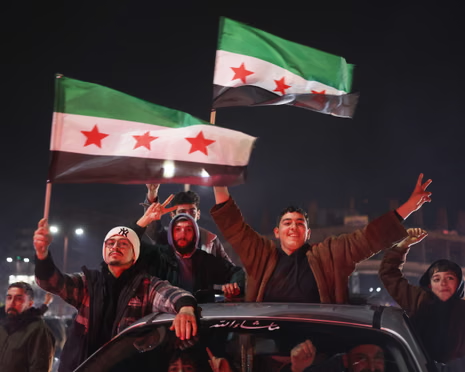
On the ground, government forces moved into Raqqa and Deir el-Zour on Sunday, where the SDF had largely withdrawn. Crowds in Raqqa celebrated the return of Syrian authority, waving national flags and setting off fireworks, capturing a moment of relief after prolonged uncertainty. Military observers report that while large convoys entered the city, the transition of administrative control, security oversight, and integration of personnel from the SDF into government structures will take place gradually, reflecting the complexity of implementing the Syria ceasefire.
The ceasefire includes provisions for senior SDF leaders to assume high-ranking roles within state institutions, offering a blend of reconciliation and strategic incorporation. Al-Sharaa highlighted that these measures would strengthen Kurdish rights while maintaining the integrity of Syrian sovereignty. Political analysts suggest that such measures could reduce future tensions, although the full impact remains contingent on consistent implementation and adherence to agreed timelines.

The Syria ceasefire holds broader regional implications, as control over Raqqa and Deir el-Zour, with their energy resources and strategic positioning along the Euphrates, strengthens Damascus’s leverage internationally. Observers note that consolidation under the Syrian government enhances its negotiating power with neighbouring countries and international actors invested in Levant stability.
Despite this progress, challenges remain. The Syrian government must navigate potential local resistance, ensure smooth integration of former SDF forces, and manage expectations among Kurdish communities, particularly in Hassakah. Analysts stress that while the Syria ceasefire marks a critical turning point, its long-term success will depend on inclusive governance, reconstruction efforts, and ongoing monitoring by domestic and international actors.
In essence, Syria has entered a new chapter where former adversaries cooperate to restore national cohesion. The Syria ceasefire symbolizes not only military and political recalibration but also a potential pathway to long-term peace. Observers view this development as a demonstration of Damascus’s ability to consolidate authority while responding to international pressure for a peaceful resolution, reaffirming the government’s strengthened role in shaping Syria’s future trajectory.
Related News:
 EU Weakens as Trump Targets Venezuela and Greenland
 Venezuela Oil Deal Opens Tensions with US Control
 US Citizens Warned to Venezuela Flee Amid Paramilitary Threats
 Gulf states warn Trump Iran strikes risk wider Middle East war
 Machado Trump medal gesture reshapes Venezuela power struggle
 Greenland defence seen as shared Nato duty amid troop arrivals
 Gulf states warn Trump Iran strikes risk wider Middle East war
 Trump Receives Machado’s Nobel Medal in White House Meeting
 Iran unrest slows under brutal crackdown and global tensions
 US Considers Asylum for British Jews Amid Rising Antisemitism
 Russia Strikes Kyiv and Kharkiv as Peace Talks Enter Day Two
 Thousands Protest ICE Operations in Nationwide US Day of Action
 Epstein Files Reveal Trump Officials’ Emails with Financier
 Thousands Protest ICE in New York Against Trump Deportation Campaign
 Sydney Protest Pepper Spray Clash During Herzog Visit
 Cuba Kills Exiles in Speedboat Attack from US Waters
 Yvette Cooper: UK Must Follow Principles, Not US Pressure
 Saudi Arabia Urging US to Keep Up Iran Attacks
 Washington Enlists Musk to Battle Global Hostility Online
 Teen Girl Charged After Alleged Melbourne Hate Crime Spree
 Macron Urges Stability as Trump Jolts Nato and Iran
 Trump Address Sparks Global Backlash Over Iran War Tactics
 Macron Rebukes Trump Following Mockery of His Marriage
 Trump Sets Tuesday Deadline for Iran to Reopen Vital Strait
 Tragic End to Outback Search as Floods Claim a Life
 Ben Roberts-Smith Arrested Over Alleged War Crimes
 Trump and Tehran Find Common Ground in Landmark Ceasefire
 Netanyahu Vows Continued Lebanon Strikes Amid Peace Talks
 Trump Predicts Rapid Return to Peace Talks in Pakistan
 Reeves Slams Trump Over Iran War Lack Of Exit Plan
 US and Iran Pursue Extension of Ceasefire via Pakistan
 Pope Leo Calls for Global Unity Following Trump Criticism
 Trump Brokers Ten Day Ceasefire to Halt Lebanon Conflict
 Mexico, Spain and Brazil call for Cuba dialogue amid crisis
 Ukraine Urges UK to Seize Russian Oil Tankers
 US Calls Australia Media Law “Foreign Extortion”
 Tragic End to Search for Missing Girl in Alice Springs
 Questions Remain Over The Tragic Bondi Massacre
 Activists allege abuse after Gaza flotilla seizure
 Ukraine strikes Tuapse as oil disaster worsens
 Global order shifts amid Trump-era turmoil
 Australia pushes Pacific security pact amid China tension
 Indiana Republicans Defy Trump in Key Vote Test
 Middle East Crisis Escalates as Oil Routes Shake Markets
 FIFA Confirms Global Ban for Benfica Star Prestianni
 New South Wales Wetland Rescue Legislation Passes
 Tensions Emerge in Netanyahu-Trump Alliance
 Putin Declares Russia Victory at Scaled Victory Day Parade
 US and Mexico Face Heatwave as Floods Batter South Africa
 The Long Way Home: Australia’s High-Stakes Virus Mission
 Trump Warns Iran Ceasefire Is Now on Life Support
 Putin Signals War End as Russian Momentum Stalls
 Scepticism and tight security as Beijing braces for Trump
 UN Faces Crucial Vote on Landmark ICJ Climate Ruling
 US-Mexico Crisis: Cartel Allegations Push Ties to Brink
 Netanyahu Calls Early Election Amid Coalition Turmoil
 Philippine Senator Flees After Days Under Senate Siege
 Solomon Islands Elects China Critic Matthew Wale as Leader
 Tragedy in the Maldives: Inside the Deep Sea Rescue
 US Ebola Case Sparks Urgent Global Screening Measures
 Xi Hosts Putin in Beijing Days After Landmark Trump Summit
 Fragile Truce Shattered as Violence Escapes Diplomatic Control
 The Hunt for Bato: Inside the Hunt for the Fugitive Senator
 Israeli Strikes in Lebanon Kill 10 Amid Ceasefire Strain
 Zelenskyy warns over Oreshnik threat as Kyiv hit
 Hunger increasingly weaponised in global conflicts
 Discontent grows around Putin amid war strain
 Former ICC prosecutor condemns US sanctions
 Bondi Tragedy Survivors Face Online Abuse After Inquiries
 Japan Suffers Plastic Shortage Due to Middle East Crisis
 Venezuela Opposition Steers Uncharted Path Forward
 Aukus Deal Facing Fierce Backing and Historic Criticism
 Thai Princess Bajrakitiyabha Passes Away at 47
 Sentenced to 30 Years: Former Leader’s Secret Drone Plot
 Kyiv Heritage Blazes After Night of Brutal Russian Strikes
 Iran To Propose New Shipping Fees In Strait Of Hormuz
 Trump’s Iran Legacy Hangs on Tehran Deal
 High Drama in Tehran Over Secret Nuclear Letters
 Houthis Strike Saudi Arabia as Middle East Tensions Rise
 Taliban global ties grow as rights fears mount