Published: 06 February 2026. The English Chronicle Desk. The English Chronicle Online.
New scientific evidence suggests that baby rhythm perception begins from the very first days of life. Researchers have found that newborn infants can detect and anticipate rhythmic patterns in music while asleep. The discovery adds strong support to the idea that baby rhythm ability is deeply rooted in human biology rather than learned later. The study, conducted by an international research team, shows that even before meaningful interaction with the outside world, the infant brain is already structured to recognise timing patterns in sound. This early baby rhythm sensitivity may also play a key role in how humans later develop language and communication skills.
The research focused on how newborn brains respond to structured musical sequences compared with altered versions. Scientists wanted to understand whether very young brains process both melody and rhythm equally, or whether one element comes first. Their findings show a clear difference. Newborns responded strongly to rhythmic surprises but showed little reaction to melodic changes. That pattern indicates that baby rhythm detection operates at a more fundamental neurological level during early development.

The project was led by Dr Roberta Bianco at the Italian Institute of Technology in Rome. She explained that babies already react to sound patterns during late pregnancy. Earlier medical observations showed that fetuses respond to music with changes in movement and heart rate. Those reactions usually begin around the eighth or ninth month of pregnancy. However, scientists did not previously know how deeply structured musical elements were processed at birth.
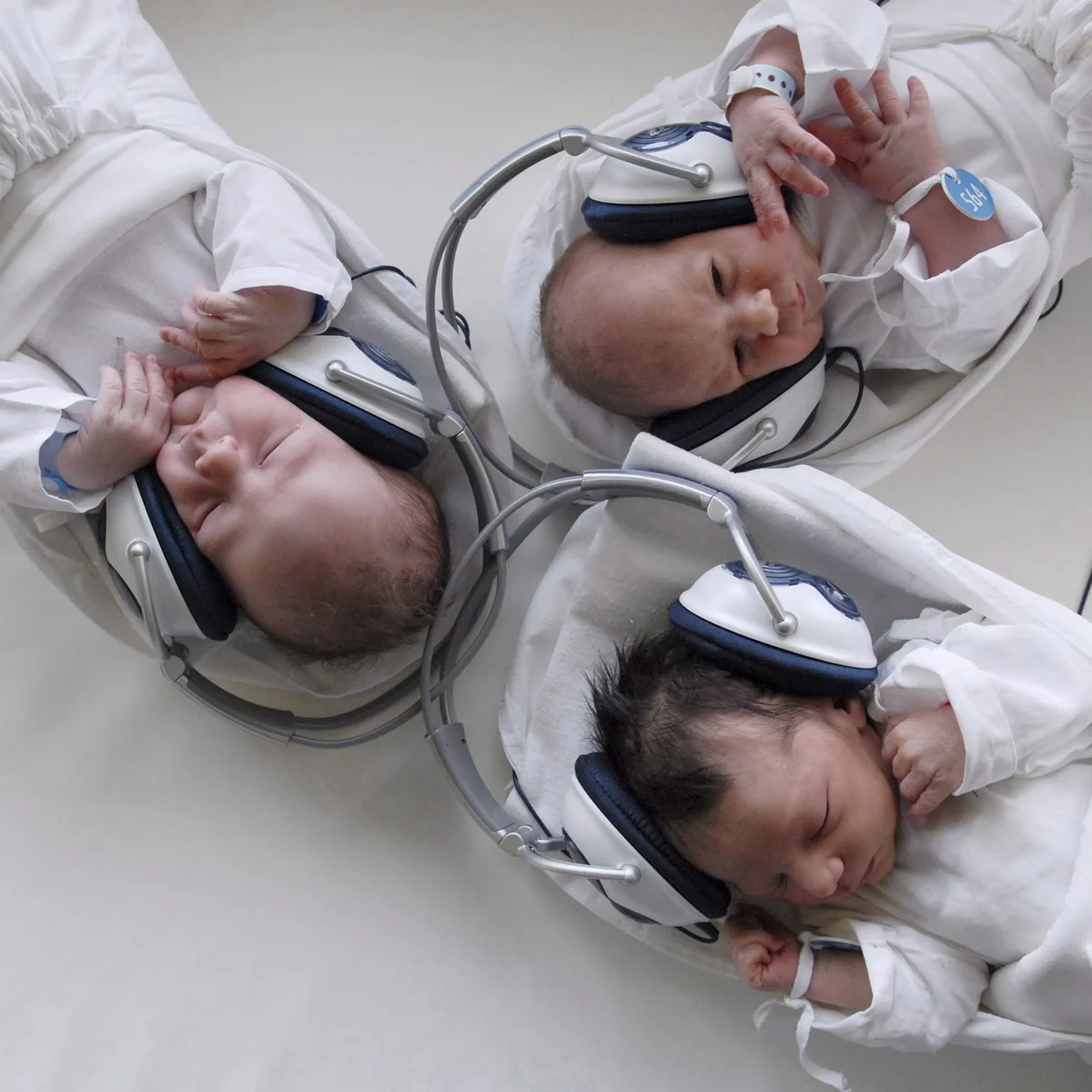
To investigate this question, the team recorded brain activity from sleeping newborns using electroencephalography, also known as EEG. This method tracks electrical signals produced by brain cells and reveals how the brain responds to sensory input. The infants wore small earphones and listened to carefully selected musical pieces. The selections included original works by Bach along with modified versions where timing or pitch order was rearranged.
The researchers then used advanced computer modelling to measure how predictable each musical note was within its sequence. Some notes followed expected rhythmic patterns, while others were intentionally placed to sound surprising. By comparing the EEG signals with these calculated surprises, scientists could see whether infant brains were forming expectations. The results showed a consistent neural response when rhythmic expectations were broken in the original compositions.
That response did not appear when melody alone was disrupted. Nor did it appear when both pitch and timing were randomly shuffled. When structure disappeared, prediction signals disappeared too. This difference strongly suggests that newborn brains are tuned to rhythmic order but not yet to melodic structure. In simple terms, baby rhythm prediction works, while melody recognition develops later through exposure and learning.
Dr Bianco noted that rhythm appears to rely on very ancient auditory mechanisms shared with other primates. Earlier animal studies showed that macaque monkeys also display stronger rhythmic sensitivity than melodic sensitivity. This evolutionary link supports the theory that rhythm processing predates complex musical systems. Melody, by contrast, likely depends on specialised human brain networks shaped after birth through culture and experience.
She described rhythm as part of humanity’s built-in sensory equipment. Melody, she suggested, is something people grow into over time. This may explain why rhythmic patterns often feel universal across cultures, while melodies vary widely between musical traditions. The baby rhythm response therefore may represent one of the earliest shared foundations of human listening behaviour.
Another interesting aspect involves the prenatal sound environment. Before birth, the fetus is surrounded by repeating internal and external rhythms. The mother’s heartbeat provides a steady pulse. Walking produces regular motion patterns. Breathing and blood flow add layered timing cues. These repeating signals may help organise early neural timing systems. By the time of birth, the brain may already expect patterned sound sequences.
The study included brain recordings from forty-nine newborn infants. All recordings were taken while the babies slept naturally. This approach helped ensure that measured responses were automatic rather than influenced by attention or movement. The presence of predictive signals during sleep strengthens the biological interpretation. It shows that rhythm tracking does not require conscious focus or training.
External experts welcomed the research while also pointing to future questions. Dr Giovanni Di Liberto of Trinity College Dublin praised the technical design and modelling methods. He noted that prenatal musical exposure was not fully measured in this group. Some mothers may have played music frequently during pregnancy. That factor could influence early neural responses. Future studies may track prenatal listening habits more closely.
Even with that limitation, the findings remain important for developmental science. They support growing evidence that timing perception underlies both music and language acquisition. Speech contains rhythmic patterns in syllables, stress, and pauses. Infants must learn these timing cues to separate words and phrases. Strong baby rhythm sensitivity could therefore support early speech processing and later reading ability.
Professor Usha Goswami of the University of Cambridge said the conclusions align with long-running language development research. Her work has shown that children’s speech perception differences are often linked to rhythm detection rather than pitch detection. The new newborn evidence fits that framework well. It suggests rhythm processing begins at the very start of life rather than emerging later.
The researchers also observed that melody may be harder to perceive before birth because of sound filtering effects. The womb environment reduces pitch clarity but preserves timing patterns more effectively. That means rhythmic structure reaches the fetal ear more reliably than melodic detail. This physical filtering may further strengthen early baby rhythm learning while delaying melodic encoding.
Beyond music, the discovery may influence how specialists design early developmental support. Gentle rhythmic sound patterns could help regulate infant states or support bonding routines. Lullabies, rocking, and heartbeat-like sounds already appear across cultures. Science now offers stronger neurological reasons for their calming effects. Predictable timing may match built-in expectations within the newborn brain.

Researchers emphasise that the work does not claim babies understand music in an adult sense. Instead, it shows that predictive timing mechanisms are already active. These mechanisms allow the brain to anticipate what comes next in a sequence. Prediction reduces uncertainty and supports faster learning. Rhythm provides a simple and reliable structure for that early prediction system.
Future investigations will likely examine how early baby rhythm sensitivity changes over the first year. Scientists want to know when melodic prediction begins and how musical exposure shapes that shift. Long-term tracking could also explore links between early rhythm responses and later language outcomes. Such connections could open new screening tools for developmental differences.
For now, the evidence paints a clear picture of a brain ready for rhythm from day one. The newborn mind appears prepared to detect timing patterns before it learns words or songs. That readiness highlights how deeply structured sound is woven into human biology. Music may feel cultural, but rhythm seems fundamentally human.
Related News:
 How Bringing Forests Into Preschools Boosts Children’s Health
 UK Water Firms Ordered to Act Over ‘Forever Chemicals’ Threat
 Experts Urge Legal Right to Timely Cancer Care
 Patients to Test Health at Home to Ease NHS Winter Pressure
 North Sea oil workers must lose weight or face job loss
 No link found between paracetamol in pregnancy and autism
 NHS frontline staff forced to cover gaps as managers remain scarce
 New Research Explains Severe Diabetes in Children
 Working-Class Men with Prostate Cancer Left Behind by NHS
 New AI tool could cut wasted efforts in organ transplants
 From Baby Teeth to Bioengineering: The Future of Self-Healing Teeth
 Healthy Habits in Your 30s That Boost Life in Your 70s
 Coffins Now Too Large to Cremate Amid Rising Obesity Crisis
 Thinktank Urges Smaller Hospitals to End NHS ‘Permacrisis’
 NHS paediatric leave parents waiting months for answers
 Google Removes Some AI Health Summaries Over Safety Concerns
 AI Transforms Lung Cancer Detection in NHS Trial
 Genes May Hold the Secret to Long Life, Scientists Find
 AI breast screening cuts later cancer diagnoses by 12%, study finds
 Autistic Girls Often Missed in Childhood Diagnoses, Study Finds
 AI Tools Used by English Councils Found to Downplay Women’s Health Issues, Raising Concerns Over Gender Bias in Care
 Shocking Rise in Children’s Exposure to Violent Online Pornography Raises Alarm
 British Pilot Joins Crew Training for Year-Long Mars Simulation Mission
 Eligibility Confusion Over COVID Vaccination Leaves Pharmacies Struggling Across the UK
 Genetic Tests May Predict Return of Blood Cancer
 Hospice Cuts Raise Alarm Across England Amid Funding Crisis
 Virgin Trains Moves Closer to Challenging Eurostar Monopoly
 Celebrities and Charities Demand UK Government Act on Child Poverty
 UK Bans Fake Numbers: Scammers Lose Their Trick
 Vibe coding’ named Collins dictionary’s word of the year
 London’s Childlessness Crisis: Schools Closing as Families Shrink
 Britain deploys RAF specialists to assist Belgium with drone threats
 Shouting Works Best to Deter Gulls, UK Study Finds
 Reeves rejects £1bn plea for NHS redundancy payouts
 Stop using ChatGPT to write speeches, AI minister tells MPs
 Northern Lights may illuminate UK skies this week
 New laws to bolster UK’s defences against cyber attacks on NHS, transport and energy
 Hitler’s DNA Confirms He Truly Had Only One Testicle
 Senator John Fetterman Hospitalized After Fall from Heart Flare-Up, Keeps Sense of Humor
 How Cultures Interpreted the Aurora Through History
 Stroke Patient Mistaken for Drunk, Care Delayed
 Sundar Pichai Cautions on AI Hype and Market Risks
 Google Chief Urges Caution: Don’t Trust AI Blindly
 ‘Traumatic Wait’: Northern Ireland Women Face Breast Cancer Delays
 US Judge Says Meta Did Not Hold Illegal Social Media Monopoly
 Scottish Families Take Legal Action Over School CO Leak
 Vicki Fears Losing Motability Car
 Delhi’s Toxic Air Crisis Leaves Children Sick and Vulnerable
 Five-Year-Old Dies After Rare Tonsil Surgery Complication
 Fibromyalgia Patients Struggle as NHS Fails to Provide Care
 AI Actress Creator Says Tilly Norwood Won’t Replace Actors
 More Patients Now Contacting GPs Online, Data Shows
 Kenya Signs $2.5bn Health Deal with US Amid Data Concerns
 Damien Martyn in Induced Coma After Meningitis Diagnosis
 Minor A&E Visits Surge Across England as Hospitals Face Pressure
 Children to Receive Home Vaccines as England Acts
 Childhood Hypertension Sparks Urgent UK Testing Calls
 AI Grok Sparks Child Safety Alarm in the UK
 Offenders to Receive Health Support During Probation Appointments
 NHS Violence Crisis: Staff Face Daily Assaults
 Celebrity Campaign Highlights SMA Screening Failures
 US Clears Nvidia AI Chip Sales to China in Policy Shift
 Amazon Milton Keynes closure sparks concern for UK warehouse workforce
 Astronomers Prepare for First-Ever Movie of a Black Hole
 Robo-Vaccination Could Transform Fight Against Bovine TB
 MPs warn AI financial risks threaten UK stability
 MPs warn AI financial risks threaten UK stability
 UK Glaucoma Rise Signals Looming Eye Health Crisis by 2060
 UK ADHD medication use triples over 13 years, landmark study finds
 Reform UK Health Plan ‘Would Cost £1.7bn’, Streeting Says
 NHS boosts bowel screening accuracy with FIT reform
 Nottingham survivor warns of repeat attacks without mental health reform
 Pornhub blocks new UK users over age checks dispute
 Amazon mistakenly signals new global layoffs to employees
 UK Launches First Rapid-Charging Battery Train This Weekend
 UK New Car Discounts Near £6,000 as Prices Are Slashed
 Study Finds One in Seven England Takeaways Are Dark Kitchens
 Deadly Cancer Postcode Lottery Limits NHS Care
 James Valentine Retires from ABC After Cancer Battle
 Pneumonia Surge Pushes England Emergency Cases Higher