Published: 19 February 2026. The English Chronicle Desk. The English Chronicle Online.
The Canberra poster seizure has ignited fierce debate about free speech and hate laws. Police confiscated protest artworks from a popular city bar, triggering political outrage. The incident unfolded in the heart of Australia’s capital and drew swift national attention. Authorities are now examining whether recently introduced hate symbol legislation was breached. Meanwhile, the venue’s owner insists the images were clearly anti-fascist statements.
The controversy centres on five posters displayed at Dissent Cafe and Bar in Canberra’s CBD. The artworks depicted global leaders wearing Nazi-style uniforms in provocative compositions. Among those portrayed were US President Donald Trump and Israeli Prime Minister Benjamin Netanyahu. Russian President Vladimir Putin was also shown in the same manner. Tech billionaire Elon Musk appeared in similar imagery, according to reports.
The posters were created by the protest collective Grow Up Art. They were positioned prominently in the bar’s front windows. On Wednesday evening, three officers attended the venue following a complaint. Around twenty patrons were inside when police arrived shortly after 7pm. The Canberra poster seizure followed a brief but tense exchange between officers and staff.
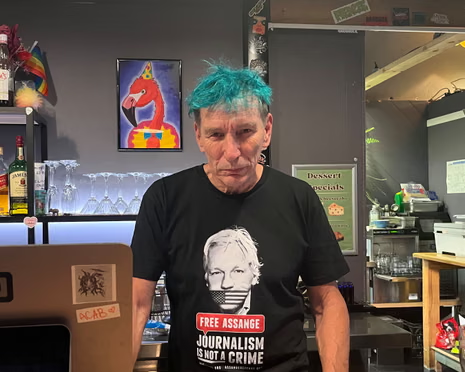
David Howe, the venue’s owner, said he was stunned by events. He described the artworks as a clear anti-fascist statement. Howe argued that the intention was to criticise authoritarianism worldwide. He also said the police action forced cancellation of a touring band’s performance. The bar was effectively shut for nearly two hours.

Police later confirmed the premises had been declared a crime scene. The five posters were removed for further examination. Officers said they were investigating possible breaches of federal hate symbol laws. The Canberra poster seizure marked the first such complaint under new legislation in the territory.
These laws were introduced earlier this year after the tragic Bondi Junction stabbings. Lawmakers moved swiftly to criminalise the public display of hate symbols. However, exemptions exist for artistic, academic, and educational contexts. Such displays must not run contrary to the public interest.
The interpretation of that exemption now sits at the centre of debate. Howe insists the images were clearly protest art. He said officers did not explicitly request that he remove the posters. Police maintain they sought voluntary compliance before seizing the material.
By Thursday afternoon, the artworks had reappeared in the windows. Their images were obscured with the word “CENSORED” in bold red lettering. Howe said he wanted patrons to understand what had happened. He maintained that the Canberra poster seizure represented unnecessary overreach.
Political figures quickly entered the discussion. ACT police minister Marisa Paterson acknowledged community concern over the shutdown. She said she was seeking further clarification about the circumstances. Her office stressed the importance of balancing safety with civil liberties.
Independent ACT MLA Thomas Emerson described the episode as troubling. He questioned why artistic exemptions were not clearly applied. Emerson warned that suppressing expression could deepen social division. He emphasised the need for proportionate enforcement.
Federal ACT senator David Pocock also weighed in. He described art as a legitimate vehicle for political dissent. Pocock urged authorities to protect communities from hate while respecting peaceful protest. His comments reflected growing unease among civil society groups.
Greens justice spokesperson David Shoebridge criticised the federal framework more sharply. He argued that the laws were being misapplied. Shoebridge claimed the measures risked silencing anti-fascist activism. His remarks intensified the political temperature around the Canberra poster seizure.
Community reaction in Canberra has been divided. Some residents believe the imagery was deeply offensive. Others argue that confronting depictions are often central to protest art. Social media discussions have been heated yet largely peaceful.
Legal experts note that context is crucial under the legislation. Courts would need to consider artistic purpose and public interest carefully. The threshold for criminal liability remains high. No charges have yet been announced in relation to the Canberra poster seizure.
Free expression advocates warn that ambiguity may chill political creativity. They argue that artists could self-censor to avoid legal scrutiny. Conversely, Jewish community representatives stress vigilance against antisemitic symbolism. They emphasise the trauma associated with Nazi imagery.
The bar itself has long hosted alternative music and activism. Dissent Cafe and Bar is known locally for progressive events. Regular patrons describe it as a hub for debate and performance. The sudden police presence therefore felt jarring to many attendees.

Observers note that democracies often struggle with symbolic speech. Images can shock, provoke, and disturb by design. Legislators must weigh harm against the value of open criticism. The Canberra poster seizure illustrates that delicate balance vividly.
Howe has reiterated that his intent was never to promote hate. He said the posters condemned fascism rather than endorsed it. He believes the temporary closure harmed his small business unnecessarily. Nevertheless, he says he will continue supporting artistic activism.
Police have stated they remain committed to addressing hate incidents promptly. They emphasise that investigations are conducted thoroughly and fairly. Officers say they will act when criminality is identified. At present, inquiries remain ongoing.
The outcome may set an important precedent for the territory. Future cases could hinge on how authorities interpret artistic exemption clauses. Lawmakers may face calls to clarify wording if confusion persists. The Canberra poster seizure has therefore become a national talking point.
For many in the UK observing from afar, the episode resonates strongly. Britain has its own complex history of regulating extremist symbols. The tension between protecting communities and defending expression feels familiar. As Australia navigates its new legal landscape, global attention remains fixed.
Ultimately, the debate extends beyond one Canberra bar. It touches on how democracies respond to provocative political art. The Canberra poster seizure underscores the enduring challenge of drawing clear legal lines. Whatever the investigation concludes, discussion about freedom and responsibility will continue.
Related News:
 British Woman in Iran ‘Losing Hope’ Amid Ongoing Detention
 BBC to Apologise Over Edited Trump Speech Amid Backlash
 Britain deploys RAF specialists to assist Belgium with drone threats
 US Justice Department Files Lawsuit Against California Over Partisan Voting Maps
 Greene Pushes Epstein Files Amid Trump Fallout
 Trump Deploys DHS to Charlotte in Major Arrest Operation
 December Run-Off in Chile as Election Produces No Winner
 Canada Passes Carney’s First Budget in Tight Parliamentary Vote
 Shadow Fleet at Sea: Europe’s Battle Against Illicit Oil Shipping
 Pentagon Officials in Ukraine to Discuss War End
 Venezuela Threatens Nobel Winner Machado with Fugitive Status
 Georgians Defy Government Crackdown After Year of Protests
 India’s Labour Law Overhaul Sparks Fierce Debate
 EU plans $105bn Ukraine aid using frozen Russian assets
 Global campaign launched to free Palestinian leader Barghouti
 Trump Policies Boost China’s Global Rise, Survey Finds
 Iran unrest slows under brutal crackdown and global tensions
 Pentagon Signals Reduced Role in Deterring North Korea
 Thousands Protest ICE Operations in Nationwide US Day of Action
 Epstein Files Reveal Trump Officials’ Emails with Financier
 Starmer Condemns ‘Depraved’ Russian Strikes on Ukraine
 Herzog visit sparks protests across Australian cities
 UK and US Drop in Global Corruption Index Rankings
 Sydney Protest Escalates and Elderly Woman Suffers Severe Injury
 Tarique Rahman’s Rise Toward Bangladesh’s Top Job
 Glass Cliff Debate After Ley’s Ouster
 AFP Reviews Pauline Hanson Comments
 Duterte ICC Hearing Begins Amid Defiance
 Trump Tariffs Threat Spark UK and EU Alarm
 Difficult Grace Tame Label Ignites Fury and Debate Down Under
 The Dangerous Rise of Remigration Across Modern Europe
 Trump’s Marathon Speech Fails to Mask a Growing National Disconnect
 US to offer passport services in West Bank settlements
 Clinton Testimony Erupts in Fiery Exchange
 Health Funding Row Rocks US‑Africa Relations
 New UK-EU Reset Faces Criticism from Parliament
 Cuba charges six exiles for terrorism after speedboat raid
 US and Ecuadorian Forces Strike Drug Cartels Together
 Mojtaba Khamenei Chosen as Iran’s New Supreme Leader
 Mojtaba Khamenei Supporters Rally as Iranians Fear Repression
 Iran Defiance Grows Amid US-Israel War Pressure
 US Strikes on Iran Set for Most Intense Day Yet
 Iran Nuclear Stockpile Sparks US Special Forces Debate
 Queensland Protest Ban Sparks First Arrests
 China’s Ethnic Unity Law Set to Reshape Minority Schools
 Moscow Internet Blackouts Raise Censorship Fears
 Republicans Rebuke FCC Threat Over Iran War Coverage
 Oil Prices Surge as IEA Weighs Emergency Release
 Trump Nato threats expose Iran strategy vacuum
 UK Minister Denies Iran Missile Threat to Britain
 Danish Election Deadlock Shakes Frederiksen’s Grip
 Trump to Visit China in May After Iran War Delay
 Pope Rebukes Leaders for War as Middle East Tensions Rise
 Trump to Deploy “God Squad” Over Gulf Wildlife Protections
 Army Probes Apache Flyover at Kid Rock’s Nashville Estate
 Italian Town Buys Mussolini Villa to Keep Away Fascist Fans
 Report Says Pezzullo Acted ‘Recklessly’ in Dealings
 Trump Employs Nixon’s Madman Theory Amid Iran Crisis
 Trump Voices Frustration Over Nato Role in Iran Conflict
 Hungary election: Orbán faces biggest test amid scandal
 Suspected Plot Targets Pipeline Before Hungary Vote
 Trump Slams UK Ties and Threatens To Rewrite Trade Deal
 Capitalism ‘Suicidal’, Warns Petro at Climate Summit
 Judge halts deportation of Yemeni refugees in US
 Trump approval plunges amid Iran war fears
 Ohio’s Battle for Trust: Democrats Vying to Flip the Buckeye State
 US ‘Narco Boat’ Strikes Draw Global Outcry
 Afghan Families Left in Limbo Face Risk of Deportation
 Tensions Emerge in Netanyahu-Trump Alliance
 US Awaits Iran Reply on New Ceasefire Proposal
 Hormuz Talks Near Critical Stage
 Discontent grows around Putin amid war strain
 Starmer Leadership Under Pressure After Setbacks
 House Curbs Trump’s War Powers in Rare Rebellion
 Germany Summons Chinese Envoy Over Russian Troop Training
 New South Wales Premier Chris Minns Signals Tough Road Ahead for Labor
 Le Pen to Run for President Despite Embezzlement Conviction
 Ukraine Creates Long-Range Strike Command
 Le Pen’s Popularity Holds Despite Conviction
 Houthis Strike Saudi Arabia as Middle East Tensions Rise