Published: 24 February 2026. The English Chronicle Desk. The English Chronicle Online.
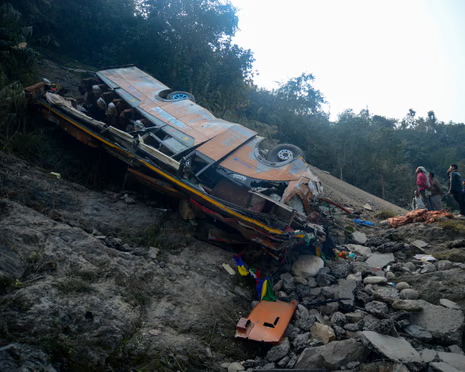
The tragic Nepal bus crash claimed the life of a young British trekker as dozens of passengers were thrown into chaos on a remote mountain highway. In the early hours of Monday morning, a crowded coach travelling from Pokhara to Kathmandu lost control on the narrow Prithvi Highway and plunged down a steep embankment beside the Trishuli River. The devastating Nepal bus crash occurred at Behighat in Dhading district, leaving emergency services scrambling to rescue survivors and recover victims from the wreckage.
Among the 44 people aboard the vehicle was Dominic Ethan, a 24‑year‑old British national from Exeter who had recently completed the famed Annapurna Circuit trek. Dominic’s family described him as a very loving and caring young man who had found great joy in exploring Nepal’s majestic trails and celebrating life among fellow hikers. His untimely death has sparked an outpouring of tributes from friends and fellow travellers remembering his adventurous spirit and warm heart.

Nepali police confirmed that 19 people died in the crash, with 25 others suffering injuries and being transported to hospitals in Kathmandu for treatment. Officials said the bus fell more than 200 metres down the mountainside after losing traction on the treacherous roadway, leaving wreckage scattered amid rocks and debris where rescuers scrambled to reach the injured. The Nepal bus crash highlighted the extreme risks associated with travelling along the country’s steep, winding mountain roads, which are often poorly maintained and overcrowded.
The local Foreign Office expressed support for Dominic’s family and confirmed that UK officials are in contact with Nepalese authorities as efforts continue to assist relatives and clarify details of the tragedy. Many of those injured included foreign visitors alongside Nepalese nationals, a stark reminder of the international reach of the incident and the dangers tourists can face on Himalayan highways.
Rescue operations through the night were challenging due to the remote location, rugged terrain, and limited access to heavy equipment, compounding the difficulties faced by emergency crews. Local police and security forces worked through steep slopes to extract injured travellers and support survivors amidst fading light and harsh conditions. The Nepal bus crash again underscores how limited infrastructure can worsen outcomes during disasters in mountainous regions.
Nepal’s mountainous terrain and winding highways have long posed threats to road safety, and the stretch of road where the crash occurred is notorious for its sharp twists, steep slopes, and limited safety barriers. Villagers and passing motorists often speak of narrow ledges and unstable ground at the edge of the highway, conditions that make even routine travel hazardous by day, let alone under the cloak of darkness.
This latest tragedy has reignited debate around road safety for both locals and tourists traversing the country’s mountainous arteries. Transport experts and advocacy groups have expressed concerns that ageing vehicles, lack of modern safety infrastructure, and inadequate enforcement of regulations all contribute to a persistent cycle of deadly accidents. The road between Pokhara and Kathmandu is particularly busy, connecting Nepal’s scenic tourist hubs while cutting through steep, unforgiving landscapes that leave little margin for error.
Officials have already formed a five‑member task force to investigate the cause of the disaster, including factors such as road conditions, vehicle maintenance, and potential human error. Nepal’s Ministry of Home Affairs convened emergency discussions to explore how to prevent similar incidents in the future and to recommend safety enhancements along key transport routes. Investigators are now analysing details from the Nepal bus crash to determine what combination of factors caused the tragedy and how similar incidents might be avoided.
Eyewitnesses and residents familiar with the region spoke of the narrow highway as a constant risk. Even minor miscalculations by drivers can result in disaster on its blind turns and precipitous drops. The rush of water in the Trishuli River below adds to the peril for vehicles that stray from the road, with little more than sheer drop separating passengers from deep, fast-moving waters.

Friends and acquaintances of Dominic have taken to social media to share their memories of his kindness and enthusiasm for travel. Many have recalled his laughter and willingness to take on Nepal’s challenging treks, with some reflecting on the joy he found in connecting with people from diverse cultures during his journeys. The loss of such a vibrant young life has resonated deeply among those who knew him, and tributes have highlighted his adventurous soul and generous nature.
Amid the grief, there has been a call from some quarters for travellers and governments alike to place greater emphasis on safety advisories and infrastructure improvements, recognising that while exploration and adventure are core aspects of travel, they must always be supported by robust measures that protect lives. Stories like Dominic’s have reminded many that while Nepal’s landscapes draw visitors from all over the world, there are still serious challenges on its roads that demand urgent attention.
Uninjured survivors are slowly recovering in hospitals, with medical staff tending to those with broken bones, bruises, and shock. Some have begun sharing their accounts of the terrifying moments before the bus descended the embankment, describing the sudden tilt, the scream of metal, and the blur of lights as passengers braced for impact. Their testimonies contribute to a growing body of evidence being examined by investigators to establish a clear sequence of events that led to this tragic crash.
As families of the victims await further information about repatriation, funerals, and ongoing investigations, the community of trekkers and travel enthusiasts has united in a collective moment of reflection. The memory of a young British trekker, whose life was defined by a love for the outdoors and a thirst for adventure, now stands as a poignant reminder of both the wonders and the fragilities of life on the road.
Related News:
 BBC to Apologise Over Edited Trump Speech Amid Backlash
 Britain deploys RAF specialists to assist Belgium with drone threats
 Palace May Restore Hyphen to Andrew Mountbatten-Windsor’s Name
 Greene Pushes Epstein Files Amid Trump Fallout
 December Run-Off in Chile as Election Produces No Winner
 Zelenskyy Signs Fighter Jet Deal Amid Russian Drone Attacks
 Canada Passes Carney’s First Budget in Tight Parliamentary Vote
 Shadow Fleet at Sea: Europe’s Battle Against Illicit Oil Shipping
 Tiny Curacao Makes History as Smallest Nation to Reach World Cup
 Deadly Russian Strikes Hit Western Ukraine, 20 Killed in Ternopil
 Ukraine Peace Plan: Zelensky Ready for Dialogue
 Royal Navy Shadows Russian Warships Entering the Channel
 US Suspends Afghan Immigration After White House Shooting
 Georgians Defy Government Crackdown After Year of Protests
 ‘Extinct’ Antelope Returns to Sahara, Bringing Hope
 American Mother Extradited From UK to U.S. on Murder Charges
 Irish Beach Tragedy: Irish Drown at Whitehaven Beach in Australia
 Sanctioned oil tankers sail Channel amid Russia scrutiny
 US and UK Withdraw Personnel as Middle East Tensions Rise
 Half the World’s Largest Cities Face Rising Water Stress
 Pentagon Signals Reduced Role in Deterring North Korea
 UK and US Drop in Global Corruption Index Rankings
 SA Police Intensify Search in Gus Lamont Case
 Canberra Poster Seizure Sparks Free Speech Row
 Evo Morales Returns After Mysterious Absence
 El Mencho Killed as Mexico Faces Violence
 Australian Women in Syrian Camp Offer Separation Deal
 The Dangerous Rise of Remigration Across Modern Europe
 US to offer passport services in West Bank settlements
 Seeking Truth: The Vital Battle for Honest Journalism
 Iranian Australian community divided after vigils
 UK Rescue Flight Delayed Amid Middle East War
 Seventh US Service Member Killed in Iran Conflict Identified
 Iran Defiance Grows Amid US-Israel War Pressure
 US Missile Strike on Iran School Sparks Global Shock
 Canada Plasma Deaths Raise Safety Concerns After Two Donors Die
 US Attack on IRIS Dena Shocks Indian Ocean Security
 Australian Petrol Crisis Deepens as Local Stations Run Dry
 Gulf Tensions Rise as Iran Alleges Covert Support
 Oil Slides, Stocks Jump on Trump Peace Signals
 Danish Election Deadlock Shakes Frederiksen’s Grip
 Bondi terror attack linked to global rise in IS plots
 Pope Rebukes Leaders for War as Middle East Tensions Rise
 Army Probes Apache Flyover at Kid Rock’s Nashville Estate
 Iran Drone Strike Hits Kuwaiti Oil Tanker in Dubai Port
 Artemis II: Humanity Returns to the Moon After Decades
 Nuns of Schloss Goldenstein Move Closer to Staying Home
 Italian Town Buys Mussolini Villa to Keep Away Fascist Fans
 Report Says Pezzullo Acted ‘Recklessly’ in Dealings
 Trump and Tehran Find Common Ground in Landmark Ceasefire
 Trump Employs Nixon’s Madman Theory Amid Iran Crisis
 Singapore Pledges Stable Fuel Supply for Australia
 Suspected Plot Targets Pipeline Before Hungary Vote
 Reeves Slams Trump Over Iran War Lack Of Exit Plan
 Learner Driver Charged After Expo Tragedy
 Coalition pushes fossil fuel phaseout plan
 Trump approval plunges amid Iran war fears
 Ohio’s Battle for Trust: Democrats Vying to Flip the Buckeye State
 US ‘Narco Boat’ Strikes Draw Global Outcry
 FIFA Confirms Global Ban for Benfica Star Prestianni
 US Awaits Iran Reply on New Ceasefire Proposal
 US and Mexico Face Heatwave as Floods Batter South Africa
 Putin Signals War End as Russian Momentum Stalls
 Australia Welcomes the Iconic Michelin Guide
 Scepticism and tight security as Beijing braces for Trump
 Philippine Senator Flees After Days Under Senate Siege
 Tensions Flare as Israeli Nationalists March in Jerusalem
 High Street Crisis: Fears Grow Over Post Office Closures
 Xi Hosts Putin for Talks Right After Trump Visit
 Oil Markets Face ‘Red Zone’ Threat Amid Iran Crisis
 Pope Meets Families in Italy Toxic Waste Zone
 Discontent grows around Putin amid war strain
 US Strikes Iranian Sites Amid Shaky Ceasefire Talks
 Starmer Leadership Under Pressure After Setbacks
 Papal Visit Offers Political Lifeline to Spanish Premier
 Aukus Deal Facing Fierce Backing and Historic Criticism
 Thai Princess Bajrakitiyabha Passes Away at 47
 Le Pen to Run for President Despite Embezzlement Conviction
 Ukraine Creates Long-Range Strike Command
 Houthis Strike Saudi Arabia as Middle East Tensions Rise