Published: 3 March 2026 . The English Chronicle Desk.
The English Chronicle Online
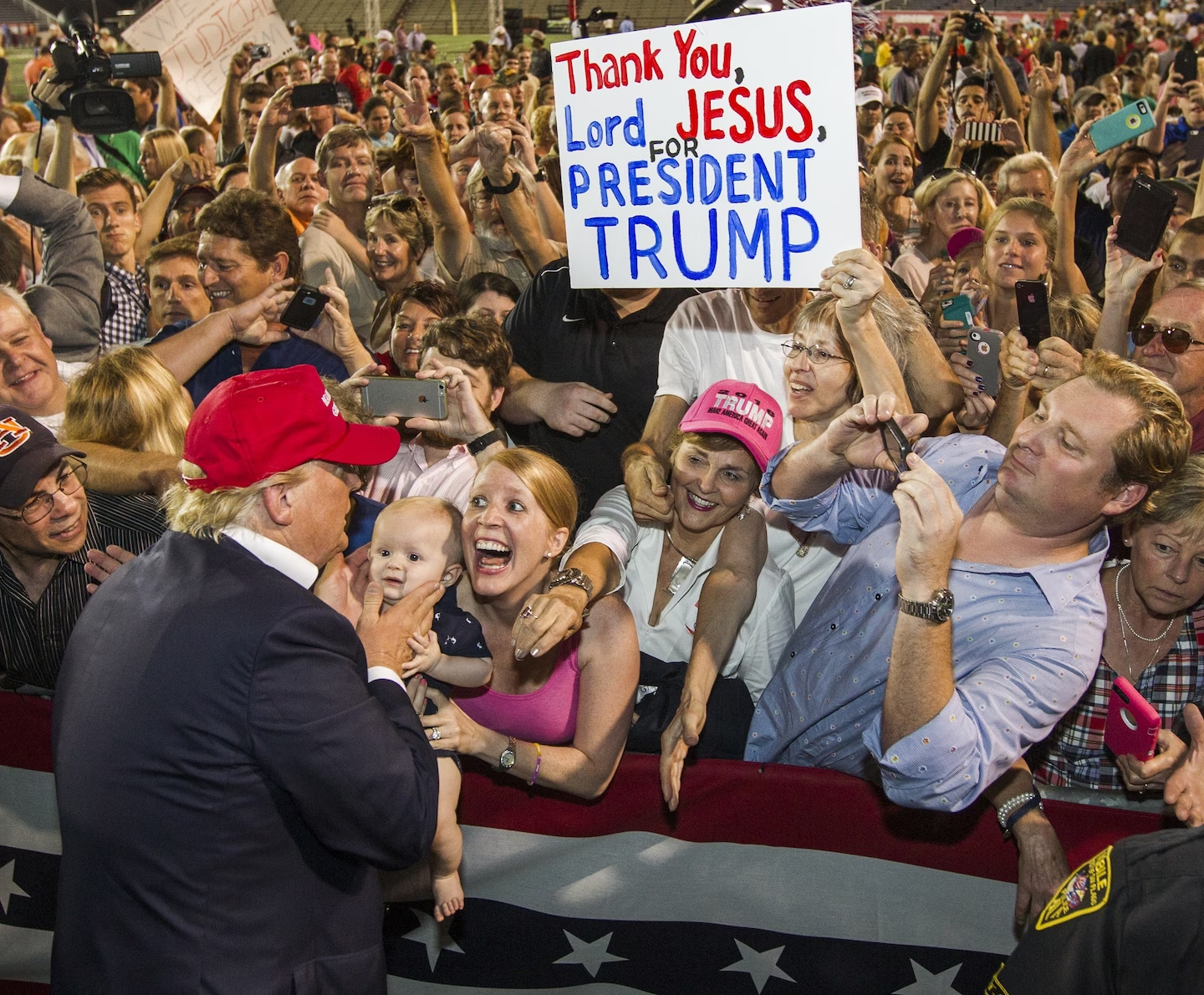
In Texas, supporters of former President Donald Trump and Republican officials have largely voiced strong support for the United States’ military strikes on Iran, framing the operation as a decisive action against a long-standing threat, even as critics warn of escalation and legal concerns. The responses underline how foreign policy events are reverberating through local and national political faultlines, particularly ahead of important primary elections.

Republican lawmakers from Texas were among the first to praise the strikes after they were announced. Senator John Cornyn described them as a necessary blow against what he characterised as “Iran and its tentacles of terror,” suggesting the operation could open the way for greater freedom in the region and a chance for oppressed Iranian citizens to rise up. Attorney General Ken Paxton echoed that support, thanking President Trump for his “courageous leadership” and framing the strikes as a critical step to prevent a nuclear-armed Iran. Cornyn’s comments tied the military action to his own political messaging on national security and his stance in the Republican Senate primary.
Some Trump supporters outside elected office expressed views that align strongly with this hawkish stance, though not without variation in tone. Anecdotes from social media and on-the-ground conversations suggest a mix of patriotic approval and moral reasoning — one Texas voter interviewed described support for the strikes as justified self-defence, asserting that responses to external threats sometimes require force even for those who prefer peace. These informal reactions reflect a segment of GOP-leaning opinion that trusts Trump’s judgment on security and views the confrontation as a defence of American interests and allies.
However, the broader reaction among Trump supporters is not entirely uniform — some online discussions reveal mixed sentiment about the conflict’s trajectory, especially as the administration signals that U.S. involvement could be sustained longer than initially suggested and that American casualties are possible. In other communities of pro-Trump voters, there is debate over whether the operation aligns with promises of limited engagement or risks escalating into a wider war.
Texas Republican support contrasts with more critical voices from other parts of the political spectrum. While many GOP figures back Trump’s action, some Democrats — and even a few Republicans nationally — have condemned the strikes for lacking clear Congressional authorisation, arguing that unilateral military action without a vote raises constitutional concerns and could jeopardise U.S. service members.

The responses in Texas highlight how international military decisions are filtering into domestic politics, especially in a state that plays a prominent role in national Republican contests. For many Trump backers, the strikes affirm longstanding views about strength in foreign policy and U.S. leadership in confronting perceived adversaries. For others, including some within the same political community, there is unease about open-ended military commitments and potential unintended consequences.
Related News:
 Putin Intensifies Territorial Demands Before US Talks
 US National Guard Member Killed in DC Shooting
 Trump to Recheck Green Cards from 19 Nations After DC Attack
 Trump to pause migration from ‘third-world countries’
 Republicans Hold Tennessee Seat Despite Democratic Surge
 Franklin Turtle, Sabrina Carpenter Slam US Social Media Use
 Russia losses Ukraine war peace talks intensify amid rising deaths
 Trump Escalates Minnesota Immigration Surge Amid Rising Tensions
 Trump: US Stands Ready to Help Iran Find Freedom Amid Widespread Unrest
 US Conducts Large-Scale Strikes Against ISIS Targets Across Syria
 Homeland security agents deployed amid Minneapolis protests
 Democrats Push Affordability to Challenge Trump Ahead of Votes
 Top Senate Republican Says Federal Probe of Powell Could Challenge Fed Nominees
 Trump Administration Probe of Fed’s Powell Draws Pushback
 US Senator Mark Kelly Sues Pentagon Chief Hegseth Over Demotion Threats
 Greenland Faces Pivotal Summit Over Arctic Power Struggle
 Trump Threatens Strong Action If Iran Executes Protesters
 Government Unveils Northern Powerhouse Rail Plans
 Trump press secretary attacks reporter over ICE question
 Kyrsten Sinema Faces High-Profile Lawsuit Over Marriage Interference
 Trump Receives Machado’s Nobel Medal in White House Meeting
 Greenland Crisis Forces Europe to Draw a Line With Trump
 European Leaders Condemn Trump Tariff Threat Over Greenland
 Iran Cannot Be Bombed Into Democracy, Only Helped There
 ‘He Believed Help Was Coming’: Why Iran’s Protesters Feel Betrayed
 Trump Fed bid heads to Supreme Court
 Historic Abu Dhabi Talks Bring US, Ukraine and Russia Together
 Trump Pulls Canada from His Controversial ‘Board of Peace’ Plan
 EU Says US Ties Have Suffered ‘Big Blow’ After Greenland Crisis
 ‘Unfathomable’: Australian veterans rebuke Trump claims
 Trump officials continue false claims after Alex Pretti shooting
 ‘Evil is resilient’: Pressure Mounts on Stephen Miller
 Partial US Government Shutdown Hits Homeland Security Funding
 Thousands Protest ICE Operations in Nationwide US Day of Action
 Epstein Files Reveal Trump Officials’ Emails with Financier
 Thousands Protest ICE in New York Against Trump Deportation Campaign
 Sinema payment row deepens after $9,000 transfer claim
 Trump Praises ‘Terrific’ Petro After White House Talks
 Starmer to Release Mandelson Files
 California Wins Supreme Court Approval for New Map
 Fears of New Arms Race as US-Russia Nuclear Weapons Treaty Expires
 Nurses’ families fear breakup under UK immigration crackdown
 Trump Calls Democrats ‘Demented and Evil’ in Unhinged Tirade About Voter IDs
 ‘Trump Will Be Gone in Three Years,’ Top Democrats Tell Europe
 Hillary Clinton Accuses Trump of Epstein Files ‘Cover-Up’ in BBC Interview
 US Civil Rights Leader Jesse Jackson Dies Aged 84
 New Nuclear Talks Between US and Iran Begin in Geneva
 ‘He Did It for Us’: US Soldier Recalls Jesse Jackson’s Efforts to Free Him and Two Other POWs
 Under Pressure From Trump, Venezuela’s New President Has Aces Up Her Sleeve
 Stephen Colbert Says CBS Spiked Interview With Democrat Over FCC Fears
 I Saw First‑Hand Why Trump Still Wants More from Greenland
 Brace for Trump’s Brave New World of 1.7°C Global Warming
 US Urges Iran to Make Deal as Military Presence Rises
 Sanders Condemns Billionaire ‘Greed’ in California Tax Debate
 Trump’s Foreign Policy Dilemma Laid Bare by Iran Tensions
 Trump Directs US Govt to Prepare Release of Files on Aliens and UFOs
 Billionaire Les Wexner Tells US Lawmakers He Was ‘Naive’ and ‘Conned’ by Epstein
 Trump Labor Secretary’s Husband Barred from Department Over Sexual Assault Allegations
 Trump Vows UFO File Release After Obama Interview
 Armed Intruder Shot Dead at Trump’s Mar-a-Lago Resort
 California Democrats Vow Trump Reckoning
 Inside Kyiv’s resolve as conflict nears five‑year mark
 What to Watch for During Trump’s State of the Union Address
 US Partially Evacuates Beirut Embassy Amid Rising Iran Tensions
 Trump’s Iran airstrikes decision to be guided by Kushner and Witkoff’s advice
 Who is Abigail Spanberger, the Democrat set to give State of the Union response
 Trump hails economic ‘turnaround’ and threatens Iran in longest ever State of the Union
 Trump’s Surgeon General Pick Evades Vaccine Questions
 Minnesota Medicaid funds halted in fraud row
 Clinton Testimony Erupts in Fiery Exchange
 American Citizen Killed in Cuba Boat Shooting, U.S. Officials Say
 Hillary Clinton Tells House Panel She Had No Idea of Epstein’s Crimes
 How Ghislaine Maxwell Brought Bill Clinton into Epstein’s Orbit
 Hillary Clinton Tells House Panel She ‘Had No Idea’ of Epstein’s Crimes
 Hopes and Fears as US Iranians Take to Streets After Toppling of Supreme Leader
 Iran, the US, and a World Cup That Starts in Three Months
 Britain’s Position and Trump Vows to Press On in Iran Conflict
 Trump Faces Questions Over Iran Conflict Plan
 Trump’s Iran Endgame Unclear After Mixed Messaging on War Aims
 Rubio Responds to Reported Strike on Iranian School