Published: 03 March 2026. The English Chronicle Desk. The English Chronicle Online.
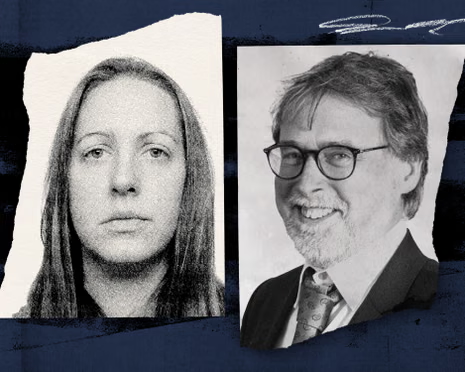
In a deeply troubling revelation that has shocked legal experts and medical commentators across the UK, it has emerged that a key expert witness in the trial of Lucy Letby faced a GMC investigation into his fitness to practise at the very time he gave crucial evidence about alleged insulin poisoning. This startling development has intensified debate over the safety of Letby’s convictions.
The focus of this renewed scrutiny is Professor Peter Hindmarsh, a respected paediatric endocrinologist whose testimony was central to the prosecution’s claim that two infants had been deliberately poisoned with insulin. Court records now show that on the very day Hindmarsh first took the stand in late 2022, the General Medical Council launched a formal probe into his clinical practice, prompted by concerns raised by Great Ormond Street Hospital and University College London Hospitals. Yet the jury was never made aware of this investigation.
According to investigative reporting, the GMC inquiry targeted serious concerns about Hindmarsh’s practice, including alleged patient harm and questionable clinical decisions. Documents seen by reporters detailed accusations involving inappropriate treatments and inadequate record‑keeping, raising questions about his ability to offer unbiased expert testimony. Despite these issues, Hindmarsh continued to serve as a prosecution witness.

The revelation has ignited intense controversy because Hindmarsh’s evidence underpinned two of the prosecution’s most impactful claims against Letby. His interpretation of blood tests, which he attributed to insulin introduced into intravenous fluid bags, was presented in court as strong scientific proof of deliberate wrongdoing. Those interpretations formed a compelling part of the case that led to unanimous guilty verdicts in respect of two infants.
The Crown Prosecution Service has defended its conduct, stressing that the allegations against Hindmarsh had not been finally adjudicated and that the jury was not misled as to his qualifications. Yet, critics argue that withholding information about an ongoing GMC investigation deprived the defence of context that could have challenged the weight and credibility of his testimony.
What is clear from the record is that during the period Hindmarsh gave evidence, a medical tribunal had imposed severe restrictions on his clinical practice, concluding that he “may pose a real risk” to patients. These restrictions, on their own, prompted debate at the time over whether he should be permitted to act as an expert witness, especially given that the tribunal itself noted that the issues under inquiry “may have the potential to impact on his ability to act as an expert witness.” Nevertheless, the tribunal allowed him to continue in his court role, requiring only that he disclose the ongoing investigation to those instructing him.
In a twist that has further fueled uncertainty, Hindmarsh ultimately removed himself from the GMC register in late 2024 through a process known as voluntary erasure, effectively terminating the fitness to practise investigation before its conclusion. As a result, there was never any regulatory finding against him and no formal conclusion to the serious concerns that had been raised.
This issue has become deeply intertwined with broader criticisms of the medical evidence presented at Letby’s trial, which ended in her conviction for seven murders and seven attempted murders. While those convictions were upheld at the Court of Appeal, Letby and her supporters have consistently argued that the prosecution’s scientific case was flawed. In particular, international teams of medical experts have contested the insulin poisoning theory at the heart of Hindmarsh’s testimony, arguing that the blood tests he relied on are known to produce unreliable results.
One such expert, Canadian neonatologist Dr Shoo Lee, led a panel of 14 specialists who concluded that the babies’ collapses and deaths were more plausibly due to natural causes or care failings at the Countess of Chester Hospital’s neonatal unit. That report has been submitted to the Criminal Cases Review Commission, which is currently assessing Letby’s case for possible referral back to the Court of Appeal.
In interviews and public statements, critics of the prosecution’s medical evidence have been adamant that Hindmarsh’s opinions were not only contested but fundamentally unsound. They say his calculations were incorrect, that he overstated the reliability of the diagnostic tests, and that he failed to present alternative explanations for the infants’ conditions that might have supported the defence’s argument of systemic failings rather than deliberate harm.
This debate has been amplified by supporters of Letby, many of whom argue that the prosecution’s case relied too heavily on contested medical theories and not enough on incontrovertible factual evidence. They point to the absence of direct forensic proof linking Letby to any intentional act of poisoning, noting that much of the case was circumstantial and hinged on contested expert interpretation.
The developments have also raised questions about legal disclosure rules and the process by which expert witnesses are vetted and presented in court. Under criminal procedure rules, expert witnesses are obligated to disclose anything that might reasonably undermine their opinions or detract from their credibility. Observers have debated whether Hindmarsh met that obligation, given the timing of the GMC investigation and the fact that the defence was reportedly not informed until shortly before his second court appearance.

For families of the victims, these revelations are profoundly distressing. Many of them sat through the trial believing that the scientific evidence presented was unassailable. Others have expressed dismay that the full context of Hindmarsh’s professional situation was not shared with the jury. For them, the stakes are deeply personal, and the ongoing review by the CCRC represents one of the few avenues left to challenge the convictions.
For legal scholars and medical ethicists, the case has become a case study in the complex interplay between scientific expertise and the justice system. The questions raised about expert credibility, disclosure obligations, and regulatory oversight go beyond any single trial, touching on fundamental issues about how courts rely on specialist knowledge and how that knowledge is vetted and communicated to juries.
As the CCRC continues its review and as international experts weigh in, the spotlight on the Letby case shows no sign of dimming. Whether these developments will prompt a fresh appeal or further inquiry remains to be seen, but the revelations about Hindmarsh’s GMC investigation have already reshaped public understanding of one of the most complex and contested criminal cases in recent British history.
Related News:
 Peterborough Mosques Tighten Security After Attack
 Five More Prisoners Freed by Mistake in Essex Week
 Nearly 48,000 Zombie Knives Removed from UK Streets in a Year
 Afghan man charged with murder after west London knife attack
 Reform Councillor Defects to Tories Over ‘Uncomfortable’ Policies
 FBI Director Kash Patel Defends Girlfriend Amid Government Jet Claims
 Trump Speaks on Prince Andrew’s Royal Scandal Fallout
 Man Charged Over Cambridgeshire Train Stabbing
 Experts Warn on Home Birth Risks, Call for Skilled Midwives
 French Taxi Driver Cleared in David Lammy Theft Case After Fare Dispute
 UK Bans Fake Numbers: Scammers Lose Their Trick
 Just Stop Oil Protesters Convicted Amid Climate Defence Row
 Met Police Culture Makes Racial Harm ‘Inevitable’
 British Grandmother to Return Home After Death Sentence in Bali
 Eleven Arrested After Pro-Palestine Protest at Villa Match
 Jailed UK climate protesters face extremist-style restrictions
 Boris Johnson accused of undermining BBC leadership
 Remaining rebel Labour MPs have whip restored
 How to get help when a child goes missing – call 999 urgently
 ‘Reckless’ cuts to victims’ services will cost more than they save
 BBC Faces Backlash as Reform UK Withdraws from Film
 Madeleine McCann Suspect Forced into Woodland Hideout After Release
 Leading doctors issue warning amid ‘bad’ flu season
 ‘Fever Pitch’ Screaming: Red Flags Before Sara Sharif’s Death
 Met Police Clarifies Scale of Grooming Gang Cases
 ‘Fake Admiral’ Sparks Outrage at Remembrance Event
 Criminal Gangs Pose as Truckers to Hijack UK Supply Chains
 Mum Calls for New Licence Rules After Teen Road Death
 UK Candidate Moved to Safe House After Election Threats
 Paralegal Fired After Exposé on Illegal Worker Scam
 Dan Wootton Rejects Catfishing Allegation in Court
 Mother Watches in Horror as Teen Daughter Dies on Tracks
 Serial Rapist and Former Cop Found Guilty Again
 Podcaster Faces Abuse Charges Over Controlling Behaviour
 Police Name Woman Who Died in Swindon as Murder Probe Continues
 Inside the Helpline Protecting Missing Children in the UK
 Most Tories Expect to Support a Farage-Led Government
 Swindon Counsellor Dies; Teen Arrested and Released
 Carer’s Allowance Chaos Draws Parallels With Post Office Scandal
 DWP to Reassess Hundreds of Thousands in Carer Allowance Scandal
 Ex-Classmate Accuses Farage of Dishonesty on Racism Claims
 Sudanese Family Vows to Stay After Racist Graffiti
 Russell Brand Faces New Sexual Offence Charges Including Rape
 Met Police Vetting Failures Let Serial Rapists Remain
 New Documentary Examines Teen’s Zombie Knife Murder
 Woman Jailed for Life After Killing E-Bike Rider in Tragic Mistaken Identity Case
 ‘It’s a Complete Scandal’: Aristocrat’s Fight for Prison Children
 Police response times face strict new national limits
 Wigan lottery drugs case exposes vast counterfeit empire
 School vetting failure exposed by London abuse case
 Man Arrested After University of Lancashire Student Found Dead
 Kingsbury stabbing probe led by counter-terror police
 Children to Receive Early Support After Knife Incidents
 London school stabbing: 13-year-old boy charged with attempted murder
 Epstein UK Flights Under Police Scrutiny
 Northampton Skate Park Stabbing Leaves Man Dead and Teen in Critical Condition
 Black People Face 48 Times Higher Stop Rates in London’s Wealthiest Areas
 Arrests Made in Jewish Ambulance Arson Attack
 Men Bailed After Arson Attack on Jewish Ambulance Service
 The Hidden Highway Heist: Inside the UK’s Cargo Theft Crisis
 Derby Car Attack: Man Remanded After Seven Pedestrians Hit
 Tragedy in the Royal Park: The Heartbreak of Finbar Sullivan
 Prevent Failings Exposed After Southport Attack
 Iran Threats Target Journalists in UK
 Teenagers Arrested Following North-West London Arson
 NHS Safety Fears as Nurses Cover Doctor Gaps
 Walsall Rapist Jailed After Hate-Filled Online Trail
 Two Children Die in Wolverhampton House Fire Tragedy
 Golders Green Stabbing: Community Security in Focus
 Counter-Terrorism Police Probe Stabbing Attack in London
 Victim says non-custodial rape sentence ‘rock in my face’
 Fatal London Explosion Cover-up Ends in Murder Conviction
 Father Shakes Four-Week-Old Baby to Death After Pub Night
 Shocking Zoo Incident Sparks Attempted Murder Probe
 Man Charged With Terror Attempted Murders In Edinburgh
 Mothers Win Campaign to Close Sentencing Gap
 UK’s Largest Muslim Convention Scales Up Security Amid Rising Bigotry
 Westminster Council Threatens Charing Cross Soup Kitchen
 BBC Warned About Missing Clothes of Murder Victim
 Cambridge Professor Jason Arday Found Dead at Home