Published: 06 March 2026
The English Chronicle Desk
The English Chronicle Online
A devastating inquest opened this morning has heard that a man killed by an Underground train in central London last month was allegedly blocked from moving to a safe area of the platform by other commuters moments before the tragedy unfolded.
David Okonjo, 47, a father of three from Lewisham, died instantly after being struck by a northbound Northern Line train at London Bridge station during the evening rush hour on 17 February. Now, newly presented CCTV evidence and witness testimony suggest the tragedy may have been avoidable.
The inquest at Southwark Coroner’s Court heard that Mr Okonjo, who was waiting for a southbound train, suddenly lurched forward and fell onto the tracks. However, multiple witnesses have told investigators that in the seconds before the fall, Mr Okonjo appeared to be trying to move away from the edge—but found his path blocked by a dense crowd of commuters pressing onto the platform.

Sarah Ferguson, who was standing approximately ten metres from Mr Okonjo at the time of the incident, described a scene of “chaotic pressure” as two trains arrived simultaneously on opposite platforms.
“There was a surge of people trying to get off the northbound train and another surge trying to get on,” she told the court. “I saw this gentleman—he seemed disoriented for a second, like he was trying to step back but there was literally nowhere to go. The crowd just pushed forward. He didn’t stand a chance.”
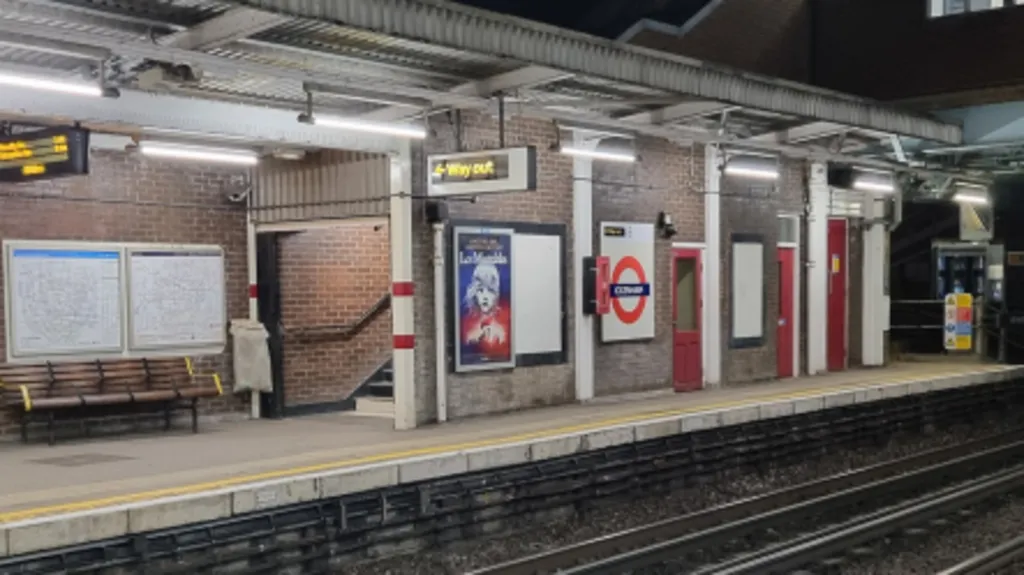
Transport for London (TfL) safety protocols designate specific areas along platform edges as “safe zones”—recessed spaces where waiting passengers can stand clear of passing trains. The inquest heard that Mr Okonjo was standing near one such zone, but it was occupied by a group of commuters who, according to witness accounts, refused to move when he attempted to step into it.
Marcus Trelawney, a barrister who was commuting to his chambers in Chancery Lane, provided the most damning testimony.
“I was directly behind the deceased. I saw him look at the safe area, which was about two metres to his left. There were three people standing in it—two men and a woman. He gestured, I believe he said ‘excuse me’ or something similar, indicating he wanted to step in. They just stared at him. One of them shook his head. They didn’t move an inch,” Trelawney said.
Seconds later, Mr Okonjo lost his footing.
“The crowd shifted as the southbound train approached. He was jostled, his arm went out, and then he was gone. It was over in a heartbeat,” Trelawney added, his voice breaking.
The coroner, Dr Amelia Foster, pressed Trelawney on whether he believed the individuals in the safe zone bore any responsibility.
“I’m not here to apportion blame,” he replied carefully. “But if you ask me whether that man would be alive today if those people had moved six inches to the left? I believe he would be.”
Transport for London has launched its own internal investigation into the incident. A spokesperson expressed condolences to Mr Okonjo’s family but emphasised that platform safety remains a shared responsibility.
“Our deepest sympathies are with Mr Okonjo’s loved ones,” the statement read. “London Underground carries millions of passengers daily, and the vast majority act with consideration and awareness. We continuously review safety protocols and station layouts to minimise risks. We urge all passengers to stand behind the yellow line, be aware of their surroundings, and allow others space to move safely.”
However, safety campaigners argue that the incident exposes a dangerous gap in public awareness and station design.
Margaret Chen, chair of the London TravelWatch safety committee, told The English Chronicle that the tragedy reflects what she called “a cultural problem” on the Tube.
“Safe zones exist for a reason—they are literally life-saving spaces. But too many commuters treat them as prime real estate. They plant themselves there, often with headphones on, scrolling on their phones, completely oblivious to anyone else. There is no etiquette, no awareness that those few feet of platform could mean the difference between life and death for someone who feels unsteady or anxious,” Chen said.
She called for a public awareness campaign and potentially redesigning platform layouts to make safe zones more visible and accessible.
“Perhaps we need clearer markings, or even announcements reminding people not to block these areas. Something has to change,” she added.
Outside the coroner’s court, Mr Okonjo’s widow, Amara, struggled to contain her emotions as she addressed reporters.
“My husband was a good man. He was kind, he was gentle. He worked as a teaching assistant, helping children with special needs. He spent his life making space for others. And in his final moments, no one would make space for him,” she said, wiping away tears.
The couple’s 15-year-old daughter, Chinwe, stood silently beside her mother, clutching a photograph of her father.
“I don’t understand how people can be like that,” Amara continued. “I don’t want revenge. I don’t want anyone punished. I just want people to think. Next time you’re standing on that platform, look around. Is someone struggling? Can you move? Just move. Please. It costs nothing.”
British Transport Police are continuing their investigation and have appealed for any additional witnesses to come forward. Detective Inspector Rachel Byrne confirmed that no criminal charges are currently being considered, as there is no evidence of malicious intent.
“At this stage, we are treating this as a tragic accident compounded by overcrowding and human error. We will review all available footage and statements before making any further determinations,” Byrne said.
The inquest has been adjourned until June, when further expert testimony on platform safety and crowd dynamics will be heard.
The case has sparked renewed debate about the safety of London’s Tube network, which handles approximately five million journeys daily. While fatalities are rare—there were three in the last financial year—campaigners warn that ageing infrastructure and increasing passenger numbers create a perfect storm.
Dr Eleanor Shaw, a transport safety expert at University College London, noted that the design of many Underground stations dates back over a century.
“These stations were never built to accommodate today’s passenger volumes. Safe zones are a retrofit solution, but they rely entirely on public cooperation. When that cooperation breaks down, the system fails,” Shaw said.
She suggested that technological interventions, such as platform edge doors—already in use on the Jubilee Line extension—should be prioritised for busy central stations like London Bridge.
“Platform edge doors would have prevented this death absolutely. They are expensive, yes, but how do you put a price on a human life?” she asked.
Regular Tube users expressed a mix of horror and resigned recognition when asked about the incident.
James Hollander, 34, who commutes daily from London Bridge to King’s Cross, admitted he had witnessed similar behaviour countless times.
“I’ve seen people literally squeeze into safe zones while an elderly person or someone with a cane is left standing in the danger zone. It’s every man for himself out there. It shouldn’t be that way, but it is,” he said.

Another commuter, Priya Sharma, suggested that the anonymity of city life contributes to the problem.
“In London, we’re all in our own bubbles. You don’t make eye contact, you don’t talk to strangers. That bubble protects you, but it also dehumanises everyone else. Maybe we need to pop those bubbles sometimes,” she reflected.
As the Okonjo family prepares for the resumption of the inquest, they hope their loss will prompt lasting change.
Amara Okonjo has launched a petition calling for mandatory safety briefings for TfL staff and clearer public messaging about the importance of keeping safe zones clear. It has already gathered over 50,000 signatures.
“I don’t want David’s death to be just another statistic,” she said. “If one person reads about what happened and decides to move aside next time, then maybe something good comes from this. That’s all I can hope for now.”
Related News:
 Tasers Introduced in UK Prisons to Combat Rising Violence and Protect Staff
 Targeted Attack in Bury Sparks Murder Investigation as Community Awaits Justice
 Man Remanded After Children Fall Ill at Leicestershire Summer Camp in Shocking Child Cruelty Case
 Hunt Intensifies for Southport Riot Suspects as Police Release Full List of 40 Still at Large
 AI Revolutionises Grooming Gang Investigations as Police Target Cold Cases Across England and Wales
 Police Advised to Disclose Ethnicity of Suspects in High-Profile Cases
 Victim of Catfish Predator Max Hollingsbee Speaks Out: “I Will Always Be Angry He Took My Innocence”
 Merseyside Police Helicopter Crew Cleared After Low-Altitude Pursuit of Suspect
 UK Launches Major Crackdown on Networks Profiting from Online Child Sexual Abuse
 Jailed Georgian Opposition Leaders Warn UK of Iranian Links to Ruling Party
 No Evidence Found to Substantiate Alleged Rape in Oxfordshire Churchyard, Police Confirm
 UK Police to Gain New Powers to Manage Repeated Protests, Home Office Announces
 Madeleine McCann Detectives to Testify Against Woman Accused of Stalking the Family
 Boris Johnson Breached Rules on Post-Office Business Contacts
 Afghan Man Guilty of Threatening Nigel Farage in TikTok Video
 UK Gamer Recruited by Wagner Group Found Guilty of Arson
 Grooming Gang Inquiry Faces Delays Amid Dispute Over Jess Phillips’ Role
 China Spy Case Hearing Reveals Key Gaps in Prosecution
 Migrant Sex Offender Deported After Erroneous Prison Release
 It’s time to come clean on the China spy case
 Five More Prisoners Freed by Mistake in Essex Week
 Nearly 48,000 Zombie Knives Removed from UK Streets in a Year
 Afghan man charged with murder after west London knife attack
 Man Charged Over Cambridgeshire Train Stabbing
 French Taxi Driver Cleared in David Lammy Theft Case After Fare Dispute
 Just Stop Oil Protesters Convicted Amid Climate Defence Row
 Met Police Culture Makes Racial Harm ‘Inevitable’
 British Grandmother to Return Home After Death Sentence in Bali
 Remaining rebel Labour MPs have whip restored
 Bar Council urges legal aid for all domestic abuse family cases
 Victims’ commissioner Baroness Newlove dies aged 63
 ‘Fake Admiral’ Sparks Outrage at Remembrance Event
 Paralegal Fired After Exposé on Illegal Worker Scam
 Dan Wootton Rejects Catfishing Allegation in Court
 Serial Rapist and Former Cop Found Guilty Again
 Gardener Guilty of Brutal Attack on Teacher Partner
 Twelve Prisoners Released in Error, Two Still Missing
 Met Police Under Scrutiny for Vetting Failures Among Hundreds of Recruits
 Woman Jailed for Life After Killing E-Bike Rider in Tragic Mistaken Identity Case
 Betfair Faces Pressure Over Funds Lost to Gambling Fraud
 Emails Show Epstein Funded Mandelson’s Husband After Jail
 Police Probe Mandelson Over Alleged Epstein Leak
 Royal Marine Admits Killing Man with Fatal Punch
 Appeal to B&B Owners Over Cash Point Ram-Raid
 Man in Court Charged with Belfast Murder
 Rapist Caught by DNA 20 Years After Teen Attack
 Wayne Couzens Still Eligible for £7k Pension
 Teenagers Guilty of Killing Man They Lured to Beach
 Met Using E‑Bikes and Drones to Catch Phone Thieves
 Disability and LGBT Hate Crimes Set to Become Aggravated Offences
 Last‑ditch Call to Save Police Front Counters in London
 Prisoner Escapes London Hospitals Twice in a Week
 Sisters to Repay £220k After Gatwick Airport Thefts
 How Much Could Andrew’s Arrest Hurt the Royal Family?
 Andrew Released Under Investigation After Arrest
 Fly-Tippers to Be Hunted by ‘Drone Squad’ in Crackdown from the Sky
 Court Error Frees Rape Suspect Who Flees UK
 Sadistic Pair Jailed for Blowing Up Sheep
 Female Double Murderer Could Be Moved to Open Jail
 Trial Date Set for Student Accused of Racial Hatred
 Two Arrested After Woman Set on Fire in Revenge Attack
 Driver Admits Causing Death of Mother Pushing Pram
 Rape Accused Had Fight With Man in Alley, Court Told
 Flatmates Cleared of Raping Man After Night Out
 MoD Launches Review into Whether Epstein Used RAF Bases
 Grave of Murdered Toddler James Bulger Vandalised
 Man Charged Over Derry Kidnapping Incident
 Outsiders Disrupted Search for Missing Teen Noah Donohoe
 Suspects in Lisa Dorrian Case Released on Bail
 Murder Charge After Security Guard Stabbed in Violent Attack
 Man Arrested Over 2021 Bedroom Killing of Teenager
 Police Brothel Raids Target Organisers, Not Sex Workers
 Driver Jailed Over Fatal Water Treatment Tank Crash
 Man on Trial for Rape That Led to Andrew Malkinson’s Wrongful Jailing
 Labour MP’s Partner Arrested on Suspicion of Spying for China
 Police Scotland Pays £8m Compensation to Staff
 Woman Smuggled Military-Grade Guns and Heroin
 Police Sell Crime-Fighting Tuk-Tuks at £28,000 Loss
 Family of Girl Groomed by Ian Huntley Beg Medics to Save His Life
 Sarah Everard’s Killer Wayne Couzens ‘Petrified’ After Ian Huntley Prison Attack