Published: 11 March 2026 The English Chronicle Desk The English Chronicle Online – UK News
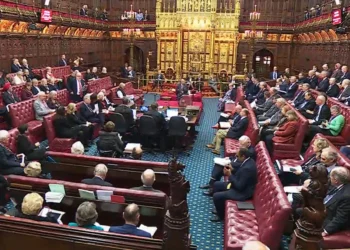
The centuries‑old tradition of hereditary peers sitting in the House of Lords is set to end after peers themselves accepted the final draft of a bill abolishing their right to remain in the upper chamber. The landmark decision, passed on Tuesday evening, marks the culmination of more than two decades of stalled reform and clears the way for the legislation to be added to the statute book before the next king’s speech in May.

Since the House of Lords Act 1999, a compromise arrangement allowed 92 hereditary peers to continue sitting and voting in the chamber. They were elected internally by their fellow hereditary peers whenever vacancies arose. Critics long argued that the arrangement was an anomaly in a modern democracy, while defenders insisted that hereditary peers contributed valuable experience and continuity.
The new bill, formally titled the House of Lords (Hereditary Peers) Bill, reduces the quota to zero. Once the current parliamentary session ends later this spring, hereditary peers who have not been granted life peerages will lose their seats.
The bill’s passage was secured after the government struck a deal to offer life peerages to some Conservative and cross‑bench hereditary peers who would otherwise be removed. This concession prompted the Conservative Party to withdraw its opposition, ensuring smooth approval in the Lords.
Angela Smith, the Lords leader, emphasised that the reform was about principle rather than individuals. “This has never been about the contribution of individuals but the underlying principle agreed by parliament over 25 years ago: that no one should sit in our parliament by way of an inherited title. Over a quarter of a century later, hereditary peers remain while meaningful reform has stagnated. We have a duty to find a way forward.”
The lord speaker, Michael Forsyth, paid tribute to the departing peers, acknowledging their contributions to debate, scrutiny and institutional memory. “Whatever views people may have of this constitutional change, it is sad to say goodbye to friends, who in many cases have contributed significantly to debate and scrutiny and to our institutional memory. Recognising their contribution is not about party politics but acknowledging the value of service and commitment.”
His remarks reflect the bittersweet nature of the reform: while many see it as a necessary step toward modernisation, it also marks the end of a tradition that has shaped the Lords for centuries.
The House of Lords has long been criticised for its unelected nature. The 1999 reforms under Tony Blair removed most hereditary peers, reducing their number from more than 700 to 92. At the time, the compromise was seen as temporary, with further reform expected. Yet successive governments struggled to agree on the future of the Lords, leaving hereditary peers in place for more than two decades.
The new bill finally fulfils the principle established in 1999: that inherited titles should not confer legislative power. It represents one of the most significant constitutional changes in recent years, even as broader questions about the future of the Lords remain unresolved.
The king’s speech, expected in the second week of May following local elections, will formally mark the end of hereditary peerages in the Lords. Those granted life peerages will remain, while others will depart. The government has not specified how many hereditary peers will be offered life peerages, but the concession is expected to be limited.
The reform does not address wider criticisms of the Lords, including its size—currently more than 800 members—and the system of political appointments. Campaigners for democratic reform argue that removing hereditary peers is only a first step, and that the chamber should ultimately be replaced with an elected body.
Reform advocates welcomed the bill as overdue. Constitutional experts noted that the persistence of hereditary peers had undermined public confidence in the Lords, and that their removal strengthens the legitimacy of the chamber.
Opponents, however, lamented the loss of continuity and tradition. Some argued that hereditary peers brought independence and a sense of duty not always present among political appointees.
Public opinion has generally favoured reform. Polls in recent years showed strong support for ending hereditary peerages, though views on replacing the Lords with an elected chamber remain divided.
The removal of hereditary peers may also shift the balance of power within the Lords. Life peers, appointed for their expertise or political service, will now dominate entirely. This could increase the influence of party leaders, who control appointments, and reduce the chamber’s independence.
At the same time, the reform may pave the way for further changes. Campaigners argue that the government should now turn to reducing the size of the Lords, introducing term limits, and making appointments more transparent.

The abolition of hereditary peerages in the House of Lords marks the end of an era. For supporters, it is a long‑overdue step toward modernisation and fairness. For critics, it is the loss of a tradition that provided continuity and independence.
Either way, the decision represents a significant constitutional milestone. As the UK prepares for the king’s speech in May, the Lords will look very different—shaped not by inheritance, but by appointment. The debate over its future, however, is far from over.
Related News:
 Tasers Introduced in UK Prisons to Combat Rising Violence and Protect Staff
 Peter Kyle Condemns Nigel Farage Over Reform UK’s Promise to Scrap Online Safety Act
 David Lammy Faces Possible Legal Challenge Over Foreign Office Secondment Scheme
 Ministers Accused of Defamation Over Palestine Action Ban and Mass Arrests
 Police Advised to Disclose Ethnicity of Suspects in High-Profile Cases
 Sally Rooney Pledges BBC Royalties to Support Palestine Action Despite UK Terror Ban
 UK’s First Transgender Judge Seeks Rehearing of Supreme Court Ruling on Biological Sex
 Government Signs Deal with Iraq to Return Illegal Migrants in Latest Bid to Deter Small Boats
 Migrant Hotel Chaos as Councils Consider Legal Action to Ban Asylum Seekers
 DWP Launches Independent Review of Post Office Staff Prosecutions
 Angela Rayner Admits Underpaying Stamp Duty on £800,000 Seaside Flat
 Angela Rayner Faces Scrutiny as Stamp Duty Row Deepens
 Shabana Mahmood Faces Daunting Challenges as New UK Home Secretary
 Tanni Grey-Thompson Faces Abuse Over Opposition to Assisted Dying Bill
New Home Secretary Hosts International Talks as Small-Boat Migrant Crossings Surge
Tanni Grey-Thompson Faces Abuse Over Opposition to Assisted Dying Bill
New Home Secretary Hosts International Talks as Small-Boat Migrant Crossings Surge
 Police Watchdog Calls for End to Recording Non-Crime Hate Incidents
 Charlie Kirk Killing Used to Mobilise UK’s Largest Far-Right Rally in Decades
 First “One In, One Out” Deportation Flight Departs Without Migrants Amid Legal Challenges
 Hillsborough Law to Hold Public Officials Accountable, Promising Jail for Serious Misconduct
 Labour Urged to Rethink Growth Strategy as Top Economist Warns of Far-Right Surge
 Corbyn and Sultana Clash Over Membership Portal as Divisions Surface in New Leftwing Party
 Commons Speaker Warns UK Parliament Vulnerable to Foreign Espionage After China-Linked Case Dropped
Mahmood Pledges Reform of Modern Slavery Laws After Court Blocks Deportation Appeal
Commons Speaker Warns UK Parliament Vulnerable to Foreign Espionage After China-Linked Case Dropped
Mahmood Pledges Reform of Modern Slavery Laws After Court Blocks Deportation Appeal
 Migrants in UK May Need to Contribute or Face Removal, Home Secretary Signals
 Jailed Georgian Opposition Leaders Warn UK of Iranian Links to Ruling Party
 UK Police to Gain New Powers to Manage Repeated Protests, Home Office Announces
 MPs’ pay watchdog seeks to give public greater voice in how politicians are funded
 Digital ID Plans Ignite Debate Over £600m Treasury Tax Boost and Privacy Concerns
 Boris Johnson Breached Rules on Post-Office Business Contacts
 Shabana Mahmood Warns Border Failings Are Eroding Trust in States
 Lucy Powell urged ministers to reconsider costly legal case for Labour donor’s firm
 Starmer Accused of Creating ‘Toxic Downing Street’
 Tories Push to Dilute Labour’s Workers’ Rights Bill
 China Spy Case Hearing Reveals Key Gaps in Prosecution
 It’s time to come clean on the China spy case
Johnson Approved China’s London ‘Super-Embassy’ in 2018
It’s time to come clean on the China spy case
Johnson Approved China’s London ‘Super-Embassy’ in 2018
 Rachel Reeves Admits Renting Home Without Required Licence
 Experts Question HMRC Over Possible Child Benefit Privacy Breach
 Phillipson urges careful review of gender recognition guidance
 French Taxi Driver Cleared in David Lammy Theft Case After Fare Dispute
 Met Police Culture Makes Racial Harm ‘Inevitable’
 Remaining rebel Labour MPs have whip restored
 Tim Davie resigns as BBC director general amid bias claims
 Palace to reinstate hyphen in Andrew’s surname
 Victims’ commissioner Baroness Newlove dies aged 63
 BBC Apologises to Trump but Rejects $1bn Compensation Claim
 Major Rent Reform Ends No-Fault Evictions in England
 Peers Flood Assisted Dying Bill with 942 Amendments
 Nandy says BBC review to probe political board influence
 Your Party Turmoil Deepens Over Withheld Donations
 UK Unveils Fast-Track Deportation and Asylum Overhaul
 UK Asylum Overhaul Sparks Debate Over Human Rights and Deportations
 UK Asylum Reforms: Temporary Refugee Status and Faster Deportations
 Mahmood Defends Tough Overhaul of UK Asylum System
 Scottish Ministers Express Alarm Over UK Asylum Reforms
 Westminster Advances Legacy Bill Amid Criticism
 Minister Defends Tough New Asylum Reform Plan
 UK Net Migration Falls Sharply After ONS Revisions
 Peers Get Extra Time to Debate Assisted Dying Bill
 Plans to Limit Jury Trials Face Retreat After Mounting Opposition
 Starmer tariffs stance rejects US trade retaliation
 Tim Walz urges Trump to withdraw federal agents immediately
 Alarm Over Chinese CCTV Guarding Magna Carta Site
 UK and EU Signal Fresh Push for Defence Cooperation Talks
 Emails Show Epstein Funded Mandelson’s Husband After Jail
 Labour Attacks Reform Candidate Over Tommy Robinson Backing
 Police Probe Mandelson Over Alleged Epstein Leak
 Starmer Reverses Local Election Delay Plan
 Starmer Ally Investigated Over Smear Claims
 Last‑ditch Call to Save Police Front Counters in London
 Civil Service Pay: Union Urges Ministers to End ‘Barking Mad’ Limits
 How Much Could Andrew’s Arrest Hurt the Royal Family?
 Andrew Released Under Investigation After Arrest
 Mandelson’s Lawyers Say Arrest Sparked by ‘Baseless’ Flight Risk Claim
 Major Changes to Asylum System Set to Come into Force
 Labour MP’s Partner Arrested on Suspicion of Spying for China
 Police Scotland Pays £8m Compensation to Staff
 UK Must Obey International Law Over Iran, Says Thornberry
 Proposed Law Leaves Gap for Children of Convicted Paedophiles
 Labour Lawyers Blocked From Briefing MPs on Jury Trials