Published: 17 March 2026. The English Chronicle Desk. The English Chronicle Online.
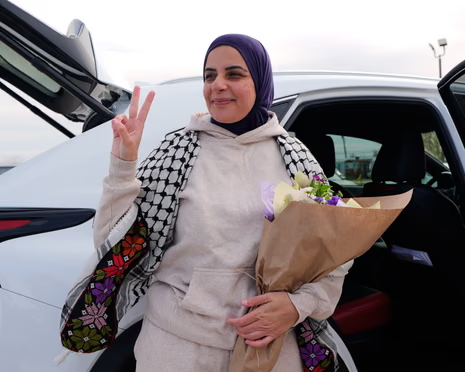
Leqaa Kordia, a pro-Palestinian activist, has been released on bond after spending over a year in ICE custody.
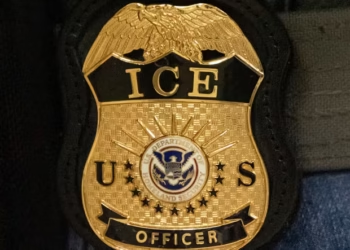
The 33-year-old New Jersey woman, originally from the West Bank, was first arrested during a protest at Columbia University against Israel’s war on Gaza in April 2024. Her detention began nearly a year later when she reported to an Immigration and Customs Enforcement office in New Jersey, prompting her transfer to the Prairieland detention center in Alvarado, Texas.
Her cousin, Hamzah Abushaban, described the past year as an unimaginable ordeal for Kordia and her family, noting the support they received from their community. “We are grateful for the countless prayers and encouragement during Ramadan, which carried us through some of our darkest days,” he said, reflecting the personal toll of prolonged detention on families.
Kordia was finally released on Monday on a $100,000 bond, despite multiple court rulings affirming she posed no threat and was eligible for release. Her attorneys repeatedly criticised the government for obstructing her basic rights, describing the prolonged detention as an abuse of power. Travis Fife of the Texas Civil Rights Project said Kordia’s release represents only the minimal restoration of her freedoms.

Throughout her detention, Kordia and her legal team raised concerns over dangerous and unsanitary conditions at the Alvarado facility. She suffered a seizure in February, during which she was shackled to the hospital bed for 72 hours, highlighting the extreme measures detainees can face even while receiving medical care. Kordia later stated that ICE detention facilities are deliberately designed to break individuals’ health and hope, calling attention to systemic issues affecting other women in similar conditions.
Kordia’s case gained national attention as she was among the last individuals held following the Trump administration’s 2025 crackdown on pro-Palestine protesters at US universities. Fellow activists Mahmoud Khalil and Mohsen Mahdawi were detained at the same time, drawing widespread concern from human rights advocates about the targeting of political expression.
Former Department of Homeland Security Secretary Kristi Noem accused Kordia of being a terrorist sympathizer, claiming authorities were investigating financial transfers she made abroad. Kordia’s legal team confirmed she had sent approximately $1,000 to her family in Gaza while working as a server, insisting the funds were intended for humanitarian purposes rather than illicit activities.
At the time of her detention, Kordia had a pending asylum application and is now in the process of obtaining permanent residency through her US citizen mother. Sarah Sherman-Stokes, supervising attorney at Boston University School of Law Immigrants Rights Clinic, highlighted that her release is a crucial step in restoring her legal rights while emphasising the broader principle of protecting activists from unlawful government targeting.
Support for Kordia’s release extended to public officials, including New York Mayor Zohran Mamdani, who personally petitioned former President Trump. The case resonated widely on social media, with users sharing solidarity messages and raising awareness about the challenges faced by pro-Palestine advocates in the US.
On the anniversary of her detention, 3 March, Kordia expressed hope for reunification with her family, reinforcing her commitment to human rights advocacy. She emphasised the importance of speaking up for freedom and equality, extending her advocacy beyond her personal circumstances to communities in both Texas and Palestine.
Observers noted that Kordia’s detention highlighted ongoing tensions in US immigration enforcement, particularly concerning political expression. The case raised questions about the balance between national security concerns and constitutional protections, especially regarding the First Amendment. Advocates argued that Kordia’s prolonged detention, despite repeated judicial rulings in her favour, reflects a troubling trend of government overreach against individuals exercising lawful protest rights.
Legal analysts have pointed out that the use of immigration detention as a tool against political activists represents a significant legal and ethical challenge, potentially setting a precedent that could affect future cases. The prolonged detention of individuals like Kordia has prompted calls for legislative reform, aiming to prevent ICE from detaining people for extended periods without clear evidence of risk or criminal activity.
Beyond the legal implications, Kordia’s experience sheds light on the personal and emotional consequences of extended incarceration. Families of detainees often face financial strain, social isolation, and profound uncertainty, all of which exacerbate the trauma of confinement. Advocates argue that these human costs must be considered alongside legal and political debates surrounding immigration enforcement practices.
In addition to highlighting systemic issues in detention facilities, Kordia’s case has also inspired broader discussions about advocacy and solidarity movements. Her release has become a focal point for organisations supporting Palestinian rights, prompting renewed attention to the challenges faced by activists globally. Social media campaigns, public statements, and community fundraising efforts have amplified the message that activism should not be criminalised, and that human rights must be respected regardless of political stance.

Kordia herself remains committed to advocacy, underscoring that her detention will not deter her efforts. She has called for continued attention to the plight of other detainees, stressing the need for reforms to prevent abuse of power in immigration enforcement. Her message resonates with many who view her release as a victory for civil liberties, demonstrating the potential impact of persistent legal advocacy and community support.
Experts suggest that monitoring Kordia’s progress following her release will be important in understanding the long-term implications of her detention. Observers are keen to assess how the combination of legal challenges, media attention, and public advocacy may influence policies affecting activists and asylum seekers in the United States. The broader discourse surrounding political expression and immigration rights is likely to remain a prominent topic in both legal and social arenas.
Ultimately, Kordia’s release marks a significant milestone in her personal journey, yet it also serves as a reminder of ongoing struggles for those advocating for human rights. Her story illustrates the intersection of immigration law, political expression, and civil liberties, highlighting the need for vigilance to protect the fundamental rights of all individuals regardless of nationality or political affiliation.
The activism of individuals like Kordia demonstrates the power of community support and legal advocacy in challenging systemic injustices. Her experience underscores the necessity of protecting the rights of dissenting voices while ensuring that detention practices comply with both national and international standards. The continued attention to cases like hers may drive meaningful change in policy and public awareness, ultimately shaping the environment for future activists.
Related News:
 Thousands Protest ICE in New York Against Trump Deportation Campaign
 Hero Rescuer Saves Baby from Icy Chicago Lake
 Judge halts deportation of Yemeni refugees in US
 Afghan Families Left in Limbo Face Risk of Deportation
 Immigration Judges Fear Pressure in Trump Era
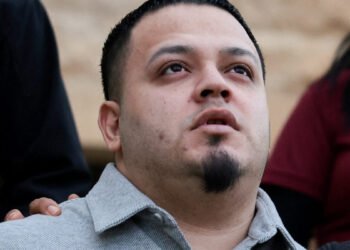 US judge dismisses Kilmar Abrego Garcia indictment
 US green card applicants must apply from abroad, DHS says
 Former ICC prosecutor condemns US sanctions
 US Supreme Court Blocks Trump Bid to End Birthright Rights
 Florida Executes One of Its Oldest Death Row Prisoners
 Two National Guard Soldiers Critically Injured Near White House
 US National Guard Member Killed in DC Shooting
 American Mother Extradited From UK to U.S. on Murder Charges
 Federal Immigration Shift: Officers Leave Louisiana for Minneapolis
 Trump Says US Must ‘Own’ Greenland to Block Russia, China
 Government Unveils Northern Powerhouse Rail Plans
 Trump press secretary attacks reporter over ICE question
 Kyrsten Sinema Faces High-Profile Lawsuit Over Marriage Interference
 Trump Fed bid heads to Supreme Court
 Iran Death Toll Crisis Exposed: Bodies, Mass Graves, and Concealment
 Partial US Government Shutdown Hits Homeland Security Funding
 Thousands Protest ICE Operations in Nationwide US Day of Action
 Epstein Files Reveal Trump Officials’ Emails with Financier
 Sinema payment row deepens after $9,000 transfer claim
 US-Cuba Negotiations Shift as Oil Blockade Looms
 Nurses’ families fear breakup under UK immigration crackdown
 Concerns rise for Canberra boy amid Iran detention fears
 California Democrats Vow Trump Reckoning
 Australian Women in Syrian Camp Offer Separation Deal
 Trump’s Surgeon General Pick Evades Vaccine Questions
 Buffalo Refugee Tragedy: Border Patrol Neglect Leads to Death
 Anthony Albanese Must Uphold Rights for All Australians
 New Poll Reveals Reform UK Stance on British Citizenship
 Adelaide University Faces Backlash Over Event Cancellation
 Ukraine war briefing: Zelenskyy offers help to Saudi Crown prince on combatting Iranian drones
 Utah Woman Found Guilty of Poisoning Husband for Inheritance
 Police Seek Immunity in Indigenous Custody Death Case
 Spain Faces Backlash Over Xenophobic Chants in Egypt Draw
 A Global Voice For Justice: Stephen Lewis Dies At Age 88
 Can King Charles Calm Trump on Key US Visit?
 US Airman Rescued in Daring Mission After F-15 Shot Down in Iran
 Melania Trump Epstein remarks spark survivor backlash
 Kyiv and Odesa Mourn After Deadly Wave of Russian Strikes
 France Urges Release of Elderly Widow Held by ICE
 Trump’s Presidency: A House of Cards Collapsing?
 US Catholics Caught Between President and the Pope
 GOP Senator Criticizes Trump’s Feud With Pope Leo XIV
 Trump Starts $166bn Tariff Refund Process
 Trump Weighs Sending Afghan Allies to the Congo
 Prominent Voices Challenge Palestine Action Ban
 Trump Defiant After Washington Hotel Shooting
 Identity Revealed: Suspected Washington Gunman Named
 Australian Activists Detained as Gaza Aid Flotilla Intercepted
 White House Security Case Sparks Political Firestorm
 Trump approval plunges amid Iran war fears
 Ohio’s Battle for Trust: Democrats Vying to Flip the Buckeye State
 US ‘Narco Boat’ Strikes Draw Global Outcry
 Florida Surgeon ‘Devastated’ Over Fatal Surgery Error
 US Awaits Iran Reply on New Ceasefire Proposal
 Mexico’s Missing: State Complicity in a Growing Crisis
 Human Rights Barrister Wins Appeal Over Contempt Charge
 Court Upholds Landmark Win for Transgender Rights
 The Hidden Cost of Separation for Refugee Families
 Taliban Codifies Strict New Marriage and Divorce Legislation
 Tulsi Gabbard exits after turbulent intelligence tenure
 DeSantis’s ‘Alligator Alcatraz’ Faces Final Shutdown
 House Curbs Trump’s War Powers in Rare Rebellion
 Trump Urged to Condemn UFC Fighter Over Obama Slurs
 Controversial London Property Show Sparks Legal Fury
 US Military Pacific Boat Strike Kills Three People
 US Loan Caps Threaten Future of Physician Assistants
 US Courts Back Trump on Park Signage Removals
 Trump’s Mount Rushmore Speech: A Divisive Anniversary
 Trump Intervenes in Fifa World Cup Balogun Ban
 NCAA Rules Unchanged After Supreme Court Transgender Ruling
 Conservative Groups Challenge ABC Broadcast Licenses
 US Airman Avoids British Court in Indecent Exposure Case
 Ukraine Creates Long-Range Strike Command
 Trump Refuses to Sign Housing Bill, But Law Takes Effect
 Houthis Strike Saudi Arabia as Middle East Tensions Rise