Published: 17 March 2026. The English Chronicle Desk. The English Chronicle Online.
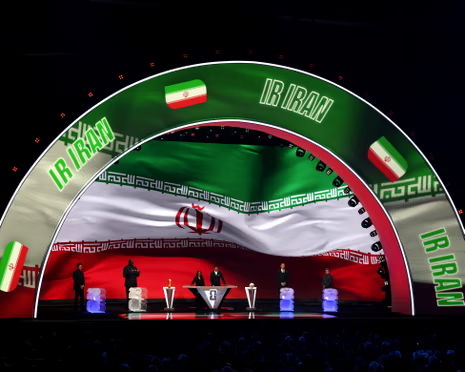
Iran World Cup move discussions have emerged as tensions reshape preparations for the upcoming global tournament. Officials from FIFA are now under pressure as Iran seeks changes. The situation reflects a wider geopolitical crisis that is now spilling into international sport with unusual intensity.
The Iranian football federation confirmed it is negotiating to relocate its World Cup fixtures from the United States to Mexico. This request comes amid escalating tensions following recent military actions involving the United States and Israel. Iranian officials argue that player safety cannot be guaranteed under current circumstances, raising serious concerns about participation.
Speaking publicly, federation president Mehdi Taj made Iran’s position clear and uncompromising. He said the team would not travel if safety assurances remain uncertain. His comments followed statements from Donald Trump suggesting risks for Iranian players in America.
Trump recently stated that Iran could participate in the tournament but hinted at potential security challenges. He remarked that it might not be appropriate for Iran to play in the United States. This comment has intensified debate, particularly among global football authorities seeking to maintain neutrality.
The Iran World Cup move proposal focuses on shifting all group matches scheduled in American cities to venues in Mexico. Iran is currently due to play two group matches in Los Angeles and one in Seattle. A relocation would require significant logistical adjustments, affecting teams, fans, and organisers alike.

Mexico, as a co-host of the 2026 tournament, is already preparing to stage multiple fixtures. Moving Iran’s matches there would reduce security risks perceived by Iranian authorities. However, it would also complicate scheduling, travel arrangements, and ticketing systems already in place.
FIFA has yet to issue an official response regarding the Iran World Cup move request. The governing body now faces a delicate balancing act between sporting integrity and geopolitical realities. Historically, FIFA has sought to separate politics from football, but this situation presents unique challenges.
The Iran World Cup move debate has drawn comparisons with previous sporting adjustments due to political tensions. In cricket, for instance, India and Pakistan frequently play matches at neutral venues. These arrangements aim to avoid security risks while preserving competition between rival nations.
However, football’s global scale makes such adjustments far more complex. The World Cup involves extensive infrastructure planning and years of preparation. Changing venues at this stage could disrupt multiple aspects of the tournament’s organisation.
Iran’s sports minister, Ahmad Donyamali, initially suggested that participation might not be possible under current conditions. His comments followed reports of recent airstrikes involving the United States and Israel targeting Tehran. These developments have heightened uncertainty around Iran’s involvement.
Despite the minister’s remarks, Iranian state media later indicated that no final decision had been made. Officials emphasised that any withdrawal would require approval at the highest levels of government. This suggests ongoing internal discussions as authorities weigh national security against sporting commitments.
The Iran World Cup move scenario also raises broader questions about the intersection of politics and international sport. Sporting events have long been used as platforms for diplomacy and unity. Yet they can also become flashpoints during periods of conflict and tension.
For players, the uncertainty creates significant emotional and professional challenges. Many athletes train for years to compete on football’s biggest stage. The possibility of relocation or withdrawal introduces instability that could affect performance and morale.
Fans are also closely watching developments, particularly those planning to attend matches in the United States. Ticket holders, travel agencies, and sponsors may face disruptions if fixtures are moved. The economic implications could be substantial for host cities expecting large crowds.
Los Angeles and Seattle, both scheduled to host Iran’s group matches, have yet to respond publicly. Organising committees in these cities are likely assessing potential impacts behind the scenes. Any changes would require coordination between local authorities and tournament organisers.
Mexico’s role in the Iran World Cup move discussions is equally important. As a co-host, the country has experience staging major football events. It previously hosted the World Cup in 1970 and 1986, earning a reputation for successful organisation.
If FIFA approves the relocation, Mexico could provide a neutral and secure environment for Iran’s matches. This would align with the broader goal of ensuring player safety while maintaining tournament continuity. However, the decision would still require careful planning and rapid execution.
The Iran World Cup move debate also touches on potential knockout stage scenarios. Iran is scheduled to face the United States in the last 32 if both teams finish as runners-up. Such a match, under current tensions, could present significant security challenges.
Avoiding such a situation may be another factor influencing Iran’s request. Relocating matches could reduce the likelihood of direct encounters in politically sensitive locations. This highlights how geopolitical considerations are shaping sporting decisions in unprecedented ways.
FIFA’s eventual response will likely set an important precedent for future tournaments. If the Iran World Cup move is approved, it may encourage other nations to request similar adjustments. This could challenge the traditional structure and planning of global sporting events.
On the other hand, rejecting the request could lead to Iran withdrawing from the tournament altogether. Such a decision would be unprecedented in the modern era of the World Cup. It would also force FIFA to find a replacement team at short notice.
The potential absence of Iran would alter the competitive balance within its group. Belgium, Egypt, and New Zealand would need to adjust their preparations accordingly. The ripple effects could extend throughout the tournament, affecting scheduling and rankings.

The Iran World Cup move issue underscores the growing influence of global politics on sport. While organisations like FIFA aim to remain neutral, external events often dictate difficult choices. This situation highlights the limits of separating sport from wider geopolitical realities.
As the tournament’s start date approaches, time is becoming a critical factor. Decisions must be made quickly to ensure smooth organisation and fair competition. Delays could increase uncertainty for teams, organisers, and fans worldwide.
For now, negotiations continue behind closed doors, with all parties seeking a viable solution. The outcome will not only determine Iran’s participation but also shape perceptions of fairness and safety in global sport. The coming weeks are likely to prove निर्णসive.
The Iran World Cup move discussions have already captured international attention, reflecting the high stakes involved. Whether matches are relocated or not, the situation has exposed vulnerabilities in the planning of major sporting events. It serves as a reminder that global tournaments exist within a broader political context that cannot be ignored.
As fans await clarity, the focus remains on ensuring a safe and successful World Cup. The decisions made now will resonate far beyond this tournament, influencing how future events are organised in uncertain times. The world of football is watching closely as this complex situation unfolds.
Related News:
 Tension and Turmoil at Aston Villa v Maccabi Match
 Lando Norris Dominates Brazil GP to Strengthen F1 Title Bid
 Ronaldo Confirms Final World Cup and Plans Retirement
 England Maintain Perfect World Cup Qualifying Record with Win Over Serbia
 Osimhen doubles as Nigeria reach CAF World Cup final
 Tears of Joy as Ireland Stun Hungary to Stay in World Cup Race
 Haaland Heroics and Portuguese Rampage Seal World Cup Qualification
 Irish Hero Parrott Says Goal Brought First Tears in Years
 Scotland Fans Reflect on France ’98 as World Cup Looms
 Nigeria Misses World Cup Again After Play-Off Loss
 Mark Wood Bowls Rapid Nets Spell, Ashes Test Hopes Rise
 Cardiff Nights Could Propel Wales to World Cup Glory
 Spain Qualify for 2026 World Cup After Dramatic Draw
 Scotland End 28-Year Wait With Stunning World Cup Qualification
 Cristiano Ronaldo Joins Trump, Bin Salman at State Dinner
 Tiny Curacao Makes History as Smallest Nation to Reach World Cup
 Haiti Qualifies for World Cup Despite Coach Never Visiting Country
 Scotland Fans Celebrate Historic World Cup Qualification
 Barcelona Returns to Camp Nou vs Athletic Bilbao
 India, Pakistan to Clash in T20 World Cup 2026 Group Match
 Mbappe Scores 4 as Real Madrid Edge Olympiakos
 Man City Lose, Champions League Risk
 Trump to attend 2026 FIFA World Cup draw in Washington
 2026 World Cup Draw Explained Ahead of Ceremony
 Hilary Knight speaks out on Trump’s recent hockey remarks
 Brady Tkachuk Denies AI Video Claims After Olympic Gold
 India T20 World Cup Triumph Seals Historic Title Defence
 Iranian Captain Departs Australia Amid Asylum Tension
 Jos Buttler Searches for Form as the IPL Returns
 Peretz Targets FA Cup Upset Amid War Concerns
 Irvine Slams Trump Fifa Peace Prize
 $13bn World Cup Set to Break All Revenue Records
 Premier League drama defines crucial weekend
 Infantino’s Grip Tightens as FIFA Eyes a $14bn Future in Vancouver
 RFU Backs Borthwick Despite England’s Poor Six Nations
 Miami Upgrades Shake Up F1 Title Fight
 Infantino Defends Soaring World Cup 2026 Ticket Costs
 FIFA Confirms Global Ban for Benfica Star Prestianni
Chasing Glory: The Quest for a New World Cup Champion
FIFA Confirms Global Ban for Benfica Star Prestianni
Chasing Glory: The Quest for a New World Cup Champion
 Tuchel Boldly Reshapes England Squad for World Cup Glory
 Drama in New Zealand as Surf Final Halted by Marine Attack
 Knicks Clinch Historic Comeback in Thrilling NBA Finals
 Football Hopes to Outshine World Cup Drama in Mexico
 Fifa Official Under Investigation Over Hand Gesture Controversy
 Canada Secure Historic Last 16 Spot with Late Goal
 Mexico World Cup Joy Turns to Tragedy as Two Die in Crowds
 Bryne Backs Haaland Before England World Cup Clash
 England and Norway Fans Turn Miami Into World Cup Carnival
 Lamine Yamal’s Birthday: Football, Fame, and France
 Chaos at Ibrox as Martin’s Rangers Era Comes to an End
 BBC to Apologise Over Edited Trump Speech Amid Backlash
 Saka Solidifies Role as Tuchel’s Key England Lieutenant
 Greene Pushes Epstein Files Amid Trump Fallout
 Zelenskyy Signs Fighter Jet Deal Amid Russian Drone Attacks
 Shadow Fleet at Sea: Europe’s Battle Against Illicit Oil Shipping
 US Suspends Afghan Immigration After White House Shooting
 ‘Extinct’ Antelope Returns to Sahara, Bringing Hope
 Aston Villa Remain Arsenal’s Key Obstacle in Title Pursuit
 Irish Beach Tragedy: Irish Drown at Whitehaven Beach in Australia
 Ben Stokes injury joke after brutal ball strike
 UK and US Drop in Global Corruption Index Rankings
 Canberra Poster Seizure Sparks Free Speech Row
 BBC World Cup Presenting Duties Shared Among Trio
 English Cricket Faces Moral Crisis Over Indian Investment
 Jacinda Ardern Move Sparks Kiwi Reflection
 Middle East Airspace Crisis Strands Thousands
 Kelly Wilkinson Inquest Reveals Bail Failure
 Injured Mojtaba Khamenei Elevated as Iran Leader
 The Kill Line: A Shifting Vision of the American Dream
 Trump and Tehran Find Common Ground in Landmark Ceasefire
 Robots Outpace Humans in Beijing Half-Marathon
 Ashley Cole: Finding His Voice and Vision in Italy
 Scepticism and tight security as Beijing braces for Trump
 Tensions Flare as Israeli Nationalists March in Jerusalem
 The Battle for Wembley Sparking Unprecedented Legal Warfare
 Pope Meets Families in Italy Toxic Waste Zone
 Is Ollie Robinson the Chaos English Cricket Needs Today?
 US Advance Past Bosnia in World Cup Thriller
 Trump’s Red-Card Intervention Hurts the US World Cup
 Houthis Strike Saudi Arabia as Middle East Tensions Rise