Published: 25 March 2026. The English Chronicle Desk. The English Chronicle Online.
Public satisfaction with the NHS has finally begun to rise after years of decline. The latest data shows a significant shift in how people view the health service today. This marks the first time since 2019 that the national mood has actually started improving. People in Britain are feeling slightly more optimistic about the future of their healthcare system. The proportion of satisfied voters has increased from a record low of twenty-one percent. Recent surveys now show that twenty-six percent of the public feel happy with the NHS. This five percent increase suggests that the long period of falling public confidence is over.
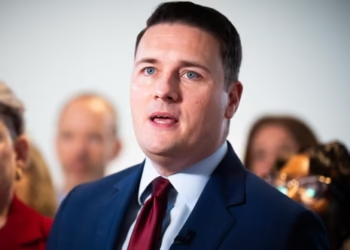
Dissatisfaction with the health service has also seen a very sharp and noticeable drop recently. It fell by eight percent which represents the largest single decline since the year 1998. Despite this improvement the overall level of dissatisfaction still remains quite high at fifty-one percent. Health Secretary Wes Streeting has welcomed these new findings as evidence of a true recovery. He previously described the service as broken when the current government took power in 2024. Streeting believes the NHS is now moving steadily along a positive and productive new road. He will use these figures to support his plans for further reform across the country.
The Health Secretary is scheduled to deliver a major speech on Wednesday regarding these updates. He intends to outline specific plans to improve care at five underperforming health trusts today. These organizations have struggled with long waiting times and poor patient outcomes for many years. Streeting has warned that failing bosses at these trusts could be sacked and quickly replaced. Service veterans may be brought in to turn around these struggling and vital medical institutions. Failing trusts could even be merged with more successful ones to ensure better patient care. This new intensive recovery programme is set to begin officially early next month across England.

The figures regarding NHS satisfaction were revealed in the latest British Social Attitudes survey results. This annual study is widely considered the gold standard for measuring public opinion in Britain. While the results are positive health experts warn that the bounce might be quite temporary. They suggest this shift does not yet mark a decisive turning point for the service. The government remains under intense pressure to deliver more visible improvements to every local hospital. Reviving the flagging fortunes of the health service will require sustained effort and more funding. Experts believe the public mood is still fragile despite the recent small increase in satisfaction.
The King’s Fund and Nuffield Trust have provided a detailed analysis of the latest data. These leading health thinktanks described the new findings as green shoots of a recovery. They suggested the results would bring a sense of relief and joy to government ministers. One analyst compared the current situation to the recovery seen during Tony Blair’s leadership period. During that era the health service underwent a massive transformation and public approval rose quickly. However the thinktanks also cautioned that these improvements are still in their very early stages. The survey of thirty-four hundred people suggests that many citizens remain very unhappy with care.
There are still deep frustrations regarding the time it takes to see a medical professional. Only twenty-two percent of respondents expressed satisfaction with current A&E and dental service levels. GP services and general hospital care scored slightly better in the recent public opinion poll. Thirty-six percent of people are satisfied with their local GP while thirty-seven percent like hospitals. Just half of the population feels satisfied with the overall quality of care being provided. Only sixteen percent of people believe that the service will improve over five years. Satisfaction with social care services remains particularly low at just fourteen percent of the public.
Delays in accessing urgent care continue to cause a great deal of public unhappiness today. Most people are still dissatisfied with the time spent waiting in busy A&E departments. Sixty-six percent of patients feel that emergency room waits are still far too long now. Similarly sixty-three percent of the public are unhappy with waits for planned hospital treatments. Getting a GP appointment remains a major struggle for fifty-eight percent of the British population. Only fourteen percent of voters are satisfied with current waiting times in the emergency room. These figures highlight the massive scale of the challenge still facing the current health secretary.
Mark Dayan from the Nuffield Trust noted that these numbers would once have seemed catastrophic. During the 2010s such low satisfaction levels would have caused a major political crisis. The current figures are still worse than those recorded during the difficult years of the 1990s. Back then the public was widely perceived to be deeply unhappy about the national health service. Dayan described the recent rise in satisfaction as a small glimmer on the dark horizon. He warned that while things are looking up the general public mood remains quite somber. People want to see faster progress before they fully trust the system to deliver results.
The main pledge from the government is to reduce the long waiting list by 2029. They want ninety-two percent of patients to be seen within eighteen weeks of their referral. However the public seems to have different priorities for the NHS at this current time. Most voters want faster access to their local GP and quicker treatment in A&E rooms. These are the two areas where the public feels the most daily pressure and frustration. Dan Wellings from The King’s Fund said that frustration with waiting times is deeply embedded. Many people still feel that accessing basic healthcare is a very difficult and stressful task.

Patients often feel like they are stuck in a queue that simply does not move. This feeling of being trapped in a broken system has lasted for several years now. Wes Streeting insists that patients are finally beginning to feel the change in their lives. He believes the NHS is showing that things can get better with the right investment. The Health Secretary credited the drop in dissatisfaction to government modernisation and hard-fought financial support. He noted that the backlog of hospital care is finally beginning to shrink for patients. More people are being seen in A&E within the target time of four hours.
Ambulance response times to urgent 999 calls are also showing signs of steady improvement recently. Streeting says his foot is pressing down on the accelerator to speed up this recovery. He promised not to stop until the job of fixing the health service is finished. The five trusts targeted for immediate improvement action cover a wide area of the country. They include North Cumbria, Mid and South Essex, and the Hull university teaching hospitals trust. Northern Lincolnshire and Goole along with East Kent hospitals are also on the recovery list. These areas will see intense focus to ensure that patient care standards rise quickly.
The road to full recovery for the NHS will likely be long and quite difficult. While the latest survey offers hope there is still a significant amount of work remaining. The government must balance its long-term goals with the immediate demands of the British public. People want to see shorter queues and easier access to their doctors and nurses today. If the current trend continues the next annual survey might show even higher satisfaction levels. For now the small rise in approval provides a much-needed boost for the health service. The eyes of the nation remain fixed on how the recovery programme will perform.
Related News:
 Celebrities and Charities Demand UK Government Act on Child Poverty
 Lancashire council plans to close care homes and day centres
 Reeves rejects £1bn plea for NHS redundancy payouts
 Senator John Fetterman Hospitalized After Fall from Heart Flare-Up, Keeps Sense of Humor
 Boris Johnson Oversaw Toxic No 10 Culture, Covid Inquiry Finds
 Welsh Government Christmas 2020 Lockdown Criticised
 Reform UK Health Plan ‘Would Cost £1.7bn’, Streeting Says
 AstraZeneca China Investment Signals Strategic Shift Abroad
 NHS Negligence Ruling Raises Payout Costs
 NHS Maternity Units Cover Up Harmful Childbirth Errors
 New Zealand Covid Response Praised Despite Lingering Scars
 NHS Plans to Cut Overseas Workers Labeled Overambitious
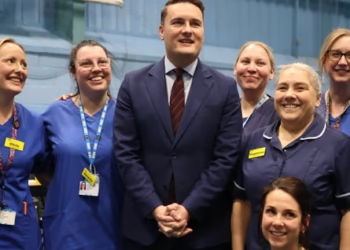 Public satisfaction with the NHS rises for the first time
 NHS Staff Shortages Stifling Recovery for Stroke Survivors
 Unions Raise Concerns Over Doctors’ Pay Dispute
 Wes Streeting Accuses Doctors of Torpedoing Pay Deal
 MPs Demand Government Scraps ‘Shameful’ NHS Palantir Deal
 NHS Safety Fears as Nurses Cover Doctor Gaps
 Giuliani hospitalised in critical condition
 US Court Restores Abortion Pill Access Temporarily
 FDA Chaos Deepens as Trump Eyes Makary Exit
 Wes Streeting faces narrow road to Labour members’ favour
 NHS Drug Deal Faces Legal Threat Over US Trade Agreement
 The Race for Radical Change in Westminster
 Labour MP Revives Blocked Assisted Dying Bill in Commons
 Mystery Grows Over Mitch McConnell’s Health
 Trump’s UK Ambassador Urges North Sea Drilling to Strengthen US Ties
BBC to Apologise Over Edited Trump Speech Amid Backlash
Trump’s UK Ambassador Urges North Sea Drilling to Strengthen US Ties
BBC to Apologise Over Edited Trump Speech Amid Backlash
 Millionaires group urge Reeves to introduce wealth tax to ‘lift kids out of poverty’
 PM Condemns Leaks, Vows Loyalty to Ministers and Stability
 Greene Pushes Epstein Files Amid Trump Fallout
 Shadow Fleet at Sea: Europe’s Battle Against Illicit Oil Shipping
 Five-Year-Old Dies After Rare Tonsil Surgery Complication
 Starmer Says Labour’s Economic Plan Needs Years to Deliver
 Australia grants Asio powers to designate hate groups under new laws
 Trump press secretary attacks reporter over ICE question
 Spoof “Make America Go Away” Caps Rally Denmark Over Greenland
 Trump Fed bid heads to Supreme Court
 Pentagon Signals Reduced Role in Deterring North Korea
 Artificial intelligence will cost jobs, admits Liz Kendall
 Partial US Government Shutdown Hits Homeland Security Funding
 Mandelson Faces Police Inquiry Over Epstein Leak
 Streeting moves on doctor pay to end strike dispute
 UK reports baby formula toxin poisoning cases across the country
 Morgan McSweeney downfall shocks Labour leadership
 UK and US Drop in Global Corruption Index Rankings
 Farage Unveils Reform UK Frontbench Team
 Canberra Poster Seizure Sparks Free Speech Row
 Evo Morales Returns After Mysterious Absence
 Placenta Accreta Warning as Hunt Urges Action
 Wales Approves Assisted Dying Bill Consent
 Jacinda Ardern Moves To Australia Following Her US Fellowships
 Jacinda Ardern Move Sparks Kiwi Reflection
 Corbyn Leads Your Party in Coordinated Left-Flank Strategy
 Asylum Seekers to Work After Year-Long Wait
 Injured Mojtaba Khamenei Elevated as Iran Leader
 Inquiry into HMRC child benefit errors launched by NAO
 Farage Shuns Truss as US Right-Wing Roadshow Hits London
 Italian Town Buys Mussolini Villa to Keep Away Fascist Fans
 Trump Defiant After Washington Hotel Shooting
 New AI Tool To Target Obesity Risk And Transform NHS Care
 Tough Fiscal Realities Await Next Scottish Government
 One Nation Candidate’s Surprising Ties to Independents
 Reform UK Faces Crisis as Newly Elected Councillors Resign
 Tony Abbott Returns as New Liberal Party President
 Pope Meets Families in Italy Toxic Waste Zone
 Record Spending Highlights Growing Crisis In National Health Service
 Secret Role of UK Security Services in Troubles Amnesty Law
 The Hidden Crisis Eroding Trust in British Communities
 Deepfake Abuse on X Sparks Safety Concerns for Dissidents
 Clean Air Initiatives Spark Major Fall in London Hospital Admissions
 NHS Urges Investigation For Irregular Periods
 US Courts Back Trump on Park Signage Removals
 Trump’s Mount Rushmore Speech: A Divisive Anniversary
 Trump’s Red-Card Intervention Hurts the US World Cup
 Farage Warns Sky News Following Financial Inquiry
 Trump Swaps Planes Amid Iran Tensions
 Ann Widdecombe, Formidable Political Figure, Dies at 78
 UK Schools Struggle as Classrooms Top 40C
 Houthis Strike Saudi Arabia as Middle East Tensions Rise