Published: March 30, 2026. The English Chronicle Desk.
The English Chronicle Online—Providing trusted news and professional analysis for the UK.
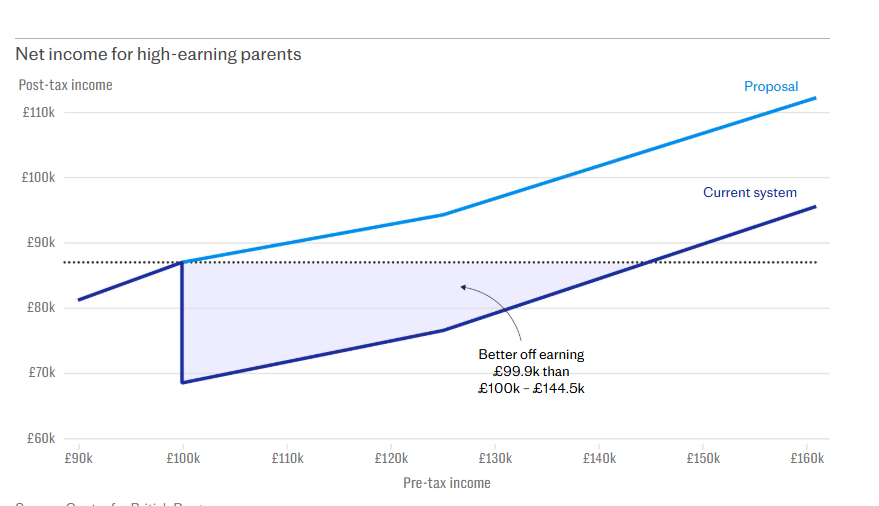
As the May local elections approach, a groundbreaking proposal from the Institute for Fiscal Studies (IFS) has handed Chancellor Rachel Reeves a potential “silver bullet” to solve one of the UK’s most notorious fiscal anomalies: the £100,000 childcare tax trap. Under current rules, the moment a parent’s income hits £100,000, they lose their entire entitlement to 30 hours of free childcare and the tax-free childcare top-up. This “cliff edge” means that a parent moving from a salary of £99,000 to £110,000 can actually see their take-home pay decrease by thousands of pounds due to the sudden spike in childcare costs—a phenomenon economists have labeled a “work penalty” that discourages productivity among the nation’s most skilled professionals.

The proposed solution involves replacing the current “all-or-nothing” cliff edge with a gradual taper, similar to how Universal Credit or the personal allowance withdrawal works. By phasing out childcare support between £100,000 and £140,000, the Treasury could eliminate the incentive for parents to turn down pay rises or reduce their hours to stay below the threshold. Most significantly, the IFS suggests that by combining this taper with a slight reduction in the “tax-free” subsidy for the highest earners, the government could actually raise an additional £700 million a year. This “fiscal windfall” would be enough to fund the government’s promised expansion of “wraparound” care for primary school children, effectively making the reform self-funding.
The political stakes for Labour are high. The Prime Minister’s “Pride in Britain” campaign launch in the West Midlands earlier today focused heavily on “fairness for working families,” yet the £100k trap remains a glaring symbol of a system that punishes ambition. Business leaders and the Confederation of British Industry (CBI) have long argued that the cliff edge is a major contributor to the “motherhood penalty,” as it often forces high-earning women out of the workforce entirely when the cost of an additional hour of work exceeds the marginal gain in pay. “We are effectively telling our most talented doctors, lawyers, and engineers that it doesn’t pay to work harder,” one CBI spokesperson remarked. “It is economic madness.”

While the Chancellor has remained tight-lipped on whether these changes will appear in the next fiscal statement, the “£700m solution” offers a rare opportunity to bridge the gap between pro-growth policy and social equity. With the UK economy facing a “gut-punch” from rising energy costs and oil at $116, finding non-inflationary ways to boost labor participation is a top priority for the Treasury. If Ms. Reeves chooses to adopt the taper, she could simultaneously claim to be the champion of “hard-pressed professionals” while securing the funds needed to stabilize the wider childcare sector. For thousands of parents currently doing the “salary sacrifice dance” to stay under the £100k mark, the reform cannot come soon enough.
Related News:
 Fury as Jobless-Migrant Households Receive Benefits Worth £10bn – ‘We Need to End This’
 PM Seeks to Reassure Australians Over Fuel Supply
 Modi’s London Visit Seals Historic UK-India Trade Pact Amid Global Tensions
 David Lammy Faces Possible Legal Challenge Over Foreign Office Secondment Scheme
 Chancellor Rachel Reeves Pushes for Sweeping Changes to Environmental Protections to Accelerate Development
 Starmer Urged to Champion Workers’ Rights Amid Low Public Awareness
 King Charles Earns Over £1 Million from Duchy Land Linked to Scrapped HS2 Project
 Senior Tories Condemn Badenoch’s Vow to Repeal Climate Change Act as Catastrophic
 Kemi Badenoch Unveils ‘Golden Rule’ to Halve Spending Cuts for Deficit Reduction at Tory Conference
 Lucy Powell urged ministers to reconsider costly legal case for Labour donor’s firm
 Rachel Reeves to lead UK trade push in Saudi Arabia amid rights debate
 Trump’s UK Ambassador Urges North Sea Drilling to Strengthen US Ties
 Rachel Reeves Set to Break Labour Pledge and Raise Income Tax
 MPs Press Rachel Reeves to Hike Gambling Taxes
 Millionaires group urge Reeves to introduce wealth tax to ‘lift kids out of poverty’
 Canada Passes Carney’s First Budget in Tight Parliamentary Vote
 PM Highlights UK Business at G20 in South Africa
 India’s Labour Law Overhaul Sparks Fierce Debate
 Starmer Says Labour’s Economic Plan Needs Years to Deliver
 Starmer links foreign trips to tackling cost of living crisis
 China Dependence Threatens UK Energy Supply Chains and Jobs
 MPs warn AI financial risks threaten UK stability
 MPs warn AI financial risks threaten UK stability
 Labour Must Revive High Streets to Avoid Election Collapse
 UK food industry urges transition if post-Brexit rules reset
 AstraZeneca China Investment Signals Strategic Shift Abroad
 Barclays drops Global Counsel after Mandelson link scrutiny
 Could Manchester Lead the UK’s Economic Revival?
 Royal Mail Blames Poor Weather and Sickness for Delayed Deliveries
 Robert Jenrick to Be Unveiled as Reform UK’s Treasury Spokesman, Reports Say
 US Civil Rights Leader Jesse Jackson Dies Aged 84
 Reform Plans to Keep UK’s Budget Watchdog in Office
 Last‑ditch Call to Save Police Front Counters in London
 Jenrick: I’ll Back OBR but There’ll Be No More Cosy Consensus
 Another U-turn Ahead as Labour Reconsiders Youth Minimum Wage
 Sanders Condemns Billionaire ‘Greed’ in California Tax Debate
 Store at Famous Shopping Village to Close After 18 Years Due to Rising Costs
 UK Sees Record £30.4bn Budget Surplus, Boosting Reeves’ Position
 Schools in England to Get Budget for Children with Special Needs as Part of SEND Overhaul
 What Now for Asia After Trump’s Tariffs Were Struck Down?
 Man discovers £18k trading card stash in his loft
 Ministers Urged to Ban Crypto Political Donations
 Reeves Must Back Defence Plan or Face Dismissal, Says Unite Chief
 Labour’s Employment Shake‑Up ‘Makes Britain Worse Than France’
 Venezuela and US to Work Together on Mining Developments, Rodríguez Says
 Manchester Students Mourn Ayatollah Amid Protest
 Nissan Sunderland Plant Faces Uncertain Future Under EU Rules
 Iran War Raises Questions Over China’s Global Plan
 Labour Faces Backlash Over Conscription Warning
 Gulf Oil Shock Sends Global Economic Ripples
 Iranian Players Get Australian Visas After Anthem Protest
 Iran Rejects Ceasefire, Warns Trump With Chilling Message
 US Says 16 Iranian Mine Ships Destroyed in Hormuz
 Sarah Ferguson Loses Another £1.5m Amid Financial Struggles
 SNP Health Secretary Criticised Over NHS Failures Locally
 Scotland Combines Alcohol and Drug Strategy to Cut Addiction Deaths
 Courier Firm Bust After 14 Years as Evri Deliveries Face ‘Temporary Disruption’
 Jobless Man on £15k Benefits Accused of Hurling Abuse at Anti-Migrant Demo
 Labour Plans Nuclear Investment Summit Days After Holyrood Election
 US Launches Probe into Trading Partners Including EU, China, and India
 UK Fuel Tax Hike Plan to Be Kept Under Review Over Iran Conflict
 Fuel Costs Are Rising — Drivers on the Frontline of the Price Surge
 ‘Heating Oil Suppliers Are Holding Us to Ransom’ as Prices and Cancellations Surge
 Sri Lanka Sets Weekly Shutdown to Save Fuel
 Rising Costs Force Families to Rethink Days Out
 Nepal to swear in ex-rapper as new prime minister
 Missing Cuba-Bound Aid Ships Spark Urgent Search
 ‘Teenage Me Could Not Have Imagined This’ Says First Female Archbishop
 Fire Crews Battle Major Blaze at Coventry Car Dealership
 US Lawmaker Demands Testimony Over Sarah Ferguson’s ‘Close Epstein Ties’
 The Last of the Lords: Two Hereditary Peers to Retain Ceremonial Roles Amid Historic Ousting
 ‘My Daughter is Under the Rubble’: The Human Cost of the Tehran Strikes
 ‘No Surprise’: Ramaphosa Downplays South Africa’s Exclusion from Emergency G7 Summit
 ‘Eye in the Sky’ Blinded: Photos Reveal Destroyed US Radar Jet at Saudi Base
 ‘Full and Immediate Access’: Netanyahu Reverses Palm Sunday Ban on Latin Patriarch
 Badenoch Demands Energy Tax Cuts Over ‘Benefit Street’ Bailouts
 Tories Urge Three-Year VAT Scrap on Energy Bills to Combat Price Spike
 Starmer Launches Labour Local Election Campaign Under Shadow of ‘Bloodbath’ Predictions
 How the King Became the Jewish Community’s Greatest Ally
 No, the RNLI is Not a ‘Taxi Service’ for Migrants – I Would Know