Published: April 1, 2026. The English Chronicle Desk.
The English Chronicle Online—Providing trusted news and professional analysis for the UK and International Affairs.
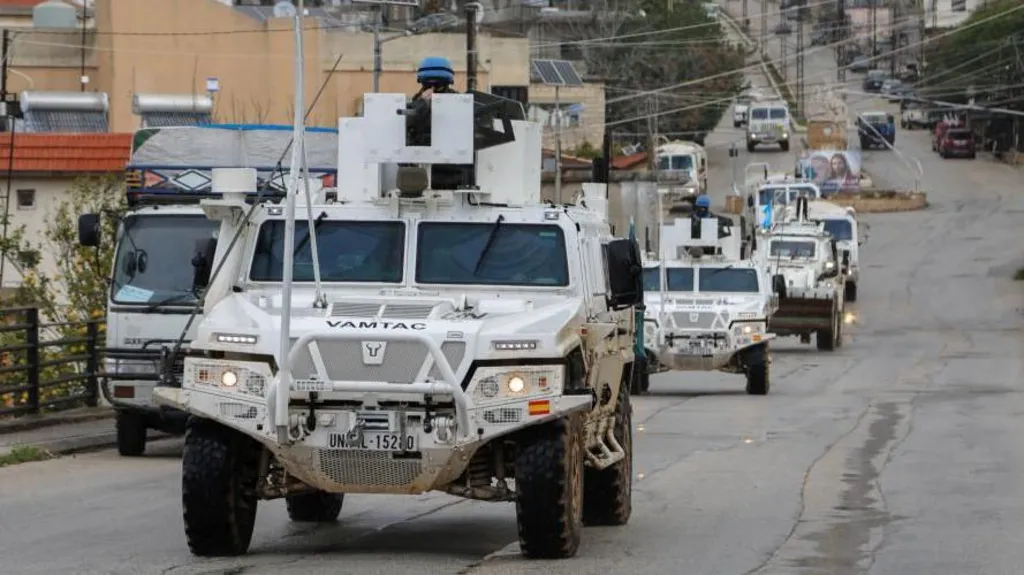
The United Nations Interim Force in Lebanon (UNIFIL) is facing one of its deadliest weeks in recent history after an initial investigation confirmed that a sophisticated roadside explosion was responsible for the deaths of two peacekeepers on Monday. Speaking to the UN Security Council late Tuesday, peacekeeping chief Jean-Pierre Lacroix stated that the preliminary findings into the blast near Bani Hayyan point to a “roadside explosion striking the convoy.” The victims, identified as two Indonesian soldiers, were part of a patrol operating in the volatile “Blue Line” border region, which has seen near-constant combat since the outbreak of the U.S.-Israel-Iran war on March 2.
The incident marks the third UN casualty in less than 48 hours. On Sunday night, a separate explosion at a UNIFIL position near Adchit al-Qusayr killed another Indonesian peacekeeper, Chief Pvt. Farizal Rhomadhon. While the UN has not yet officially assigned blame for the roadside bomb, the tragedy has sparked a fierce diplomatic row within the Security Council, with both the Israel Defense Forces (IDF) and Hezbollah trading accusations of endangering international personnel.

A War of Narratives
As the $116 oil price continues to pressure the global economy, the safety of the 7,500-strong UNIFIL force has become a secondary flashpoint in the regional conflict.
-
The IDF Review: The Israeli military issued a statement on Tuesday claiming their review of the Bani Hayyan incident concluded that no Israeli troops or explosive devices were present in the area. Israeli UN Ambassador Danny Danon instead pointed to Hezbollah, alleging the group is “placing peacekeepers directly in the line of fire” by planting IEDs along patrol routes.
-
The UN Stance: UNIFIL spokesperson Kandice Ardiel has called for both parties to “share their evidence with our investigative team.” Meanwhile, UN security sources told AFP that the separate Sunday incident—the death of the third peacekeeper—may have been caused by “debris from an Israeli tank round” recovered at the site, though this remains under high-level verification.
-
The Indonesian Response: In Jakarta, Foreign Minister Sugiono condemned the “reprehensible developments” in the strongest terms, noting that Indonesia remains a mainstay of the mission despite the “extremely dangerous” conditions.
The ‘Winding Down’ Paradox
The deaths come at a particularly sensitive time for the mission. Under a previous Security Council mandate, UNIFIL is scheduled to cease operations at the end of 2026 and fully withdraw by 2027.
-
Operational Risk: With the mandate expiring in months, the “Blue Helmets” find themselves in a precarious position—caught between a retreating diplomatic shield and a rapidly expanding ground offensive.
-
The Humanitarian Toll: The violence has already displaced over 1.1 million people in Lebanon. UNIFIL’s ability to facilitate aid—already hampered by the “8 Million Dilemma” affecting global logistics—is now severely restricted by the threat of IEDs.
[Image: An infographic showing ‘UNIFIL Casualties by Incident Type’ (2024-2026)]
‘No Man’s Land’
As Asia stocks jump on Trump’s “weeks, not months” peace signals, the reality for the troops in South Lebanon is far less optimistic. The “roadside bomb” signature of the Monday attack suggests a shift toward asymmetric warfare in the region, where UN convoys are increasingly unable to distinguish between combatant maneuvers and hidden traps.

For the families of the fallen Indonesian soldiers, the geopolitical debates over Lego drones or bunker-buster strikes are cold comfort. Their loved ones were the “thin blue line” in a conflict that has now claimed over 1,200 lives in Lebanon alone. As the Easter bank holiday approaches, France and Indonesia have requested a formal emergency session of the Security Council to demand “immediate and concrete guarantees” for the safety of those wearing the UN beret.
Related News:
 UK Will Allow US to Use Bases to Strike Iranian Missile Sites, PM Says
 Cooper: Joining US Strikes on Iran ‘Not in Britain’s Interest’
 Trump’s Iran Endgame Unclear After Mixed Messaging on War Aims
 Shock US Raid: Maduro Pleads Not Guilty in Manhattan Court
 UK and France Agree Troop Deployment Plan for Ukraine
 EU Weakens as Trump Targets Venezuela and Greenland
 Israel Dossier Sparks Australian Political Interference Concern
 Venezuela Oil Deal Opens Tensions with US Control
 US Citizens Warned to Venezuela Flee Amid Paramilitary Threats
 Gulf states warn Trump Iran strikes risk wider Middle East war
 Machado Trump medal gesture reshapes Venezuela power struggle
 Greenland defence seen as shared Nato duty amid troop arrivals
 Trump Receives Machado’s Nobel Medal in White House Meeting
 Iran unrest slows under brutal crackdown and global tensions
 Syria President Declares Victory as Ceasefire Reached with SDF
 US Considers Asylum for British Jews Amid Rising Antisemitism
 Russia Strikes Kyiv and Kharkiv as Peace Talks Enter Day Two
 Emails Show Epstein Funded Mandelson’s Husband After Jail
 Fears of New Arms Race as US-Russia Nuclear Weapons Treaty Expires
 US Military Says Two Killed in Strike on Alleged Drug Boat in Eastern Pacific
 Trump Endorses Japan’s Takaichi Ahead of Snap Election
 Venezuela’s Opposition Says Party Leader Kidnapped Hours After Being Freed
 Christchurch Shooter Seeks to Overturn Guilty Plea in Appeals Court
 Starmer Weighs Fast-Tracking Defence Boost
 Macron Rebuked in Franco-German Defence Row
 Facing a Demographic Catastrophe, Ukraine Is Paying for Troops to Freeze Their Sperm
 Ukraine-Russia War Latest: Kyiv’s Forces Make Huge Gains Ahead of Geneva Peace Talks
 US Says It “Supports” UK Chagos Islands Deal
 Iran Says ‘Guiding Principles’ Agreed With US at Nuclear Talks
 Ukraine Peace Talks End in Acrimony After Two Hours
 Leave Chagos Now, Britain Tells Returning Islanders
 Indian University Kicked Out of AI Summit for Claiming Chinese Robot Dog as Its Own Invention
 India Sentences Three Men to Death for Attack on Israeli Tourist and Hosts
 Japan Braces as Takaichi Begins New Term with Huge Mandate for Low‑Tax, Ultra‑Conservative Agenda
 US Build-Up of Warships and Fighter Jets Tracked Near Iran
 UK Has Not Given US Permission to Use RAF Bases for Iran Strikes
 Musk Cuts Starlink Access for Russian Forces – Giving Ukraine an Edge at the Front
 Drugs, Denial, Stigma: Fiji’s HIV Crisis Hits Children
 German Chancellor Lands in Beijing for Inaugural China Trip
 Cuba Kills Exiles in Speedboat Attack from US Waters
 Four Killed on US-Registered Speedboat Were Cuban Nationals, Cuba Says
 Canada Says U.S. Unlikely to Lift Tariffs Amid Ongoing Trade Tensions
 US ‘Suitcase Murderer’ Deported From Bali After 11 Years in Jail
 Why Asian Firms Are Not Cheering Trump Tariff Ruling
 Why Asian Firms Are Not Cheering Trump Tariff Ruling
 RAF Responding to Suspected Drone Strike at UK Cyprus Base
 Months of Planning Behind US‑Israeli Mission to Target Iran’s Supreme Leader
 What Khamenei’s Death Means for Russia and China
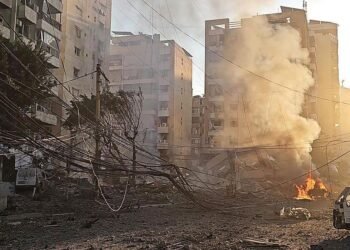 Israel Launches Fresh Strikes on Tehran & Beirut; US Warns “Hardest Hits” Ahead
 Carney to Push His Middle Power Strategy During Australia Visit
 The US Now Has the Medicine for Cheap Swarming Drone Attacks
 Global Order Is ‘Breaking Down’, Carney Tells Australian Parliament
 Spain’s Sánchez Hits Back at Trump Threat to Sever Trade, Says ‘No to War’
 Azerbaijan Promises Retaliation After Iranian Drone Hits Airport
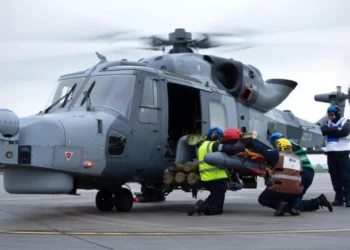 Minister Meets Crews Who Will ‘Take Out’ Iranian Drones
 UK Prepares Aircraft Carrier for Middle East Crisis
 UK–US Tensions Ease as Starmer and Trump Hold First Call Since Iran Row
 Yvette Cooper: UK Must Follow Principles, Not US Pressure
 Wary Allies Signal No Easy Path in Iran Crisis
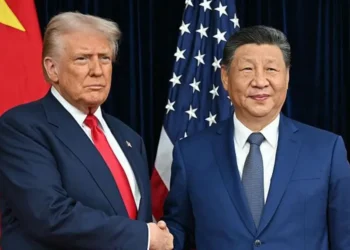 Trump Seeks to Delay Meeting With Xi
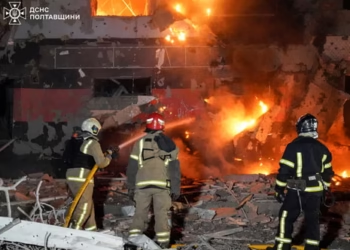 Russia Drone Attack Intensifies Ukraine War Pressure
 Saudi Arabia Urging US to Keep Up Iran Attacks
 Washington Enlists Musk to Battle Global Hostility Online
 China’s Secret Mountain Ruins Rise Again in New Cold War
 Beyond ‘Halfway’: Netanyahu Signals Progress as Iranian Drone Strikes Tanker in Dubai
 ‘United by Music’: Eurovision Song Contest Officially Launches First-Ever Asia Edition
 ‘Emergency Management’: Korean Air Slashes Costs as Jet Fuel Prices Double
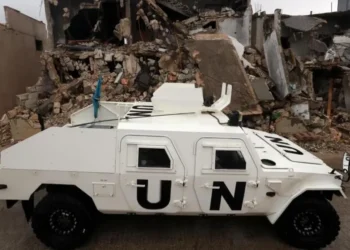 Tragedy in Lebanon: Two Indonesian UN Peacekeepers Killed in Border Explosion
 ‘Democracy Manifest’: Iconic ‘Succulent Chinese Meal’ Rant Added to National Film Archive
 Chain of Fire: US Bunker Busters Strike Major Iranian Ammo Depot in Isfahan
 ‘Floating Inferno’: Iran Attacks Fully Loaded Oil Tanker Off Dubai Coast
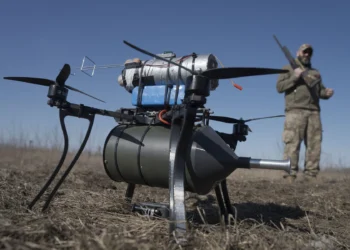 ‘Lego Drones’: Ukraine Hits Back at German Arms Giant Over ‘Housewife’ Slurs
 ‘Silent Neighbors’: China Bans Residential ‘Bone-Ash’ Apartments Amid Qingming Crackdown
 ‘Targeting the Truth’: US Journalist Shelly Kittleson Abducted in Central Baghdad
 ‘The Warthog’s Stopover’: American Tank Busters Land at Lakenheath En Route to the Gulf
 ‘Patriots, Carry On’: Hegseth Overrules Army to Reinstate Pilots After Kid Rock Flyover
 ‘The Cost of Living’: Asia’s Migrant Workers Debate if Gulf Jobs are Worth the Risk of War
 ‘The 42-Day Rally’: Asian Markets Surge as Trump Signals ‘Rapid’ Iran Exit
 ‘You’re No Longer My Sister’: The Invisible Frontline Dividing Iranian Families
 ‘The Counting of a Nation’: India Launches World’s Largest Census Amid Tech Revolution