Published: April 7, 2026. The English Chronicle Desk. The English Chronicle Online — Navigating the future of global innovation and technology.
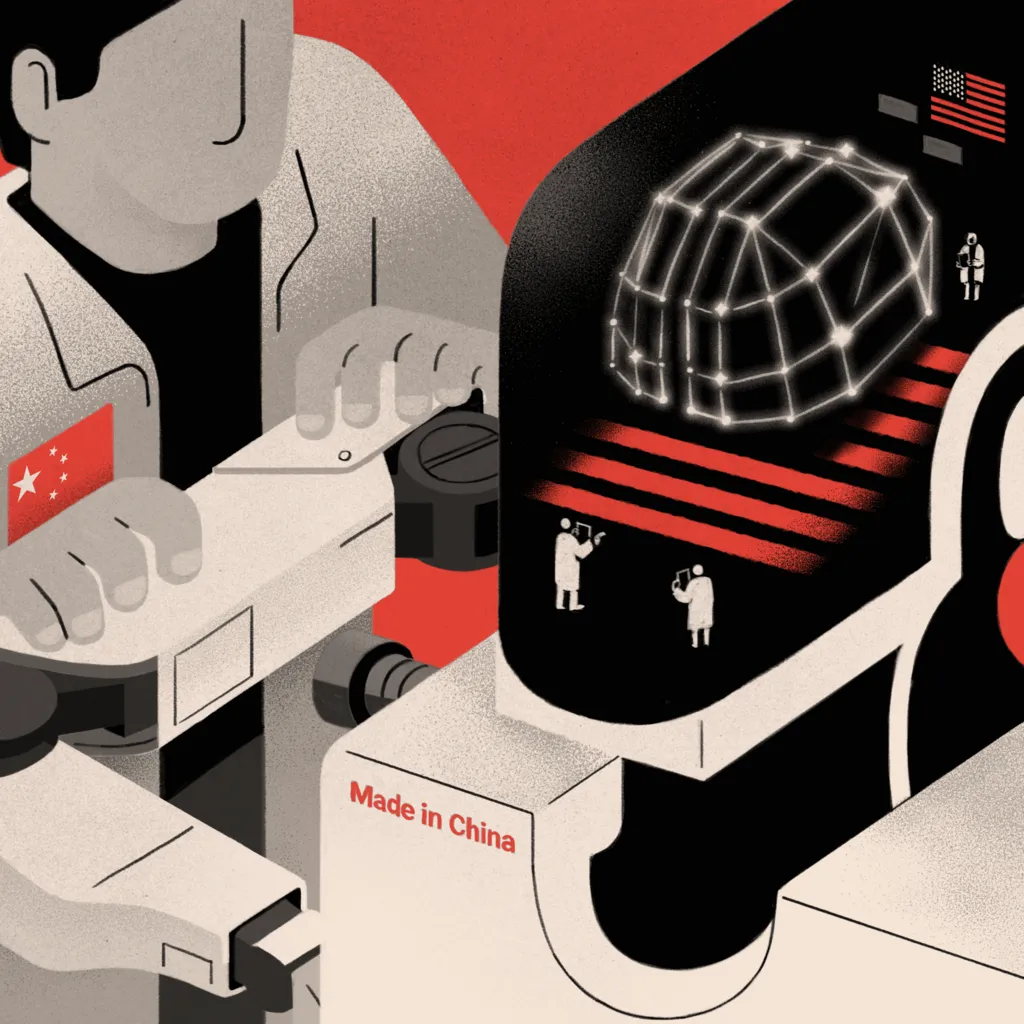
The global competition for artificial intelligence supremacy has entered a nuanced and bifurcated phase, with recent data suggesting that China and the United States are currently winning two distinct, yet equally critical, races. While the narrative for years focused on a singular winner-takes-all sprint, the reality in 2026 is a complex landscape of specialization. China has effectively secured a lead in the practical application and industrial integration of AI, while the United States remains the undisputed heavyweight in foundational research and the development of cutting-edge, frontier Large Language Models.

China’s dominance is most visible in the realm of “Physical AI” and smart manufacturing. Leveraging its massive industrial base and centralized data policies, Beijing has successfully integrated AI into the fabric of its infrastructure. From autonomous logistics hubs in Shanghai to AI-driven predictive maintenance in its nationwide high-speed rail network, China has turned the technology into a tangible tool for economic efficiency. Furthermore, China now leads the world in AI patent filings and the sheer volume of “applied AI” talent. By focusing on narrow, task-specific AI that solves immediate industrial problems, China has created a self-sustaining ecosystem that prioritizes commercial viability and national resilience over theoretical breakthroughs.
In contrast, the United States maintains a commanding lead in the “Generative Frontier.” Silicon Valley remains the epicenter for the most sophisticated AI architectures, such as the successors to GPT-5 and Gemini. The U.S. advantage lies in its concentrated computing power and its “brain drain” capability, consistently attracting the world’s top researchers to its elite universities and private labs. The American approach favors general-purpose AI—systems capable of reasoning, creative synthesis, and complex coding—which many experts believe will be the ultimate engine of long-term economic transformation. This lead is underpinned by a robust venture capital environment that is willing to bet billions on the speculative potential of Artificial General Intelligence (AGI).
However, the “pull-ahead” factor for either nation remains tethered to two volatile variables: hardware and regulation. For the United States, the primary challenge is maintaining its lead in high-end semiconductor design while managing a domestic debate over AI safety and copyright that threatens to slow down deployment. For China, the hurdle is the ongoing U.S.-led export controls on the most advanced AI chips, which forces Chinese firms to innovate around hardware limitations. Despite these sanctions, Chinese tech giants have made surprising strides in developing domestic “inference” chips that are optimized for running models, even if they struggle with the initial training of massive frontier systems.

As both nations pour hundreds of billions into their respective strategies, the possibility of a “decisive breakthrough” remains. Some analysts argue that China’s lead in robotics and hardware integration could allow it to dominate the future of autonomous systems before the U.S. can fully commercialize its advanced reasoning models. Conversely, if the U.S. achieves a breakthrough in AGI that can automate the scientific process itself, it could leapfrog China’s industrial lead in a matter of months. In this high-stakes technological cold war, the winner may not be the one with the fastest model, but the one who can most effectively bridge the gap between digital intelligence and physical execution.
Related News:
 Jack Dorsey’s Block Cuts Thousands of Jobs as It Embraces AI
 India’s $300bn Outsourcing Industry Faces AI Test
 China’s Tech Giants Race to Hong Kong as Global “Staging Post”
 China’s AI ‘Lobster’ Craze Signals Bigger Ambitions
 Anglian Water Fined £63 Million Over Sewage Scandal Amid National Outrage
 How to Exit Your Broadband Contract Without Paying Exit Fees
 Permission Granted for Britain’s First Vertical Rocket Launch at Shetland Spaceport
 Government Expands Electric Car Grant Scheme, Offers Discounts on Five More Models
 Ed Davey Urges Government to Block Elon Musk’s Tesla from Supplying UK Home Energy
 Apple Unveils Ultra-Thin $999 iPhone Air at “Awe-Dropping” Annual Event
 Merck Abandons £1bn London Research Hub and Cuts 125 Jobs in Blow to UK Life Sciences
 UK and US Forge Landmark Deals to Build Modular Nuclear Reactors Across Britain
 Big Pharma Investment Freeze Puts UK Life Sciences Sector Under Strain
 UK Could Generate Nearly £2bn Annually by Taxing SUVs, New Study Reveals
 Google Pledges £5bn AI Investment in UK Ahead of Trump State Visit
 Donald Trump’s UK State Visit Kicks Off Amid Major Tech Investments and Business Engagements
 Jaguar Land Rover Extends Production Halt Following Cyber-Attack
 British AI Startup Outshines Human Forecasters in Global Prediction Contest
 Royal Mail Owner Acquires Stake in Collect+ and Launches High Street Rebrand
 Jaguar Land Rover to Resume Production After Cyber-Attack, Launches Supplier Support Scheme
 NHS May Pay 25% More for Medicines Amid US Drug Talks
 Watchdog Rules Red Tractor Ad Misled Public on Environmental Claims
 Eurostar to launch doubledecker trains through Channel Tunnel by 2031
 Bloomsbury chief: AI will aid authors in beating writer’s block
Virgin Trains Moves Closer to Challenging Eurostar Monopoly
Bloomsbury chief: AI will aid authors in beating writer’s block
Virgin Trains Moves Closer to Challenging Eurostar Monopoly
 North Sea oil workers must lose weight or face job loss
 New laws to bolster UK’s defences against cyber attacks on NHS, transport and energy
 UK Taskforce Unveils Plan to Streamline Nuclear Reactor Rules
 UK Car Sales Pass 2 Million as Chinese Brands Surge
 China Halts Nvidia H200 Chips Despite US Export Approval
 MPs warn AI financial risks threaten UK stability
 MPs warn AI financial risks threaten UK stability
 AI job losses UK: Britain faces sharper employment shock
 UK AI avatar firm Synthesia valuation jumps to $4bn
 SpaceX Plans $1.5tn IPO Amid Planetary Alignment
 Amazon mistakenly signals new global layoffs to employees
 UK New Car Discounts Near £6,000 as Prices Are Slashed
 Bithumb Bitcoin Mistake Shocks Crypto World
 BT Names New Openreach Chief Amid Major Fibre Expansion
 AI fears hit UK wealth and comparison sites
 The Chinese AI App Sending Hollywood Into a Panic
 Etsy Sells Second‑Hand Fashion App Depop to eBay for $1.2bn
 Urgent AI Threat Research Needed, Says Google Boss
 AI Coding Firm’s ‘Pride’ at Business Award Win
 Met Police Using AI Tools Supplied by Palantir to Flag Officer Misconduct
 Anthropic Boss Rejects Pentagon Demand to Drop AI Safeguards
 Burger King Rolls Out AI Headsets to Track Employee ‘Friendliness’
 How Aston Martin Must Adapt to Meet Changing Needs
 How AI Can Read Our Scrambled Inner Thoughts
UK Firms Warned of Rising Iran Cyber Threats
How AI Can Read Our Scrambled Inner Thoughts
UK Firms Warned of Rising Iran Cyber Threats
 UK Firms Warned of Rising Iran Cyber Threats
 Boy George Says He’s Using ChatGPT to Help Write New Songs
 Musk Tells Jury “People Read Too Much” Into His Posts in Twitter Investor Trial
 Revealed: UK AI Push Faces Phantom Investment Claims
 Ukraine’s Anti-Drone Bullet Could Shield Gulf Skies
 Bank of Scotland App Glitch Lets Customers See Other Users’ Transactions
 Tesla Enters British Energy Market Following Ofgem Approval
 UK Pushes NHS and MoD to Buy British Tech
 ABC Staff Strike Over Pay and AI Concerns
 High Court Orders Lynch Estate to Pay £920m to HPE
 UK Watchdog Probes Five Firms Over Fake Review Failings
 Councils Pressed to Use Universal Parking App to Cut ‘Unfair’ Fines
 One Ant for $220: The New Frontier of Wildlife Trafficking
 Miliband Accused of ‘Cheating’ After Classing Foreign Gas as Clean Power
 British AI Startup Nscale Faces Backlash Over Planned Microsoft Data Centre
 Jim Ratcliffe’s £3.5bn Chemical Plant Delayed with Parts Stranded in the Gulf
 Baltic Blackout: Satellite Images Reveal Scorched Russian Oil Hubs After Ukraine Strikes
 OpenAI Must Find Profit Path Before Stock Market Debut
 The “Trap” Is Closing: New Global Laws Target Subscription Loops
 The “Subscription Trap” Snaps Shut: New Global Laws Mandate One-Click Refunds
 The $11k Ticket: High Stakes and Dynamic Pricing in FIFA’s First Open Sale
 New Gmail Feature Ends Era of Embarrassing Email Names
 Apple at 50: Three Products That Changed How We Live
 UK House Price Growth Slows as Buyers Exercise Caution Ahead of Autumn Budget
 Reeves Faces Setback as Labour May Miss Homes Target
 Trump’s UK Ambassador Urges North Sea Drilling to Strengthen US Ties
 UK Bans Fake Numbers: Scammers Lose Their Trick
 Vibe coding’ named Collins dictionary’s word of the year
 Millionaires group urge Reeves to introduce wealth tax to ‘lift kids out of poverty’
 Sundar Pichai Cautions on AI Hype and Market Risks