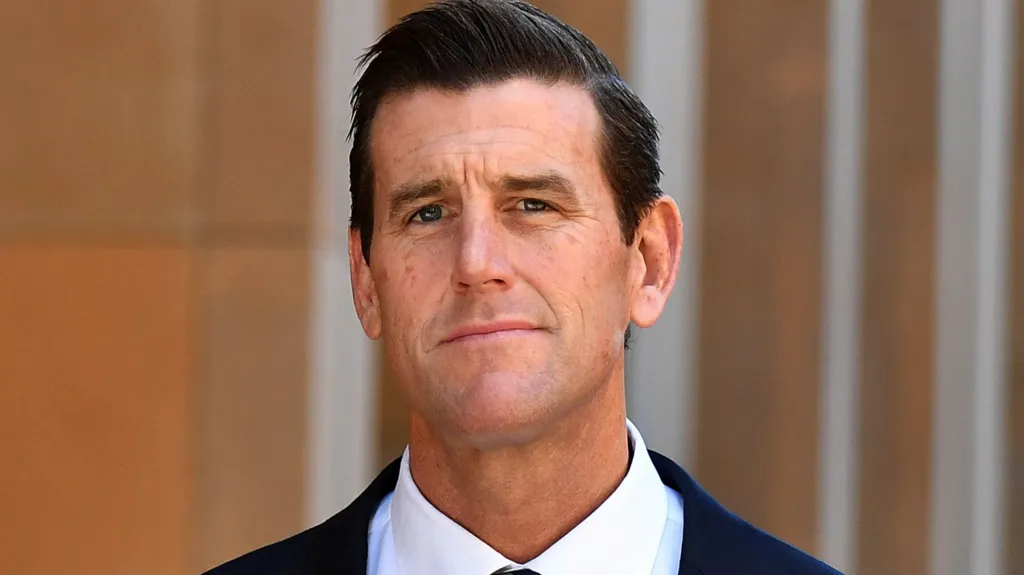
Published: April 7, 2026. The English Chronicle Desk.
The English Chronicle Online — Accountability and the heavy cost of the deep frontier.
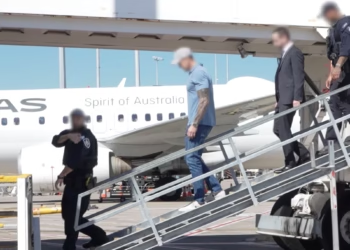
SYDNEY — In a momentous day for Australian military history, Ben Roberts-Smith, the nation’s most decorated living soldier, was arrested at Sydney Airport on Tuesday morning and charged with five counts of murder. The charges, stemming from his time as a Special Air Service (SAS) corporal in Afghanistan between 2009 and 2012, mark the culmination of a grueling five-year investigation by the Office of the Special Investigator (OSI) and the Australian Federal Police (AFP).

The 47-year-old Victoria Cross recipient, once lionized as a national hero and named “Father of the Year,” now faces the prospect of life imprisonment. AFP Commissioner Krissy Barrett confirmed that the charges relate to three separate incidents in which unarmed Afghan civilians were allegedly killed while under the control of Australian Defense Force (ADF) members. “It will be alleged the victims were not taking part in hostilities at the time of their deaths,” Barrett stated. “They were detained, unarmed, and under control.”
The charges detail a dark departure from the rules of engagement. Investigators allege that Roberts-Smith either personally executed the victims or ordered subordinates to do so in his presence—a practice referred to in military circles as “blooding” junior soldiers.
-
The Cliff Incident (Darwan, 2012): One of the most high-profile allegations involves the death of an Afghan villager named Ali Jan. It is alleged that Roberts-Smith kicked the handcuffed man off a ten-meter cliff before ordering a subordinate to shoot him dead.
-
Whiskey 108 (2009): Two of the counts relate to an incident at a compound known as Whiskey 108, where two Afghan men were allegedly discovered in a hidden tunnel and subsequently executed.
-
Syahchow (2012): The final two charges concern the deaths of two civilians during a mission in the Syahchow region.
The arrest follows a catastrophic legal defeat for Roberts-Smith in 2025, where he lost a multi-million dollar defamation suit against three Australian newspapers. In that civil trial, a Federal Court judge found that the newspapers had proven, on the balance of probabilities, that Roberts-Smith was indeed a murderer and a war criminal. While the standard of proof in today’s criminal charges is much higher—beyond a reasonable doubt—the civil ruling stripped away the “hero” narrative that had protected the soldier for over a decade.
The OSI, established in 2021 following the landmark Brereton Report, has been meticulously building the criminal case, navigating the immense challenges of restricted access to crime scenes and the absence of physical evidence. Director of Investigations Ross Barnett emphasized that while 39 other investigations have concluded without charges, the evidence in the Roberts-Smith case was “compelling enough to move to the next stage of justice.”
The arrest has sent shockwaves through the ADF and the broader Australian public. For many, Roberts-Smith was the face of the modern Australian warrior; his portrait hangs in the Australian War Memorial, and his Victoria Cross was a source of immense national pride. Prime Minister Anthony Albanese has declined to comment on the active legal proceedings, but the AFP Commissioner was quick to defend the broader military. “The alleged conduct is confined to a very small section of our trusted and respected ADF,” Barrett said. “The majority serve with honor and distinction.”

As Ben Roberts-Smith spends his first night in a cell at Silverwater Prison, the case moves from the court of public opinion to the bail court. For the families of the victims in Afghanistan, the arrest represents a “significant step” toward a truth that has been buried for nearly fifteen years. For Australia, it is a painful, necessary reckoning with the shadows cast by its most celebrated veterans.
Related News:
 ‘The Nanny of Bondi’: Accused Pinochet Agent Adriana Rivas to be Extradited to Chile
 ‘Staggeringly Stupid’ Man Jailed After Tattooing Children
 Suspect in Rhode Island Ice Hockey Shooting Killed Ex‑Wife and Son
 Epstein Eyed Record Label Investment to Access Women, Files Suggest
 Sydney kidnapping mystery deepens as grandfather’s remains found after mistaken abduction
 Australians Arrested Over Alleged Murder of Grandfather Mistakenly Kidnapped
 Wealthy Parents Play Dead After Son Hires Hitman to Kill Them
 Ecuador Deploys 75,000 Forces in Anti-Gang Drive
 ‘Ghost Offences’: Data Reveals No Children Charged with New ‘Adult Crime’ Laws in 11 Years
 Reckoning in Sydney: Ben Roberts-Smith Arrested and Charged with Five War Crime Murders
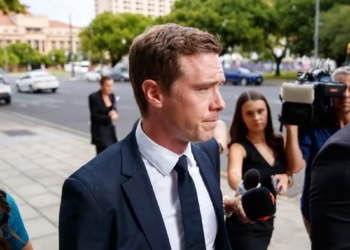 ‘It Was an Accident’: Rohan Dennis Breaks Silence to Attack ‘False Narrative’ Over Wife’s Death
 Northern Ireland Family of Three Shot Dead in Maguiresbridge Home Incident
 A Fugitive’s Double Life Uncovered: My Interview with Nicholas Rossi, Scotland’s Notorious Escapee Facing Utah Rape Trial
 Failed New Mexico Candidate Sentenced to 80 Years for Drive-By Shootings at Lawmakers’ Homes
 Father’s Tip Leads to Arrest in Charlie Kirk Murder Case
 Jailed Georgian Opposition Leaders Warn UK of Iranian Links to Ruling Party
 UK Gamer Recruited by Wagner Group Found Guilty of Arson
 Just Stop Oil Protesters Convicted Amid Climate Defence Row
 British Grandmother to Return Home After Death Sentence in Bali
 Oklahoma Governor Grants Last-Minute Clemency to Death Row Inmate
 Teens ‘Ran Amok’ at Ex-MP’s Covid Testing Firm
 Migrant father guilty of honour killing in Holland
 Emails Show Epstein Funded Mandelson’s Husband After Jail
 Five Young People Die in Spain Apartment Block Fire
 Disability and LGBT Hate Crimes Set to Become Aggravated Offences
 Last‑ditch Call to Save Police Front Counters in London
 Nine Arrested in France Over Death of Far‑Right Student
 Desperate Hunt for Breakthrough in Nancy Guthrie Case Turns to Mexico
 How Much Could Andrew’s Arrest Hurt the Royal Family?
 Epstein Files Could Be Just Tip of the Iceberg for Andrew Investigation
Man Guilty of XL Bully Offence After Fatal Attack
Epstein Files Could Be Just Tip of the Iceberg for Andrew Investigation
Man Guilty of XL Bully Offence After Fatal Attack
 Austrian Climber Found Guilty After Girlfriend Froze to Death on Mountain
 ‘El Mencho’ Killed in Military Operation, Triggering Violence
 Australian Prosecutors Consider Reopening British Girl’s Cold Case Disappearance
 Conman Stole My Money and Bought His Wife a 10‑Carat Diamond Ring
 Sadistic Pair Jailed for Blowing Up Sheep
 Inside Kyiv’s resolve as conflict nears five‑year mark
 ‘I reported rape in Hong Kong, now I could face prison’
 Nick Reiner pleads not guilty to killing parents Rob and Michele
 Owner Sentenced After Emaciated Dog Put Down
 Two Arrested After Woman Set on Fire in Revenge Attack
 US ‘Suitcase Murderer’ Deported From Bali After 11 Years in Jail
 Grave of Murdered Toddler James Bulger Vandalised
 Outsiders Disrupted Search for Missing Teen Noah Donohoe
 Police Brothel Raids Target Organisers, Not Sex Workers
 Family of Girl Groomed by Ian Huntley Beg Medics to Save His Life
 Sarah Everard’s Killer Wayne Couzens ‘Petrified’ After Ian Huntley Prison Attack
 Undercover officer deceived women with ‘grotesque and cruel’ lies, spycops inquiry told
 Alleged Bondi gunman seeks order to suppress family’s identity
 Istanbul’s ex-mayor to stand trial on corruption charges
 Gran Vows to Shield Huntley’s Daughter From Soham Killer’s Funeral
 Two Charged After Bomb Attack Outside NYC Mayor’s Home
 Burglar’s Bizarre Excuse After Bedroom Break-In
 King Charles Strips MBE and OBE Titles from Nine People Including Stuart Hogg
 Chinese National Arrested Over Attempt to Smuggle 2,000 Queen Ants From Kenya
 Blind Woman Forced to Move Out After Leak Causes Ceiling to Cave In
 Rapist Caught After Victim Calls Police Mid-Attack

 Brutal Attack on Officer Leads to Five-Year Sentence
 Children’s Author Convicted in Husband Poisoning Case
 Teen Admits Filming Westfield Chair Prank
 Missing Cuba-Bound Aid Ships Spark Urgent Search
 Belarus Leader Gifts Rifle to Kim Jong Un

 Hazardous Material Found in Scots Home Raid
 Families Tortured by Authorities During Investigations Inquiry Told
 Mother’s Heartbreak as Son Traumatised by Friend’s Sexual Abuse
 Watchdog Probes Police Handling of Andrew Tate Abuse Claims
 Dawn Raids in Scotland and Spain: Eight Arrested in Major Organised Crime Sting
 ‘I Didn’t Realise’: ‘Housebound’ Benefit Cheat Caught Ziplining in Mexico
 Three-Minute Heist: Renoir, Cézanne, and Matisse Masterpieces Stolen in Italy
 Seven-Month Australian Manhunt Ends in Fatal Shootout
 “Unforgivable Scene”: Crisis Staff Discover Gruesome Conditions at Convicted Undertaker’s Funeral Home
 “The Monster of Hull”: Funeral Director Admits to Preventing 30 Burials and Stealing Charity Cash
 Inside Job: Corrupt Prison Guard and Gang Jailed Over Sophisticated Smuggling Plot
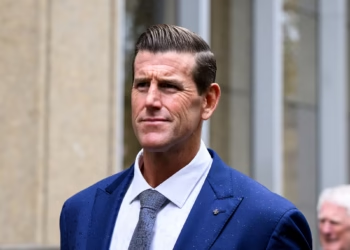 ‘I Will Not Abandon Him’: Pauline Hanson Stands by Ben Roberts-Smith After War Crime Charges
 ‘I Know Him in My Bones’: Melissa Gilbert Denies Being ‘Naive’ in Defense of Timothy Busfield
 The Invisible Trap: How an Online Friendship Became a Sextortion Nightmare
 The ‘Algorithm of Arson’: How a Global Cyber-Syndicate Triggered Real-World Riots
 ‘Seismic Change’: How Nationalist Wins in Celtic Nations Could Reshape the UK