Published: April 8, 2026. The English Chronicle Desk.
The English Chronicle Online — Monitoring the tectonic shifts in global energy flows.
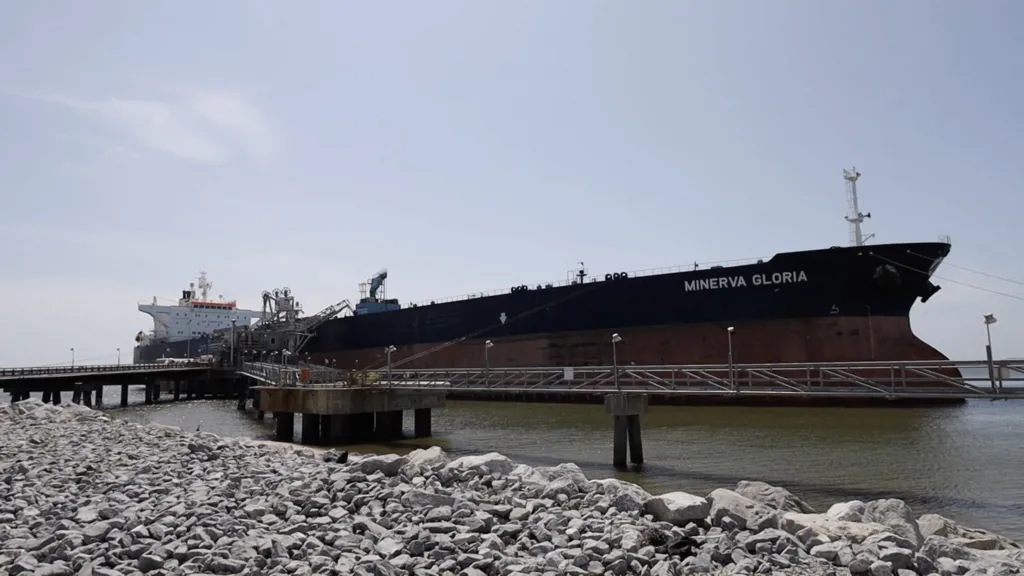
HOUSTON / NEW ORLEANS — The landscape of the American energy sector is undergoing a “seismic” transformation this April as Gulf Coast refineries officially pivot back to a familiar, if long-absent, partner. Following the dramatic geopolitical shifts in Caracas earlier this year and the subsequent lifting of U.S. sanctions, heavy Venezuelan crude is once again flowing into American storage tanks in volumes not seen since 2019. For refineries in Texas and Louisiana—complex facilities specifically engineered to handle the “thick, high-sulfur” grades of the Orinoco Belt—the arrival of these barrels represents a critical operational lifeline.

Leading the charge is Valero Energy Corp., which confirmed this week that its Port Arthur and St. Charles facilities have significantly ramped up the processing of Venezuelan heavy sour crude. For years, these refineries were forced to rely on more expensive Canadian or Mexican alternatives; however, with Mexico’s Pemex slashing its own heavy crude exports to feed its domestic refining expansion, the return of Venezuelan oil has arrived as a timely “market shock.”
The return of Venezuelan oil isn’t just a matter of trade; it’s a matter of mechanical compatibility.
-
The Complexity Factor: Unlike the light, sweet crude produced in U.S. shale basins, Venezuelan oil is extra-heavy. It requires specialized “coking” units and high-pressure desulfurization equipment to be transformed into gasoline and diesel.
-
The Mexican Gap: With Mexico projected to withhold nearly 200,000 barrels per day from the U.S. market in 2026, Gulf refiners like Chevron and PBF Energy are racing to recalibrate their systems.
-
Price Advantage: As of early April, Venezuelan barrels are trading at a significant discount—reportedly $9.50 cheaper per barrel than Brent crude—making it a lucrative, albeit technically demanding, asset for the American refining “heavyweights.”
Despite the enthusiasm, the transition has hit a “bum note” of logistical friction. After years of dormancy, the infrastructure connecting Venezuelan tankers to U.S. pipelines is showing signs of “rust.” Industry insiders report that while the oil is arriving, the pace of personnel retraining and equipment “descaling” has been slower than anticipated. In January alone, the U.S. imported 284,000 barrels per day, leaving some refineries momentarily overwhelmed by the sheer volume of “extra-heavy” feedstock.
Furthermore, the “human-centered” cost of this energy pivot remains a point of intense debate. While the Trump administration has framed the new U.S.-Venezuela Energy Deal as a victory for American consumers, the “indefinite control” of Venezuelan oil sales by U.S.-managed accounts has raised questions regarding long-term regional stability. For the workers on the Houston ship channel, however, the politics matter less than the “full-capacity” signs returning to their docks for the first time in seven years.
A critical sub-plot in the 2026 energy map is the rerouting of Venezuelan oil away from Asia. During the sanctions era, nearly all of Venezuela’s output was surreptitiously shipped to China. Under the new General License 48, U.S. Treasury rules now explicitly prohibit the sale of this crude to Beijing, effectively “reclaiming” the resource for the Western Hemisphere.
As ExxonMobil and ConocoPhillips send assessment teams back into the Orinoco to rebuild neglected infrastructure, the message from the Gulf Coast is clear: the age of “Heavy” is back. The 2026 energy crisis, defined by the Iran conflict and rising fuel costs, has found an unlikely, if controversial, pressure valve in the oil fields of Venezuela.
Related News:
 British AI Startup Outshines Human Forecasters in Global Prediction Contest
 UK New Car Discounts Near £6,000 as Prices Are Slashed
 The Chinese AI App Sending Hollywood Into a Panic
 Etsy Sells Second‑Hand Fashion App Depop to eBay for $1.2bn
 ABC Staff Strike Over Pay and AI Concerns
 Jim Ratcliffe’s £3.5bn Chemical Plant Delayed with Parts Stranded in the Gulf
 Baltic Blackout: Satellite Images Reveal Scorched Russian Oil Hubs After Ukraine Strikes
 Apple at 50: Three Products That Changed How We Live
 Electric Shock: Australians Buy Record Number of New EVs as Fuel Crisis Bites
 War, Windfalls, and the Carbon Trap: The Iran Conflict’s Brutal Energy Math
 Modi’s London Visit Seals Historic UK-India Trade Pact Amid Global Tensions
 How to Exit Your Broadband Contract Without Paying Exit Fees
 China’s crackdown on civil servant perks sparks economic concerns
 Shein UK Faces Allegations of Shifting Majority of Profits to Singapore to Reduce UK Tax
 UK and US Forge Landmark Deals to Build Modular Nuclear Reactors Across Britain
 Big Pharma Investment Freeze Puts UK Life Sciences Sector Under Strain
 Jaguar Land Rover Extends Production Halt Following Cyber-Attack
 UK Fighter Jet Purchase Could Breach Nuclear Treaty, Warns CND
 Google at 27: The Untold Story of Ruth Kedar, the Woman Behind the Iconic Logo
 Cooper Unveils £4m Cyber Plan Against Russian Hackers
 China warns UK over delayed London mega embassy decision
 Experts Warn Russia’s Burevestnik Missile Could Destabilise Arms Control
 Virgin Trains Moves Closer to Challenging Eurostar Monopoly
 Britain deploys RAF specialists to assist Belgium with drone threats
 New laws to bolster UK’s defences against cyber attacks on NHS, transport and energy
 Pokémon to open world’s first theme park in Japan next year
 Canada Passes Carney’s First Budget in Tight Parliamentary Vote
 US Clears Nvidia AI Chip Sales to China in Policy Shift
 MPs warn AI financial risks threaten UK stability
 MPs warn AI financial risks threaten UK stability
 Amazon mistakenly signals new global layoffs to employees
 BT Names New Openreach Chief Amid Major Fibre Expansion
 Indian University Kicked Out of AI Summit for Claiming Chinese Robot Dog as Its Own Invention
 China Shows Off Nunchuck‑Wielding Humanoid Robots for Lunar New Year
 How Do You Modernise Mango Farming? India’s Growers Urged to Innovate as Climate Change Hits
 Live Nation Sees Strong Ticket Sales as Monopoly Lawsuit Looms
 ‘We’re Still on Edge’: Toy Firms Look to US Supreme Court as Tariffs Hit Profits
 Musk Cuts Starlink Access for Russian Forces – Giving Ukraine an Edge at the Front
 AI Coding Firm’s ‘Pride’ at Business Award Win
 US Will Not Back Out of Tariff Deals with UK and Others, Says Trump Trade Representative
 Bill Gates ‘Took Responsibility’ Over Epstein Ties in Staff Meeting, Foundation Says
 Social Media Trial: Woman Says Addiction Began at Six
Instagram Investigating AI Profiles ‘Fetishising’ Disabled People
Social Media Trial: Woman Says Addiction Began at Six
Instagram Investigating AI Profiles ‘Fetishising’ Disabled People
 Why Russia Controls Its People With a Flick of a Switch
 Limited Flights Leave UAE But Disruption Continues Amid Iran Strikes
 The US Now Has the Medicine for Cheap Swarming Drone Attacks
 Boy George Says He’s Using ChatGPT to Help Write New Songs
 Protesters Rally in San Francisco Against OpenAI Deal With Pentagon
 We Have More Privacy Controls Yet Less Privacy Than Ever — The Paradox of Digital Life
 Study Says Only Two Nations May Survive Nuclear War
 Oil Prices Surge Above $100 Amid Iran War
 Revealed: UK AI Push Faces Phantom Investment Claims
 Oil Price Jumps Despite Deal to Release Record Amount of Reserves
 Tesla Enters British Energy Market Following Ofgem Approval
 UniCredit’s Bold Move to Reshape European Banking
 India’s $300bn Outsourcing Industry Faces AI Test
 UK Wage Growth Slows as Jobs Market Holds Firm
 One Ant for $220: The New Frontier of Wildlife Trafficking
 Trump Considers Military Operation to Seize Iran’s Uranium
 Trump Threatens Iran With Total Infrastructure Destruction
 ‘Better Off Not Planting’: UK Farmers Face 36% Fertiliser Spike as Gulf Crisis Bites
 The ‘Career Ceiling’: One in Five High Earners Say £100k Tax Trap is ‘Ruining’ Their Ambition
 ‘The 42-Day Rally’: Asian Markets Surge as Trump Signals ‘Rapid’ Iran Exit
 ‘At the Doorstep of the Future’: Florida’s Space Coast Braces for Historic Artemis II Launch
 Russia: The Unforeseen Winner of the Iran Conflict
 ‘We Go for All Humanity’ — Artemis II Returns Humans to the Lunar Vicinity
 A Name for the Nameless: DNA Finally Links 1974 Utah Murder to Ted Bundy
 7.4-Magnitude Earthquake Jolts Eastern Indonesia; Tsunami Warning Lifted
 Breaking the Horizon: Blind Runner to Tackle Brighton Marathon with Smart Glasses
 The $11k Ticket: High Stakes and Dynamic Pricing in FIFA’s First Open Sale
 The Bitter Aftertaste: Iran War Threatens to Spike Prices for Indian Beer and Bottled Water
 New Gmail Feature Ends Era of Embarrassing Email Names
 US Senators Slam Ticketmaster Over Sneaky New Fee Hikes
 Oil and Diplomacy: Russian Refineries Burn as Zelenskyy Secures Middle East Shield
 “A Perfect Storm”: UK Small Businesses Face Doubling Energy Bills as Iran War Rattles Markets
 Voices of the Vanguard: ‘Audio Time Capsule’ of Disability Rights Pioneers Discovered
 China and the US: The Divergent Fronts of the Global AI Superpower Race
 The Great Saddle-Up: Sydney Commuters Ditch the ‘Crazy’ Bowsers for the Bike Lane
 Debt Relief or Drop in the Ocean? UK Caps Student Loan Interest at 6%
 The $100 Billion Peace: Trump’s ‘Grand Bargain’ Ends Iran Conflict at a Staggering Cost