Published: 11 April 2026.The English Chronicle Desk. The English Chronicle Online
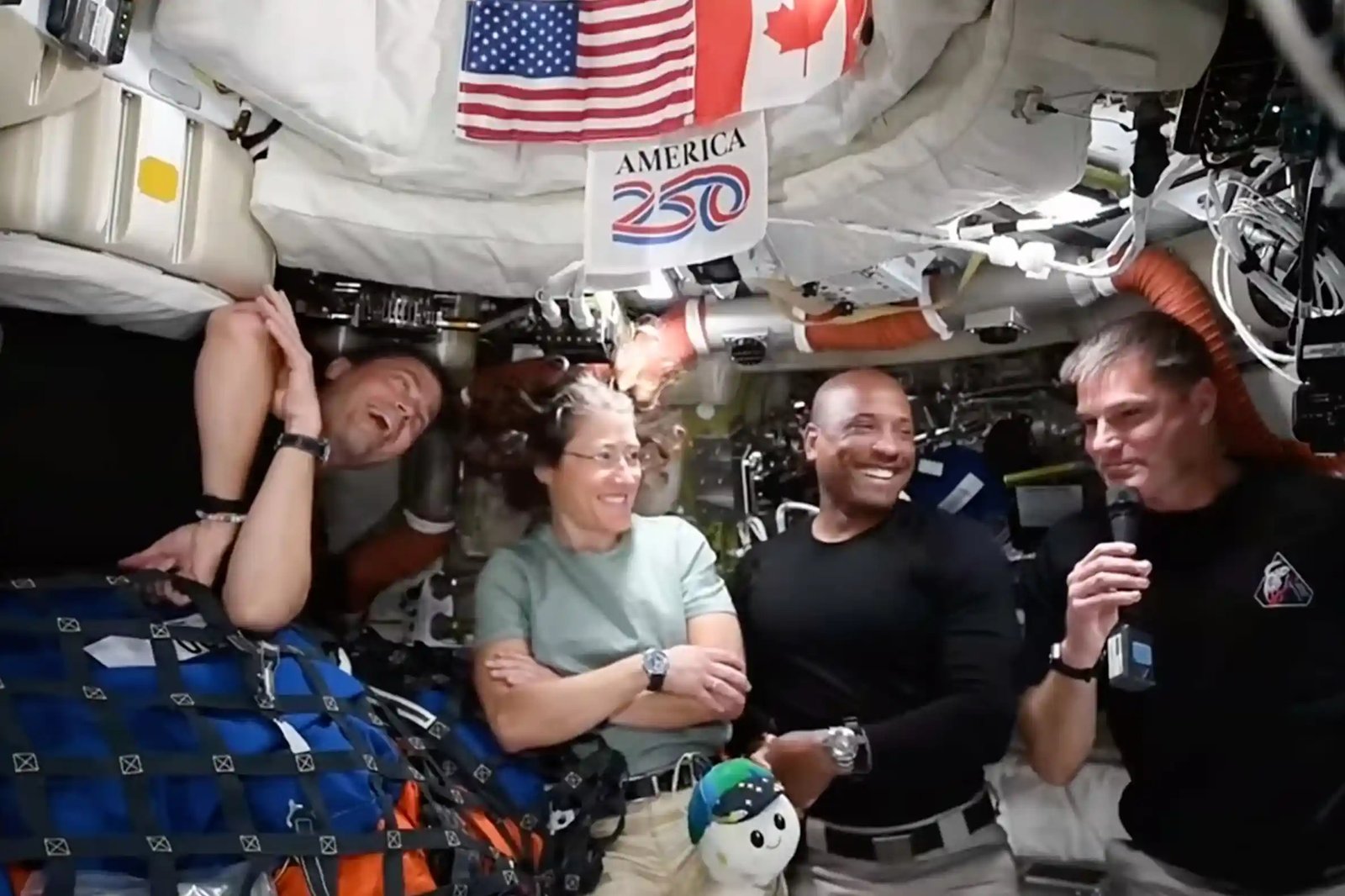
Humanity has taken a major step back toward deep-space exploration after the successful return of Artemis II, a historic lunar flyby mission that concluded with a dramatic splashdown in the Pacific Ocean off the coast of San Diego. The four astronauts aboard the Orion spacecraft safely returned to Earth following a 10-day journey that carried them farther into space than any humans have travelled in more than half a century. Their achievement marks a critical milestone in the effort to establish a sustained human presence on the Moon and beyond.
The crew of four astronauts completed a remarkable journey around Earth’s nearest celestial neighbour, travelling approximately 694,481 miles during a mission lasting nine days, one hour and 32 minutes. Despite technically falling short of ten full days in flight time, the mission is officially recorded as a ten-day expedition because launch day was designated as the first operational day. The achievement represents the first time humans have travelled to the Moon and returned safely since the crew of Apollo 17 in December 1972, bringing an end to a 53-year gap in crewed lunar exploration.

The mission was led by commander Reid Wiseman, alongside pilot Victor Glover, mission specialist Christina Koch, and Canadian Space Agency astronaut Jeremy Hansen. Together they became part of a small and elite group of only 28 humans in history to have travelled to the Moon and safely returned home. Their journey carried them to a distance of 252,756 miles from Earth, surpassing the previous record set by the crew of Apollo 13 in 1970.
As the Orion capsule descended toward Earth’s atmosphere, the astronauts described the profound emotional experience of seeing the planet from deep space. Wiseman spoke of the “great blue hue” of Earth as it emerged from the darkness, a reminder of the fragile environment that sustains life. Christina Koch described an overwhelming moment when the Moon’s surface came into clear view, highlighting the unique perspective astronauts gain when observing celestial bodies directly. Such reflections have historically played a powerful role in shaping public interest in space exploration and environmental awareness.
The safe return of Artemis II demonstrates the continued reliability of modern spacecraft engineering and advances in life-support technology. During the mission, astronauts tested upgraded radiation detectors, communication systems, navigation instruments and next-generation spacesuits designed for future lunar missions. Engineers also evaluated modifications made after the uncrewed Artemis I flight in 2022, particularly improvements to the spacecraft’s heat shield, which must withstand temperatures reaching approximately 5,000 degrees Fahrenheit during atmospheric re-entry. The successful performance of these systems provides confidence for upcoming missions that aim to place astronauts on the Moon’s surface once again.
The spacecraft’s descent required carefully timed deployment of eleven parachutes, gradually slowing the capsule from speeds exceeding 25,000 miles per hour to a gentle splashdown velocity of approximately 17 miles per hour. Recovery teams stationed aboard the US Navy vessel USS John P Murtha quickly reached the capsule and assisted the astronauts out of the spacecraft for medical evaluation. Following initial checks, the crew was transported to a military facility in San Diego before returning to Johnson Space Center in Houston, where they will reunite with their families and undergo further post-mission assessment.
NASA officials emphasised that Artemis II is not simply a symbolic achievement but a practical step toward long-term human exploration of the Moon. The Artemis programme aims to establish a sustainable lunar presence within the coming decade, including the development of a permanent base that could serve as a staging point for future missions to Mars. The next phase, Artemis III, is expected to include a crewed landing on the lunar surface, potentially marking the first time astronauts have walked on the Moon since the Apollo era.
Beyond its scientific importance, the mission has generated widespread public interest due to the powerful imagery transmitted back to Earth. High-resolution images of the Moon’s surface and distant views of Earth captured the imagination of millions worldwide, demonstrating the continuing cultural significance of human spaceflight. The emotional connection many people feel when observing Earth from space reflects a shared sense of global unity that transcends national boundaries.
The mission also included symbolic moments that resonated deeply with audiences. During the journey, the astronauts proposed naming a previously unidentified lunar crater in honour of Carroll Taylor Wiseman, the late wife of commander Reid Wiseman, who died of cancer in 2020. The tribute highlighted the personal sacrifices often associated with long-duration space missions and underscored the human dimension of scientific exploration.
Although largely successful, the mission was not without minor technical challenges. A malfunction in the spacecraft’s toilet system required in-flight repairs, illustrating the complexity of sustaining life in confined environments far from Earth. Such issues provide valuable lessons for engineers designing spacecraft intended for longer missions in deep space, where reliability is essential.

NASA leaders described Artemis II as the beginning of a new era in exploration, emphasising that regular missions to the Moon could soon become routine. The agency envisions a future in which astronauts return to the lunar surface not merely for brief visits, but to establish a continuous human presence capable of supporting scientific research, technological development and commercial activity.
As humanity looks toward returning to the Moon, Artemis II stands as a reminder of the progress achieved since the Apollo era and the possibilities that lie ahead. The successful mission demonstrates that deep-space exploration is once again within reach, supported by international collaboration, technological innovation and renewed public enthusiasm.
The Artemis programme is widely viewed as a crucial stepping stone toward eventual human missions to Mars, a long-standing ambition that could redefine the scope of human exploration. With each milestone achieved, the vision of a multi-planetary future becomes increasingly realistic.
Related News:
 Artemis II astronauts capture Earth en route to the Moon
 Unlocking the Genome: The Quest to Sequence Tardigrades
 Cern Prepares First-Ever Antimatter Transport Test
 ‘The frontline is like Terminator’: Ukraine’s fighting robots
 Apple at 50: Three Products That Changed How We Live
 Canadian Fiddler Sues Google Over AI Defamation Claim
 Doomsday Clock Nears Midnight Amid Global Crises
 UK firms accused of ‘AI washing’ boom
 British Paralympian to Become First Disabled Astronaut in Orbit
 Meta Drops AI Image Tool After Privacy Backlash
 Britain deploys RAF specialists to assist Belgium with drone threats
 Night after night, Belgium is on high alert.
 Hitler’s DNA Confirms He Truly Had Only One Testicle
 Ukraine to Get 100 French Rafale Jets in Historic Deal
 Poll Reveals China Leads World in Trusting AI Technology
 US Clears Nvidia AI Chip Sales to China in Policy Shift
 UK New Car Discounts Near £6,000 as Prices Are Slashed
 Anthropic AI Refuses Pentagon’s Safety Demand
 Social Media Trial: Woman Says Addiction Began at Six
 Brady Tkachuk Denies AI Video Claims After Olympic Gold
 Musk’s xAI Permit Sparks Fury Over Power Plant Expansion
 The Kill Line: A Shifting Vision of the American Dream
 Iran Social Media Strategy Shifts to Information War
 ABC Staff Strike Over Pay and AI Concerns
 Cluster Strikes Test Israel’s Missile Defences
 Artemis II: Humanity Returns to the Moon After Decades
 Europe EV Demand Surges as Fuel Prices Rise
 Robots Outpace Humans in Beijing Half-Marathon
 Gene Therapy Wins Major Prize for Restoring Vision
 Canadian astronaut French words ease language row
 OpenAI CEO Apologizes After Canada Shooting Case
 Chornobyl Still at Risk 40 Years After Disaster
 Reform UK funding: mystery billionaire revealed
 RAF Typhoons scrambled amid Russian drone threat near Nato
 Disneyland Adds Facial Recognition at Entrances
 Meta Faces EU Action Over Child Safety Breach
 Inside the World of AI Jailbreakers
 Germany to Return Rare Irritator Dinosaur Skull to Brazil
 Musk v OpenAI Trial: The Battle for the Soul of AI
 China mine blast death toll rises to 90
 Ebola outbreak in DRC overwhelms health system as cases surge
 Cannes filmmakers split over AI’s role in cinema
 UN Issues Urgent Warning: Imminent Return of El Niño
 Gen Z turns to BirdTok for a gentler digital escape
 UK Bans Fake Numbers: Scammers Lose Their Trick
 Vibe coding’ named Collins dictionary’s word of the year
 Patients to Test Health at Home to Ease NHS Winter Pressure
 BBC to Apologise Over Edited Trump Speech Amid Backlash
 Greene Pushes Epstein Files Amid Trump Fallout
 Zelenskyy Signs Fighter Jet Deal Amid Russian Drone Attacks
 Sundar Pichai Cautions on AI Hype and Market Risks
 Shadow Fleet at Sea: Europe’s Battle Against Illicit Oil Shipping
 US Suspends Afghan Immigration After White House Shooting
 ‘Extinct’ Antelope Returns to Sahara, Bringing Hope
 Irish Beach Tragedy: Irish Drown at Whitehaven Beach in Australia
 ABC Facebook Page Briefly Hacked, Adult Photos Posted
 Meta trial over child exploitation claims begins
 UK and US Drop in Global Corruption Index Rankings
 Canberra Poster Seizure Sparks Free Speech Row
 Stewart Brand on Musk, Bezos and a Life of Long Thinking
 Jacinda Ardern Move Sparks Kiwi Reflection
 Middle East Airspace Crisis Strands Thousands
 Kelly Wilkinson Inquest Reveals Bail Failure
 Injured Mojtaba Khamenei Elevated as Iran Leader
 Air Canada CEO Faces Outcry Over Recent Language Misstep
 Extreme Weather: Europe Shivers as Cyclone Narelle Hits
 Asia Turns Back to Coal Amid Middle East Energy Crisis
 Relationship with Trump may be beyond repair, Starmer warned
 Trump’s Six-Week Iranian War: The High Cost of Ignorance
 Suspected Plot Targets Pipeline Before Hungary Vote
 Reeves Slams Trump Over Iran War Lack Of Exit Plan
 Learner Driver Charged After Expo Tragedy
 UK Faces Growing Threat of Scale Hacktivist Attacks
 Coalition pushes fossil fuel phaseout plan
 Trump approval plunges amid Iran war fears
 Scepticism and tight security as Beijing braces for Trump
 Tensions Flare as Israeli Nationalists March in Jerusalem
 Pope Meets Families in Italy Toxic Waste Zone
 Stolen Mobiles Could Soon Become Useless Bricks
 Houthis Strike Saudi Arabia as Middle East Tensions Rise