Published: 29 April 2026. The English Chronicle Desk. The English Chronicle Online.
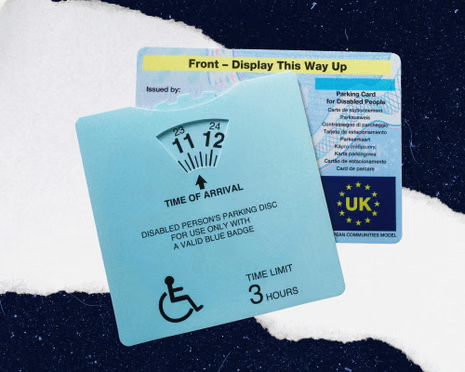
The quiet struggle for inclusion is currently facing a very harsh reality for many. Thousands of disabled Britons report a surge in abuse regarding their blue badges. These essential permits allow drivers to park within more accessible spaces throughout the country. Approximately three million people across the nation rely upon this vital parking scheme. Such support remains critical for many individuals to maintain their daily independence. Recent trends suggest that anti-benefits rhetoric has become increasingly mainstream in Britain. This cultural shift seems to have encouraged public suspicion of disabled citizens. Many badge holders now feel targeted, harassed, and occasionally even physically assaulted. The environment has become deeply distressing for those who genuinely require these.
Public discourse often highlights concerns regarding the misuse of the blue badge scheme. Some media outlets have actively named and shamed drivers caught using fraudulent documents. While addressing fraud is necessary, this focus has created a culture of suspicion. Many members of the public now feel emboldened to police these parking spaces. They often assume that any badge holder looking fit must be a complete grifter. This assumption ignores the reality that many disabilities are not always visually apparent. Invisible conditions often leave people vulnerable to intense scrutiny from complete strangers today. The consequences of this misplaced vigilante justice are profound and deeply upsetting. Many disabled people now choose to stay home rather than risk public confrontation.

Charlotte from Aberdeen experienced a traumatic incident at her local supermarket last year. Her carer was physically assaulted while they were using a designated disabled bay. A stranger approached them, claiming that her carer did not look sufficiently disabled. Despite explanations that the badge was for Charlotte, the woman became extremely aggressive. She pushed a heavy shopping trolley into the carer during this heated encounter. Charlotte, who lives with muscular dystrophy and autism, was understandably terrified throughout. The woman even blocked their car to prevent them from leaving the scene. They have not returned to that store since this frightening experience occurred. Charlotte fears that her carers might face future violence during these outings.
The intensity of this harassment often leaves victims feeling isolated and deeply vulnerable. Recent research suggests that one in five people with multiple sclerosis faces questioning. Many report being shouted at or even spat on by aggressive members of the public. Dave, a thirty-five-year-old from Bournemouth, frequently faces hostility for his young appearance. He relies upon a walking stick to manage his debilitating chronic pain condition. Despite this, he is constantly challenged by strangers while parking his vehicle. In February, an elderly man filmed him while calling him a fraudulent user. Another woman stood in his way, preventing him from exiting his own car. These encounters are repetitive, exhausting, and take a significant toll on mental health.
The impact of this hostility extends to families of children with severe disabilities. Emma lives in London, where she cares for her seven-year-old daughter named Amelia. The child requires a specialist buggy due to complex and severe mobility problems. During a recent trip to a car park, a stranger questioned their eligibility. This confrontation deeply upset Amelia’s eleven-year-old sister, who felt compelled to defend her. Emma describes herself as becoming physically tense whenever the family leaves their home. The constant fear of judgment makes it difficult to enjoy simple family activities. She now wonders if she possesses the emotional strength required for each outing. Such social pressure significantly limits their ability to participate in normal daily life.
Many individuals describe being followed around shops by strangers after parking their cars. Sarah, from North Yorkshire, relies on crutches due to the impact of osteoarthritis. She is currently awaiting a double knee replacement to improve her limited mobility. Last week, she was accused of faking her disability at a local supermarket. A stranger followed her throughout the shop, loudly questioning her genuine medical needs. This individual suggested that she could not be disabled while having two legs. These aggressive confrontations are becoming far too common for many disabled residents today. Sarah now rarely leaves her home because she fears a physical attack occurring. The psychological burden of this constant policing is truly immense for every victim.

The rhetoric surrounding disability benefits often uses damaging terms like golden tickets. Such language appears to have legitimised the public questioning of genuine blue badge holders. Sally, who lives in the West Midlands, helps care for her adult son. He holds a badge due to epilepsy, dyspraxia, and the effects of fatigue. She describes the environment as one where people are prone to jumping conclusions. Her son frequently feels immense guilt because he looks fit to the public. He often begs his mother to go home during these hostile parking encounters. Sally feels deeply worried about his safety when they are out in public. She believes that invisible disabilities are becoming a primary target for public aggression.
This issue highlights a significant disconnect between the public and those needing accessibility. The presumption of guilt has created a climate of fear for many vulnerable citizens. Everyone deserves to live without the threat of intimidation when using public services. Society must address the harmful myths that fuel this aggressive and unnecessary behavior. True inclusivity requires a kinder approach to those whose needs are not visible. We must prioritize empathy over the urge to judge strangers in parking bays. Ensuring the safety of disabled citizens remains a fundamental responsibility for our communities. Protecting the rights of those with disabilities is a benchmark of a decent society. We should all work to foster a culture of understanding rather than hostility.
Related News:
 Reeves Faces Setback as Labour May Miss Homes Target
 Kate Winslet to Narrate Film Highlighting King’s Environmental Mission
 Trump’s UK Ambassador Urges North Sea Drilling to Strengthen US Ties
 UK Bans Fake Numbers: Scammers Lose Their Trick
 Millionaires group urge Reeves to introduce wealth tax to ‘lift kids out of poverty’
 Reeves rejects £1bn plea for NHS redundancy payouts
 PM Condemns Leaks, Vows Loyalty to Ministers and Stability
 Stroke Patient Mistaken for Drunk, Care Delayed
 Inside the Helpline Protecting Missing Children in the UK
 Boots Showstopper Beauty Bundle Outshines Many Advent Calendars This Holiday Season
 PlayStation PS5 Deals Hit Lowest Prices Ahead of Black Friday
 Five-Year-Old Dies After Rare Tonsil Surgery Complication
 Starmer Says Labour’s Economic Plan Needs Years to Deliver
 UK unemployment rises to four-year high of 5.1% before budget
 Wiltshire Police Use Lasso to Catch Rampaging Village Goat
 Coasting Drinks: The Trend Redefining Alcohol Enjoyment This New Year
 Rising Hate Crimes Threaten Safety on UK Public Transport
 Starmer Faces Parliamentary Battles Over UK-EU ‘Reset’ Plan
 Met Police Vetting Failures Let Serial Rapists Remain
 Google Employee Claims Redundancy After Harassment Report
 Fatal Bolton Taxi Crash Claims Three Teens and Driver
 ScottishPower Tops List of Worst UK Energy Suppliers
 Judi Dench Champions Fight to Save London’s Green Spaces
 Crowborough Camp Welcomes First Asylum Seekers
 BBC Funding Crisis: Tim Davie Warns of Jeopardy Ahead
 Storm Chandra floods Somerset, triggers major incident declaration
 Artificial intelligence will cost jobs, admits Liz Kendall
 Older Women Vanish from BBC Screens, Review Confirms Bias
 Mandelson Faces Police Inquiry Over Epstein Leak
 Streeting moves on doctor pay to end strike dispute
 UK reports baby formula toxin poisoning cases across the country
 Morgan McSweeney downfall shocks Labour leadership
 Send spending gap leaves deprived areas behind
 Hidden Crisis: Domestic Abuse Suicide Toll in UK
 UK Unemployment Rate Climbs to 5.2% Peak
 Farage Unveils Reform UK Frontbench Team
 BBC World Cup Presenting Duties Shared Among Trio
 Placenta Accreta Warning as Hunt Urges Action
 Wales Approves Assisted Dying Bill Consent
 CPS Updates Guidance on Honour-Based and Dowry Abuse
 Asylum Seekers to Work After Year-Long Wait
 Inquiry into HMRC child benefit errors launched by NAO
 Rising Costs Force Families to Rethink Days Out
 Scott Mills Sacked by BBC Over Personal Conduct Claims
 Palantir Boss Defends NHS Deal Amid Government Break Clause
 Relationship with Trump may be beyond repair, Starmer warned
 UK Government Poised to Revive Stalled Hillsborough Law
 Home Office Faces Legal Risks Over Asylum Hotel Living
 Crisis in NHS Surgery Scheduling Hits Patients Hard
 New AI Tool To Target Obesity Risk And Transform NHS Care
 Greens Face Internal Row Over Antisemitism Claims
 Met Officers Probed Over Al Fayed Abuse Allegations
 Reform UK Faces Crisis as Newly Elected Councillors Resign
 Starmer Strikes Back as 100 MPs Sign Support Pledge
 UK Firms Freeze Spending as Iran Conflict Bites
 Rugby Legend Scott Hastings Dies Aged 61
 Reeves to Fast-Track Clean Energy Amid Iran Crisis
 The Battle for Wembley Sparking Unprecedented Legal Warfare
 Record Spending Highlights Growing Crisis In National Health Service
 Secret Role of UK Security Services in Troubles Amnesty Law
 Tube Strike Brings Capital to a Standstill Over Shift Disputes
 BP Stands Firm on Amanda Blanc Amid Boardroom Storm
 Teaching Machines Right From Wrong in the Digital Age
 UK House Prices Drop For Third Month Due To War Fears
 The Hidden Crisis Eroding Trust in British Communities
 Deepfake Abuse on X Sparks Safety Concerns for Dissidents
 Stolen Mobiles Could Soon Become Useless Bricks
 Clean Air Initiatives Spark Major Fall in London Hospital Admissions
 United Kingdom Politics Worse Now Than Before Brexit, Warns MP
 Russian Tanker Captain Remanded in UK Court After Channel Seizure
 Shocking Zoo Incident Sparks Attempted Murder Probe
 The Hybrid School Revolution Defying the Social Media Ban
 UK Care Crisis: Row Explodes Over New Visa Settlement Rules
 Sainsbury’s Boss Optimistic As Grocery Inflation Eases
 NHS Urges Investigation For Irregular Periods
 US Airman Avoids British Court in Indecent Exposure Case
 Farage Warns Sky News Following Financial Inquiry
 Ann Widdecombe, Formidable Political Figure, Dies at 78
 UK Schools Struggle as Classrooms Top 40C
 Westminster Council Threatens Charing Cross Soup Kitchen