Published: 12 May 2026. The English Chronicle Desk. The English Chronicle Online.
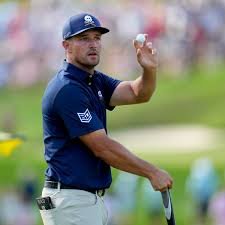
The world of professional golf is currently facing a very strange and unexpected crossroads today. Bryson DeChambeau recently suggested he might leave the professional tour to focus on his YouTube channel. This news shocked many fans who follow his career and the evolving LIV Golf league. Most experts believe this is just a clever way to gain some financial leverage now. His contract with LIV Golf is ending soon and the league faces a shaky future. The Saudi Public Investment Fund recently stopped providing the massive financial support they once easily gave. This leaves many players like DeChambeau looking for a new and stable way to earn. He stated he wants to grow his digital audience by three times very very soon. The golfer hopes to reach new global markets by dubbing his videos into different languages. It is quite a bold claim for an athlete who is in his prime. Most professional golfers focus on winning major trophies and securing their place in sporting history. DeChambeau seems more interested in chasing digital views and building a massive online media brand. His stated goal is now to give the world more reasons to watch YouTube daily. This shift in focus marks a significant change in how athletes view their own careers. Is he simply being smart about money or is sport losing its traditional competitive soul?

Perhaps he is just a unique individual who values digital fame over traditional sporting success. Or maybe he represents a much larger shift in how we consume all modern sports. Organized sports seem to be splintering into smaller and more personalized pieces of digital content. DeChambeau earned forty five million dollars on the course over the last twelve months alone. He was reportedly asking for a new five hundred million dollar contract from LIV Golf. Those dreams of a half billion dollar payday vanished when the main investors pulled out. Now he must navigate a complex path back toward the traditional and strict PGA Tour. He remains incredibly wealthy so we do not need to worry about his personal bank. Competitive golf has always seemed secondary to his passion for creating engaging and viral content. He is certainly the biggest success story to emerge from the controversial LIV Golf experiment. Winning two US Open titles proved he possesses a genuine and rare level of talent. Yet he has always been more interesting as a cultural icon than a pure sportsman. His fame grew more from his online presence than from any single round of golf. He boasts millions of followers across TikTok and Instagram and his YouTube channel is massive. His dedicated production team works hard to release long and high quality videos every week.
The content ranges from breaking course records to testing affordable clubs from local warehouse stores. He often creates stunts like letting voice assistants choose which club he should hit next. One popular series features him playing alongside major celebrities like Steph Curry and Adam Sandler. These videos attract millions of views from people who might never watch a full tournament. DeChambeau even filmed a cameo for the upcoming and highly anticipated movie Happy Gilmore two. His close relationship with Donald Trump also adds a unique political layer to his brand. He serves as the chair of the council on sports for the former American president. They have filmed several viral videos together that have performed exceptionally well on social media. This bond seems to be built on a shared and deep love for public attention. His name feels as quintessentially American as a cold bottle of bright green Mountain Dew. There is something very American about choosing to become a professional celebrity over an athlete. Every modern sport now has to find space for influencers and their loud digital antics. We see creators like MrBeast or IShowSpeed appearing at major football and basketball events. These appearances are usually just small distractions from the actual game being played on field. DeChambeau is different because he is a top professional athlete choosing to become an influencer.
He is not a clown entering sports but an athlete who wants to become a clown. Many journalists are now trying to figure out if this financial move actually makes sense. Recent data suggests that specialized media brands are now worth hundreds of millions of dollars. A thirty two year old athlete could arguably make more money by owning his media. This transition would likely be very profitable and liberating for DeChambeau as a private businessman. However this trend could be quite damaging for the long term health of professional sport. It suggests that heritage and excellence are less valuable than short form clips and stunts. Digital culture has already changed how we enjoy the slow and traditional pleasures of golf. If sports exist only to feed social media then the games themselves will surely change. Sport might need to be streamlined and stripped of its depth to suit mobile screens. We risk reaching a future where the identity of professional sport becomes completely lost forever. Most people watch these games because they love the competition and the high stakes involved. We must wonder if fans will stay if the game becomes just another YouTube stunt. Professional golf has survived many crises but this digital shift feels much more permanent and real. DeChambeau might be the first of many to choose the camera over the trophy room. If he succeeds then the very definition of a professional athlete will change for everyone.

The statistics surrounding this shift are quite revealing when we look at the broader landscape. Research shows that younger audiences are fifty percent more likely to watch highlights than full games. This trend is especially visible among different demographics who value quick engagement over long form broadcasts. Data from digital marketing firms indicates that Gen Z sports fans prefer following individual personalities. In the United States nearly sixty percent of sports fans engage with athletes on social platforms. This number remains high across all racial groups including Black, Hispanic, and White sports consumers alike. Younger viewers across these groups are moving away from traditional cable television at record breaking speeds. They find more value in the authentic and behind the scenes footage found on YouTube. DeChambeau is tapping into a market that is already moving away from traditional league structures. By prioritizing his channel he is following the data that shows where the money goes. Advertisers are now shifting billions of dollars from television spots to individual creator sponsorships annually. This economic reality makes the lure of a full time digital career very hard to ignore. It is no longer just about the love of the game but about platform ownership. DeChambeau wants to own the network rather than just being a player on the field. This ambition could redefine what it means to be a global superstar in the future. Whether fans will follow this new path remains the biggest question for the sporting world.
Related News:
 Granit Xhaka Rescue Earns Everton Draw at Sunderland
 Bellingham has ‘the edge’ among England No 10s
 Man City Masterclass on Guardiola’s Milestone Day Exposes Liverpool Woes
 Mary Earps’s Manchester United Return Faces Mixed Reception
 UK and Ireland Announce Venues for Euro 2028 Tournament
 Saka Solidifies Role as Tuchel’s Key England Lieutenant
 Former Lion Heskey Warns of Shortage of England Strikers
 Tiny Curacao Makes History as Smallest Nation to Reach World Cup
 Haiti Qualifies for World Cup Despite Coach Never Visiting Country
 Australia Face Big Changes as Cummins and Lyon Ruled Out of Ashes
 Van de Ven Tackle Leaves Isak with Fractured Leg
 ECB powerless to halt England’s recurring Ashes failures
 Stokes urges empathy for England players amid Ashes struggles
 Aston Villa Remain Arsenal’s Key Obstacle in Title Pursuit
 Salah Shines as Egypt Knock Out Ivory Coast at Afcon
 Raphinha doubles up as Barcelona beat Real Madrid in Super Cup
 Xabi Alonso leaves Real Madrid, Arbeloa Takes Over
 Maya Joint stunned by Valentová in Australian Open upset
 Chelsea warn fans of danger in Naples after hospital incidents
 Liverpool Chase Champions Glory With Stunning Qarabag Victory
 Carlos Alcaraz Triumphs Over Zverev in Five-Set Australian Open Epic
 Ben Stokes injury joke after brutal ball strike
 Wrestler at 60: A Powerful New Start in the Ring
 Arsenal blow lead as Arteta rues Wolves draw
 England v Ireland: Scrum Battle Takes Centre Stage
 BBC World Cup Presenting Duties Shared Among Trio
 Craig Tiley Leaves Australian Open Legacy
 English Cricket Faces Moral Crisis Over Indian Investment
 Hudson-Odoi Sends Nottingham Forest Into Europa Last 16
 Buttler Eyes Vital Run Surge as England Face New Zealand
 World Cup Drinks Breaks Could Bring ITV Ad Debate
 Saka criticism response: Arsenal star dismisses outside noise
 Spurs Coach Defends Early Kinsky Substitution at Atlético
 Abramovich Chelsea Sale Cash Faces Jersey Probe
 Champions League Failure Sparking Premier League Crisis
 African World Cup Fans Face $15,000 Entry Bond Fee
 Teenage Titan: Sooryavanshi Smashes IPL Records
 Sam Konstas Dropped as Australia Unveils New Contract List
 ECB Faces Backlash Over Disability Premier League Inclusion
 The Wildest Plastico: Leverkusen and Wolfsburg Thriller
 Maguire Commits Future to Manchester United with New Deal
 Can De Zerbi Restore Belief to Save Spurs From the Drop?
 Robots Outpace Humans in Beijing Half-Marathon
 Ashley Cole: Finding His Voice and Vision in Italy
 A Nine-Goal Thriller Redefines European Football Brilliance
 Scott Parker Leaves Burnley After Premier League Drop
 $13bn World Cup Set to Break All Revenue Records
 Arteta urges Arsenal to step up in Atlético semi-final
 RFU Backs Borthwick Despite England’s Poor Six Nations
 Infantino Defends Soaring World Cup 2026 Ticket Costs
 FIFA Confirms Global Ban for Benfica Star Prestianni
 Fernandes Equals Assist Record as United Secure Third
 Bracing for the Cherries: Guardiola Likens Vital Bournemouth Trip to the Dentist
 De Zerbi Rallies Spurs To Fight Relegation Threat
 The Battle for Wembley Sparking Unprecedented Legal Warfare
 Chasing Glory: The Quest for a New World Cup Champion
 Tuchel Defends Tough England Squad Decisions
 Farewell to an Icon: Pep Guardiola to Exit Manchester City
 Chasing Paris Glory Amid Familiar Echoes
 Tom Pidcock On Chasing Tadej Pogacar And His Future Ambitions
 Is Ollie Robinson the Chaos English Cricket Needs Today?
 Saka Playing Through Pain As England World Cup Campaign Looms
 Iran Files Official Fifa Complaint Over World Cup Travel
 Women’s T20 World Cup Breaks Records But Gaps Remain
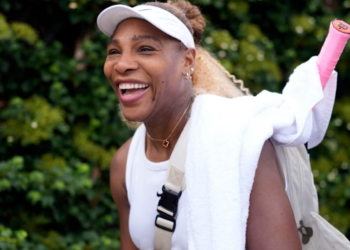 Serena Williams Returns to Wimbledon Centre Court
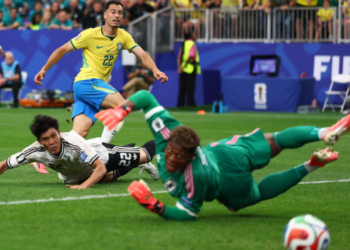 Martinelli Strikes Late as Brazil Edge Past Brave Japan
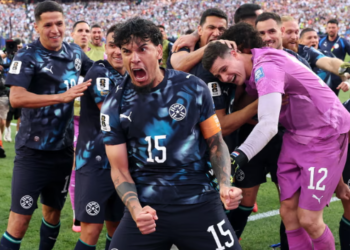 Paraguay Shock Germany in Historic Penalty Shootout
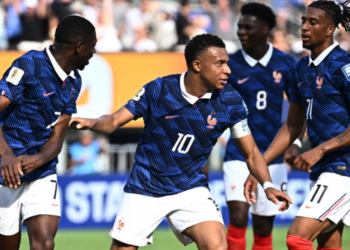 France Dominate Sweden as Deschamps’ New Era Takes Shape
 Mexico World Cup Joy Turns to Tragedy as Two Die in Crowds
 US Advance Past Bosnia in World Cup Thriller
 Kane Saves Tuchel as England Survive Dramatic Exit
 The Stokes Departure: A New Era or a Tactical Mistake?
 Taylor Swift and Travis Kelce Marry at Madison Square Garden
 Trump’s Red-Card Intervention Hurts the US World Cup
 Trump Intervenes in Fifa World Cup Balogun Ban
 NCAA Rules Unchanged After Supreme Court Transgender Ruling
 USA World Cup Heartbreak: Belgium Ends Their Dream
 Mbappé Brilliance Leads France Into Semi-Finals
 Spain’s Superstar Fan: Keyne Yamal Steals the Spotlight
 Lamine Yamal’s Birthday: Football, Fame, and France