Published: 22 April 2026. The English Chronicle Desk. The English Chronicle Online.
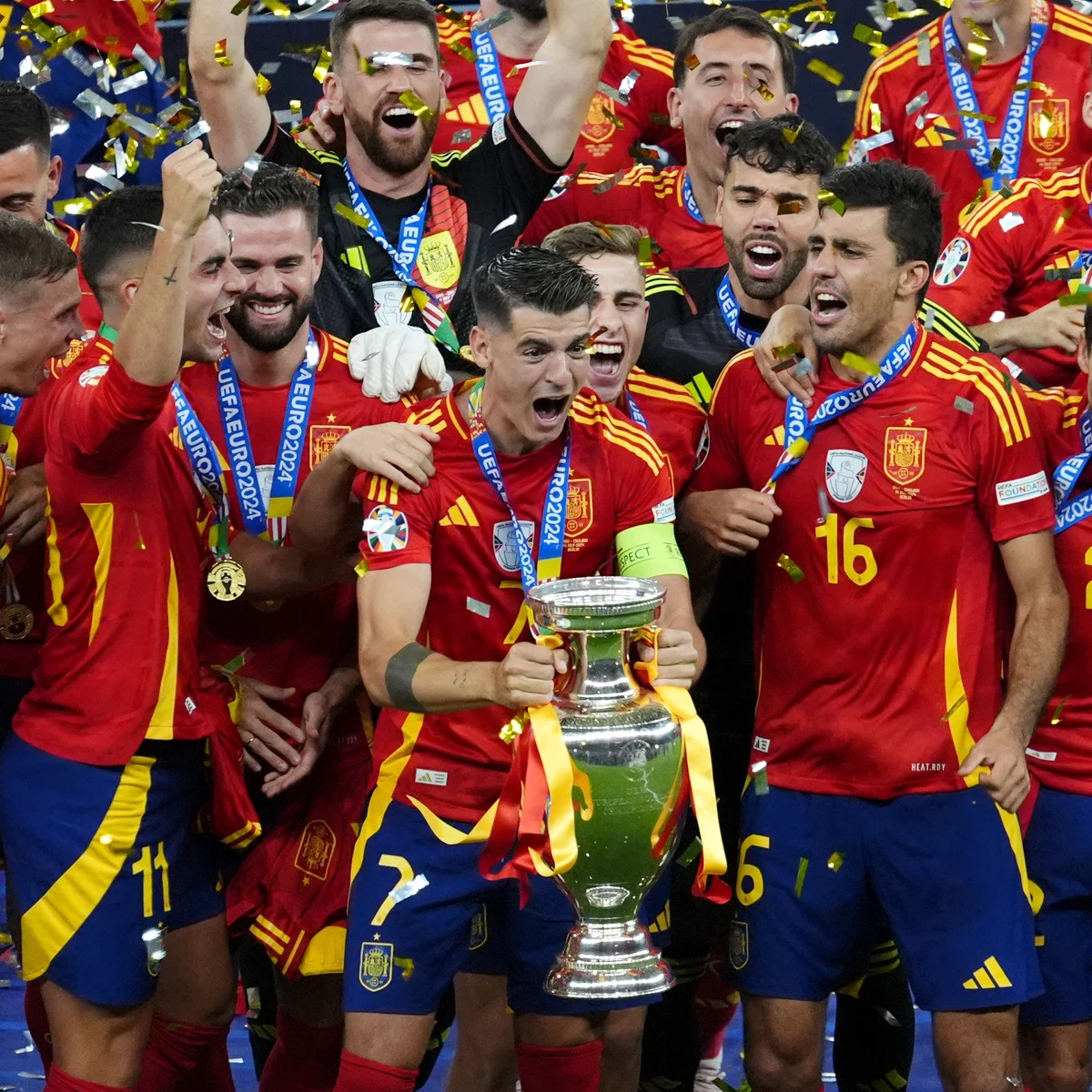
European football authorities are currently evaluating significant changes to the qualification structure for future European Championships. A refined model resembling the successful Nations League format has emerged as the primary option for upcoming international cycles. This potential overhaul marks a pivotal shift following the conclusion of the highly anticipated Euro 2028 tournament next summer. UEFA officials recently presented these innovative proposals to their dedicated national team competitions committee during a strategic meeting on Tuesday afternoon. Individual football associations will now review these comprehensive plans within smaller regional groups over the coming days ahead. A final and binding decision regarding this structural change will be determined by the UEFA executive committee in Istanbul later. This decisive meeting is scheduled to take place just before the prestigious Europa League final occurs next month. There has been growing concern for some time that current qualification formats are becoming unappealing to global fans. Television rights holders have also expressed clear dissatisfaction with the lack of competitive intensity in these routine international matches. Many fixtures have become entirely predictable for larger footballing nations since the expansion of final tournament spots for both European Championships and World Cups.
A specialized working group, which includes the FA chief executive Mark Bullingham, has been carefully studying various fresh options for several months. Achieving a broad consensus across the entire European continent may not be a straightforward task for these dedicated football administrators. A complex Swiss system model, which has been utilized in the Champions League since last season, remains among the various possibilities currently under review. However, experts suggest this format could still lead to significant mismatches and is widely understood to be far less favoured by major international broadcasters. While it would technically guarantee that smaller nations play some high-ticket fixtures, it is not considered to hold the same widespread appeal as a model based on the existing Nations League. That specific plan is currently preferred by many of the continent’s leading footballing lights who desire higher quality matches. If successfully agreed upon, it would represent a strategic variant of the format now used within Europe for women’s World Cup qualification processes.

That specific tournament structure utilizes the most recent Nations League rankings as its foundational basis for determining group placements. It splits participating teams into three distinct leagues before dividing each of those leagues into competitive groups of four so that similarly ranked teams face each other consistently. Group winners from the elite League A would qualify automatically for the tournament, with an extended playoff system then determining which additional teams ultimately progress to the main event. Given that twenty-four teams will eventually qualify for the European Championship, there are likely to be more direct qualifiers included from any new format approved by UEFA in the near future. The Nations League-style scheme would effectively satisfy the increasing demand for high-stakes games between the leading countries across the continent. However, those footballing nations lower down the competitive scale rightfully risk feeling sidelined by such a radical change to the established order of international competition. This critical topic will undoubtedly dominate the discussions taking place between various national federations throughout this busy week.
Retaining the current status quo will also be discussed by committee members, but this traditional path is considered particularly undesirable by influential countries like England. The English team has lost only once since 2009 during qualification campaigns for major international tournaments and firmly believes the existing system has simply gone stale for players and fans alike. There would be no projected increase in the total number of matches played under this proposed new model, which is a key priority for managing player workloads. Sources with deep knowledge of the ongoing process believe the complex mechanics of any change, including essential new agreements with major international broadcasters, are unlikely to be fully in place before the qualification process for the tournament following Euro 2028 begins next March. The transition period will require careful coordination between UEFA and all fifty-five member associations to ensure a smooth implementation of any agreed framework.
Broadcasters are watching these high-level negotiations with significant interest, as the financial implications of a revamped qualification format are substantial for the entire European football landscape. The shift toward a more tiered competitive structure is intended to rejuvenate interest in international breaks that have often felt disconnected from the excitement of club football. Fans have frequently expressed a desire for more balanced groups where teams of comparable quality compete for limited qualification slots, thereby increasing the drama of each individual matchday. Furthermore, the inclusion of an adaptive playoff system ensures that smaller nations retain a legitimate pathway to qualify for major tournaments, which is vital for maintaining the inclusive spirit of the European game. This delicate balance between elite competition and developmental opportunity remains the core challenge facing the UEFA executive committee as they deliberate on the best way forward. As the footballing world looks toward the future, these discussions will shape the competitive landscape for a generation of players and supporters across Europe. The ultimate objective is to create a sustainable and exciting qualification journey that celebrates the rich diversity of European football while providing the highest possible entertainment value for a global television audience. All eyes will now turn to Istanbul, where the future of international qualification will finally be decided in a few short weeks.
Related News:
 Granit Xhaka Rescue Earns Everton Draw at Sunderland
 Bellingham has ‘the edge’ among England No 10s
 Man City Masterclass on Guardiola’s Milestone Day Exposes Liverpool Woes
 VAR Must Rein Its Neck In to Save Football’s Spirit
 Mary Earps’s Manchester United Return Faces Mixed Reception
 UK and Ireland Announce Venues for Euro 2028 Tournament
 Saka Solidifies Role as Tuchel’s Key England Lieutenant
 Former Lion Heskey Warns of Shortage of England Strikers
 Tiny Curacao Makes History as Smallest Nation to Reach World Cup
 Haiti Qualifies for World Cup Despite Coach Never Visiting Country
 Australia Face Big Changes as Cummins and Lyon Ruled Out of Ashes
 Van de Ven Tackle Leaves Isak with Fractured Leg
 ECB powerless to halt England’s recurring Ashes failures
 Stokes urges empathy for England players amid Ashes struggles
 Aston Villa Remain Arsenal’s Key Obstacle in Title Pursuit
 Salah Shines as Egypt Knock Out Ivory Coast at Afcon
 Raphinha doubles up as Barcelona beat Real Madrid in Super Cup
 Xabi Alonso leaves Real Madrid, Arbeloa Takes Over
 Maya Joint stunned by Valentová in Australian Open upset
 Chelsea warn fans of danger in Naples after hospital incidents
 Liverpool Chase Champions Glory With Stunning Qarabag Victory
 Carlos Alcaraz Triumphs Over Zverev in Five-Set Australian Open Epic
 Ben Stokes injury joke after brutal ball strike
 Wrestler at 60: A Powerful New Start in the Ring
 Arsenal blow lead as Arteta rues Wolves draw
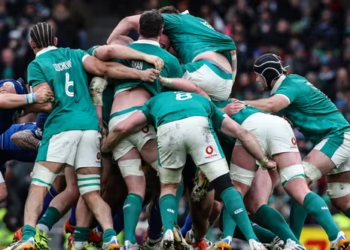 England v Ireland: Scrum Battle Takes Centre Stage
 BBC World Cup Presenting Duties Shared Among Trio
 Craig Tiley Leaves Australian Open Legacy
 English Cricket Faces Moral Crisis Over Indian Investment
 Hudson-Odoi Sends Nottingham Forest Into Europa Last 16
 Buttler Eyes Vital Run Surge as England Face New Zealand
 World Cup Drinks Breaks Could Bring ITV Ad Debate
 Saka criticism response: Arsenal star dismisses outside noise
 Spurs Coach Defends Early Kinsky Substitution at Atlético
 Abramovich Chelsea Sale Cash Faces Jersey Probe
 Champions League Failure Sparking Premier League Crisis
 African World Cup Fans Face $15,000 Entry Bond Fee
 Teenage Titan: Sooryavanshi Smashes IPL Records
 Sam Konstas Dropped as Australia Unveils New Contract List
 ECB Faces Backlash Over Disability Premier League Inclusion
 The Wildest Plastico: Leverkusen and Wolfsburg Thriller
 Maguire Commits Future to Manchester United with New Deal
 Can De Zerbi Restore Belief to Save Spurs From the Drop?
 Robots Outpace Humans in Beijing Half-Marathon
 Ashley Cole: Finding His Voice and Vision in Italy
 A Nine-Goal Thriller Redefines European Football Brilliance
 George North Announces Retirement From Rugby
 $13bn World Cup Set to Break All Revenue Records
 Disney+ Wins Champions League Rights in Key Markets
 FIFA Confirms Global Ban for Benfica Star Prestianni
 The Global Battle for Control Over the Women’s Game
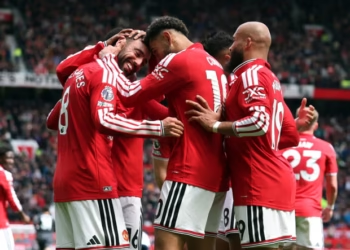 Fernandes Equals Assist Record as United Secure Third
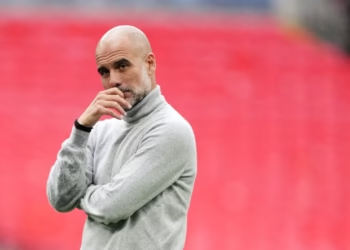 Bracing for the Cherries: Guardiola Likens Vital Bournemouth Trip to the Dentist
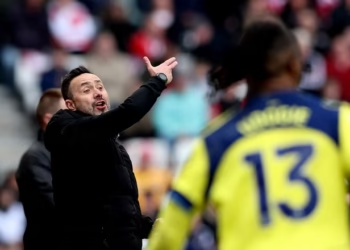 De Zerbi Rallies Spurs To Fight Relegation Threat
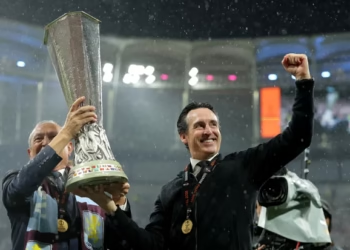 The Battle for Wembley Sparking Unprecedented Legal Warfare
 Chasing Glory: The Quest for a New World Cup Champion
 Tuchel Defends Tough England Squad Decisions
 Farewell to an Icon: Pep Guardiola to Exit Manchester City
 Chasing Paris Glory Amid Familiar Echoes
 Tom Pidcock On Chasing Tadej Pogacar And His Future Ambitions
 Is Ollie Robinson the Chaos English Cricket Needs Today?
 Saka Playing Through Pain As England World Cup Campaign Looms
 Iran Files Official Fifa Complaint Over World Cup Travel
 Women’s T20 World Cup Breaks Records But Gaps Remain
 Serena Williams Returns to Wimbledon Centre Court
 Martinelli Strikes Late as Brazil Edge Past Brave Japan
 Paraguay Shock Germany in Historic Penalty Shootout
 France Dominate Sweden as Deschamps’ New Era Takes Shape
 Mexico World Cup Joy Turns to Tragedy as Two Die in Crowds
 US Advance Past Bosnia in World Cup Thriller
 Kane Saves Tuchel as England Survive Dramatic Exit
 The Stokes Departure: A New Era or a Tactical Mistake?
 Taylor Swift and Travis Kelce Marry at Madison Square Garden
 Trump’s Red-Card Intervention Hurts the US World Cup
 Trump Intervenes in Fifa World Cup Balogun Ban
 NCAA Rules Unchanged After Supreme Court Transgender Ruling
 USA World Cup Heartbreak: Belgium Ends Their Dream
 Mbappé Brilliance Leads France Into Semi-Finals
 Spain’s Superstar Fan: Keyne Yamal Steals the Spotlight
 Lamine Yamal’s Birthday: Football, Fame, and France