Published: 14 May 2026. The English Chronicle Desk. The English Chronicle Online.
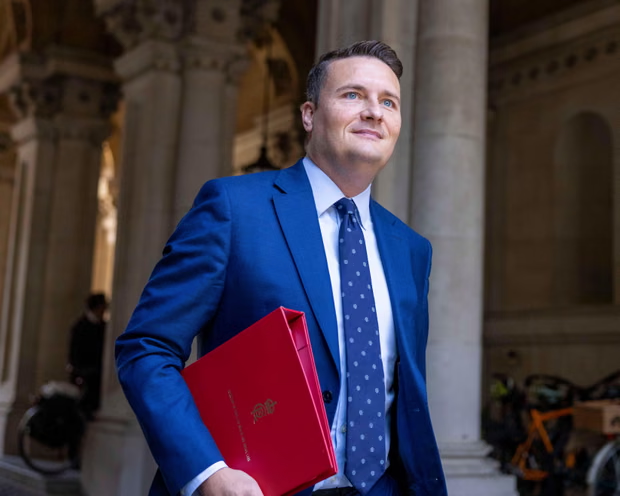
The corridors of Westminster are currently humming with the quiet electricity of a potential leadership transition. Wes Streeting has long been viewed as a rising star within the Labour movement’s ranks. His supporters believe he possesses a rare ability to speak directly to the British public. Many critics often dismiss him as a mere shadow of the former Prime Minister Tony Blair. However, the diverse coalition forming behind him suggests a much more complex political reality today. His allies are not just ideological clones seeking a return to the New Labour era. They represent a broad spectrum of the party hungry for a more decisive leadership style. Recent events have forced these hidden alliances into the harsh light of the national media. A wave of resignations has shaken the very foundations of Keir Starmer’s current government. These departures were not random acts of defiance from the backbenches of the party. They appear to be a coordinated effort to create space for a new vision. Streeting is often described as a master communicator by those who work with him. His personal charm has allowed him to build bridges across many different internal factions. This network is now being activated as the party considers its long-term future direction.
The most significant movement began when several junior ministers chose to leave their government posts. Zubir Ahmed was a key figure in this initial wave of strategic ministerial resignations. As a former surgeon, he brought practical expertise to Streeting’s health and social care team. Their collaboration on NHS reform was seen as a blueprint for the party’s future. Ahmed did not leave quietly but instead chose to challenge the Prime Minister’s current authority. He argued that the current leadership lacked the necessary spark to transform the country’s services. This sentiment is shared by Jess Phillips, a politician who commands significant public attention. Phillips served as the safeguarding minister before deciding to step down from her frontbench role. She is known for her blunt honesty and her deep commitment to social justice causes. Her resignation letter was particularly sharp and focused on the Prime Minister’s cautious political nature. She claimed that a preoccupation with process was hindering the delivery of vital public services. Phillips represents a bridge to the more populist and emotive wing of the party. Her support for Streeting signals that his appeal extends far beyond the centrist core.
The younger generation of Labour lawmakers is also playing a pivotal role in this shift. Joe Morris was the first to fire what many call the official starting gun. As a newly elected MP for Hexham, he served directly under Streeting as his PPS. Their relationship is built on mutual respect and a shared vision for rural communities. Streeting personally campaigned for Morris during the difficult 2024 general election in the north. This bond of loyalty is common among the lawmakers currently backing the Health Secretary’s bid. Alex Davies-Jones is another influential figure who has recently moved into the Streeting orbit. She was highly regarded for her work as the victims minister in the Home Office. Her resignation letter was a direct appeal for a clear timetable for leadership change. She believes the country’s interest must come before any single individual’s political career goals. This sense of urgency is becoming a recurring theme among the younger Scottish members. Alan Gemmell and Melanie Ward have both added their voices to the growing chorus. Gemmell brings a diplomatic background to the table while Ward has deep humanitarian experience. Both represent the new Scottish Labour resurgence that is vital for any future majority.
Economic policy remains a central battleground for those who wish to lead the country. Chris Curtis currently chairs the influential Labour Growth Group within the parliamentary party structure. He represents the aspirational voters who helped Labour secure its victory in Milton Keynes North. Curtis has been vocal about the need for bolder economic and planning reform measures. He suggested that the Prime Minister’s recent speeches have failed to inspire the business community. By aligning with Streeting, Curtis is signaling a desire for more dynamic economic leadership. This group believes that growth requires a leader who is comfortable with modern markets. Streeting has spent years cultivating relationships with business leaders and various policy think tanks. This preparation is now paying off as the party looks for a fresh start. The support of the Growth Group provides Streeting with a solid platform for governance. It moves the conversation away from personality and toward a concrete plan for prosperity. Many MPs feel that the current administration has become far too stagnant and reactive. They see in Streeting a candidate who can set a proactive and ambitious agenda.
Despite the growing rebellion, some of Streeting’s closest friends remain officially loyal to Starmer. Peter Kyle serves as the Business Secretary and is a key figure in government. He represents the coastal seat of Hove and Portslade with a very modern outlook. Kyle and Streeting are known to be exceptionally close friends in their private lives. They share a similar ideological outlook and a common vision for a modern Britain. Kyle has been sent out to defend the government during recent difficult media rounds. He famously joked that the pair spent their evening watching films rather than plotting. This public display of loyalty is a classic feature of high-stakes British political maneuvering. It allows the senior leadership to maintain a facade of unity while tensions rise. However, few in Westminster believe that this loyalty would survive a formal leadership contest. Kyle would almost certainly be the architect of a Streeting campaign in any race. His involvement would bring a level of professional polish and strategic depth to the bid. The friendship between the two men is one of the strongest in politics today.
The coming weeks will determine if this momentum can be sustained into a challenge. Streeting must balance his ambition with the need to maintain party unity during crises. His supporters are clearly ready to move, but the timing remains a delicate matter. The public’s perception of these internal battles will also play a very significant role. Voters generally dislike parties that appear more interested in themselves than in the country. Streeting’s greatest challenge will be proving he is a leader for the whole nation. He must show that he can unite the warring factions of his own party. The diverse group of MPs currently in his corner is a very good start. They represent different regions, different professional backgrounds, and different generations of the Labour movement. From the surgical wards of Glasgow to the coastal towns of Sussex, the network grows. Whether this leads to the doorstep of Number Ten remains to be seen clearly. For now, the shadow of Wes Streeting looms very large over the current leadership. The debate over the future of the party has only just begun to intensify. Every resignation and every public statement is a move on a much larger board. The Labour Party stands at a crossroads as it looks toward the next election.
Related News:
 Reeves Faces Setback as Labour May Miss Homes Target
 Kate Winslet to Narrate Film Highlighting King’s Environmental Mission
 Trump’s UK Ambassador Urges North Sea Drilling to Strengthen US Ties
 UK Bans Fake Numbers: Scammers Lose Their Trick
 M&S Profits More Than Halve After Cyber-Attack
 Patients to Test Health at Home to Ease NHS Winter Pressure
 Millionaires group urge Reeves to introduce wealth tax to ‘lift kids out of poverty’
 Reeves rejects £1bn plea for NHS redundancy payouts
 Northern Lights may illuminate UK skies this week
 PM Condemns Leaks, Vows Loyalty to Ministers and Stability
 Major Rent Reform Ends No-Fault Evictions in England
 Stroke Patient Mistaken for Drunk, Care Delayed
 Inside the Helpline Protecting Missing Children in the UK
 Boots Showstopper Beauty Bundle Outshines Many Advent Calendars This Holiday Season
 PlayStation PS5 Deals Hit Lowest Prices Ahead of Black Friday
 Five-Year-Old Dies After Rare Tonsil Surgery Complication
 Starmer Says Labour’s Economic Plan Needs Years to Deliver
 UK unemployment rises to four-year high of 5.1% before budget
 Wiltshire Police Use Lasso to Catch Rampaging Village Goat
 Coasting Drinks: The Trend Redefining Alcohol Enjoyment This New Year
 Rising Hate Crimes Threaten Safety on UK Public Transport
 Starmer Faces Parliamentary Battles Over UK-EU ‘Reset’ Plan
 Met Police Vetting Failures Let Serial Rapists Remain
 Google Employee Claims Redundancy After Harassment Report
 Fatal Bolton Taxi Crash Claims Three Teens and Driver
 ScottishPower Tops List of Worst UK Energy Suppliers
 Judi Dench Champions Fight to Save London’s Green Spaces
 Crowborough Camp Welcomes First Asylum Seekers
 BBC Funding Crisis: Tim Davie Warns of Jeopardy Ahead
 Artificial intelligence will cost jobs, admits Liz Kendall
 Older Women Vanish from BBC Screens, Review Confirms Bias
 Streeting moves on doctor pay to end strike dispute
 Send spending gap leaves deprived areas behind
 Hidden Crisis: Domestic Abuse Suicide Toll in UK
 UK Unemployment Rate Climbs to 5.2% Peak
 BBC World Cup Presenting Duties Shared Among Trio
 Wales Approves Assisted Dying Bill Consent
 CPS Updates Guidance on Honour-Based and Dowry Abuse
 Asylum Seekers to Work After Year-Long Wait
 Inquiry into HMRC child benefit errors launched by NAO
 Rising Costs Force Families to Rethink Days Out
 Scott Mills Sacked by BBC Over Personal Conduct Claims
 Palantir Boss Defends NHS Deal Amid Government Break Clause
 Relationship with Trump may be beyond repair, Starmer warned
 UK Government Poised to Revive Stalled Hillsborough Law
 UK Staycations Rise as Travel Fears Grow
 Home Office Faces Legal Risks Over Asylum Hotel Living
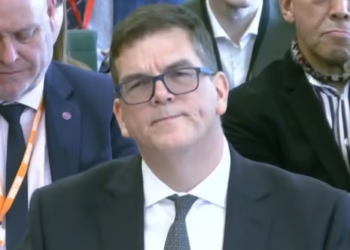 Official Admits Debate Over Mandelson Vetting Records
 Crisis in NHS Surgery Scheduling Hits Patients Hard
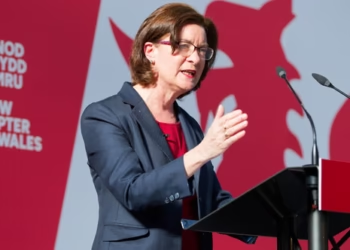 Welsh Labour Faces Potential Historic Election Defeat
 Blue Badge Abuse: The Rising Tide of Public Hostility
 UK Faces Future Where Deaths Outnumber Births Yearly
 Scott Parker Leaves Burnley After Premier League Drop
 Silent Tracks: Rail Line Without Passengers
 RFU Backs Borthwick Despite England’s Poor Six Nations
 Major test for Labour as polls open in Great Britain
 Keir Starmer Struggles to Secure His Grip on Downing Street
 Fear and Betrayal: The Chilling Case of Kouri Richins
 UK Firms Freeze Spending as Iran Conflict Bites
 Rugby Legend Scott Hastings Dies Aged 61
 Reeves to Fast-Track Clean Energy Amid Iran Crisis
 The Battle for Wembley Sparking Unprecedented Legal Warfare
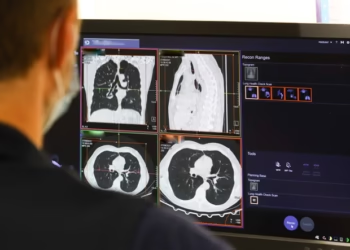 Record Spending Highlights Growing Crisis In National Health Service
 Secret Role of UK Security Services in Troubles Amnesty Law
 Tube Strike Brings Capital to a Standstill Over Shift Disputes
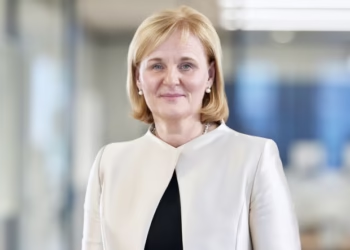
 BP Stands Firm on Amanda Blanc Amid Boardroom Storm
 Teaching Machines Right From Wrong in the Digital Age
 UK House Prices Drop For Third Month Due To War Fears
 The Hidden Crisis Eroding Trust in British Communities
 Deepfake Abuse on X Sparks Safety Concerns for Dissidents
 Stolen Mobiles Could Soon Become Useless Bricks
 Clean Air Initiatives Spark Major Fall in London Hospital Admissions
 United Kingdom Politics Worse Now Than Before Brexit, Warns MP
 Russian Tanker Captain Remanded in UK Court After Channel Seizure
 Shocking Zoo Incident Sparks Attempted Murder Probe
 UK Care Crisis: Row Explodes Over New Visa Settlement Rules
 Sainsbury’s Boss Optimistic As Grocery Inflation Eases
 US Airman Avoids British Court in Indecent Exposure Case
 Ann Widdecombe, Formidable Political Figure, Dies at 78
 UK Schools Struggle as Classrooms Top 40C