Published: 15 May 2026. The English Chronicle Desk. The English Chronicle Online.
The political landscape in Greater Manchester has been dramatically upended following a bold announcement from the Green Party. Representatives have confirmed their intention to aggressively contest the upcoming parliamentary byelection in the Makerfield constituency. This decision introduces a significant complication for Andy Burnham as he seeks a path back to Westminster. The high-profile Mayor of Greater Manchester now faces a multi-front battle in what was already an incredibly tense regional contest. The sudden vacancy in Makerfield emerged on Thursday when the sitting Labour member of parliament announced his resignation. Josh Simons surprised Westminster by stepping down from his parliamentary seat after a relatively brief tenure. He explicitly stated that his departure was intended to facilitate the political return of the metro mayor. Burnham wasted no time in confirming his desire to secure the official Labour nomination for the seat. The strategic move is widely viewed as a crucial step for his long-term national political ambitions. However, the unexpected intervention by the Greens has severely complicated what Labour strategists hoped would be a straightforward coronation.
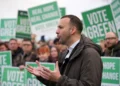
The Green Party enters this contest with a fresh sense of confidence and significant momentum. Local organizers are drawing direct inspiration from their sensational electoral upset in another Greater Manchester constituency earlier this year. In February, the Greens shocked the political establishment by winning the Gorton and Denton byelection. That remarkable victory saw them overturn a massive Labour majority of thirteen thousand votes. The stunning result proved that the Greens could successfully challenge Labour in its traditional urban heartlands. Now, the party aims to replicate that exact strategy in the less secure territory of Makerfield. The mathematical challenge facing Labour in this particular constituency is already much more acute. At the last general election, the party secured a much narrower majority of just over five thousand votes. This modest cushion leaves the constituency highly vulnerable to even minor shifts in voter sentiment. Furthermore, the political right poses an exceptionally formidable challenge to Labour in this part of the country. Reform UK finished in a strong second place across the constituency during the general election campaign.

The recent local elections have underscored the true scale of the challenge facing the Labour leadership. Last week, Reform UK achieved a clean sweep by winning all nine contested council seats in Wigan. This extraordinary municipal performance suggests a powerful undercurrent of populist support right across the local area. Because of these results, Burnham is embarking on an exceptionally risky political gamble for his career. He is wagering that his substantial personal popularity can overcome the poor national polling of his party. The metro mayor has long enjoyed a unique connection with voters across the wider metropolitan region. He hopes this regional affection will insulate him from the wider dissatisfaction facing the current government. Nevertheless, the presence of an active and energized Green campaign threatens to fracture his essential voter base. Political commentators had previously speculated that the Greens might choose to sit out this specific contest. There were rumors of a potential electoral pact designed to protect the progressive vote share. Such a strategy would have aimed to prevent a split vote from handing victory to Reform.
One rumored arrangement involved the Greens standing aside in exchange for commitments on voting system reform. Burnham has previously indicated a personal openness to exploring alternative systems like proportional representation. This alignment on democratic principles led many to believe a mutual understanding could be reached. However, any hopes of a backroom deal were firmly shattered by the Greens on Friday morning. A senior party spokesperson released an official statement expressing immense enthusiasm for the upcoming campaign trail. The representative emphasized that local members were already actively engaged in selecting a suitable parliamentary candidate. They noted that the party had developed highly sophisticated campaigning techniques during recent successful contests. The spokesperson confidently asserted that their activists had already demonstrated an ability to defeat Reform candidates. This public stance reflects the highly decentralized organizational structure that defines the modern Green Party. National leadership figures cannot simply impose decisions regarding candidate selection on autonomous local branches. Therefore, the choice to fight the seat rests entirely with the enthusiastic local membership base.
A prominent Green source within Greater Manchester shed light on the internal dynamics of the campaign. The insider explained that ultimate authority remained with the dedicated activists on the ground. However, the ultimate impact of the campaign would depend on resources from the national executive. The source recalled how concentrated national funding and volunteers transformed the recent Gorton and Denton race. They suggested that a similar mobilization could deliver another monumental shock to the political establishment. During the previous general election, the Greens finished a distant fifth place in the constituency. They lagged well behind Labour, Reform UK, the Conservative Party, and the Liberal Democrats. Despite that modest historical showing, the party has experienced a remarkable surge in national opinion polls. This growth has occurred under the high-profile leadership of Zack Polanski in recent months. The party has proven it can mobilize vast armies of enthusiastic volunteers for local canvassing. These dedicated activists are capable of turning a low-key byelection into a major national event.
Meanwhile, Burnham confirmed his formal application to the National Executive Committee of the Labour Party. He requires official authorization from this central governing body to enter the parliamentary selection race. This process carries historical tension, as the committee previously blocked his ambitions in Gorton and Denton. On that occasion, the national party machinery actively prevented the mayor from seeking the nomination. This time, Downing Street insiders have signaled that the prime minister will not oppose his candidacy. Yet, this high-stakes Westminster comeback attempt triggers another complicated logistical and political problem for Labour. Burnham entering parliament would automatically necessitate a brand-new byelection for the Greater Manchester mayoralty itself. This prospect fills many regional Labour organizers with a deep sense of dread and anxiety. There are genuine concerns that an ascendant Reform UK could realistically win the powerful mayoral position. Such an outcome would represent a devastating blow to the regional influence of the Labour Party.
In his formal public address, Burnham sought to frame his return to parliament around national issues. He specifically singled out the ongoing cost of living crisis as the absolute priority for voters. The mayor argued that his experience in local government prepared him perfectly for national leadership challenges. He expressed a desire to bring the governance style of Greater Manchester to the wider nation. Burnham insisted that his primary motivation was to make national politics work properly for ordinary citizens. He emphasized that millions of people across the country were currently struggling with severe economic hardships. In his view, these widespread difficulties require urgent and radical legislative action from the central government. By focusing heavily on these bread-and-butter issues, he hopes to appeal directly to traditional working-class voters. These are the very same individuals who have increasingly drifted toward Reform UK in recent months. The unfolding battle for Makerfield is rapidly transforming into a crucial test for British politics. It will measure the durability of populist movements against established regional political heavyweights. Every political party will watch the results of this fascinating contest with intense national interest.
Related News:
 Reeves Faces Setback as Labour May Miss Homes Target
 Kate Winslet to Narrate Film Highlighting King’s Environmental Mission
 Trump’s UK Ambassador Urges North Sea Drilling to Strengthen US Ties
 UK Bans Fake Numbers: Scammers Lose Their Trick
 M&S Profits More Than Halve After Cyber-Attack
 Patients to Test Health at Home to Ease NHS Winter Pressure
 Millionaires group urge Reeves to introduce wealth tax to ‘lift kids out of poverty’
 Reeves rejects £1bn plea for NHS redundancy payouts
 Northern Lights may illuminate UK skies this week
 PM Condemns Leaks, Vows Loyalty to Ministers and Stability
 Major Rent Reform Ends No-Fault Evictions in England
 Stroke Patient Mistaken for Drunk, Care Delayed
 Inside the Helpline Protecting Missing Children in the UK
 Boots Showstopper Beauty Bundle Outshines Many Advent Calendars This Holiday Season
 PlayStation PS5 Deals Hit Lowest Prices Ahead of Black Friday
 Five-Year-Old Dies After Rare Tonsil Surgery Complication
 Starmer Says Labour’s Economic Plan Needs Years to Deliver
 UK unemployment rises to four-year high of 5.1% before budget
 Wiltshire Police Use Lasso to Catch Rampaging Village Goat
 Coasting Drinks: The Trend Redefining Alcohol Enjoyment This New Year
 Rising Hate Crimes Threaten Safety on UK Public Transport
 Starmer Faces Parliamentary Battles Over UK-EU ‘Reset’ Plan
 Met Police Vetting Failures Let Serial Rapists Remain
 Fatal Bolton Taxi Crash Claims Three Teens and Driver
 ScottishPower Tops List of Worst UK Energy Suppliers
 Judi Dench Champions Fight to Save London’s Green Spaces
 Crowborough Camp Welcomes First Asylum Seekers
 BBC Funding Crisis: Tim Davie Warns of Jeopardy Ahead
 Artificial intelligence will cost jobs, admits Liz Kendall
 Older Women Vanish from BBC Screens, Review Confirms Bias
 Streeting moves on doctor pay to end strike dispute
 Send spending gap leaves deprived areas behind
 Hidden Crisis: Domestic Abuse Suicide Toll in UK
 UK Unemployment Rate Climbs to 5.2% Peak
 BBC World Cup Presenting Duties Shared Among Trio
 Wales Approves Assisted Dying Bill Consent
 CPS Updates Guidance on Honour-Based and Dowry Abuse
 Asylum Seekers to Work After Year-Long Wait
 Inquiry into HMRC child benefit errors launched by NAO
 Rising Costs Force Families to Rethink Days Out
 Scott Mills Sacked by BBC Over Personal Conduct Claims
 Palantir Boss Defends NHS Deal Amid Government Break Clause
 Relationship with Trump may be beyond repair, Starmer warned
 UK Government Poised to Revive Stalled Hillsborough Law
 UK Staycations Rise as Travel Fears Grow
 Home Office Faces Legal Risks Over Asylum Hotel Living
 Official Admits Debate Over Mandelson Vetting Records
 Crisis in NHS Surgery Scheduling Hits Patients Hard
 Welsh Labour Faces Potential Historic Election Defeat
 Blue Badge Abuse: The Rising Tide of Public Hostility
 UK Faces Future Where Deaths Outnumber Births Yearly
 Scott Parker Leaves Burnley After Premier League Drop
 Silent Tracks: Rail Line Without Passengers
 RFU Backs Borthwick Despite England’s Poor Six Nations
 Major test for Labour as polls open in Great Britain
 Keir Starmer Struggles to Secure His Grip on Downing Street
 Fear and Betrayal: The Chilling Case of Kouri Richins
 Farage Faces Standards Probe Over Cash Property Purchase
 UK Firms Freeze Spending as Iran Conflict Bites
 Rugby Legend Scott Hastings Dies Aged 61
 Reeves to Fast-Track Clean Energy Amid Iran Crisis
 The Battle for Wembley Sparking Unprecedented Legal Warfare
 Record Spending Highlights Growing Crisis In National Health Service
 Secret Role of UK Security Services in Troubles Amnesty Law
 Tube Strike Brings Capital to a Standstill Over Shift Disputes
 BP Stands Firm on Amanda Blanc Amid Boardroom Storm
 Teaching Machines Right From Wrong in the Digital Age
 UK House Prices Drop For Third Month Due To War Fears
 The Hidden Crisis Eroding Trust in British Communities
 Deepfake Abuse on X Sparks Safety Concerns for Dissidents
 Stolen Mobiles Could Soon Become Useless Bricks
 Clean Air Initiatives Spark Major Fall in London Hospital Admissions
 United Kingdom Politics Worse Now Than Before Brexit, Warns MP
 Russian Tanker Captain Remanded in UK Court After Channel Seizure
 Shocking Zoo Incident Sparks Attempted Murder Probe
 UK Care Crisis: Row Explodes Over New Visa Settlement Rules
 Sainsbury’s Boss Optimistic As Grocery Inflation Eases
 US Airman Avoids British Court in Indecent Exposure Case
 Ann Widdecombe, Formidable Political Figure, Dies at 78
 UK Schools Struggle as Classrooms Top 40C