Published: 18 May 2026. The English Chronicle Desk. The English Chronicle Online.
The intricate web of British diplomatic appointments has faced intense parliamentary scrutiny over recent months. Attention has now focused on the diplomatic figure chosen to represent British interests within Japan. Senior politicians are currently considering whether to summon this prominent diplomat for formal questioning very soon. This potential development marks a significant escalation in an ongoing investigation into government vetting procedures. The core of the matter involves how high-level security clearances are distributed to senior officials.
Parliamentary figures are investigating the controversial decision to grant clearance to a high-profile political diplomat. Vetting officials had originally advised against granting this specific security clearance due to potential risks. The upcoming ambassador to Japan was serving as a senior operating chief during this timeframe. Documents suggest this official played a central role in discussions regarding the contentious security clearance. Members of Parliament are now eager to understand her specific involvement in those January deliberations.
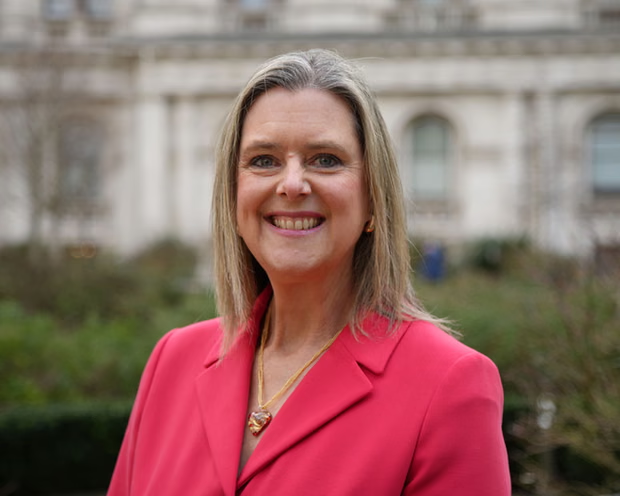
The diplomat is currently preparing to transition into her prestigious new role within Tokyo this August. However, she remains the final key official who has not faced direct parliamentary questioning. Two other senior civil servants involved in the matter have already provided their testimonies. Members of the foreign affairs select committee are now debating their next investigative steps. They will decide this week whether to formally request her appearance before the panel.
The committee could choose to demand a formal, in-person appearance from the diplomat very soon. Alternatively, they might allow her to provide detailed written responses to their specific queries. This investigation into the Washington appointment is rapidly approaching its final and most critical phase. However, committee members intend to review additional government documents before publishing their definitive final report. These upcoming documents are being released through a specialized parliamentary process known as a humble address.
The ultimate decision to grant the controversial security clearance rested with a very senior official. This top civil servant was dismissed from his position by the Prime Minister three weeks ago. His dismissal followed media revelations that he ignored clear warnings from national vetting agencies. The Prime Minister expressed immense anger over being kept entirely in the dark regarding these risks. He described the failure to share this vital security information as an unforgivable mistake.
The dismissed official has steadfastly defended his actions during subsequent parliamentary committee hearings last month. He maintained that he was entirely correct to keep vetting details away from political ministers. Meanwhile, the former head of security chose to respond to parliamentary questions through official correspondence. His written evidence heavily emphasized the active participation of the upcoming ambassador to Japan in discussions. This disclosure has placed the future Tokyo envoy under a intense spotlight from investigators.
Her upcoming testimony could potentially resolve several contradictions that have continuously puzzled investigating committee members. Parliamentarians have encountered significant difficulties while trying to reconstruct the exact timeline of these events. Their efforts have been severely hindered by a complete lack of formal written records. No official audit trails exist to document how the Foreign Office reached its final decision. This absence of paperwork has raised serious questions about transparency within the civil service.
Both officials who previously testified relied completely on their personal memories of those unrecorded conversations. It appears that no formal minutes were taken during any of these crucial security meetings. The upcoming ambassador to Japan will likely be asked to confirm the accuracy of these recollections. Investigators hope her testimony will clarify what was actually discussed behind closed doors in January. New information suggests the vetting agency expressed exceptionally high concerns regarding the candidate at that time.
The vetting agency explicitly recommended that security clearance should be denied to the political figure. Despite this clear warning, the Prime Minister had already publicly confirmed his choice for the post. The committee heard evidence that immense pressure existed to expedite the diplomatic appointment to Washington. The security chief initially discussed these rising concerns with the future Tokyo envoy before involving others. They apparently agreed that the identified security risks could be managed through specific mitigation steps.
It remains entirely unclear whether the future ambassador ever personally reviewed the official vetting file. She may have relied entirely on verbal summaries provided by her close departmental colleagues. The Cabinet Office permanent secretary later clarified that any official in the chain could request files. She noted that looking at the physical documents is permitted if deemed necessary by staff. The committee is determined to discover why nobody chose to examine the paperwork directly.
The officials involved claimed the vetting agency had described the entire case as merely borderline. However, no publicly available evidence has emerged to substantiate this specific characterization of the file. No other government minister who viewed the documents has used the word borderline to describe them. If she is called to testify, the diplomat will face intense questions regarding this description. Investigators want to know if she remembers the case being described in that exact manner.
Following the controversial decision to grant clearance, an email was circulated among the key decision makers. This communication noted the final approval but failed to detail the specific risks discovered during vetting. This email has now been handed over to officials managing the parliamentary document release process. This process requires the government to publish all papers connected to the controversial Washington appointment. Investigators are currently sorting through thousands of pages of internal communications and memos.
The future ambassador to Japan may also help solve a particularly baffling mystery in this case. Investigators want to know why officials sought access to the vetting files much later that year. Both senior figures requested the files immediately after the political appointee was dismissed in September. Neither official has provided a clear reason for wanting to see the paperwork at that stage. They had notably declined to look at those exact files seven months earlier.
The diplomat has declined to comment publicly on the matter through Foreign Office spokespeople this week. The next major batch of internal government documents is expected to be published very soon. However, independent observers are expressing growing anxiety that the released files might be heavily censored. They fear the public will not receive an accurate account of what actually transpired. These concerns were amplified by recent comments from the intelligence and security committee last Friday.
This specialized cross-party committee has been reviewing the most sensitive documents before their public release. The panel strongly criticized the government for withholding the complete vetting file from parliamentary scrutiny. They argued that official redactions have been applied far too broadly across the available papers. This criticism has added further momentum to demands for a completely transparent and open inquiry. The upcoming testimony from the future Tokyo ambassador could prove vital to uncovering the truth.
The political fallout from this vetting scandal continues to reverberate across the entire civil service. It has exposed deep divisions between career diplomats and political appointees within the foreign policy establishment. Many officials fear the controversy could damage Britain’s diplomatic standing with its closest international allies. The situation requires careful handling to protect sensitive national security protocols while ensuring public accountability. The coming weeks will decide whether parliamentary investigators can successfully uncover the full story.
Related News:
 Reeves Faces Setback as Labour May Miss Homes Target
 Kate Winslet to Narrate Film Highlighting King’s Environmental Mission
 Trump’s UK Ambassador Urges North Sea Drilling to Strengthen US Ties
 UK Bans Fake Numbers: Scammers Lose Their Trick
 Millionaires group urge Reeves to introduce wealth tax to ‘lift kids out of poverty’
 Reeves rejects £1bn plea for NHS redundancy payouts
 PM Condemns Leaks, Vows Loyalty to Ministers and Stability
 Inside the Helpline Protecting Missing Children in the UK
 PlayStation PS5 Deals Hit Lowest Prices Ahead of Black Friday
 Five-Year-Old Dies After Rare Tonsil Surgery Complication
 Starmer Says Labour’s Economic Plan Needs Years to Deliver
 Starmer Faces Parliamentary Battles Over UK-EU ‘Reset’ Plan
 Met Police Vetting Failures Let Serial Rapists Remain
 Google Employee Claims Redundancy After Harassment Report
 Fatal Bolton Taxi Crash Claims Three Teens and Driver
 ScottishPower Tops List of Worst UK Energy Suppliers
 Judi Dench Champions Fight to Save London’s Green Spaces
 Crowborough Camp Welcomes First Asylum Seekers
 BBC Funding Crisis: Tim Davie Warns of Jeopardy Ahead
 Storm Chandra floods Somerset, triggers major incident declaration
 Artificial intelligence will cost jobs, admits Liz Kendall
 Older Women Vanish from BBC Screens, Review Confirms Bias
 Mandelson Faces Police Inquiry Over Epstein Leak
 Streeting moves on doctor pay to end strike dispute
 UK reports baby formula toxin poisoning cases across the country
 Morgan McSweeney downfall shocks Labour leadership
 Send spending gap leaves deprived areas behind
 Hidden Crisis: Domestic Abuse Suicide Toll in UK
 UK Unemployment Rate Climbs to 5.2% Peak
 Farage Unveils Reform UK Frontbench Team
 BBC World Cup Presenting Duties Shared Among Trio
 Placenta Accreta Warning as Hunt Urges Action
 Wales Approves Assisted Dying Bill Consent
 CPS Updates Guidance on Honour-Based and Dowry Abuse
 Rolling Hills and Heritage: A Car-Free Break in Leicestershire
 Corbyn Leads Your Party in Coordinated Left-Flank Strategy
 Asylum Seekers to Work After Year-Long Wait
 Starmer Row as Greens Demand Apology
 Major Fire Causes Chaos at Glasgow Central Station
 Gordon Brown urges court for crimes against children
 Inquiry into HMRC child benefit errors launched by NAO
 Farage Faces Backlash Over Crypto Cameo Endorsements
 Rising Costs Force Families to Rethink Days Out
 Sarah Mullally: The Solid Choice for Canterbury
 Scott Mills Sacked by BBC Over Personal Conduct Claims
 Palantir Boss Defends NHS Deal Amid Government Break Clause
 Police Chiefs Under Fire for Failing to Address Racism
 Relationship with Trump may be beyond repair, Starmer warned
 Unions Raise Concerns Over Doctors’ Pay Dispute
 UK Government Poised to Revive Stalled Hillsborough Law
 UK Staycations Rise as Travel Fears Grow
 Home Office Faces Legal Risks Over Asylum Hotel Living
 Official Admits Debate Over Mandelson Vetting Records
 Crisis in NHS Surgery Scheduling Hits Patients Hard
 Blue Badge Abuse: The Rising Tide of Public Hostility
 Scott Parker Leaves Burnley After Premier League Drop
 Silent Tracks: Rail Line Without Passengers
 RFU Backs Borthwick Despite England’s Poor Six Nations
 Major test for Labour as polls open in Great Britain
 Keir Starmer Struggles to Secure His Grip on Downing Street
 Farage Faces Standards Probe Over Cash Property Purchase
 UK Firms Freeze Spending as Iran Conflict Bites
 Reeves to Fast-Track Clean Energy Amid Iran Crisis
 The Battle for Wembley Sparking Unprecedented Legal Warfare
 Secret Role of UK Security Services in Troubles Amnesty Law
 Tube Strike Brings Capital to a Standstill Over Shift Disputes
 Teaching Machines Right From Wrong in the Digital Age
 The Hidden Crisis Eroding Trust in British Communities
 Stolen Mobiles Could Soon Become Useless Bricks
 Clean Air Initiatives Spark Major Fall in London Hospital Admissions
 Shocking Zoo Incident Sparks Attempted Murder Probe
 The Hybrid School Revolution Defying the Social Media Ban
 UK Care Crisis: Row Explodes Over New Visa Settlement Rules
 Sainsbury’s Boss Optimistic As Grocery Inflation Eases
 NHS Urges Investigation For Irregular Periods
 US Airman Avoids British Court in Indecent Exposure Case
 Farage Warns Sky News Following Financial Inquiry
 Ann Widdecombe, Formidable Political Figure, Dies at 78
 UK Schools Struggle as Classrooms Top 40C
 Westminster Council Threatens Charing Cross Soup Kitchen