Published: 21 May 2026. The English Chronicle Desk. The English Chronicle Online.
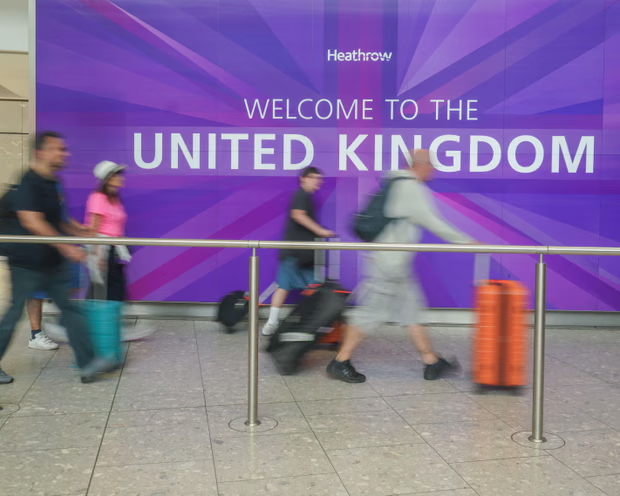
The political landscape of the United Kingdom experienced a significant shift on Thursday morning. Newly released official data revealed a massive drop in net migration figures across the nation. The total number of arrivals decreased by nearly fifty percent over the past year. This dramatic decline represents a major milestone for Prime Minister Keir Starmer and his cabinet. The statistics provide a timely boost for the current Labour administration and its policy goals. Government ministers previously made firm commitments to reduce the influx of international arrivals significantly. These new findings suggest that their targeted legislative measures are finally yielding tangible results.
According to the Office for National Statistics, the net migration total settled at 171,000. This specific figure measures the difference between people entering and leaving the British borders. The latest annual total represents the lowest level of net migration recorded since 2021. Experts noted a forty-eight percent year-on-year drop from the 331,000 recorded in 2024. This change extends a sharp downward trajectory from the historic peak seen recently. In 2023, net migration to the United Kingdom reached an unprecedented high of 944,000. The rapid descent from that peak highlights the changing dynamics of British border control.
The ongoing debate surrounding immigration remains a central battleground in contemporary British political life. The sharp decline will certainly encourage government ministers who faced intense pressure over numbers. Labour politicians previously promised voters they would systematically drive down overall net migration figures. This issue has become particularly sensitive due to the rapid rise of Reform UK. Nigel Farage has consistently used immigration statistics to challenge the mainstream political establishment. The new data provides the ruling party with strong statistical evidence to counter opposition. Ministers can now argue that their approach to border management is proving highly effective.
Statistical analysts looked closely at the specific factors driving this major demographic shift. The data revealed that fewer non-European Union nationals arrived for work-related reasons last year. In fact, work-related arrivals from outside the economic bloc fell by forty-seven percent. This specific reduction emerged as the primary driver behind the falling net migration totals. Meanwhile, the overall number of people choosing to leave the country fell only slightly. The balance between arrivals and departures has clearly adjusted in a very short period. These shifting dynamics reflect both changing global economic conditions and tighter domestic visa regulations.
The total numbers show a comprehensive picture of movement across British borders last year. An estimated 813,000 individuals immigrated to the United Kingdom during the twelve-month period. Concurrently, approximately 642,000 people chose to emigrate from the country to live elsewhere. The Office for National Statistics confirmed that reduced non-European arrivals caused this lower net balance. Tighter restrictions on international students and their dependants also played a significant role here. Fewer health and care workers arrived under the revised visa schemes implemented recently. These combined factors created a substantial downward pressure on the final population calculations.
The timeframe for these specific calculations remains important for understanding the political context. The comprehensive figures from the statistical office cover the calendar year ending December 2025. Interestingly, the Home Office is also scheduled to publish separate data on Thursday afternoon. Their upcoming departmental report will cover the twelve-month period leading up to March 2026. Political commentators expect these twin data releases to dominate the afternoon news cycles completely. The dual publications will offer a very detailed view of recent border trends. Together, they will shape the ongoing policy conversations in Westminster for months.
Despite these clear statistical trends, public perception tells a completely different story across Britain. A prominent independent thinktank recently conducted extensive research into general public attitudes on migration. The study by British Future was published intentionally ahead of the official government announcement. Their findings revealed a massive chasm between factual reality and general public perception today. A substantial portion of the British public firmly believes that net migration is rising. Many citizens remain completely unaware that the official numbers have dropped to low levels. This disconnect presents a unique communication challenge for the current Labour press team.
Media coverage and intense political rhetoric often fuel these widespread public misconceptions about borders. Continuous news reports focusing on irregular channel crossings tend to distort the wider picture. Many voters confuse small boat arrivals with the much larger legal migration statistics. The thinktank report suggested that targeted government communication is vital to bridge this gap. Ministers must work harder to ensure that factual statistical declines are widely understood. Without effective messaging, the political benefit of these lower numbers might be entirely lost. The government needs to align public awareness with actual statistical reality very quickly.
Economic analysts are also weighing in on the potential long-term impacts of this decline. Some business sectors might face recruitment challenges due to fewer international workers arriving. The social care and hospitality industries have traditionally relied heavily on overseas staffing solutions. A forty-seven percent drop in non-European workers will inevitably felt across these sectors. Ministers argue that domestic training programmes will eventually fill these vacancies quite naturally. However, business leaders remain concerned about immediate labor shortages in key regional markets. Balancing reduced migration with stable economic growth remains a delicate tightrope walk.
The international community is watching the British approach to border management very closely. Many European nations are currently grappling with similar political pressures regarding immigration levels. The significant drop achieved by the United Kingdom could serve as a model. Alternatively, it might raise questions about the long-term sustainability of such rapid reductions. High net migration can strain local public services like healthcare and regional housing markets. Conversely, sharp drops can impact tax revenues and slow down overall economic productivity. The true consequences of this demographic shift will become clearer in coming years.
Downing Street officials expressed quiet satisfaction with the trajectory shown in the reports. They view the data as validation of their measured approach to immigration policy. The government seeks to demonstrate that control can achieved without causing economic chaos. They want to prove that legal migration pathways can managed fairly and effectively. This narrative is crucial for maintaining the trust of traditional working-class Labour voters. Many of these voters expressed serious concerns about high migration during recent elections. Delivering on this key promise is central to Starmer’s long-term political survival strategy.
Looking ahead, the political debate over these figures will likely intensify rather than diminish. Opposition parties will undoubtedly find specific elements of the data to criticize severely. Some right-wing commentators may argue the reduction is still not happening fast enough. Left-wing critics might express concern over the impact on public sector staffing levels. Nevertheless, a fifty percent reduction remains a substantial headline victory for the administration. The English Chronicle will continue to track these essential demographic trends very closely. For now, the government enjoys a moment of hard-won political relief this week.
Related News:
 Reeves Faces Setback as Labour May Miss Homes Target
 Kate Winslet to Narrate Film Highlighting King’s Environmental Mission
 Trump’s UK Ambassador Urges North Sea Drilling to Strengthen US Ties
 UK Bans Fake Numbers: Scammers Lose Their Trick
 M&S Profits More Than Halve After Cyber-Attack
 Patients to Test Health at Home to Ease NHS Winter Pressure
 Millionaires group urge Reeves to introduce wealth tax to ‘lift kids out of poverty’
 Reeves rejects £1bn plea for NHS redundancy payouts
 Northern Lights may illuminate UK skies this week
 PM Condemns Leaks, Vows Loyalty to Ministers and Stability
 Major Rent Reform Ends No-Fault Evictions in England
 Stroke Patient Mistaken for Drunk, Care Delayed
 Inside the Helpline Protecting Missing Children in the UK
 Boots Showstopper Beauty Bundle Outshines Many Advent Calendars This Holiday Season
 PlayStation PS5 Deals Hit Lowest Prices Ahead of Black Friday
 Five-Year-Old Dies After Rare Tonsil Surgery Complication
 Starmer Says Labour’s Economic Plan Needs Years to Deliver
 UK unemployment rises to four-year high of 5.1% before budget
 Wiltshire Police Use Lasso to Catch Rampaging Village Goat
 Coasting Drinks: The Trend Redefining Alcohol Enjoyment This New Year
 Rising Hate Crimes Threaten Safety on UK Public Transport
 Starmer Faces Parliamentary Battles Over UK-EU ‘Reset’ Plan
 Met Police Vetting Failures Let Serial Rapists Remain
 Google Employee Claims Redundancy After Harassment Report
 Fatal Bolton Taxi Crash Claims Three Teens and Driver
 ScottishPower Tops List of Worst UK Energy Suppliers
 Judi Dench Champions Fight to Save London’s Green Spaces
 Crowborough Camp Welcomes First Asylum Seekers
 BBC Funding Crisis: Tim Davie Warns of Jeopardy Ahead
 Artificial intelligence will cost jobs, admits Liz Kendall
 Older Women Vanish from BBC Screens, Review Confirms Bias
 Streeting moves on doctor pay to end strike dispute
 Send spending gap leaves deprived areas behind
 Hidden Crisis: Domestic Abuse Suicide Toll in UK
 UK Unemployment Rate Climbs to 5.2% Peak
 BBC World Cup Presenting Duties Shared Among Trio
 Wales Approves Assisted Dying Bill Consent
 CPS Updates Guidance on Honour-Based and Dowry Abuse
 Asylum Seekers to Work After Year-Long Wait
 Inquiry into HMRC child benefit errors launched by NAO
 Rising Costs Force Families to Rethink Days Out
 Scott Mills Sacked by BBC Over Personal Conduct Claims
 Palantir Boss Defends NHS Deal Amid Government Break Clause
 Relationship with Trump may be beyond repair, Starmer warned
 UK Government Poised to Revive Stalled Hillsborough Law
 UK Staycations Rise as Travel Fears Grow
 Home Office Faces Legal Risks Over Asylum Hotel Living
 Official Admits Debate Over Mandelson Vetting Records
 Crisis in NHS Surgery Scheduling Hits Patients Hard
 Welsh Labour Faces Potential Historic Election Defeat
 Blue Badge Abuse: The Rising Tide of Public Hostility
 UK Faces Future Where Deaths Outnumber Births Yearly
 Scott Parker Leaves Burnley After Premier League Drop
 Silent Tracks: Rail Line Without Passengers
 RFU Backs Borthwick Despite England’s Poor Six Nations
 Major test for Labour as polls open in Great Britain
 Keir Starmer Struggles to Secure His Grip on Downing Street
 Fear and Betrayal: The Chilling Case of Kouri Richins
 Farage Faces Standards Probe Over Cash Property Purchase
 Closing the Gap: UK Pensions Commission Demands Action
 The Battle for Wembley Sparking Unprecedented Legal Warfare
 Record Spending Highlights Growing Crisis In National Health Service
 Secret Role of UK Security Services in Troubles Amnesty Law
 Tube Strike Brings Capital to a Standstill Over Shift Disputes
 BP Stands Firm on Amanda Blanc Amid Boardroom Storm
 Teaching Machines Right From Wrong in the Digital Age
 UK House Prices Drop For Third Month Due To War Fears
 The Hidden Crisis Eroding Trust in British Communities
 Deepfake Abuse on X Sparks Safety Concerns for Dissidents
 Stolen Mobiles Could Soon Become Useless Bricks
 Clean Air Initiatives Spark Major Fall in London Hospital Admissions
 United Kingdom Politics Worse Now Than Before Brexit, Warns MP
 Russian Tanker Captain Remanded in UK Court After Channel Seizure
 Shocking Zoo Incident Sparks Attempted Murder Probe
 The Hybrid School Revolution Defying the Social Media Ban
 UK Care Crisis: Row Explodes Over New Visa Settlement Rules
 Sainsbury’s Boss Optimistic As Grocery Inflation Eases
 US Airman Avoids British Court in Indecent Exposure Case
 Ann Widdecombe, Formidable Political Figure, Dies at 78
 UK Schools Struggle as Classrooms Top 40C