Published: 25 May 2026. The English Chronicle Desk. The English Chronicle Online.
A major political storm has erupted within the ranks of Reform UK this week. The controversy centers on serious allegations made by the party leader, Nigel Farage, regarding a cyberattack. Farage recently claimed that state-sponsored Russian agents successfully targeted his personal mobile phone device last month. This alleged digital breach reportedly led to the public disclosure of a massive financial transaction. A prominent national newspaper published details of a five-million-pound gift from a crypto billionaire.
The timing of these revelations has placed the right-wing party under immense public pressure. Both Labour and Conservative politicians have reacted with deep concern over these hacking claims. Mainstream leaders stressed that hostile foreign interference represents a severe threat to national security. Consequently, opponents demand that Farage immediately provide his digital evidence to British intelligence agencies. The situation intensified significantly following a tense live radio interview with a senior party colleague.
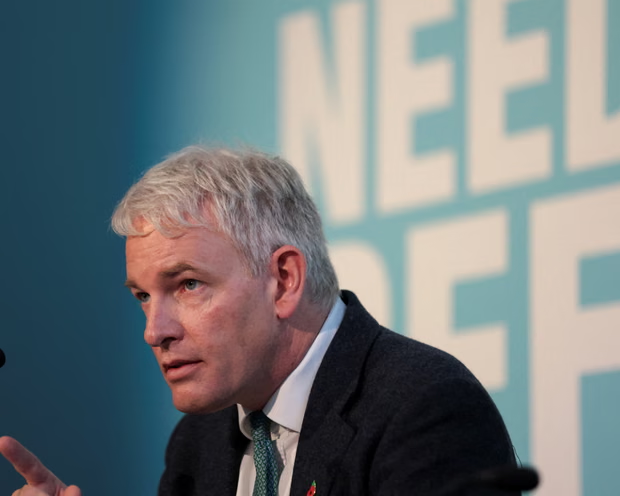
Danny Kruger, who currently leads Reform’s strategic preparations for government, faced intense media questioning. Speaking on the flagship BBC Radio Four Today programme, Kruger appeared visibly uncomfortable with the topic. The veteran politician repeatedly refused to demand that his leader cooperate with security officials. He claimed to lack specific knowledge regarding the intricate details of the alleged cyber incident. This public hesitation has fueled further speculation about internal party communication regarding the matter.
When pressed on whether Farage had contacted authorities, Kruger offered an evasive response. He told listeners he was not privy to private conversations involving the party leader. The frontbencher added that he felt entirely unable to comment on the specific situation. Journalists quickly asked if Farage possessed a civic duty to share his evidence immediately. Kruger insisted he was not the correct person to discuss details of any investigation.
The senior politician further complicated the narrative by defining the hack as private business. He suggested that an independent investigation was necessary but remained unsure of the method. Kruger emphasized that the entire controversy should be treated primarily as a personal issue. This stance has drawn sharp criticism from political analysts across the United Kingdom media landscape. Experts argue that foreign state espionage against British lawmakers can never be considered private.
Meanwhile, anonymous sources within the Reform party have leaked additional details to Sunday newspapers. These insiders claim Farage privately hired specialized counter-espionage experts to examine his telephone. The unnamed security contractors reportedly concluded that the device was compromised by Russian operatives. However, no official technical report has been published to substantiate these dramatic claims. The identities of the private cybersecurity experts also remain entirely hidden from the public.
Spokespersons for Farage have consistently ignored detailed questions regarding the alleged state-sponsored cyberattack. They refuse to confirm if any technical data has been given to police forces. Requests for the independent analysis of the mobile phone have also been met with silence. This lack of transparency has allowed political opponents to step up their daily attacks. Critics suggest the narrative may be an attempt to evade legitimate financial scrutiny.
A representative for the Guardian newspaper strongly rejected the Russian hacking theory this afternoon. The media outlet had originally published the exclusive story detailing the massive billionaire donation. The spokesperson described the hacking claim as a classic deflection tactic by the politician. They argued that Farage routinely uses baseless attacks on journalists to avoid difficult questions. Furthermore, the media group labeled the suggestion of a Russian leak as completely absurd.
The controversy comes at a highly sensitive time for the populist political party. Reform UK is currently fighting a crucial parliamentary byelection in the Makerfield constituency. Party managers have spent weeks promoting their local candidate, Robert Kenyon, to regional voters. Kenyon, a local plumber and military reservist, was framed as an authentic working-class champion. The campaign aimed to contrast his local roots against traditional career politicians in Westminster.
However, recent historical internet archives have seriously undermined this carefully managed public image. Journalists discovered that Kenyon had previously made highly offensive remarks about female public figures. The candidate also used online platforms to question the efficacy of medical vaccines. Most damagingly, archives revealed multiple friendly interactions with notorious far-right accounts on social media. The controversial profiles in question have since been completely deleted from the internet.
Kruger found himself forced to defend the embattled byelection candidate during his broadcast appearance. He argued that many ordinary citizens treat public social media networks like private spaces. The politician stated he would not judge individuals for historical comments made online. He acknowledged that elected officials should ideally refrain from using such divisive language. However, Kruger noted that Kenyon deeply regrets the posts and has removed them.
The dual controversies have created a challenging environment for Reform UK’s leadership team. The party has consistently campaigned on platforms of strict law, order, and national sovereignty. Watching senior figures struggle with national security questions has energized their traditional political rivals. Labour strategists are already using the incident to question Reform’s readiness for actual governance. They argue that handling sensitive international security matters requires total transparency and institutional trust.
Conservative commentators have also seized on the ongoing drama to win back traditional voters. They suggest that Farage’s reluctance to involve official security services raises serious policy questions. Right-wing voters are being reminded of the current government’s established record on cyber defense. The Tories hope this contrast will stall Reform’s recent rise in national opinion polls. The debate highlights the shifting dynamics within the right wing of British politics today.
Security experts note that digital espionage has become a frequent tool in modern politics. However, alleging foreign interference without providing proof can damage public trust in democratic systems. Intelligence agencies rely on prompt reporting to track and neutralize sophisticated foreign cyber threats. By treating the matter privately, political figures risk complicating official national defense efforts. The government continues to urge anyone targeting by foreign states to come forward.
As the Makerfield byelection approaches, the pressure on Farage is unlikely to diminish soon. Voters are increasingly demanding clarity on both the financial donation and the hacking claims. The refusal of colleagues to fully back his narrative suggests a cautious internal approach. Whether this strategy will protect the party from wider electoral damage remains highly uncertain. For now, the British public awaits definitive answers regarding this extraordinary security claim.
Related News:
 Reeves Faces Setback as Labour May Miss Homes Target
 Kate Winslet to Narrate Film Highlighting King’s Environmental Mission
 Trump’s UK Ambassador Urges North Sea Drilling to Strengthen US Ties
 UK Bans Fake Numbers: Scammers Lose Their Trick
 Millionaires group urge Reeves to introduce wealth tax to ‘lift kids out of poverty’
 Reeves rejects £1bn plea for NHS redundancy payouts
 PM Condemns Leaks, Vows Loyalty to Ministers and Stability
 Stroke Patient Mistaken for Drunk, Care Delayed
 Inside the Helpline Protecting Missing Children in the UK
 Boots Showstopper Beauty Bundle Outshines Many Advent Calendars This Holiday Season
 PlayStation PS5 Deals Hit Lowest Prices Ahead of Black Friday
 Five-Year-Old Dies After Rare Tonsil Surgery Complication
 Starmer Says Labour’s Economic Plan Needs Years to Deliver
 UK unemployment rises to four-year high of 5.1% before budget
 Wiltshire Police Use Lasso to Catch Rampaging Village Goat
 Coasting Drinks: The Trend Redefining Alcohol Enjoyment This New Year
 Rising Hate Crimes Threaten Safety on UK Public Transport
 Starmer Faces Parliamentary Battles Over UK-EU ‘Reset’ Plan
 Met Police Vetting Failures Let Serial Rapists Remain
 Google Employee Claims Redundancy After Harassment Report
 Fatal Bolton Taxi Crash Claims Three Teens and Driver
 ScottishPower Tops List of Worst UK Energy Suppliers
 Judi Dench Champions Fight to Save London’s Green Spaces
 Crowborough Camp Welcomes First Asylum Seekers
 BBC Funding Crisis: Tim Davie Warns of Jeopardy Ahead
 Storm Chandra floods Somerset, triggers major incident declaration
 Artificial intelligence will cost jobs, admits Liz Kendall
 Older Women Vanish from BBC Screens, Review Confirms Bias
 Mandelson Faces Police Inquiry Over Epstein Leak
 Streeting moves on doctor pay to end strike dispute
 UK reports baby formula toxin poisoning cases across the country
 Morgan McSweeney downfall shocks Labour leadership
 Send spending gap leaves deprived areas behind
 Hidden Crisis: Domestic Abuse Suicide Toll in UK
 UK Unemployment Rate Climbs to 5.2% Peak
 Farage Unveils Reform UK Frontbench Team
 BBC World Cup Presenting Duties Shared Among Trio
 Wales Approves Assisted Dying Bill Consent
 CPS Updates Guidance on Honour-Based and Dowry Abuse
 Asylum Seekers to Work After Year-Long Wait
 Inquiry into HMRC child benefit errors launched by NAO
 Rising Costs Force Families to Rethink Days Out
 Scott Mills Sacked by BBC Over Personal Conduct Claims
 Palantir Boss Defends NHS Deal Amid Government Break Clause
 Relationship with Trump may be beyond repair, Starmer warned
 UK Government Poised to Revive Stalled Hillsborough Law
 Home Office Faces Legal Risks Over Asylum Hotel Living
 Crisis in NHS Surgery Scheduling Hits Patients Hard
 Blue Badge Abuse: The Rising Tide of Public Hostility
 Scott Parker Leaves Burnley After Premier League Drop
 Silent Tracks: Rail Line Without Passengers
 RFU Backs Borthwick Despite England’s Poor Six Nations
 Major test for Labour as polls open in Great Britain
 Keir Starmer Struggles to Secure His Grip on Downing Street
 Fear and Betrayal: The Chilling Case of Kouri Richins
 Farage Faces Standards Probe Over Cash Property Purchase
 Closing the Gap: UK Pensions Commission Demands Action
 Sun and Jams: Britain Braces for a Sizzling Bank Holiday
 Russian Electronic Attack Targets UK Defence Chief Jet
 Secret Role of UK Security Services in Troubles Amnesty Law
 Tube Strike Brings Capital to a Standstill Over Shift Disputes
 BP Stands Firm on Amanda Blanc Amid Boardroom Storm
 Teaching Machines Right From Wrong in the Digital Age
 UK House Prices Drop For Third Month Due To War Fears
 The Hidden Crisis Eroding Trust in British Communities
 Deepfake Abuse on X Sparks Safety Concerns for Dissidents
 Stolen Mobiles Could Soon Become Useless Bricks
 Clean Air Initiatives Spark Major Fall in London Hospital Admissions
 United Kingdom Politics Worse Now Than Before Brexit, Warns MP
 Russian Tanker Captain Remanded in UK Court After Channel Seizure
 Shocking Zoo Incident Sparks Attempted Murder Probe
 The Hybrid School Revolution Defying the Social Media Ban
 UK Care Crisis: Row Explodes Over New Visa Settlement Rules
 Sainsbury’s Boss Optimistic As Grocery Inflation Eases
 NHS Urges Investigation For Irregular Periods
 US Airman Avoids British Court in Indecent Exposure Case
 Farage Warns Sky News Following Financial Inquiry
 Ann Widdecombe, Formidable Political Figure, Dies at 78
 UK Schools Struggle as Classrooms Top 40C
 Westminster Council Threatens Charing Cross Soup Kitchen