Published: 15 June 2026. The English Chronicle Desk. The English Chronicle Online.
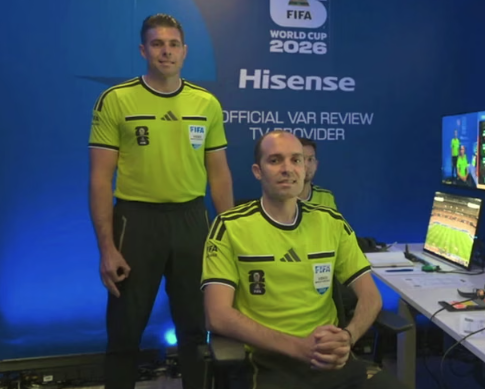
The global football community found itself embroiled in a sensitive cultural controversy today following an incident during the opening match of the World Cup. Fifa’s official discrimination monitor has formally requested the immediate removal of a prominent video assistant referee after a pre-match broadcast segment. The official in question allegedly displayed a controversial hand gesture that has long been associated with far-right political movements. The incident occurred during the highly anticipated opening fixture between Germany and Curaçao, which was broadcast live to millions of viewers worldwide.
As the official television coverage transitioned to the video assistant referee control room, cameras captured Australian official Shaun Evans making a distinctive hand sign. The gesture, which resembled the traditional “OK” symbol, was displayed with his right hand positioned in front of his right leg. Although the match itself was being played in Houston, Texas, the video assistant referee team operates from a centralised broadcast facility located in Dallas. The brief television moment immediately sparked intense discussion across social media platforms and prompted a swift response from international anti-discrimination organisations.
The Fare network, an organization that collaborates closely with global football governing bodies to monitor discriminatory behavior, issued a strong public statement regarding the incident. The advocacy group stated that their expert advisors concluded the gesture clearly resembled the upside-down symbol utilized by far-right networks. Representatives from the network asserted that the official should be stripped of his duties for the remainder of the tournament. The organisation described the gesture using terms associated with extreme political groups, underscoring the severity with which they view the matter.
Fifa officials were contacted immediately for an official statement regarding the unfolding situation and the referee’s future involvement. In Australia, both the Professional Football Referees Association and Football Australia were also reached to provide clarity on the matter. At this stage of the investigation, it remains entirely unclear whether the gesture carried intentional political connotations. Analysts noted the gesture could easily have been a manifestation of a popular and harmless schoolyard game played worldwide.
The traditional playground activity, often referred to as the circle game, involves tricking a companion into looking below the waistline. Over the past decade, however, the digital landscape has complicated the cultural meaning of this specific physical gesture. The symbol was famously adopted as a modern hoax on internet message boards before gaining traction among extremist groups. This dual meaning has created significant challenges for organizations attempting to police visual conduct during major international sporting events.
In late 2019, the New York-based Anti-Defamation League officially classified the specific hand formation within its extensive database of hate symbols. Experts from the organisation emphasized at the time that careful context is absolutely essential when interpreting the gesture. Researchers noted that the symbol is still overwhelmingly used in its traditional, entirely harmless context by the general public. However, the volume of malicious usage by specific groups necessitated its inclusion in modern tracking databases to ensure public safety.
The official involved in the current controversy is one of thirty specialist video referees selected for this prestigious tournament. The expanded international competition is being hosted jointly across various cities in the United States, Canada, and Mexico. The event represents the pinnacle of professional achievement for referees, making the current allegations particularly damaging to a career. The pressure on governing bodies to maintain an inclusive environment remains immense throughout this high-profile month of sport.
The monitoring network questioned why an experienced official would utilize such a ambiguous symbol while knowing cameras were filming. The organization further noted that subsequent television broadcasts appeared to alter how the refereeing panel was introduced to viewers. Television directors seemingly stopped showing the live video feed of the assistant referees during the later matches on Sunday. This apparent adjustment suggests that broadcasting teams were quick to react to the growing online conversation surrounding the incident.
The incident highlights the immense difficulty international sports organisations face when managing live global broadcasts in the digital era. Modern high-definition television coverage ensures that every single movement made by match officials is scrutinised by public audiences. For sporting bodies like Fifa, maintaining strict neutrality and eliminating discriminatory symbols is paramount to their corporate identity. Consequently, even ambiguous gestures can trigger massive public relations challenges that require immediate investigation and clear institutional communication.
Football tournaments have historically served as platforms for broader social commentary and cultural debates across the European continent. Governing bodies have spent decades implementing rigorous campaigns designed to eradicate discriminatory behavior from stadiums and broadcast feeds. The current controversy threatens to overshadow the sporting achievements of the competing nations during the opening week of play. Supporters worldwide are now watching closely to see how football administrators will balance fairness with necessary disciplinary action.
The Australian refereeing community has generally maintained a strong reputation for professionalism and integrity on the international stage. Colleagues of the official expressed surprise at the sudden controversy developing around an experienced member of their association. Many commentators urge caution, noting that public condemnation should not precede a thorough review of the actual intent. The intersection of internet culture, playground games, and political symbolism creates a complex puzzle for investigators to solve.
As the tournament progresses into the group stages, the governing body is expected to release a comprehensive statement soon. The decision will likely influence how broadcasting protocols are managed for the remainder of the three-nation summer tournament. For now, the focus remains divided between the exciting action on the pitch and the cultural debates surrounding it. Football fans hope for a swift resolution that allows the sport itself to reclaim the global spotlight.
Related News:
 Tension and Turmoil at Aston Villa v Maccabi Match
 Lando Norris Dominates Brazil GP to Strengthen F1 Title Bid
 Ronaldo Confirms Final World Cup and Plans Retirement
 England Maintain Perfect World Cup Qualifying Record with Win Over Serbia
 Osimhen doubles as Nigeria reach CAF World Cup final
 Tears of Joy as Ireland Stun Hungary to Stay in World Cup Race
 Haaland Heroics and Portuguese Rampage Seal World Cup Qualification
 Irish Hero Parrott Says Goal Brought First Tears in Years
 Scotland Fans Reflect on France ’98 as World Cup Looms
 Nigeria Misses World Cup Again After Play-Off Loss
 Mark Wood Bowls Rapid Nets Spell, Ashes Test Hopes Rise
 Cardiff Nights Could Propel Wales to World Cup Glory
 Spain Qualify for 2026 World Cup After Dramatic Draw
 Scotland End 28-Year Wait With Stunning World Cup Qualification
 Cristiano Ronaldo Joins Trump, Bin Salman at State Dinner
 Tiny Curacao Makes History as Smallest Nation to Reach World Cup
 Haiti Qualifies for World Cup Despite Coach Never Visiting Country
 Scotland Fans Celebrate Historic World Cup Qualification
 Barcelona Returns to Camp Nou vs Athletic Bilbao
 India, Pakistan to Clash in T20 World Cup 2026 Group Match
 Mbappe Scores 4 as Real Madrid Edge Olympiakos
 Man City Lose, Champions League Risk
 Trump to attend 2026 FIFA World Cup draw in Washington
 2026 World Cup Draw Explained Ahead of Ceremony
 Hilary Knight speaks out on Trump’s recent hockey remarks
 Brady Tkachuk Denies AI Video Claims After Olympic Gold
 India T20 World Cup Triumph Seals Historic Title Defence
 Iranian Captain Departs Australia Amid Asylum Tension
 Iran World Cup Move Talks Raise Global Concerns
 Jos Buttler Searches for Form as the IPL Returns
 Peretz Targets FA Cup Upset Amid War Concerns
 Irvine Slams Trump Fifa Peace Prize
 $13bn World Cup Set to Break All Revenue Records
 Premier League drama defines crucial weekend
 Infantino’s Grip Tightens as FIFA Eyes a $14bn Future in Vancouver
 RFU Backs Borthwick Despite England’s Poor Six Nations
 Miami Upgrades Shake Up F1 Title Fight
 Infantino Defends Soaring World Cup 2026 Ticket Costs
 FIFA Confirms Global Ban for Benfica Star Prestianni
Chasing Glory: The Quest for a New World Cup Champion
FIFA Confirms Global Ban for Benfica Star Prestianni
Chasing Glory: The Quest for a New World Cup Champion
 Tuchel Boldly Reshapes England Squad for World Cup Glory
 Drama in New Zealand as Surf Final Halted by Marine Attack
 Knicks Clinch Historic Comeback in Thrilling NBA Finals
 Football Hopes to Outshine World Cup Drama in Mexico
 Canada Secure Historic Last 16 Spot with Late Goal
 Mexico World Cup Joy Turns to Tragedy as Two Die in Crowds
 Bryne Backs Haaland Before England World Cup Clash
 England and Norway Fans Turn Miami Into World Cup Carnival
 Lamine Yamal’s Birthday: Football, Fame, and France
 Chaos at Ibrox as Martin’s Rangers Era Comes to an End
 Zelenskyy Signs Fighter Jet Deal Amid Russian Drone Attacks
 Shadow Fleet at Sea: Europe’s Battle Against Illicit Oil Shipping
 US Suspends Afghan Immigration After White House Shooting
 ‘Extinct’ Antelope Returns to Sahara, Bringing Hope
 Aston Villa Remain Arsenal’s Key Obstacle in Title Pursuit
 Irish Beach Tragedy: Irish Drown at Whitehaven Beach in Australia
 Ben Stokes injury joke after brutal ball strike
 UK and US Drop in Global Corruption Index Rankings
 Canberra Poster Seizure Sparks Free Speech Row
 BBC World Cup Presenting Duties Shared Among Trio
 English Cricket Faces Moral Crisis Over Indian Investment
 Jacinda Ardern Move Sparks Kiwi Reflection
 Middle East Airspace Crisis Strands Thousands
 Kelly Wilkinson Inquest Reveals Bail Failure
 Injured Mojtaba Khamenei Elevated as Iran Leader
 The Kill Line: A Shifting Vision of the American Dream
 Air Canada CEO Faces Outcry Over Recent Language Misstep
 Extreme Weather: Europe Shivers as Cyclone Narelle Hits
 Asia Turns Back to Coal Amid Middle East Energy Crisis
 Relationship with Trump may be beyond repair, Starmer warned
 Trump’s Six-Week Iranian War: The High Cost of Ignorance
 Ben Roberts-Smith Denies War Crime Allegations in First Statement
 Scott Parker Leaves Burnley After Premier League Drop
 Alice Capsey Sparks England Win With Brilliant Fifty
 Maldives Cave Diving Tragedy Raises Safety Alarm
 Man City Threaten Legal Action Over Haaland Real Madrid Shirt
 Britain’s Crowning Butterfly Takes the Nation by Storm
 US Advance Past Bosnia in World Cup Thriller
 Trump’s Red-Card Intervention Hurts the US World Cup
 Houthis Strike Saudi Arabia as Middle East Tensions Rise