Published: 18 September ‘2025. The English Chronicle Desk.
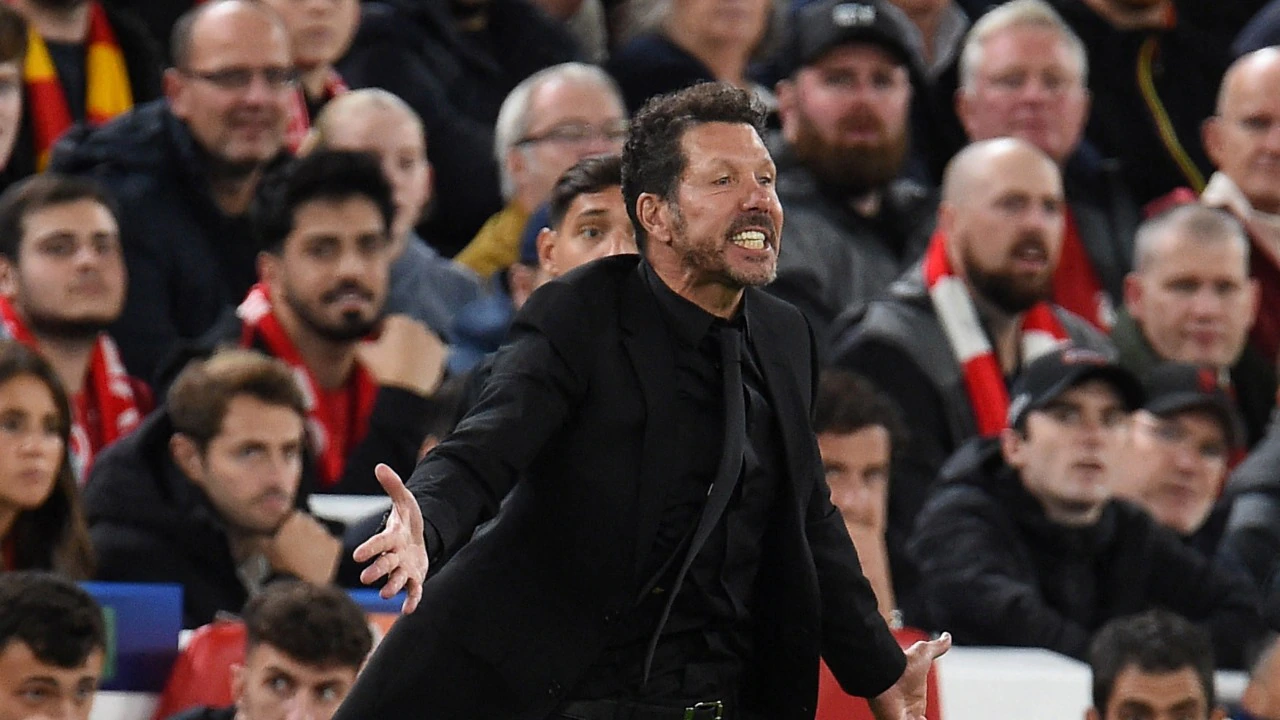
Atlético Madrid head coach Diego Simeone has spoken out about the incident involving a fan confrontation that occurred immediately after Liverpool scored a dramatic 92nd-minute goal, sealing a 3-2 victory over his side at Anfield. The match, characterized by intense competition and high drama, saw Simeone, who was dismissed by the referee during the game, express emotions that he describes as “human” in response to a sustained barrage of insults and provocations from the crowd throughout the ninety minutes.
The game unfolded as a tense and competitive encounter between two of Europe’s top clubs. Liverpool initially surged ahead thanks to goals from Andy Robertson and Mohamed Salah, putting Atlético on the back foot. However, the resilient Spanish side, led by Marcos Llorente, staged a remarkable comeback in the second half, with Llorente scoring twice to level the score. The match looked set to end in a draw, a result that Simeone would have considered a fair reflection of his team’s effort and performance on the night. Yet, in the dying minutes, Virgil van Dijk scored Liverpool’s decisive goal, leaving Simeone visibly agitated and prompting a confrontation with a fan seated near the touchline.

Speaking to the media after the match, Simeone attempted to explain his response, emphasizing that while managers are expected to maintain composure under intense pressure, they are still human beings capable of emotional reactions. “We are in a place where we don’t have a right to reply or react, and it is never good when we react as managers,” he said. “But if there are comments against us, whether they are insults or discrimination, we can get angry or feel compelled to respond. In my case, when we were being insulted throughout the match and the third goal was scored, one fan turned around and insulted me. I am a person; I am human.”
Simeone, who carefully refrained from specifying the nature of the insults, clarified that he was not seeking to elaborate on the content of the abuse. He stated, “I am not going to get into the exact nature of the insults. I don’t want to get involved in that discussion. I have got to stay in my place. I know what went on behind the manager’s bench. I cannot solve society’s problems in one press conference. I have to live with it.” His comments highlighted the difficult position managers often occupy, having to balance intense public scrutiny with the emotional pressures of high-stakes football matches.
The match also marked a notable pattern for Liverpool this season, as it was the fifth consecutive game in which the club secured victory with a late goal. This particular match also coincided with Arne Slot’s 47th birthday, providing an emotional backdrop to the dramatic finale. Liverpool’s manager praised his team’s fitness, preparation, and collective determination, underscoring the importance of physical and mental readiness in high-pressure moments. “You’re never 100% sure in these moments,” Slot said. “But what I do know is that we are so fit that we are able to push one more time. Even if we don’t score, we will try to push for it. That is the mentality this team has. But it should not only be about mentality; it’s also how fit we are, how well prepared we are throughout the last few weeks, that they are able to push one more time.”
Slot further reflected on the personal significance of celebrating his birthday during consecutive Champions League nights, noting with humor and gratitude that the team’s victories had been a gift in themselves. “It’s the second year in a row that I had to celebrate my birthday on a Champions League night,” he said. “And it’s also the second time in a row that the players gave me a nice present because we won both games. But I would like to ask UEFA if next year I can celebrate my birthday with my friends and family.” His comments were met with smiles and understanding from the media and fans alike, highlighting the human side of professional sports, where personal milestones often intersect with the relentless demands of top-level competition.
The events at Anfield, particularly Simeone’s emotional response, sparked widespread discussion among fans, analysts, and commentators. Many emphasized that the incident sheds light on the intense pressure managers face, not only in directing their teams but also in handling provocative situations from spectators. Football, as a sport with a global following, often magnifies even minor incidents into national or international news, and this match was no exception. The media coverage underscored the intersection between athletic performance, crowd behavior, and the psychological resilience required by players and coaching staff alike.
Furthermore, Simeone’s explanation serves as a reminder that football managers, despite their professional composure, are human beings with limits to patience and emotional endurance. The challenges of high-profile matches, especially in stadiums with passionate and sometimes hostile crowds, demand extraordinary levels of focus, strategic thinking, and personal discipline. Simeone’s candid remarks acknowledged these challenges while emphasizing the broader point that emotional responses, while sometimes visible and dramatic, are part of the human experience.

Analysts also noted that Liverpool’s repeated ability to secure victories through late goals reflects both their physical conditioning and their tactical maturity under pressure. It emphasizes the evolving dynamics of modern football, where matches can turn decisively in moments of intense intensity, demanding mental fortitude from players, staff, and management. Simeone’s confrontation with the fan, while controversial, underscores the extreme emotions that such pivotal moments can generate in competitive sports.
In conclusion, the match between Liverpool and Atlético Madrid on that memorable evening at Anfield was a dramatic showcase of skill, resilience, and emotion, encapsulating the unpredictable nature of football at the highest level. Simeone’s response, while criticized by some, has also been interpreted as a human reaction to continuous provocation and the emotional rollercoaster inherent in elite sports. Both the players and managers faced immense challenges, yet the match will be remembered not only for the late winner but also for the broader conversations it has sparked about sportsmanship, crowd behavior, and the human side of professional football.
This event serves as a case study for how pressure, expectation, and personal dignity intersect in professional football, highlighting the complex responsibilities managers shoulder during high-profile matches and the importance of resilience, preparation, and human empathy in responding to extreme circumstances.
Related News:
 London Bids for 2029 World Athletics Championships with £45 Million Government Backing
 Hannah Hampton’s Heroics Propel England to World Cup Glory Amid Personal Adversity
 Usyk vs. Dubois: Heavyweight Clash of Generations Set to Electrify Boxing World Tonight
 Darts’ Elite Converge on Blackpool as Prestigious World Matchplay Tournament Begins
 Aston Villa Under Pressure as Newcastle Take on Hosts in Premier League Opener
 Tottenham Make Three Changes as Spurs Prepare to Host Burnley in Premier League Opener
 Manchester City Announce Their Return in Style with Haaland Double and Debut Goals at Wolves
 Kylian Mbappé Fires Real Madrid to Winning Start for Alonso Against Osasuna
 One More Step for Cristiano Ronaldo! Al-Nassr Beat Al-Ittihad
 Second Arrest Made Over Racist Abuse Targeting Jess Carter
 Merino Hat-Trick Inspires Spain to 6-0 Rout of Turkey in World Cup Qualifier
 Carlos Alcaraz Celebrates Second US Open Triumph, Calls It the Best Tournament of His Career
 India Triumph in Dubai Amid Unexpected Twists
 Barcelona Thrash Valencia 6-0 in Stunning Home Opener
 Kane’s Double Secures Bayern Triumph as Chelsea’s Champions League Return Hits Hurdle
 Man City 2-0 Napoli: Haaland Reaches 50 Champions League Goals After Red Card Turns Tide
 Rashford’s Brilliance Stuns Newcastle as Barcelona Claim Champions League Victory
 Real Madrid-4 Dominate Levante-1 Victory to Maintain Perfect La Liga Start
 Liverpool Edge Past Southampton in Dramatic Carabao Cup Clash
Manchester City Dominate Burnley 5-1 as Haaland’s Brace Secures Vital Win
Liverpool Edge Past Southampton in Dramatic Carabao Cup Clash
Manchester City Dominate Burnley 5-1 as Haaland’s Brace Secures Vital Win
 Aston Villa Fight Back to End Winless Run with Convincing Victory over Fulham
Barcelona vs Real Sociedad
Aston Villa Fight Back to End Winless Run with Convincing Victory over Fulham
Barcelona vs Real Sociedad
 Bournemouth Stun Fulham with Dramatic Comeback in Premier League Thriller
 Manchester United Stand Firm Behind Ruben Amorim After Sunderland Win
 Arsenal Edge Past West Ham Amid Injury Concerns
Guardiola Enters Elite Club with Record-Breaking 250th Premier League Win
Arsenal Edge Past West Ham Amid Injury Concerns
Guardiola Enters Elite Club with Record-Breaking 250th Premier League Win
 Chaos at Ibrox as Martin’s Rangers Era Comes to an End
 Arsenal Showcase Depth and Flexibility as Arteta Eyes Title Challenge
 Champions League defeat leaves Arsenal Women’s
 Ange Postecoglou’s Naivety Premier League Misadventure Ends
 Barnes Inspires Newcastle to Champions League Triumph Over Benfica
City shine with PlayStation-style football to overwhelm Villarreal
Barnes Inspires Newcastle to Champions League Triumph Over Benfica
City shine with PlayStation-style football to overwhelm Villarreal
 Gibbs-White Inspires Forest to Thrilling Win Over Porto
 Go Ahead Eagles Shock Aston Villa as Buendía Misses Late Penalty
 Manchester United triumph as Mbeumo brace seals thrilling win
 Fabio Wardley stuns Joseph Parker to earn Usyk title shot
 Wolvaardt’s Masterclass Fires South Africa into First World Cup Final
 Only One Boxing Day Game This Year Due to UEFA Fixture Expansion
 Dyche Criticises Corner Decision as Forest Draw with United
 Caicedo Shines as Chelsea Edge Spurs in Chaotic Derby
 Mary Earps’s Manchester United Return Faces Mixed Reception
 Sam Kerr Stars in Chelsea Return with Champions League Double
 This kid is something else: Alex Scott’s rise to England call-up
 Ronaldo’s Red in Dublin Sparks Managerial Debate and Drama
 Saka Solidifies Role as Tuchel’s Key England Lieutenant
 Former Lion Heskey Warns of Shortage of England Strikers
 Australia Fast Bowler Aims to Silence Joe Root in Perth
 Cardiff Nights Could Propel Wales to World Cup Glory
 Germany and Netherlands Confirm Places in 2026 World Cup
 Cristiano Ronaldo Joins Trump, Bin Salman at State Dinner
 Haiti Qualifies for World Cup Despite Coach Never Visiting Country
 Scotland Fans Celebrate Historic World Cup Qualification
 Major League Baseball Scores New Broadcast Deals Through 2028
 Rookie Driver Hollie McRae Flips Car but Walks Away Safe
 Chelsea Dominates Barcelona with 3-0 Champions League Win
 India, Pakistan to Clash in T20 World Cup 2026 Group Match
 Kids Football Coach Removed Over Suspected ‘Drugs Menu’
 Mbappe Scores 4 as Real Madrid Edge Olympiakos
 Man City Lose, Champions League Risk
 Barcelona, Atletico set for decisive La Liga showdown
 Maxwell withdraws from IPL 2026 after 13 seasons
 Barcelona Come From Behind to Beat Atletico 3-1
 Post Office Scandal Compensation Tops £1 Billion as Victims Finally See Justice
 UK Banks Granted Reprieve as BoE Delays Basel III Capital Rules Until 2028
 England Grapples with Unprecedented Bluetongue Virus Outbreak: Entire Nation Declared Infected Zone
 London Set to Honour Euro 2025 Champions as Lionesses Take Victory Parade Through the Capital
 West End Exposed as London’s Knife Crime Epicentre Amid Alarming Surge in Violence
 Tottenham Takes On Newcastle
 Singapore Corruption Scandal: Details Emerge on Iswaran’s Luxury Flight and Ties to Tycoon Ong Beng Seng
 Rugby Confronts Safety Concerns with Smart Mouthguards at Women’s World Cup
 Premier League Supercomputer Predicts Tough Season for Man Utd Amid Three-Team Title Battle
 Mystery Wallaby Spotted on Norfolk-Suffolk Border Sparks Police Appeal
 UK Weather: Heat Alerts Extended as Temperatures Set to Reach 30°C This Weekend
 Arsenal VS Newcastle Hearts with Dramatic Late Turnaround at St James’ Park
 Hospice Cuts Raise Alarm Across England Amid Funding Crisis
 Son Reveals UK Couple in Iran Resort to Hunger Strike for Help
 Orban Says Ukraine Has ‘No Chance’ as EU Support Continues
 Serial Rapist and Former Cop Found Guilty Again
 Scottish Families Take Legal Action Over School CO Leak
 Two National Guard Soldiers Critically Injured Near White House