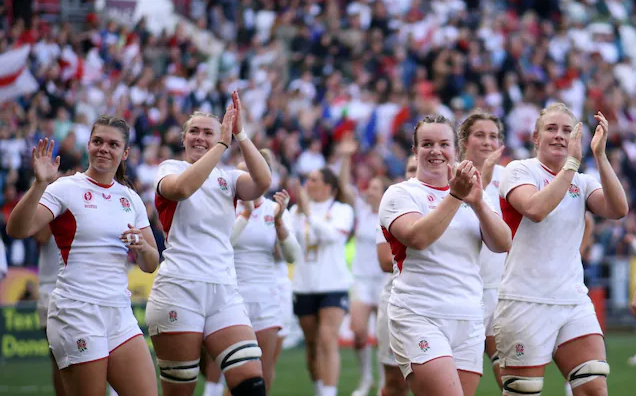
Published: 22 September ‘2025. The English Chronicle Desk. The English Chronicle Online
As the Women’s Rugby World Cup final approaches this Saturday at the Allianz Stadium, the spotlight turns firmly onto England’s Red Roses, a team carrying the hopes of a nation eager for World Cup glory. For many, including those intimately connected with English women’s rugby for decades, this moment evokes memories of the past, particularly the heartbreak of 1991, when England reached the final against Australia only to fall short in a contest that has lingered in memory for more than thirty years.
For those like myself, who were involved with England’s forwards in 1991, the upcoming final is both a privilege and a poignant reminder of the challenges that accompany playing on the world stage. That year marked the humble beginnings of women’s rugby in England, a time when only a handful of pioneering women laid the foundations for the professional and globally recognised game we see today. To witness a sold-out stadium with 82,000 spectators is a testament to the progress made since those early days. Yet, the emotional weight of history serves as a cautionary tale for the current squad: the temptation to stray from the team’s core strengths in pursuit of spectacle or external validation can be perilous.

England’s team faces unprecedented pressure ahead of the final, a challenge compounded by the global nature of modern media coverage and the relentless scrutiny of digital platforms. The Red Roses are pre-tournament favourites, reflecting years of planning, investment, and professionalisation of the women’s game through the Premiership Women’s Rugby (PWR), a league that has elevated the sport and prepared athletes for elite competition. But being favourites comes with its own burden: every error is magnified, every tactical decision analysed, and every opponent motivated to upset the established hierarchy.
Their opponents, Canada, represent a formidable challenge. The Canadian team’s journey to the final has been extraordinary, requiring crowdfunding efforts amounting to 1 million Canadian dollars (£538,000) to support their campaign. This resourcefulness and determination have galvanised the global rugby community, ensuring that the final will not merely be a contest of skill, but a showcase of dedication, resilience, and strategic acumen. Neutral fans, often inclined to cheer against England, add another layer of psychological complexity to the encounter, increasing the need for England to maintain focus, discipline, and adherence to their natural style.
The impact of a potential England victory transcends the immediate outcome of the final. A win would inspire a new generation of girls and women to participate in rugby, continuing the transformative influence seen in football through the Lionesses. Furthermore, triumph would validate the Rugby Football Union’s investment in professional women’s rugby, demonstrating that long-term planning, financial support, and structural development can yield success on the global stage. England’s Red Roses, therefore, carry a dual responsibility: to compete at the highest level and to serve as role models whose performance will shape the sport’s future for decades.
Despite England’s strengths, their performances leading up to the final have been somewhat uneven. While scoreboard results indicate high-scoring outcomes, the team has displayed vulnerabilities that could be exploited by a well-prepared opponent. In particular, ball-carriers who penetrate near the edges of the breakdown have caused difficulties, an area where Canada’s scrum-half, Justine Pelletier, has excelled with her incisive and sniping runs. England will need to tighten their defence, manage restarts more effectively, and ensure that support players react promptly to breakdown situations. Penalty discipline will be crucial, as errors in these areas can shift momentum in high-stakes matches.
Importantly, England must resist external pressures to alter their style for the sake of entertainment. There is often a misplaced assumption that thrilling, high-risk rugby is inherently superior to methodical, forward-oriented play. England’s 20-metre driving maul try against France exemplifies the power, skill, and strategic intelligence required to score through structured, disciplined rugby. Such tries, though less flamboyant than dramatic solo runs, demand precision, resilience, and seamless teamwork. In high-pressure finals, these qualities are often more decisive than aesthetic considerations.
The lesson from 1991 remains particularly pertinent. In that final against Australia, England deviated from their established style, embracing a game plan that prioritised spectacle over strategic coherence. The result was a loss that lingered for decades, a reminder that winning, rather than entertaining, must always remain the ultimate goal. The disappointment of 1991 was not mitigated by the match’s perceived entertainment value; the scoreboard reflected defeat, and that reality shaped the memories of players, coaches, and supporters alike.
Current England players have the benefit of professional structures, scientific support, and tactical sophistication unavailable to their predecessors. Yet, the psychological pressures remain similar: the expectations of a nation, the glare of media scrutiny, and the heightened stakes of a World Cup final. Head coach John Mitchell and his squad must harness these pressures constructively, ensuring that every decision reinforces the team’s core strengths rather than succumbing to the allure of external approval or stylistic experimentation.
Beyond the pitch, the broader context of women’s rugby highlights the stakes involved. Investment in domestic leagues, grassroots development, and international exposure has expanded opportunities for players to perform at elite levels. Yet, this progress also intensifies scrutiny: performances are measured not only by victory but by perceived aesthetics, creativity, and alignment with modern rugby trends. England’s Red Roses must therefore navigate a delicate balance, combining tactical discipline, resilience, and execution while remaining true to the principles that have consistently brought them success.
England’s path to the final has demonstrated both the potency and the risks inherent in their approach. While the team has the ability to score prolifically and dominate possession, lapses in defensive organisation and minor errors at key moments have highlighted vulnerabilities. The Canada team’s strategic adaptability, physicality, and determination will test England’s ability to maintain composure, assert dominance, and execute a game plan effectively under sustained pressure.

As the final approaches, the key message for England is clear: maintain the team’s identity. Altering style for the sake of entertainment, external expectations, or superficial comparisons risks undermining everything the squad has achieved. Rugby, at its highest level, rewards discipline, consistency, and tactical intelligence—qualities that have underpinned England’s successes and must remain central to their approach.
Ultimately, the Women’s Rugby World Cup final is not merely a contest of athletic skill, but a culmination of decades of dedication, professionalisation, and strategic development. England’s Red Roses have the opportunity to cement their legacy, inspire future generations, and demonstrate that adherence to core principles—rather than the pursuit of spectacle—remains the path to championship glory. Reflecting on past lessons from 1991, the imperative is clear: win, execute, and honour the team’s identity above all else.
The Allianz Stadium will bear witness to this pivotal encounter, where strategy, skill, and mental fortitude converge. For England, the message is simple yet profound: stay true to your strengths, respect the lessons of history, and play the rugby that has brought you to this defining moment. Victory, after all, belongs to those who remain faithful to their principles when it matters most.
Related News:
 Predicted Leicester Line-ups Reflect Cifuentes’ Tactical Plans Ahead of New Season
 Lionesses Return in Glory with an Open-Top Parade, Spark National Pride and Rewrite the Future of Women’s Football
 Central London Gears Up for Lionesses’ Victory Parade as Thousands Prepare to Celebrate Historic Women’s Euros Win
 London Set to Honour Euro 2025 Champions as Lionesses Take Victory Parade Through the Capital
 Rangers Boss Russell Martin Launches Blistering Critique After Disappointing Draw with Motherwell
 Ngumoha Shines Bright as Liverpool’s Future Looks Fiercely Promising
 Minute’s Silence for Diogo Jota Abruptly Ended After Wembley Tribute Disrupted
 Premier League Supercomputer Predicts Tough Season for Man Utd Amid Three-Team Title Battle
 Diogo Jota’s Empty Seat at Liverpool: A Symbol of Grief, Inspiration, and Duty
 Aston Villa Under Pressure as Newcastle Take on Hosts in Premier League Opener
 Isaac Price Shines as West Brom Clinch 3-2 Victory at Wrexham’s Championship Return
 Tottenham Make Three Changes as Spurs Prepare to Host Burnley in Premier League Opener
 FIFA Eyes Biennial Club World Cup from 2029, Plans Possible Expansion
 European Football: Atlético Madrid Stumble at Espanyol as Vitinha Secures PSG Win
 Leeds Mark Premier League Return with Gritty Win Over Everton
 Arsenal Move to Secure Eberechi Eze, Outpacing Tottenham
 Mateta’s Strike Gives Crystal Palace First-Leg Edge in Conference Playoff
 British Paralympians Accused of Disrespect After Turning Backs During Israeli Anthem
 Ruby Tui Emerges as the BBC Rugby Pundit Fans Never Knew They Needed
 Grimsby Stun Manchester United in Dramatic Penalty Shootout
 Club Brugge Crush Ten-Man Rangers to Deepen Russell Martin’s Crisis
 Guardiola Admits City ‘Forgot to Play’ After Shock Defeat to Brighton
 Morgan MacRae: From 17 Minutes Dead to Returning to Rugby in Six Weeks
 Serbia Humiliated 0-5 by England in World Cup Qualifier
 Fábio Carvalho’s Last-Minute Heroics Deny Chelsea Victory at Brentford
 Tottenham Cruise to 3-0 Victory Over 10-Man West Ham in London Derby
 Terence Crawford Shocks Canelo Álvarez to Claim Undisputed Super-Middleweight Crown
 Guardiola Faces Criticism for Defensive Approach in Manchester City’s Clash with Arsenal
Liverpool Vs outhampton Set for Carabao Cup Clash at Anfield
Guardiola Faces Criticism for Defensive Approach in Manchester City’s Clash with Arsenal
Liverpool Vs outhampton Set for Carabao Cup Clash at Anfield
 Chelsea Survive Lincoln City Scare to Advance in Carabao Cup
 Dickie Bird: Cricket’s Beloved Umpire Who Won Hearts with Wit and Integrity
 Aston Villa Edge Bologna as Europa League Campaign Kicks Off
 Tottenham Salvage Point with Stoppage-Time Palhinha Strike Against Wolves
 Manchester City Dominate Burnley 5-1 as Haaland’s Brace Secures Vital Win
 Arsenal VS Newcastle Hearts with Dramatic Late Turnaround at St James’ Park
 Aston Villa Fight Back to End Winless Run with Convincing Victory over Fulham
 Tragic Death Strikes Half-Marathon in Stoke-on-Trent: Runner Dies Shortly After Crossing Finish Line
 Postecoglou Stands Firm Amid Mounting Forest Fan Frustration
 Tuchel Criticises ‘Silent Wembley’ After England Win
 Kane’s Double Seals England’s World Cup Qualification
 Ronaldo’s Record Not Enough as Hungary Hold Portugal
 Fulham vs Arsenal Trossard Strike Sends Gunners Three Points Clear
 Ange Postecoglou’s Naivety Premier League Misadventure Ends
 Arsenal vs Atlético Madrid,Gyökeres Double Secures 4-0 Champions League Victory
 Barnes Inspires Newcastle to Champions League Triumph Over Benfica
 Gibbs-White Inspires Forest to Thrilling Win Over Porto
 Go Ahead Eagles Shock Aston Villa as Buendía Misses Late Penalty
 Aaronson and Rodon Punish West Ham as Leeds Claim Victory
 Manchester United triumph as Mbeumo brace seals thrilling win
 Fabio Wardley stuns Joseph Parker to earn Usyk title shot
 Tottenham shine at Everton but Frank wary of title push
 Brentford Dominate Grimsby in Carabao Cup, Collins Seals 5-0 Triumph
 Lecomte Shines as Fulham Edge Wycombe in Nervy Carabao Cup Win
 Sarr Double Sinks Young Liverpool in Carabao Cup
 Nwaneri and Saka Secure Arsenal Win Over Brighton
 Woltemade Hot Streak Fires Newcastle Past Spurs
 Salah & Gravenberch Lead Liverpool to Win Against Villa
 Dyche Criticises Corner Decision as Forest Draw with United
Caicedo Shines as Chelsea Edge Spurs in Chaotic Derby
Dyche Criticises Corner Decision as Forest Draw with United
Caicedo Shines as Chelsea Edge Spurs in Chaotic Derby
 Granit Xhaka Rescue Earns Everton Draw at Sunderland
 Liverpool Edge Real Madrid 1-0 in Champions League Thriller
 Burn and Joelinton Head Newcastle to Victory Over Bilbao
 Foden shines as Man City dismantle Dortmund in dominant display
 Garnacho Spares Chelsea From Shock Champions League Loss in Baku
 Tension and Turmoil at Aston Villa v Maccabi Match
 Bellingham has ‘the edge’ among England No 10s
Man City Masterclass on Guardiola’s Milestone Day Exposes Liverpool Woes
Bellingham has ‘the edge’ among England No 10s
Man City Masterclass on Guardiola’s Milestone Day Exposes Liverpool Woes
 Lando Norris Dominates Brazil GP to Strengthen F1 Title Bid
 England cannot afford to be in awe of the All Blacks, warns Jamie George
 VAR Must Rein Its Neck In to Save Football’s Spirit
 Trescothick Hints Pope Will Keep Number Three Spot
 Ronaldo Confirms Final World Cup and Plans Retirement
 Mary Earps’s Manchester United Return Faces Mixed Reception
 Sam Kerr Stars in Chelsea Return with Champions League Double
 This kid is something else: Alex Scott’s rise to England call-up
 Former Lion Heskey Warns of Shortage of England Strikers
 Moyes Defends Gueye After Dramatic Everton Bust-Up
 Jac Morgan to Miss Six Nations Start After Surgery
 Alexander Isak ends drought as Liverpool stop rot with win at West Ham
 Mbappe rescues Real Madrid with a penalty at Girona