Published: 16 October 2025. The English Chronicle Desk. The English Chronicle Online.
A political and legal storm has erupted in the United Kingdom after newly released witness statements revealed claims of “large-scale espionage” being carried out by China against the UK. The explosive revelation comes amid growing scrutiny over the collapse of a high-profile spy case involving two men accused of working for the Chinese Communist Party.
Deputy National Security Adviser Matthew Collins stated in his witness testimonies that China “presents the biggest state-based threat to the country’s economic security,” adding that its espionage operations pose a direct challenge to the UK’s prosperity and resilience. The Prime Minister ordered the publication of the statements in an attempt to clear up mounting questions about why the Crown Prosecution Service (CPS) dropped the case.

The CPS had concluded that evidence did not meet the threshold to demonstrate China was a threat to national security at the time of the alleged offences, prompting outrage from opposition politicians and members of Parliament. However, the release of the witness statements appears to contradict that position, intensifying speculation about possible political interference and the government’s handling of national security issues.
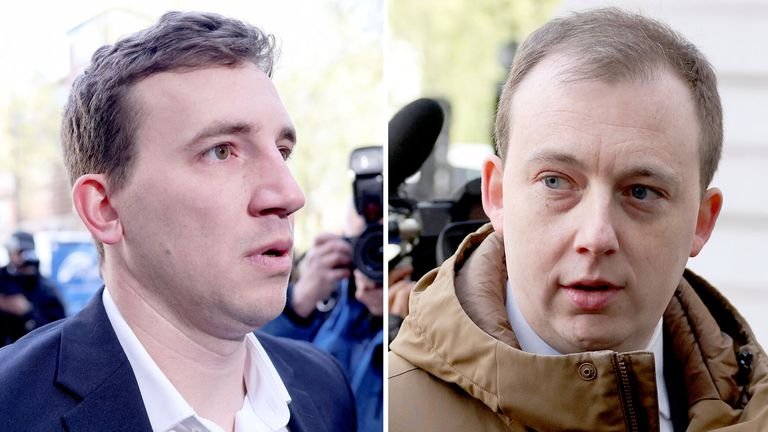
The case, which centred on former parliamentary researcher Christopher Cash and academic Christopher Berry, accused both men of collaborating with a senior figure within the Chinese Communist Party’s Central National Security Commission—an entity chaired by President Xi Jinping. The two were charged under the Official Secrets Act in April 2024, accused of gathering and passing information prejudicial to Britain’s safety and interests between December 2021 and February 2023. Both men continue to deny any wrongdoing.
Mr Cash expressed frustration following the publication of the statements, saying he had been placed in an “impossible situation” without the opportunity to prove his innocence in court. “I should not have to take part in a trial by media,” he said, arguing that the public release of selective evidence lacked crucial context. Mr Berry has declined to comment since the case collapsed.
China’s Foreign Ministry quickly dismissed the allegations, calling them part of a Western “smear campaign.” Spokesperson Lin Jian said, “China firmly opposes the peddling of so-called spy narratives and the vilification of our country.”
The government’s decision to publish the statements—three in total, written between December 2023 and August 2025—is highly unusual. The first statement was made under the Conservative government, while the latter two came after Labour took power. The language used in the second and third statements emphasised the dual nature of the UK’s relationship with China: “We will co-operate where we can, compete where we need to, and challenge where we must.”
That phrasing drew sharp criticism from Conservative MP Alicia Kearns, who said it mirrored the wording in Labour’s 2024 election manifesto. “There’s a direct lift from the Labour Party manifesto,” she said. “It’s very hard to believe there was no political interference.” Kearns argued that the CPS should have allowed the case to proceed, stating that “it’s for a jury to decide if China is or could be a threat to our country.”
Sources close to the Deputy National Security Adviser said Mr Collins believed he had supplied enough evidence to sustain prosecution when he filed his third statement this August. He reportedly described “the increasing Chinese espionage threat posed to the UK” as a justification for continued legal action.
However, CPS head Stephen Parkinson has been criticised for dropping the charges, with MPs claiming he bowed to political pressure. Parkinson told senior lawmakers that the evidence was “95% of the way there,” but still fell short of the threshold necessary for a realistic prospect of conviction.
Government minister Stephen Kinnock rejected claims of interference, describing the accusations as “unsubstantiated.” He insisted that Mr Collins’s statements merely reflected the broader diplomatic and economic context of UK-China relations, and that the CPS made its decision independently. “It is, of course, a matter for the CPS to determine whether or not the evidentiary basis has been met,” Kinnock told Times Radio.

Despite these assurances, the episode has raised difficult questions about how national security and economic interests intersect in modern British foreign policy. Critics say the government’s reluctance to label China as a “national security threat” may have undermined efforts to confront espionage risks head-on. Others warn that such hesitation could leave the UK vulnerable to foreign interference in sensitive sectors, from research and technology to politics.
The controversy has also exposed tensions between the Labour government and its Conservative predecessors over how to balance security with economic cooperation. While the Labour administration stresses a pragmatic approach to China—one that blends competition and collaboration—critics accuse it of soft-pedalling on espionage in the interest of trade.
Meanwhile, security experts say the revelations highlight the increasingly complex nature of state-based espionage. As China expands its global influence, the UK faces growing challenges in protecting intellectual property, political institutions, and critical infrastructure from foreign infiltration.
As investigations continue, the fallout from this collapsed spy case has left deep political divisions and renewed debate about Britain’s ability to defend itself against covert foreign threats. Whether or not new prosecutions emerge, the controversy underscores the mounting tension between transparency, justice, and the need to protect national security.
Related News:
 UK Must Act with Courage and Clarity on Israel-Palestine Conflict, Says Foreign Affairs Committee Report
 Starmer and Trump to Meet in Scotland Amid Growing Gaza Ceasefire Pressure
 Minister Dismisses Legal Concerns Over UK’s Pledge to Recognise Palestinian State
 MPs Call on UK Government to Delay Biometric Visa Checks for Gaza Students Amid Humanitarian Crisis
 Radioactive Leak at UK’s Nuclear Warhead Base Sparks Outcry Over Safety and Secrecy
 ‘I’m collateral damage’: ex-minister Tulip Siddiq on her Bangladesh corruption trial
 Mutual Inconvenience: Why Alaska Was Chosen for the Trump-Putin Summit on Ukraine
 “I Don’t Expect to Live a Normal Life”: How a Leeds Teenager Became the Target of a Chinese Bounty
 Ministers Accused of Defamation Over Palestine Action Ban and Mass Arrests
 UK Defence Secretary Says Allied Troops ‘Ready to Act from Day One’ if Ukraine Ceasefire Agreed
 Is the UK Ready to Put Boots on the Ground in Ukraine? Assessing Military Capacity and Challenges
 Protests Expected as Israeli Arms Firms Join Global Defence Trade Fair in London
 UK Home Office to Launch French Beach Signage to Warn Asylum Seekers of Risks
 Charlie Kirk Killing Used to Mobilise UK’s Largest Far-Right Rally in Decades
 UK Immigration Figures: Separating Facts from Perceptions
 Far-Right Rally in London Draws Record Crowds Amid Clashes with Police
 Thousands Gather in London to Protest Donald Trump’s Second UK State Visit
 UK and Ireland Set to Unveil New Proposals to Address Northern Ireland’s Troubles Legacy
 Trump Urges UK to “Call Out the Military” to Secure Borders Amid State Visit
Tulip Siddiq Raises Concerns Over Alleged ‘Fake’ Documents in Bangladesh Corruption Trial
Trump Urges UK to “Call Out the Military” to Secure Borders Amid State Visit
Tulip Siddiq Raises Concerns Over Alleged ‘Fake’ Documents in Bangladesh Corruption Trial
 UK Recognises State of Palestine in Push to Preserve Hope for Peace
 UK’s Recognition of Palestine: Symbolic Step or Real Change?
Trump’s UN Speech Criticises London and UK Policies, Draws Far-Right Attention
UK’s Recognition of Palestine: Symbolic Step or Real Change?
Trump’s UN Speech Criticises London and UK Policies, Draws Far-Right Attention
 UK Fighter Jet Purchase Could Breach Nuclear Treaty, Warns CND
 A Third of EU Citizens in UK Report Discrimination by Public Bodies Post-Brexit
 Jailed Georgian Opposition Leaders Warn UK of Iranian Links to Ruling Party
 Russia repeatedly targets UK military satellites, warns Space Command chief
 Pro-Palestine March to Proceed in London Despite Calls to Cancel After Manchester Attack
 UK Universities Warn Students Ahead of 7 October Pro-Palestine Protests
Starmer Considers Stricter Measures on Pro-Palestinian Protest Chants
UK Universities Warn Students Ahead of 7 October Pro-Palestine Protests
Starmer Considers Stricter Measures on Pro-Palestinian Protest Chants
 Public Trust in SNP Hits Historic Low Amid NHS Concerns
 Tony Blair Met Jeffrey Epstein at Downing Street in 2002
 China’s Mega Embassy in London Faces Further Delay
 Johnson Suggests Mandelson Linked to China Spy Controversy
 Minister Blames Deputy for Collapse of China Spy Case
 Shabana Mahmood Warns Border Failings Are Eroding Trust in States
 Witness statements reveal the CPS China spy row collapse in the UK
 Nigel Farage Calls Vladimir Putin ‘A Very Bad Dude’
 Rachel Reeves signals welfare reform ahead of key budget
 Prince Andrew met alleged Chinese spies during Pitch@Palace China trips
 Kosovo agrees to host Britain’s refused asylum seekers
 Plaid Cymru Triumphs in Caerphilly, Ending Labour Century-Long Hold
 Rachel Reeves to lead UK trade push in Saudi Arabia amid rights debate
 British Woman in Iran ‘Losing Hope’ Amid Ongoing Detention
 Johnson Approved China’s London ‘Super-Embassy’ in 2018
 BBC Journalist Held and Interrogated in Vietnam
 Zohran Mamdani becomes New York City’s first Muslim mayor
Zohran Mamdani names all-female transition team for NYC mayoralty
Zohran Mamdani becomes New York City’s first Muslim mayor
Zohran Mamdani names all-female transition team for NYC mayoralty
 Second world war veterans honoured as King leads Remembrance Sunday
 BBC director-general and news chief resign amid bias row
 New review urges UK to repatriate Shamima Begum, others from Syria
 Rama Rebukes Mahmood for Targeting Albanian Families
 Russian Vessel Used Lasers on RAF Pilots, UK Claims
 Ireland Boosts Ukraine Aid as Zelensky Visits Dublin
 Chancellor Faces Mounting Pressure Amid “Impossible Trilemma” Over Tax Rises
 Terence Stamp, ’60s British Film Legend and Star of Superman, Dies at 87
 Hong Kong Summons UK and Australian Envoys Following Asylum Grants to Democracy Activists
 Police Scotland Spends £500,000 Compensating Officers Over Trump Visit
 Urgent Action Needed on Windrush Compensation as Survivors Speak of “Waiting to Die”
 Tanni Grey-Thompson Faces Abuse Over Opposition to Assisted Dying Bill
 TfL Invites RMT to Resume Talks as London Tube Strikes End
Channel Crossings Surge: Over 1,000 People Arrive in the UK in Small Boats in a Single Day
TfL Invites RMT to Resume Talks as London Tube Strikes End
Channel Crossings Surge: Over 1,000 People Arrive in the UK in Small Boats in a Single Day
 Nigel Farage Unveils Controversial Immigration and Welfare Plans at Reform UK Press Conference
 Yvette Cooper Signals Global Momentum Towards Gaza Peace Deal Amid Humanitarian Crisis
 Ed Miliband Warns UK Government on X, Citing Elon Musk as a “Dangerous Influence”
 Kemi Badenoch Unveils ‘Golden Rule’ to Halve Spending Cuts for Deficit Reduction at Tory Conference
 UK border officers deployed to Balkans to tackle migrant smuggling
 Reform UK candidate fined £19,000 after using AI-generated cases to challenge election
 William Steps Up Over Prince Andrew Palace Response
 Ireland Votes as Two Women Compete for Presidency
 Experts Warn Russia’s Burevestnik Missile Could Destabilise Arms Control
 Green Party Surges Past Labour in Latest UK Poll
 Zarah Sultana Launches Party to Change Politics
 Just Stop Oil Protesters Convicted Amid Climate Defence Row
 Starmer Faces Growing Dissent as Labour MPs Weigh Leadership Challenge
 Peers Flood Assisted Dying Bill with 942 Amendments
 Trump Deploys DHS to Charlotte in Major Arrest Operation
 Pentagon Officials in Ukraine to Discuss War End
 Venezuela Threatens Nobel Winner Machado with Fugitive Status
 Most Tories Expect to Support a Farage-Led Government