Published: 04 November 2025. The English Chronicle Desk. The English Chronicle Online.
David Moyes returned to the Stadium of Light on Saturday, facing a Sunderland side that bore little resemblance to the struggling team he managed eight years ago. Back in 2016, Moyes oversaw a disastrous relegation campaign, which saw Sunderland finish bottom of the Premier League with just 24 points, marking the only relegation of his managerial career. Injuries, poor signings, and a lack of cohesion plagued the team that season, leaving fans to endure a demoralising campaign that ultimately ended in Moyes’ resignation.
This time, however, Sunderland presented a very different picture. Under the guidance of Régis Le Bris, the Black Cats had moved up to fourth place in the Championship ahead of their home clash with Premier League visitors Everton. The match ended in a hard-fought 1-1 draw, with Granit Xhaka cancelling out Iliman Ndiaye’s early strike in a game that showcased Sunderland’s renewed resilience and determination.

Everton dominated large portions of the first half, with Jack Grealish providing a constant threat from the left. A 20-yard strike from Grealish rattled the post, while Thierno Barry played a key role in the lead-up to Everton’s opening goal. Ndiaye, supported by Barry’s movement on the right flank, superbly evaded three Sunderland defenders before slotting the ball past Robin Roefs, whose impressive goalkeeping had kept Sunderland in contention for much of the season. Despite Everton’s dominance, Sunderland showed glimpses of resilience in the closing stages of the first half, with Dan Ballard heading a dangerous ball from Nordi Mukiele, forcing a scramble in the Everton defence. Jordan Pickford, making his first return to the Stadium of Light since leaving Sunderland, remained largely untested in the first 45 minutes.
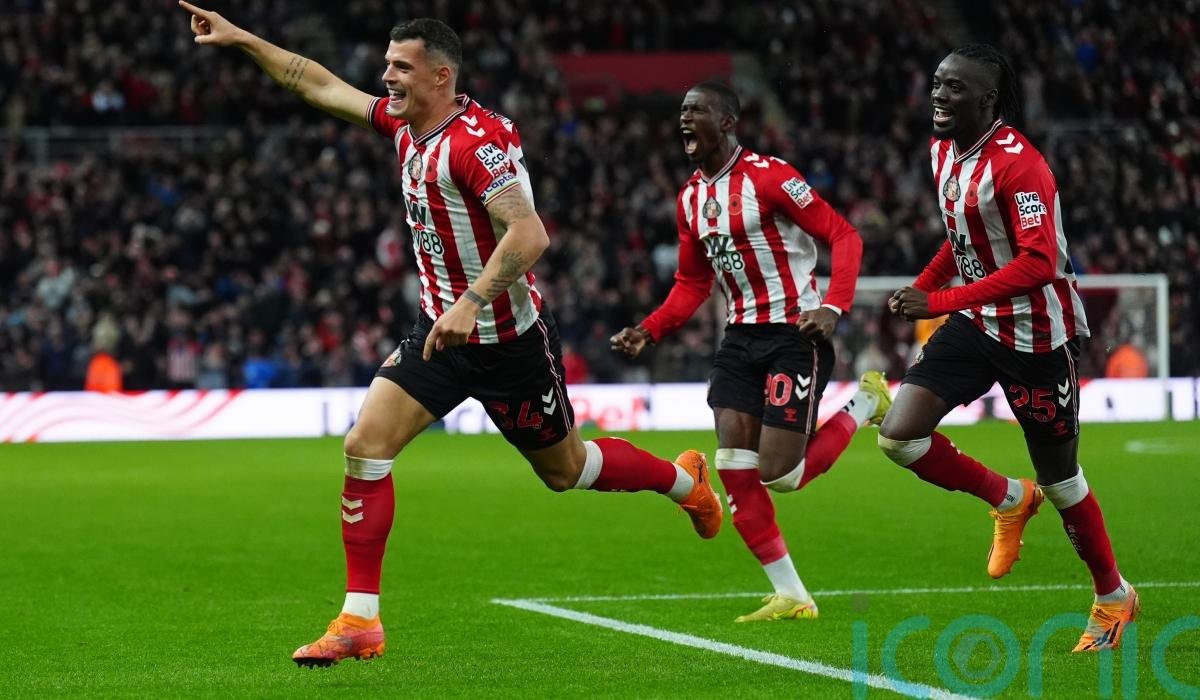
The second half saw a revitalised Sunderland side. True to the spirit of their previous Championship playoff campaign, they continued to press relentlessly, determined not to be left behind. Their persistence paid off almost immediately after the restart. Granit Xhaka, inadvertently assisted by James Tarkowski’s deflection, capitalised on a pass from Enzo Le Fée to score, leveling the game and sparking wild celebrations among the home fans. The Stadium of Light erupted as Sunderland demonstrated their tactical discipline, tenacity, and hunger for results against top-flight opposition.
Sunderland maintained pressure throughout the second half, relentlessly pressing Everton and frequently regaining possession. Long throws from Mukiele caused repeated panic in the visiting side’s defence, and several opportunities fell narrowly wide, including a headed chance from Mukiele that sailed over the bar. Everton, for their part, struggled to regain a foothold in the game, with Dwight McNeil introduced to provide fresh energy, but their attacks lacked cohesion as Sunderland continued to dominate possession and tempo.
Moyes reflected on the encounter with a measured perspective. “After 30 minutes, I’d have been disappointed to be only going home with a point,” he admitted. “After 90 minutes I was quite pleased with a point.” He praised Sunderland’s transformation since his tenure, acknowledging the efforts of Le Bris and the club in rebuilding a side capable of competing at a high level. “They’ve done amazingly to bring themselves back round. Maybe they’ve been away longer than they hoped to be, but it’s great to see them back. They’re doing a brilliant job,” Moyes noted, showing respect for the club’s progress.
For Régis Le Bris, the result was a reminder of the league’s difficulty and competitiveness. “We didn’t start well. They were better than us, they were dominant,” he said of the first half. Despite the initial setback, he emphasized the value of gaining a point against a strong Everton side. “Not really disappointed, because this league is so tough. It’s a good reminder how hard it is to win a single point. We started really well this season, so we might forget that we are still a promoted team. It’s a good point.”
The match highlighted Sunderland’s resurgence from the depths of League One just a few years ago to a club capable of challenging and containing Premier League opposition. Their ability to remain organised, press effectively, and convert moments of opportunity into goals underlines the team’s evolution. Meanwhile, Everton’s performance showed glimpses of their quality but also the challenges they face against a well-drilled and motivated side.
Tactically, Sunderland’s game plan was executed with precision. Their focus on pressing, winning second balls, and exploiting set-piece opportunities made them a constant threat. Granit Xhaka’s equaliser epitomised the chaotic yet effective nature of Sunderland’s attacking strategy, showing both opportunism and clinical execution. Everton’s attempts to respond were stifled by Sunderland’s defensive organisation, and the home crowd played a significant role in keeping the team motivated, turning every challenge into a roaring call for support.

Moyes’ return to Sunderland served as a poignant reminder of the club’s contrasting fortunes across the years. From a side in freefall to a competitive Championship outfit capable of holding Premier League opposition to a draw, Sunderland’s journey has been remarkable. Moyes himself acknowledged the contrast, praising the club’s management and players for the transformation they have achieved.
By the final whistle, Sunderland’s players and supporters could take pride in the result. A point against Everton, secured through resilience and determination, underscored the progress made since the club’s darkest days. Meanwhile, Everton salvaged a draw but were left reflecting on missed chances and the intensity required to break down a well-prepared opponent.
In summary, the 1-1 draw at the Stadium of Light highlighted not only the enduring spirit of Sunderland but also the challenges and unpredictability inherent in football. For Moyes, it was a bittersweet return, confronting memories of past failures while witnessing a club reborn through strategic management, determination, and the unwavering support of its fans. For Sunderland, the match reinforced their identity as a team that refuses to yield, demonstrating a capacity to compete against higher-tier opposition while holding on to the lessons of their journey back to prominence.
Related News:
 Tottenham shine at Everton but Frank wary of title push
 Matty Cash seals Villa win as City falter again at Villa Park
 Sarr Double Sinks Young Liverpool in Carabao Cup
 Nwaneri and Saka Secure Arsenal Win Over Brighton
 Woltemade Hot Streak Fires Newcastle Past Spurs
 Kieffer Moore Hat-Trick Ends Coventry’s Unbeaten Run
 Salah & Gravenberch Lead Liverpool to Win Against Villa
 Dyche Criticises Corner Decision as Forest Draw with United
 Caicedo Shines as Chelsea Edge Spurs in Chaotic Derby
 Liverpool Edge Real Madrid 1-0 in Champions League Thriller
 Van de Ven Stunner Lifts 10-Man Spurs to UCL Glory
 Merino Shines as Arsenal Beat Slavia 3-0 Without Gyokeres
 Burn and Joelinton Head Newcastle to Victory Over Bilbao
 Foden shines as Man City dismantle Dortmund in dominant display
 Garnacho Spares Chelsea From Shock Champions League Loss in Baku
 Tension and Turmoil at Aston Villa v Maccabi Match
 Bellingham has ‘the edge’ among England No 10s
 Arteta Left Frustrated as Sunderland Deny Arsenal Late Win
Chelsea Cruise Past Wolves to Go Second in the Premier League
Man City Masterclass on Guardiola’s Milestone Day Exposes Liverpool Woes
Arteta Left Frustrated as Sunderland Deny Arsenal Late Win
Chelsea Cruise Past Wolves to Go Second in the Premier League
Man City Masterclass on Guardiola’s Milestone Day Exposes Liverpool Woes
 Lando Norris Dominates Brazil GP to Strengthen F1 Title Bid
 England cannot afford to be in awe of the All Blacks, warns Jamie George
 VAR Must Rein Its Neck In to Save Football’s Spirit
 Trescothick Hints Pope Will Keep Number Three Spot
 Ronaldo Confirms Final World Cup and Plans Retirement
 Mary Earps’s Manchester United Return Faces Mixed Reception
 Sam Kerr Stars in Chelsea Return with Champions League Double
 This kid is something else: Alex Scott’s rise to England call-up
 Anthony Joshua Faces Backlash Over Proposed Jake Paul Fight
 Former Lion Heskey Warns of Shortage of England Strikers
 Rogers Double Aston Villa as Leeds Slip Deeper into Trouble
Eze Hat-Trick Stuns Spurs in Dominant Arsenal Derby Win
Rogers Double Aston Villa as Leeds Slip Deeper into Trouble
Eze Hat-Trick Stuns Spurs in Dominant Arsenal Derby Win
 Moyes Defends Gueye After Dramatic Everton Bust-Up
 Rookie Driver Hollie McRae Flips Car but Walks Away Safe
 Gerrard warns Liverpool’s terrible run could worsen
 Jac Morgan to Miss Six Nations Start After Surgery
 Alexander Isak ends drought as Liverpool stop rot with win at West Ham
 Mbappe rescues Real Madrid with a penalty at Girona
 London Set to Honour Euro 2025 Champions as Lionesses Take Victory Parade Through the Capital
 Premier League Supercomputer Predicts Tough Season for Man Utd Amid Three-Team Title Battle
 Grimsby Stun Manchester United in Dramatic Penalty Shootout
 Arsenal VS Newcastle Hearts with Dramatic Late Turnaround at St James’ Park
 Everton Held by West Ham as Bowen Cancels Out Keane’s Header in Nuno’s First Game
Monaco Hold Man City to Dramatic 2-2 Draw as Eric Dier Converts Late Penalty
Arsenal Edge Past West Ham Amid Injury Concerns
Everton Held by West Ham as Bowen Cancels Out Keane’s Header in Nuno’s First Game
Monaco Hold Man City to Dramatic 2-2 Draw as Eric Dier Converts Late Penalty
Arsenal Edge Past West Ham Amid Injury Concerns
 Questions Remain as Rugby Legend Lewis Moody Faces Motor Neurone Disease Diagnosis
 Son of ex-England footballer dies in tractor crash
 Brentford 3-2 Liverpool: Reds suffer fourth straight PL defeat
 Peterborough Mosques Tighten Security After Attack
 Reeves Faces Setback as Labour May Miss Homes Target
 Hospice Cuts Raise Alarm Across England Amid Funding Crisis
 Kate Winslet to Narrate Film Highlighting King’s Environmental Mission
 Green Party Surges Past Labour in Latest UK Poll
 Trump’s UK Ambassador Urges North Sea Drilling to Strengthen US Ties
 Children to Learn Local History in Major Curriculum Overhaul
 The Lowry Hotel: Manchester’s Iconic Five-Star Retreat
 Prince William Plants Trees with Brazil’s Nature Heroes
 Just Stop Oil Protesters Convicted Amid Climate Defence Row
 Tony Blair think tank warns Rachel Reeves must cut taxes if manifesto broken
 King Charles to Lead Nation in Remembrance Sunday Service
 How to get help when a child goes missing – call 999 urgently
 Starmer Faces Growing Dissent as Labour MPs Weigh Leadership Challenge
 Son Reveals UK Couple in Iran Resort to Hunger Strike for Help
 Peers Flood Assisted Dying Bill with 942 Amendments
 Global markets drop amid tech sell-off and China slowdown
 Mum Calls for New Licence Rules After Teen Road Death
 Mother Watches in Horror as Teen Daughter Dies on Tracks
 ‘Traumatic Wait’: Northern Ireland Women Face Breast Cancer Delays
 Haiti Qualifies for World Cup Despite Coach Never Visiting Country
 Serial Rapist and Former Cop Found Guilty Again
 Coffins Now Too Large to Cremate Amid Rising Obesity Crisis
 Most Tories Expect to Support a Farage-Led Government
 Bill Murray Terrified Wes Anderson but Became His Closest Collaborator
 Labour MP claims devolution bill is ‘blatant discrimination’ against Cornwall
 Karen Carney Stuns on Blackpool Week, Deserves Strictly Final
 Millions Face Higher Taxes Under Reeves New Budget
 Fibromyalgia Patients Struggle as NHS Fails to Provide Care
 Search underway for British man overboard off Tenerife
 Virgin Media Fined £23.8m Over Telecare Safety Failures
 Rising Water Bills Lift Troubled Thames Back to Profit