Published: 13 November 2025. The English Chronicle Desk. The English Chronicle Online.
“Look at this picture of a monkey eating a banana. Is this cooking?” asks my tour guide, Polini, completely deadpan. It might seem like a strange question, but I’m standing in the elBulli 1846 Museum, dedicated to the revolutionary, three-Michelin-starred elBulli restaurant that operated on Spain’s wild Costa Brava for 47 years. ElBulli was not merely a restaurant; it was a laboratory of culinary imagination, so revered that it was voted the world’s best restaurant five times before closing in 2011.
I pause, considering the question. Here, food isn’t just food—it is an idea, a philosophy, a performance. I think of the simple act of finding a banana, peeling it, and eating it. There is no heat, no conventional cooking involved, yet the pleasure is undeniable. Tentatively, I reply, “Yes, why not?” hoping my abstract reasoning counts. Behind me, an American man who had eagerly joined the tour snaps, “No,” with unmistakable certainty, and quickly distances himself.

ElBulli was at the forefront of molecular gastronomy, using science to transform dining into an art form. Chef Ferran Adrià and his brother Albert, who joined the kitchen in the 1980s, took the restaurant from one Michelin star to three, pioneering techniques that would reshape modern cuisine. The Adriàs experimented with “deconstruction,” turning familiar dishes into unexpected compositions, and mastered the art of transforming liquids into spheres, foams, and gels. Their signature liquid olives, bursting with flavour, remain iconic.
At its peak, elBulli received two million reservation requests each year, yet it could accommodate only around 8,000 diners, maintaining a 12-month waiting list. Their radical approach forced the culinary world to rethink the nature of food itself. Much like haute couture in fashion, elBulli’s techniques have since trickled down, influencing kitchens across the globe.
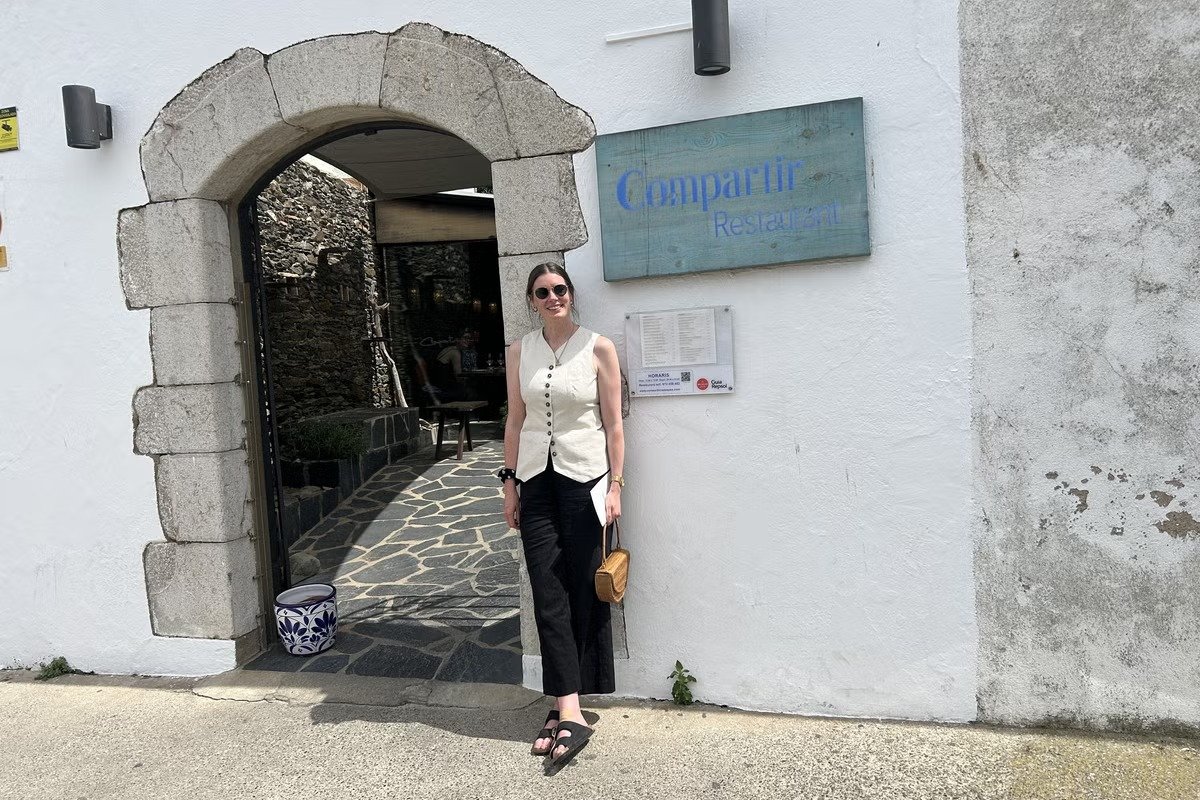
That legacy continues along the Costa Brava, particularly in the picturesque town of Cadaqués, just ten miles north of Roses. Here, former elBulli chefs—known as Bullinianos—have established their own restaurants, while others inspired by the restaurant’s ethos have gravitated to the area to open new culinary ventures.
Cadaqués itself feels like stepping into a living postcard. Nestled between the Pyrenees and the Mediterranean, the village of around 3,000 people is accessible via a winding mountain road that drops sharply into the horseshoe-shaped bay, preserving its rugged charm. Steep cobbled streets, whitewashed buildings, and a Baroque church perched high above create a timeless landscape. The town captivated surrealist artist Salvador Dalí, whose house remains a popular attraction, alongside the legacy of other greats like Matisse and Picasso. Every corner exudes a sense of artistry and creativity, echoing the spirit of elBulli that still pervades the region.
Walking through Cadaqués, it’s impossible not to notice the subtle influence of the restaurant. Small, innovative kitchens are dotted throughout the town, many helmed by chefs who trained at elBulli. Menus often blend traditional Catalan flavours with experimental techniques: foams atop seafood dishes, gels bursting with unexpected aromas, and desserts that look more like sculptures than sweets. Each plate tells a story, a nod to the Adriàs’ philosophy that food should surprise, delight, and provoke thought.
Visiting the elBulli 1846 Museum, it becomes clear that the restaurant’s spirit isn’t confined to its former physical space. The exhibits trace the evolution of Adrià’s techniques, showcasing everything from experimental recipes to photographs of sculpted dishes. The museum feels less like a conventional archive and more like an ongoing conversation about what cooking can be, challenging every visitor to reconsider the ordinary. Even a banana becomes an act of creation.
The trail from elBulli extends beyond Cadaqués. The entire Costa Brava has absorbed the restaurant’s influence, with Michelin-starred and independent restaurants alike embracing innovation while honouring tradition. Local ingredients—fresh fish from the Mediterranean, olive oils pressed nearby, artisanal cheeses—are transformed with techniques that would have been unthinkable thirty years ago. The Adriàs’ legacy has, in effect, created a culinary ecosystem, where creativity and craftsmanship coexist in every kitchen.

For food lovers, the journey is as much about inspiration as indulgence. Walking through Cadaqués, dining in intimate, inventive restaurants, and exploring the museum, one experiences not just the flavour of the region but the philosophy behind it: that food is an expression of imagination, a bridge between past and future, and a medium for storytelling. The elBulli effect is subtle yet pervasive, a reminder that innovation often leaves a mark long after the final dish is served.
Whether you are a dedicated foodie or a curious traveller, the Costa Brava offers more than just sun and sea. It invites you to step into a world where culinary boundaries are challenged, where every meal is an experiment, and where the influence of the world’s most celebrated restaurant continues to ripple through every kitchen, gallery, and cobbled street.
Related News:
 UK launches search for first-ever ‘town of culture’ to highlight overlooked areas
 UK Charters Emergency Flights to Evacuate Britons from Jamaica
 Is Carbis Bay Hotel the Best Stay on North Cornwall’s Coast?
 The Lowry Hotel: Manchester’s Iconic Five-Star Retreat
 World Whisky Tour: 9 Global Gems
 Shouting Works Best to Deter Gulls, UK Study Finds
 A Local Chef’s Guide to Iconic Boston Clam Chowder
 Thai King Embarks on Historic China Visit After 50 Years
 Canadians Stay Home as US Travel Declines Amid Tensions
 Snow and Ice Warnings Affect Scotland and Northern England
 Seven Countries, One Winner: Europe’s Best Christmas Market
 Arctic Blast Hits UK as Snow and Ice Warnings Trigger Travel Disruption
 Night Bus Crash in Cambodia Kills 16
 Clifftop Lodges Spark Fears Over Jurassic Coast Stability
 The 20 best Christmas markets in the UK, from Bath to Edinburgh
 These are the best Airbnb cottages in the UK for getaway inspired by The Holiday
 Scotland Gains 33 New Towns – Life in Growing Communities
 A Colourful Cultural Escape in Mexico’s Querétaro
 Search underway for British man overboard off Tenerife
 7 Travel Trends Set to Shape 2026 Adventures
 £140m revamp of Cardiff Central station approved
 Corfu Beyond the Crowds: Discovering Serenity in Southern Villages and Hidden Taverns
 Peterborough Mosques Tighten Security After Attack
 Reeves Faces Setback as Labour May Miss Homes Target
 Virgin Trains Moves Closer to Challenging Eurostar Monopoly
 Kate Winslet to Narrate Film Highlighting King’s Environmental Mission
 Army Officers Orders to Cut Ties with Men-Only Clubs
 Trump’s UK Ambassador Urges North Sea Drilling to Strengthen US Ties
 Ryanair Chief UK Economy ‘Doomed’ Under Labour
 French Taxi Driver Cleared in David Lammy Theft Case After Fare Dispute
 UK Bans Fake Numbers: Scammers Lose Their Trick
 M&S Profits More Than Halve After Cyber-Attack
 Kent village told to remove flags before Christmas lights go up
 Vibe coding’ named Collins dictionary’s word of the year
 Patients to Test Health at Home to Ease NHS Winter Pressure
BBC to Apologise Over Edited Trump Speech Amid Backlash
Patients to Test Health at Home to Ease NHS Winter Pressure
BBC to Apologise Over Edited Trump Speech Amid Backlash
 Britain deploys RAF specialists to assist Belgium with drone threats
 Palace May Restore Hyphen to Andrew Mountbatten-Windsor’s Name
 Millionaires group urge Reeves to introduce wealth tax to ‘lift kids out of poverty’
 From Lego to Pokémon: How Adults Are Driving UK Toy Market Growth
 Reeves rejects £1bn plea for NHS redundancy payouts
 Northern Lights may illuminate UK skies this week
 UK and Ireland Announce Venues for Euro 2028 Tournament
 PM Condemns Leaks, Vows Loyalty to Ministers and Stability
 TalkTV Fires Mike Graham Over Racist Facebook Post
 Phillipson Accused of Appeasing Unions by Diluting EBacc
 Peers Flood Assisted Dying Bill with 942 Amendments
 US Justice Department Files Lawsuit Against California Over Partisan Voting Maps
 Former Lion Heskey Warns of Shortage of England Strikers
 Global markets drop amid tech sell-off and China slowdown
 Trump Deploys DHS to Charlotte in Major Arrest Operation
 New Evidence Emerges in Haditha Family Killings
 Mum Calls for New Licence Rules After Teen Road Death
 Orban Says Ukraine Has ‘No Chance’ as EU Support Continues
 Mother Watches in Horror as Teen Daughter Dies on Tracks
 Charlotte Raids: 130 Arrested in Major Immigration Sweep
 Google Chief Urges Caution: Don’t Trust AI Blindly
 Israeli Strike Kills 13 Near Palestinian Camp in Lebanon
 ‘Traumatic Wait’: Northern Ireland Women Face Breast Cancer Delays
 Haiti Qualifies for World Cup Despite Coach Never Visiting Country
 Healthy Habits in Your 30s That Boost Life in Your 70s
 Serial Rapist and Former Cop Found Guilty Again
 Pentagon Officials in Ukraine to Discuss War End
 Vietnam Battles Deadly Floods as Rains Continue
 Scottish Families Take Legal Action Over School CO Leak
 Venezuela Threatens Nobel Winner Machado with Fugitive Status
 Coffins Now Too Large to Cremate Amid Rising Obesity Crisis
 Most Tories Expect to Support a Farage-Led Government
 Bill Murray Terrified Wes Anderson but Became His Closest Collaborator
 Labour MP claims devolution bill is ‘blatant discrimination’ against Cornwall
 Karen Carney Stuns on Blackpool Week, Deserves Strictly Final
 Vicki Fears Losing Motability Car
 Millions Face Higher Taxes Under Reeves New Budget
 Two National Guard Soldiers Critically Injured Near White House
 Southern Lebanon reels as Israeli strikes shatter communities
 Fibromyalgia Patients Struggle as NHS Fails to Provide Care
 Jordan Bardella: France’s Young Presidential Contender
 Virgin Media Fined £23.8m Over Telecare Safety Failures
 Pavarotti statue frozen in Italian ice rink sparks backlash
 EU plans $105bn Ukraine aid using frozen Russian assets