Published: 17 November 2025 Monday. The English Chronicle Desk. The English Chronicle Online
Rosalind Levine and Maxie Allen say they never imagined a series of messages in a parents’ WhatsApp group would one day lead to their arrest, an overnight ordeal in police custody, and a long, painful battle to clear their names. Yet, ten months after officers entered their home and detained them on suspicion of harassment and malicious communications, the couple say Hertfordshire Police has now accepted liability for the unlawful arrests and agreed to pay £20,000 in damages, along with additional legal costs. For Levine and Allen, the financial settlement offers some formal recognition of wrongdoing, but they say the emotional and social consequences of the experience remain deeply distressing.
Speaking to the BBC, Levine said the police had “accepted liability for unlawful arrest,” confirming that the settlement had been reached after negotiations with the force. BBC News asked Hertfordshire Police to comment on the outcome, but the force has so far not responded publicly. Earlier statements, however, insisted that the arrests had been “necessary to fully investigate the allegations,” a position that the couple have strongly challenged since the day officers arrived at their door.
The dispute originated at Cowley Hill Primary School in Borehamwood, where the parents’ daughter, who has epilepsy, is neurodivergent, and registered disabled, was enrolled. The couple had spent months raising concerns with school leadership, including questions about the recruitment process for a new head teacher and broader issues relating to the care and support their daughter required. Some of these conversations took place in a parents’ WhatsApp group, where they had expressed frustration about leadership decisions and the school’s communication with families. According to The Times, it was those same private messages that were later cited as part of the basis for the complaints that ultimately brought police to their door.
The school had banned the couple from entering the premises following what staff described as persistent and disruptive questioning. After the ban, Levine and Allen continued to email the school regularly with questions and concerns about their daughter’s needs. The school, in turn, claimed it had been faced with a “high volume of direct correspondence and public social media posts” that staff, governors and some parents found upsetting or intimidating. Feeling the situation had escalated beyond their capacity to manage internally, the school contacted police for advice.

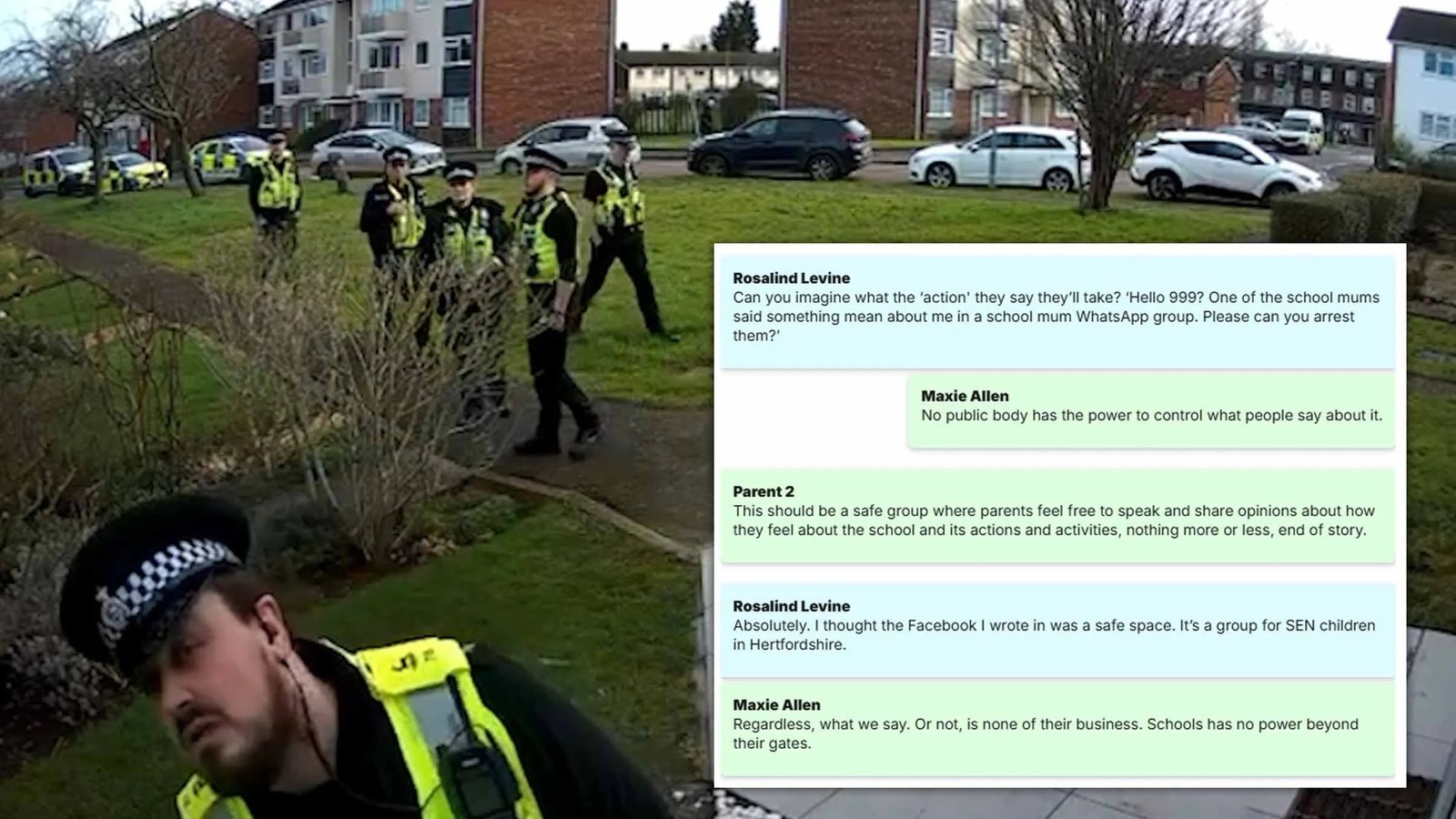
In December, an officer visited the family and issued a warning, strongly suggesting that the couple withdraw their daughter from the school. The family complied with the advice the following month. But even after their daughter had been removed, the tension between the parents and the school did not ease. Barely a week later, on 29 January, six police officers appeared at the couple’s home. Allen, a producer for Times Radio, recalled the moment vividly, saying he was shocked by the heavy-handed response to what he felt was simply an extended disagreement between concerned parents and a school leadership team.
Both parents were arrested in front of their family. They were held in custody for around 11 hours on suspicion of harassment, malicious communications, and causing a nuisance on school property. Allen has repeatedly denied using any abusive or threatening language, emphasising that even the more critical comments he made in private WhatsApp exchanges were within the bounds of acceptable discussion among parents. What followed, he said, was a harrowing experience that left his daughter and extended family distressed and confused.
As public interest in the case grew, Hertfordshire’s Police and Crime Commissioner, Jonathan Ash-Edwards, said there had been “a fundamental breakdown in relationships between a school and parents that shouldn’t have become a police matter.” The case prompted widespread debate about the criminalisation of parental complaints, the role of police in school-related disputes, and the use of harassment laws in situations where communication, however persistent, is arguably part of navigating a child’s educational and health needs.
For Levine, the arrest was not only traumatic but deeply destabilising for her family. She previously said she still had serious concerns about how and why the arrest was authorised at an inspector level. That decision, she said, had long-term effects on her children and elderly mother. Their three-year-old daughter witnessed the arrest as officers entered the home. Levine said her mother, aged 80, became physically ill after learning what had happened. The emotional impact, she said, extended far beyond the single day of detainment.
The family say that even after charges were dropped and they were told no further action would be taken, the stigma of being arrested lingered. In their community, rumours spread quickly, and the couple found themselves answering uncomfortable questions and defending their actions to friends, colleagues and other parents. They also expressed concern about future police interactions, particularly given their daughter’s health needs, fearing they might be viewed through a lens of suspicion rather than as parents advocating for necessary care.
The settlement represents a significant acknowledgement that the handling of the case fell short of acceptable policing standards. Although the force has not issued a public apology, the acceptance of liability and the payment of damages indicate that internal assessments found procedural faults in how the arrests were authorised and conducted. It also raises broader questions about the relationship between schools and law enforcement, particularly in cases where administrative difficulties, communication disputes or complaints about leadership escalate unnecessarily into criminal investigations.
Community advocates and legal experts following the case have noted that parents often feel powerless when disagreements with school leadership intensify. Schools, facing mounting pressure from oversight bodies, regulatory frameworks and safeguarding obligations, may turn to the police more quickly than in previous decades. At the same time, parents say they sometimes feel cornered when their concerns are dismissed or reframed as disruptive behaviour. This case, they argue, highlights the importance of clear communication and mediation before disputes reach crisis point.

For Levine and Allen, the hope now is that their experience will prompt change. Levine said she hopes the case will “highlight failings within the constabulary” and push the chief constable to ensure similar incidents do not occur again. The couple also say they want the situation to serve as a reminder that families raising concerns about their children’s welfare should not be criminalised or intimidated for doing so. They acknowledge, however, that the road to rebuilding trust—both with public institutions and within their local community—will take time.
In the months since the incident, the parents have shifted their focus to their daughter’s wellbeing and education, seeking an environment where her health needs are prioritised and communication with school leadership feels open and collaborative. They say they are relieved to move forward but remain deeply aware of how quickly a conflict can escalate when systems designed to protect children and families fail to recognise the emotional complexities behind parental advocacy.
The case has sparked wider public conversation, particularly among parents of children with special educational needs or medical conditions. Many say they recognise the exhaustion and frustration Levine and Allen described, noting that navigating school bureaucracy can be overwhelming. Others have raised concerns about excessive reliance on police intervention in cases where mediation or pastoral support might offer a more constructive path.
As the couple continue to recover from the ordeal, the settlement gives them a measure of closure. But for many observers, questions remain about what should have happened differently, why the situation deteriorated so dramatically, and how similar events can be prevented in the future. The conversation is likely to continue, particularly as more families come forward to describe experiences where routine communications with schools led to unexpected legal consequences.
For now, Levine and Allen hope their story will serve as a catalyst for change—not only in policing protocols, but also in the way schools respond to parental concerns. They believe that mutual respect, transparency and genuine dialogue should underpin every interaction between families and the institutions that educate their children. While they cannot erase the trauma of the past year, they say they will continue advocating for better processes and protections so that no other family faces the fear and confusion they endured.
Related News:
 Nearly 48,000 Zombie Knives Removed from UK Streets in a Year
 Rachel Reeves Admits Renting Home Without Required Licence
 Experts Question HMRC Over Possible Child Benefit Privacy Breach
 Newcastle United Lifts Ban on Fan Over Gender-Critical Views
 British Grandmother to Return Home After Death Sentence in Bali
 Tim Davie resigns as BBC director general amid bias claims
 Bar Council urges legal aid for all domestic abuse family cases
 Judges to Decide Fate of Chief Constable Guilty of Contempt
 NHS trust fined after woman takes life in mental health unit
 UK Asylum Overhaul Sparks Debate Over Human Rights and Deportations
 UK Asylum Reforms: Temporary Refugee Status and Faster Deportations
 Court to Hear Challenge to Wimbledon Expansion Plan
 Second homes curbs quashed in Gwynedd legal ruling
 Virgin Media Fined £23.8m Over Telecare Safety Failures
 Inquest Finds Agency Worker Failings Led to Unlawful Death of Vulnerable 14-Year-Old
 First “One In, One Out” Deportation Flight Departs Without Migrants Amid Legal Challenges
 Corbyn and Sultana Clash Over Membership Portal as Divisions Surface in New Leftwing Party
 Madeleine McCann Detectives to Testify Against Woman Accused of Stalking the Family
 Peterborough Mosques Tighten Security After Attack
 Prunella Scales: From Fawlty Towers Icon to Beloved Canal Explorer
 Hospice Cuts Raise Alarm Across England Amid Funding Crisis
 UK Woman Loses Child Benefit After Booking Flight She Never Took
 UK launches search for first-ever ‘town of culture’ to highlight overlooked areas
 Afghan man charged with murder after west London knife attack
 Children to Learn Local History in Major Curriculum Overhaul
 Hollywood Is an Industry of Looney Tunes Pretending to Be Normal
 Experts Warn on Home Birth Risks, Call for Skilled Midwives
 Court Hears Challenge Over Water Bills Funding Sewage Fixes
 French Taxi Driver Cleared in David Lammy Theft Case After Fare Dispute
 The Lowry Hotel: Manchester’s Iconic Five-Star Retreat
 Prince William Plants Trees with Brazil’s Nature Heroes
 Just Stop Oil Protesters Convicted Amid Climate Defence Row
 Greta Thunberg Backs Student Facing UK Visa Revocation
 Kent village told to remove flags before Christmas lights go up
 Oprah enjoys Meghan’s jam on English muffins
 Jailed UK climate protesters face extremist-style restrictions
 Boris Johnson accused of undermining BBC leadership
 North Sea oil workers must lose weight or face job loss
 King Charles to Lead Nation in Remembrance Sunday Service
 How to get help when a child goes missing – call 999 urgently
 ‘Reckless’ cuts to victims’ services will cost more than they save
 Government urges schools to ban phones to curb classroom disruption
 Seven Conditions That Automatically Qualify You for a Free Bus Pass
 Shouting Works Best to Deter Gulls, UK Study Finds
 Reeves rejects £1bn plea for NHS redundancy payouts
 UK toy market enjoys bumper year as ‘kidults’ fuel demand
 Politics latest: Starmer ‘will fight any leadership coup’ as Streeting denies attempt to oust Labour PM
 Leading doctors issue warning amid ‘bad’ flu season
 Pop Stars Call on UK Government to Cap Resale Prices for Fans
 PM Condemns Leaks, Vows Loyalty to Ministers and Stability
 Son Reveals UK Couple in Iran Resort to Hunger Strike for Help
 South Korea’s Jeju Island Faces Rising Tide of Illicit Drugs
 Major Rent Reform Ends No-Fault Evictions in England
 Peers Flood Assisted Dying Bill with 942 Amendments
 UK Unveils Fast-Track Deportation and Asylum Overhaul
 Mum Calls for New Licence Rules After Teen Road Death
 Shoppers Left in Darkness After Clock Change Delay
 Mahmood Defends Tough Overhaul of UK Asylum System
 Paralegal Fired After Exposé on Illegal Worker Scam
 Mother Watches in Horror as Teen Daughter Dies on Tracks
 Convicted Killer Challenges Vegemite Ban Behind Bars
 Westminster Advances Legacy Bill Amid Criticism
 ‘Traumatic Wait’: Northern Ireland Women Face Breast Cancer Delays
 Commuters warned as yellow snow and ice alert hits Northern Ireland
 PM Shares Emotional Letter to Son on Men’s Struggles
 Serial Rapist and Former Cop Found Guilty Again
 Kate Forbes: Motherhood Harder Than Politics
 TikTok Star Jessie Yendle Mocked by KFC
 Coffins Now Too Large to Cremate Amid Rising Obesity Crisis
Reeves to Crack Down on Benefit Fraud While Lifting Two-Child Limit
Coffins Now Too Large to Cremate Amid Rising Obesity Crisis
Reeves to Crack Down on Benefit Fraud While Lifting Two-Child Limit
 DWP to Reassess Hundreds of Thousands in Carer Allowance Scandal
 Labour MP claims devolution bill is ‘blatant discrimination’ against Cornwall
 Peers Get Extra Time to Debate Assisted Dying Bill
 Planned Palestinian Flag Raising at Belfast City Hall Faces Delay Amid Legal Concerns
 Sudanese Family Vows to Stay After Racist Graffiti
 Residents Face £3.6m Bill for Unsafe Kirkby Flats
 Fibromyalgia Patients Struggle as NHS Fails to Provide Care
 Machynlleth High Street Left Without Christmas Lights
 Search underway for British man overboard off Tenerife
 Hong Kong Orders Probe Into Deadly 151-Death Fire