Published: 21 November 2025 Friday. The English Chronicle Desk. The English Chronicle Online
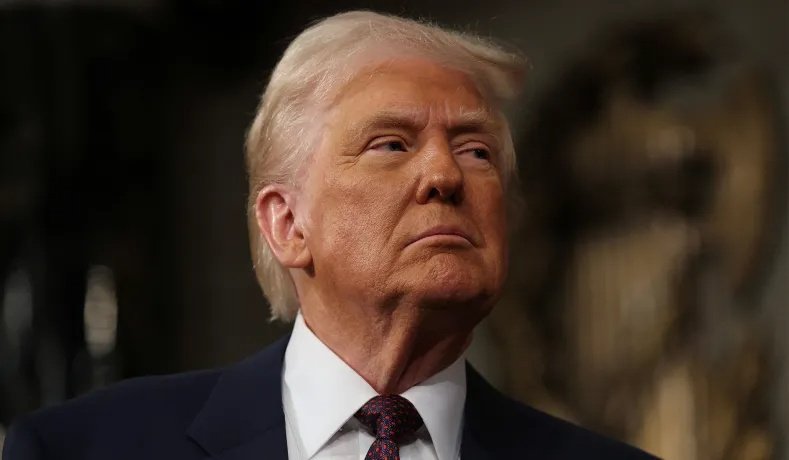
President Donald Trump has ignited a fierce political storm after accusing six Democratic lawmakers of engaging in “seditious behaviour, punishable by death.” His explosive claim followed the release of a video in which the lawmakers, all with backgrounds in the military or intelligence community, urged members of the US armed forces to refuse any illegal command from political leaders.
Trump’s response, delivered through a rapid succession of posts on his social media platform, has prompted renewed concerns about the tone of political rhetoric in the United States and its potential to fuel violence during an already volatile moment in the country’s political landscape. The remarks have also raised questions about the boundaries between lawful dissent, public service responsibility, and the obligations of military personnel under constitutional law.
The video that triggered Trump’s outburst was shared by Michigan Senator Elissa Slotkin and included contributions from Arizona Senator Mark Kelly, as well as Representatives Chris DeLuzio, Maggie Goodlander, Chrissy Houlahan and Jason Crow. Each of the lawmakers has served either in the US military or the intelligence sector, and they framed their message as a reminder to active-duty personnel that they are legally protected if they refuse orders that violate constitutional or federal law.
“Our laws are clear. You can refuse illegal orders,” Senator Kelly said pointedly in the video. The group emphasised that military members swear an oath to the US Constitution rather than to any political leader, and that their loyalty must remain rooted in democratic principles rather than personal allegiance.

The video’s narration reinforced that message, stating: “No one has to carry out orders that violate the law or our Constitution.” It went on to warn that current political tensions in the United States posed domestic threats to the democratic system comparable to foreign adversaries. “Like us, you all swore an oath to protect and defend this Constitution. Right now, the threats coming to our Constitution aren’t just coming from abroad but from right here at home.”
Trump responded with his characteristic forcefulness. In three separate posts, he accused the lawmakers of outright sedition, a charge historically associated with attempts to overthrow or undermine the government. “It’s called SEDITIOUS BEHAVIOR AT THE HIGHEST LEVEL,” Trump wrote. “Each one of these traitors to our Country should be ARRESTED AND PUT ON TRIAL.” His posts became increasingly confrontational, culminating in a dramatic claim: “SEDITIOUS BEHAVIOR, punishable by DEATH!”
Adding to the controversy, Trump also reposted a message from another user calling for the lawmakers to be hanged, invoking the era of George Washington. The Democratic lawmakers responded collectively, condemning Trump’s statements as dangerous incitement against elected officials. “No threat, intimidation, or call for violence will deter us from that sacred obligation,” they said, referring to their duty to uphold the Constitution.
The White House attempted to downplay the intensity of Trump’s language. Press Secretary Karoline Leavitt, speaking at a briefing on Thursday afternoon, denied that the president was calling for the execution of members of Congress. She insisted that the lawmakers’ video had crossed a line by urging military personnel to resist what she characterised as “lawful orders,” arguing that this behaviour itself could violate federal law. “They are literally saying to 1.3 million active-duty service members to defy the chain of command,” she said. When pressed directly on whether Trump wished to see his political opponents executed, she responded with a concise “no,” urging the media to focus instead on the lawmakers’ conduct.

On Capitol Hill, the reaction split largely along party lines. House Minority Leader Hakeem Jeffries condemned Trump’s words as “violent rhetoric” and warned they could put public officials and their families at risk. “The president must recant his violent rhetoric before he gets someone killed,” Jeffries said, echoing widespread fears about escalating threats faced by public figures.
By contrast, Republican House Speaker Mike Johnson defended Trump. He argued that the president was merely “defining the crime of sedition” and asserted that the Democrats’ video was “wildly inappropriate” and “very dangerous.” Johnson confirmed that the matter would be reviewed by both the Department of Justice and the Pentagon but suggested that it was the Democrats, not Trump, who may have provoked legal scrutiny.
The stakes of the confrontation extend far beyond a single political argument. The United States has seen a significant rise in politically motivated threats, harassment, and violence over the past two years. An October study by the Pew Research Center showed that 85 percent of Americans believe political violence is increasing. Another poll released in November by Politico and Public First found that nearly two-thirds of respondents felt the country was approaching a turning point at which political divisions could spark more severe conflict.
The country has already witnessed several major incidents this year, including the assassination of conservative commentator Charlie Kirk, an arson attack on the home of Pennsylvania Governor Josh Shapiro, and the killing of a Democratic lawmaker in Minnesota and her husband. These events have contributed to a growing sense of fear, mistrust, and instability.
Even Trump himself has been targeted. Two attempted attacks on his life have taken place in the last year, one of them during a campaign rally in which a spectator was killed and several others, including Trump, were injured. His supporters have pointed to these incidents as evidence that Democrats and the media are fostering an environment hostile to conservatives.

The climate of threat has not spared members of Congress on either side. Republican Representative Marjorie Taylor Greene, who recently broke with Trump on several policy points, reported a surge in threats following a series of Truth Social posts in which Trump derided her as a “traitor.” Her son was targeted with a death threat, an incident now under investigation by local police.
Beyond direct threats, a wave of “swatting” attacks — hoax emergency calls intended to provoke armed police responses — has targeted public officials across several states. Even Republicans who typically align with Trump have not been immune. One Indiana lawmaker faced a swatting incident shortly after Trump publicly criticised him over a redistricting dispute.
As the fallout from Trump’s remarks continues, leadership in the US House of Representatives has confirmed that they are working with Capitol Police to ensure adequate protection for the six Democratic lawmakers at the centre of the controversy. Security measures are also being extended to their families, given the potential risks posed by the heightened rhetoric online.
This latest clash highlights a perilous moment for American politics, where the boundaries between passionate disagreement and dangerous incitement are increasingly blurred. The struggle over the role of the military, the meaning of constitutional loyalty, and the limits of political speech once again underscores how deeply polarised the country has become. With threats rising and tempers flaring, leaders across the political spectrum face mounting pressure to temper their words — before the consequences turn deadly.
Related News:
 South African Detained After Neo-Nazi Rally in Australia
 UK Police to Gain New Powers to Manage Repeated Protests, Home Office Announces
 French Taxi Driver Cleared in David Lammy Theft Case After Fare Dispute
 Met Police Culture Makes Racial Harm ‘Inevitable’
 US Justice Department Files Lawsuit Against California Over Partisan Voting Maps
 UK Asylum Reforms: Temporary Refugee Status and Faster Deportations
 Minister Defends Tough New Asylum Reform Plan
 UK Net Migration Falls Sharply After ONS Revisions
 Only One Republican Opposes Mass Release of Epstein Files
 Congress Approves Release of Epstein Files, Trump Expected to Sign
 Serial Rapist and Former Cop Found Guilty Again
 Two Officers Injured After Van Deliberately Rams Patrol Car
 Senedd Suspends Politician Over Offensive Racial Slur
 WhatsApp Messages Expose Nathan Gill’s Bribery
 Venezuela Threatens Nobel Winner Machado with Fugitive Status
 Texas Governor Faces Lawsuit From CAIR
 Ex-Classmate Accuses Farage of Dishonesty on Racism Claims
 Runaway Driver Caught by DNA Evidence
 Trump Envoy to Discuss Ukraine Peace at Kremlin
 Peers Get Extra Time to Debate Assisted Dying Bill
 US National Guard Member Killed in DC Shooting
 Video shows Israeli troops kill Palestinians after surrender
 Ex-Brexit MEP Rejects Claim of Pro-Russia Payments
 Man Arrested Over Manchester Synagogue Terror Attack
 Guinea-Bissau President Flees After Military Coup
 ICC to Rule on Duterte’s Provisional Release
 Trump to pause migration from ‘third-world countries’
 Chinese & Japanese Boats Clash Near Disputed Islands
 Putin Meets US Envoy Amid Key Ukraine Peace Talks
 Twelve Prisoners Released in Error, Two Still Missing
 Franklin Turtle, Sabrina Carpenter Slam US Social Media Use
 Trump Administration Dismisses 17 Immigration Judges, Sparking Debate Over Judicial Independence
 Tasers Introduced in UK Prisons to Combat Rising Violence and Protect Staff
 Northern Ireland Family of Three Shot Dead in Maguiresbridge Home Incident
 Police Advised to Disclose Ethnicity of Suspects in High-Profile Cases
 Badenoch Warns Farage’s Grooming Gangs Plan Could Backfire
 Afghan man charged with murder after west London knife attack
 FBI Director Kash Patel Defends Girlfriend Amid Government Jet Claims
 Police Probe Four Knife Incidents Linked to Cambridgeshire Train Attack
 Just Stop Oil Protesters Convicted Amid Climate Defence Row
 Britain deploys RAF specialists to assist Belgium with drone threats
 ‘Reckless’ cuts to victims’ services will cost more than they save
 Seven Conditions That Automatically Qualify You for a Free Bus Pass
 PM Condemns Leaks, Vows Loyalty to Ministers and Stability
 South Korea’s Jeju Island Faces Rising Tide of Illicit Drugs
 Major Rent Reform Ends No-Fault Evictions in England
 Peers Flood Assisted Dying Bill with 942 Amendments
 Oklahoma Governor Grants Last-Minute Clemency to Death Row Inmate
 Rio Raid’s Death Toll Raises Questions About Gang Impact
 Israel Confirms Returned Hostage as Meny Godard
 Trump Deploys DHS to Charlotte in Major Arrest Operation
 Delhi Car Bomb Arrest: Suspect Linked to Deadly Attack
 December Run-Off in Chile as Election Produces No Winner
 UK Asylum Overhaul Sparks Debate Over Human Rights and Deportations
 UK Candidate Moved to Safe House After Election Threats
 Mahmood Defends Tough Overhaul of UK Asylum System
 Mother Watches in Horror as Teen Daughter Dies on Tracks
 Charlotte Raids: 130 Arrested in Major Immigration Sweep
 Westminster Advances Legacy Bill Amid Criticism
 Federal Court Blocks Texas Republican Maps Over Racial Bias
 Shadow Fleet at Sea: Europe’s Battle Against Illicit Oil Shipping
 UK Vulnerable to Attack, Defence Committee Finds
 Bangladesh Families Call for Hasina’s Return and Execution
 Rama Rebukes Mahmood for Targeting Albanian Families
 Man Charged Over Attempted Murder of Senior Officer
 Man Denies Stealing Bronze Age Gold from Museum
 Pentagon Officials in Ukraine to Discuss War End
 Twenty-Four Nigerian Schoolgirls Freed After Abduction
 Teens Launch High Court Challenge to Australia’s Social Media Ban
 Millions Face Higher Taxes Under Reeves New Budget
 Planned Palestinian Flag Raising at Belfast City Hall Faces Delay Amid Legal Concerns
 Two National Guard Soldiers Critically Injured Near White House
 Pope Leo XIV Begins Historic Trip to Turkey and Lebanon
 Singapore Women Acquitted After Pro-Palestine March
 India’s Labour Law Overhaul Sparks Fierce Debate
 Government righting decades-old injustice for miners
 Second homes curbs quashed in Gwynedd legal ruling
 Jordan Bardella: France’s Young Presidential Contender
 Hong Kong Orders Probe Into Deadly 151-Death Fire
 Indonesia to Repatriate Two Dutch Drug Convicts