Published: 19 December 2025. The English Chronicle Desk. The English Chronicle Online.
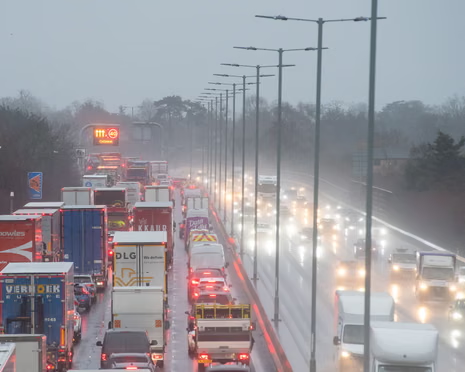
Britain is preparing for the busiest Christmas getaway in living memory as both roads and airports face unprecedented pressure. On Friday, a perfect storm of commuters, early departures, and festive travellers is expected to create significant congestion nationwide. Motoring organisations warn that while Saturday and Christmas Eve traditionally see peaks, Friday may become the most congested day due to overlapping travel purposes.
The Automobile Association (AA) predicts 24.4 million cars will be on Britain’s roads on Friday alone. Surveys indicate 72% of members plan to drive that day for work or leisure, prompting warnings to plan journeys carefully and allow extra time. Shaun Jones, an AA spokesperson and mechanic, commented, “It’s beginning to look a lot like traffic,” highlighting the seriousness of congestion risks for drivers.

Meanwhile, the RAC expects that most full-break travellers will depart on Saturday or 24 December, forecasting over 4 million leisure car journeys on each day. The organisation warns this period is likely to be the busiest Christmas getaway recorded since it began compiling data. High-risk congestion areas include the M25 clockwise west of London, M6 northbound around Birmingham, M1 northbound past Leicester, and the M60 clockwise.
Rail travel is also set to be heavily affected by pre-planned engineering works. Key lines and stations will close during the festive period, potentially lengthening journeys or requiring rail replacement buses. Passengers travelling on the West Coast main line between London, Birmingham, Manchester, Liverpool, and Scotland should anticipate significant delays, with replacement buses operating between Milton Keynes and Rugby. Diversions via Sheffield on the Midland main line may also be required.
London Euston services will face disruptions from 27 December to 4 January, with additional closures impacting Scotland to north-west England from 1–14 January. Other closures include Leeds to York until 2 January, Cambridge to Stansted Airport until 5 January, and London Waterloo remaining closed until 28 December. Liverpool Street station will be unavailable to mainline trains until New Year’s Day, while the Dunbartonshire line from Glasgow Queen Street to Crianlarich will remain closed until 2 January. Despite this, Network Rail emphasised that approximately 95% of Britain’s network will remain operational.
National Express, the country’s largest scheduled coach operator, is increasing capacity by 45,000 seats during the festive period, with over 10,000 additional seats between the north-west and London, aiming to accommodate demand amid engineering disruptions.
Air travel is forecast to reach unprecedented levels this Christmas. The Civil Aviation Authority (CAA) expects around 460,000 passengers to depart from UK airports on Friday, with a total of roughly 3 million outbound travellers over the peak festive period. Christmas Day alone may see about 160,000 flights, marking a 13% rise from last year and a 72% increase since 2015. Passenger numbers for December are projected to surpass the previous record of 22 million in 2024.

Cross-channel travel will also intensify, with the Port of Dover estimating nearly 30,000 cars will embark on outbound sailings during the festive period. Traffic is expected to peak between 6am and 1pm from Friday through Sunday, compounding congestion on connecting road networks.
Experts advise travellers to plan well in advance, consider alternative routes, and allow extra time to navigate delays, particularly on high-density motorways, rail routes, and at major airports. While congestion may be inevitable, careful planning and awareness of peak times could help reduce travel stress during Britain’s busiest Christmas period on record.
Related News:
 British teen mistakenly takes wrong flight from Menorca airport and lands in Italy
 Manchester Airport Faces Delays After EasyJet Planes’ Wings ‘Clip’ on Runway
 Access to Iconic Cornish Beach Cut Off by National Trust Amid Safety Concerns
 Bank Holiday Getaway: Drivers and Rail Passengers Warned of Major Delays Across Britain
 Storm Amy set to disrupt travel across UK with winds reaching 95mph
 New EU Border System Could Cause 4-Hour Delays
 UK launches search for first-ever ‘town of culture’ to highlight overlooked areas
 The Lowry Hotel: Manchester’s Iconic Five-Star Retreat
 Shouting Works Best to Deter Gulls, UK Study Finds
 Chatsworth estate opens new family-friendly hotel
 Clifftop Lodges Spark Fears Over Jurassic Coast Stability
 The 20 best Christmas markets in the UK, from Bath to Edinburgh
 These are the best Airbnb cottages in the UK for getaway inspired by The Holiday
 Search underway for British man overboard off Tenerife
 £140m revamp of Cardiff Central station approved
 UK Must Act with Courage and Clarity on Israel-Palestine Conflict, Says Foreign Affairs Committee Report
 The Ketamine Crisis in the UK is a Silent Epidemic Leaving Users with Lifelong Pain
 London Set to Honour Euro 2025 Champions as Lionesses Take Victory Parade Through the Capital
 Targeted Attack in Bury Sparks Murder Investigation as Community Awaits Justice
 Princess of Wales Launches Animated Video Series to Support Early Childhood Development
 Heartbreak in the New Forest as Shetland Ponies Vanish, Community on Edge
 Radioactive Leak at UK’s Nuclear Warhead Base Sparks Outcry Over Safety and Secrecy
 Fire Contained at Edinburgh’s Arthur’s Seat After Overnight Battle by Firefighters
 Premier League Supercomputer Predicts Tough Season for Man Utd Amid Three-Team Title Battle
 Mystery Wallaby Spotted on Norfolk-Suffolk Border Sparks Police Appeal
 UK Weather: Heat Alerts Extended as Temperatures Set to Reach 30°C This Weekend
 Terence Stamp, ’60s British Film Legend and Star of Superman, Dies at 87
 Corfu Beyond the Crowds: Discovering Serenity in Southern Villages and Hidden Taverns
 Merseyside Police Helicopter Crew Cleared After Low-Altitude Pursuit of Suspect
 Is the UK Ready to Put Boots on the Ground in Ukraine? Assessing Military Capacity and Challenges
 Education Leaders Call for End to Compulsory GCSE Resits in English and Maths
 Police Scotland Spends £500,000 Compensating Officers Over Trump Visit
 Thousands of New School Nursery Places to Be Rolled Out Across England
 Urgent Action Needed on Windrush Compensation as Survivors Speak of “Waiting to Die”
 Tanni Grey-Thompson Faces Abuse Over Opposition to Assisted Dying Bill
 Rising Food Bank Dependence Highlights Deepening Hardship Across the UK
 Birmingham Bin Strike Enters Sixth Month as Negotiations Stall
 TfL Invites RMT to Resume Talks as London Tube Strikes End
 Over 40% of Private Renters Forced to Ration Energy to Afford Bills, Study Reveals
 Systemic Racism in Maternity Care Continues to Endanger Black Women in England, MPs Warn
 One in Three GPs in England Do Not Work in NHS, Raising Concerns Over Access to Care
 Northern Ireland Faces Fears of Prolonged Race Riot “Permacrisis”
 Nigel Farage Unveils Controversial Immigration and Welfare Plans at Reform UK Press Conference
 Great Britain’s Energy Operator Commits to Strengthening Grid to Prevent Blackouts
 Scottish Teenager’s Petition on Single-Use Plastics Gains Parliamentary Support
 White Low-Income Pupils in England Show Lowest Levels of School Engagement, Study Finds
 Ed Miliband Warns UK Government on X, Citing Elon Musk as a “Dangerous Influence”
 No Evidence Found to Substantiate Alleged Rape in Oxfordshire Churchyard, Police Confirm
 UK House Price Growth Slows as Buyers Exercise Caution Ahead of Autumn Budget
 Kemi Badenoch Unveils ‘Golden Rule’ to Halve Spending Cuts for Deficit Reduction at Tory Conference
 Massive London Poundland Fire Engulfs High Street
 Sussexes Warn on Children’s Phone Use Echoing Princess of Wales
 Paedophile Singer Ian Watkins Dies After Prison Attack
 Prince Andrew told Epstein “we are in this together”
 Former Premier League Referee David Coote Pleads Guilty to Child Image Offence
 UK border officers deployed to Balkans to tackle migrant smuggling
 UK MPs warn of repeat riots over online misinformation
 New V-Level qualification to transform post-16 education
Giuffre’s bombshell memoir names Prince Andrew 88 times in shocking revelations
New V-Level qualification to transform post-16 education
Giuffre’s bombshell memoir names Prince Andrew 88 times in shocking revelations
 M&S and Morrisons Lead Christmas Supermarket Taste Test
 Reeves Faces Setback as Labour May Miss Homes Target
 Kate Winslet to Narrate Film Highlighting King’s Environmental Mission
 Trump’s UK Ambassador Urges North Sea Drilling to Strengthen US Ties
 UK Bans Fake Numbers: Scammers Lose Their Trick
 M&S Profits More Than Halve After Cyber-Attack
 Patients to Test Health at Home to Ease NHS Winter Pressure
 Millionaires group urge Reeves to introduce wealth tax to ‘lift kids out of poverty’
 Reeves rejects £1bn plea for NHS redundancy payouts
 Northern Lights may illuminate UK skies this week
 PM Condemns Leaks, Vows Loyalty to Ministers and Stability
 Major Rent Reform Ends No-Fault Evictions in England
 Stroke Patient Mistaken for Drunk, Care Delayed
 Inside the Helpline Protecting Missing Children in the UK
 Boots Showstopper Beauty Bundle Outshines Many Advent Calendars This Holiday Season
 PlayStation PS5 Deals Hit Lowest Prices Ahead of Black Friday
 Five-Year-Old Dies After Rare Tonsil Surgery Complication
 Starmer Says Labour’s Economic Plan Needs Years to Deliver
 England delays four mayoral elections amid criticism
 IndiGo Cancels Hundreds of Flights Amid Pilot Shortages
 UK unemployment rises to four-year high of 5.1% before budget