Published: 02 January 2026. The English Chronicle Desk. The English Chronicle Online.
The shocking rise in UK small boat crossings grabbed headlines as official figures revealed that over 41,000 people reached Britain last year in fragile vessels across the English Channel, with the Home Office calling the total “shameful” and warning of deeper political fallout. Within the first hundred words of this report the focus on UK small boat crossings is clear, with the government’s own statistics confirming that the figure of 41,472 is the second‑highest annual total on record since comprehensive data began. The year’s accumulated total was 13 percent above the number recorded in 2024, and though the pace of arrivals slowed late in the year, the policy challenge for ministers remains acute.

The Prime Minister and the Home Secretary, under mounting pressure, have defended their response to UK small boat crossings by pointing to new laws and international agreements that are designed to deter irregular migration and break up people‑smuggling networks. In December 2025, lawmakers passed the Border Security, Asylum and Immigration Act, which creates fresh criminal offences and gives law enforcement broader powers to disrupt organised smuggling gangs that profit from desperate crossings. In parallel, a pilot returns scheme with France, known as the “one‑in, one‑out” arrangement, has been operational since mid‑2025, though only a small number of returns have been completed compared with new arrivals.
According to Home Office figures, no migrants crossed on New Year’s Eve and the last recorded journey was on 22 December, illustrating an ebb in crossings towards the close of the year. Despite this slowdown, the 2025 total still finished nearly 9 percent below the 2022 high of about 45,774, but far above recent years, with around 36,816 small boat arrivals in 2024 and 29,437 in 2023. Critics argue that the current strategy has failed to substantially deter crossings, with some opposition leaders condemning government policy as ineffective and urging tougher measures.
For many Conservative figures and Reform UK opponents, the issue of UK small boat crossings has crystallised wider anxieties about border control and legal obligations. They argue that the government’s refusal to leave the European Convention on Human Rights hampers enforcement and enables migrants to invoke human rights law to resist removal, a contention rejected by ministers who say they are seeking reform rather than withdrawal. The political debate has intensified as local elections approach, with migration policy at the forefront of campaign rhetoric.

Human rights organisations and refugee charities, meanwhile, point out the human cost behind the stark numbers relating to UK small boat crossings, noting that at least dozens of deaths were reported during perilous Channel attempts in 2025, though exact figures vary. Frontline responders and international agencies highlight that most people making the journey are fleeing war, persecution or extreme hardship and that punitive measures alone will not address the root causes that drive desperate men, women and children to risk their lives at sea.
The government insists it has removed tens of thousands of individuals who were here illegally and continues to extend cooperation with international partners to close dangerous routes and expand legal pathways for migration. Efforts to broaden bilateral agreements with European states, clamp down on people‑smuggling advertisements, and strengthen border intelligence collaborations remain central to the official approach in response to UK small boat crossings.
As the UK enters 2026 with fresh scrutiny on its asylum and border management system, UK small boat crossings will remain a defining metric of policy success or failure. Ministers face a complex balance between enforcing immigration rules, upholding international obligations and responding to public concern about the scale and human impact of these crossings. With no simple solutions in sight, the challenge of managing perilous Channel journeys is set to shape political discourse and public debate in the months ahead.
Related News:
 UK Banks Granted Reprieve as BoE Delays Basel III Capital Rules Until 2028
 Singapore Corruption Scandal: Details Emerge on Iswaran’s Luxury Flight and Ties to Tycoon Ong Beng Seng
 Corfu Beyond the Crowds: Discovering Serenity in Southern Villages and Hidden Taverns
 Peter Andre Praises Son Junior’s ‘Quiet Season’ Amid Ongoing Family Dispute
 Massive 641-Mile Storm Set to Batter UK with 15 Hours of Rain and Strong Winds
 Jeremy Clarkson’s Pub: A Sunday Lunch Like No Other
 Scottish Government Mandates Single-Sex Toilets and Changing Facilities in Schools
 Reeves Faces Setback as Labour May Miss Homes Target
 Kate Winslet to Narrate Film Highlighting King’s Environmental Mission
 Trump’s UK Ambassador Urges North Sea Drilling to Strengthen US Ties
 UK Bans Fake Numbers: Scammers Lose Their Trick
 Liberal Turmoil Threatens Victorian Election Hopes
 British skier killed in La Plagne avalanche tragedy
 Xabi Alonso leaves Real Madrid, Arbeloa Takes Over
 Trump Policies Boost China’s Global Rise, Survey Finds
 Markets Slide As Gold Rally Signals Risk From Trump Greenland Tariff Plan
 UK Inflation Hits 3.4% in December, Ending Five-Month Decline
 Silence and Unity Mark Bondi Terror Attack Memorial
 Huge mistake: Labour blocks Burnham from byelection bid
 India-EU Free Trade Deal Marks Historic Economic Shift
 Labour targets Greens on drugs in Gorton Denton byelection
 Greens nominate Hannah Spencer for Gorton and Denton byelection
 John Lithgow criticises Rowling stance in trans debate
 Autistic Girls Often Missed in Childhood Diagnoses, Study Finds
 Labour Thinktank Row Deepens Over Journalist Probe Claims
 Telstra AI jobs cuts as automation drive expands
 Cabinet Secretary Shake-Up Triggers Due Diligence Warning
 Starmer Faces Inquiry Calls Over Thinktank Probe
 UK shelves £110m border project amid trade strain
 Arsenal blow lead as Arteta rues Wolves draw
 California Democrats Vow Trump Reckoning
 British Dual Nationals Face Travel Block From UK, Home Office Confirms
 Trump’s Surgeon General Pick Evades Vaccine Questions
 Facial Recognition Error Leads to Wrongful Arrest in Milton Keynes
 The Dangerous Rise of Remigration Across Modern Europe
 Green Party Stuns Labour in Gorton and Denton Byelection
 Labour Together scandal sparks clean break vow
 Grocery Inflation Rises Amid War Fears
 Zorevunersen Breakthrough for Dravet Syndrome
 BrewDog sold Highland estate for knockdown price after abandoning reforestation plans
 Taking Multivitamins Daily Could Slightly Slow Ageing, Study Finds
 US Missile Strike on Iran School Sparks Global Shock
 Champions League Failure Sparking Premier League Crisis
 NHS Plans to Cut Overseas Workers Labeled Overambitious
 Utah Woman Found Guilty of Poisoning Husband for Inheritance
 Oil Slides, Stocks Jump on Trump Peace Signals
 African World Cup Fans Face $15,000 Entry Bond Fee
 Middle East Deluge: Freak Storms Bangle Desert Nations
 Farage Shuns Truss as US Right-Wing Roadshow Hits London
 Artemis II: Humanity Returns to the Moon After Decades
 Italian Town Buys Mussolini Villa to Keep Away Fascist Fans
 The Price of Hubris: Trump, Netanyahu, and the ‘Easy’ War
 Trump and Tehran Find Common Ground in Landmark Ceasefire
 National Energy Grant Proposed to Slash UK Household Bills
 Stefano Gabbana Resigns as Chair of Italian Luxury Giant
 Rolls-Royce SMR Secures £600m Boost for Nuclear Future
 Kyiv and Odesa Mourn After Deadly Wave of Russian Strikes
 Medellín’s Green Revolution: A Global Climate Blueprint
 Robots Outpace Humans in Beijing Half-Marathon
 US Forces Seize Iranian Ship Near Hormuz Blockade
 Japan’s Youth Defend Pacifist Constitution
 Investigation: Offshore Loans and Sanctions
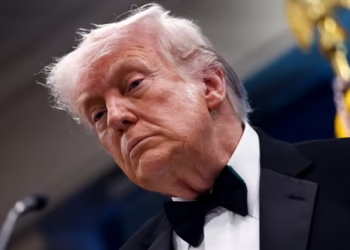 Trump Defiant After Washington Hotel Shooting
 Cross-Border Crisis Shatters Fragile Afghan Peace
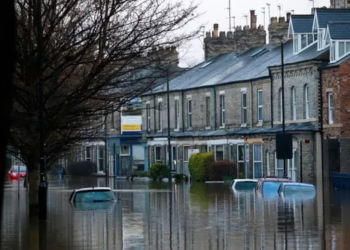 Urban Flood Crisis: A Growing Threat to English Homes
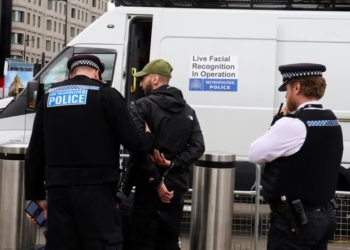 The Fear Gap: Why Europe Feels Less Safe Than It Is
 US Military Pacific Boat Strike Kills Three People
 Dettol Apologises for ‘Toxic Men’ Advert Backlash in China
 UK Care Crisis: Row Explodes Over New Visa Settlement Rules
 Sainsbury’s Boss Optimistic As Grocery Inflation Eases
 US Advance Past Bosnia in World Cup Thriller
 Trump’s Mount Rushmore Speech: A Divisive Anniversary
 Trump’s Red-Card Intervention Hurts the US World Cup
 US Airman Avoids British Court in Indecent Exposure Case
 Britain’s Mini Fan Craze Sparks Major Waste Crisis
 Trump Swaps Planes Amid Iran Tensions
 Ann Widdecombe, Formidable Political Figure, Dies at 78
 UK Schools Struggle as Classrooms Top 40C
 Yemen Accuses Iran of Violating National Sovereignty
 Houthis Strike Saudi Arabia as Middle East Tensions Rise