Published: 01 January 2026. The English Chronicle Desk. The English Chronicle Online.
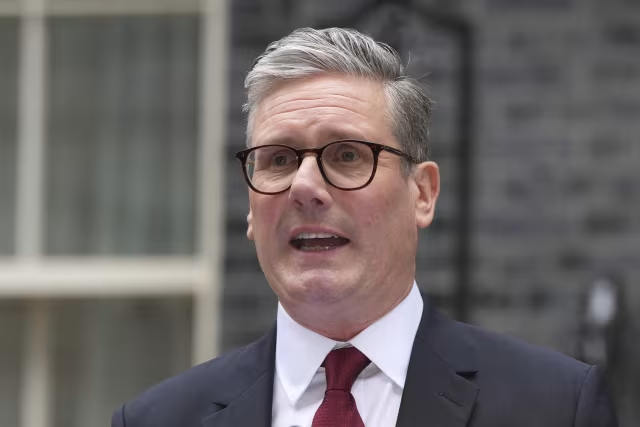
Keir Starmer has entered the new year determined to reset his leadership narrative through a renewed cost of living plan that he believes can reconnect his government with frustrated voters and unsettled Labour MPs. The prime minister is preparing a series of carefully timed interventions designed to show that the economic pressures weighing on households are beginning to ease, and that the difficult decisions of his first months in office are starting to deliver visible results. With 2026 framed as a decisive year for both his authority and Labour’s electoral future, Starmer’s cost of living plan has become the central pillar of his political message.
In the opening days of January, Starmer is expected to deliver a keynote speech outlining how his government intends to bring sustained relief to families struggling with bills, mortgages, and daily essentials. Advisers say the address will emphasise tangible outcomes rather than future promises, reflecting a conscious shift in tone after months of criticism that Labour’s early policies lacked immediate impact. By repeatedly returning to the cost of living plan, the prime minister hopes to reassure voters that improvement is not theoretical, but already under way.
The speech will highlight recent reductions in energy bills and interest rates, developments ministers argue are easing household pressure after years of volatility. Mortgage costs, which peaked during the economic turmoil of 2022 and 2023, have now fallen to their lowest levels in several years. For many homeowners, this shift has translated into hundreds of pounds in annual savings, a point Starmer intends to stress as evidence that economic stability is returning. He will also draw attention to the government’s decision to end the two-child benefit cap, a move long demanded by Labour backbenchers and anti-poverty groups.

Alongside his public messaging, Starmer is launching a parallel effort to rebuild confidence within his own party. A series of New Year drinks receptions at Chequers has been organised for Labour MPs, offering informal settings for discussion after a bruising period marked by internal dissent. Officials describe the gatherings as an attempt to listen as much as persuade, though some MPs remain sceptical about whether symbolism can heal deeper frustrations. Nevertheless, the prime minister views unity as essential if the cost of living plan is to be communicated effectively ahead of critical elections.
Those elections loom large over Labour’s strategy. Local and devolved contests scheduled for May 2026 are widely expected to be challenging, with polls suggesting potential losses in Scotland and Wales. Starmer’s advisers acknowledge the risk but argue that the coming months offer an opportunity to shift perceptions. Morgan McSweeney, the prime minister’s chief adviser, has characterised 2026 as “the year of proof,” a phrase now echoed throughout government briefings. The implication is clear: voters should judge Labour not by inherited difficulties, but by measurable progress.
In his New Year message, Starmer struck an optimistic tone, insisting that the choices made by his administration would soon translate into everyday improvements. He spoke of bills becoming more manageable, communities seeing renewed investment, and the health service beginning to stabilise after prolonged strain. Beyond material changes, he emphasised the importance of restoring hope, arguing that confidence in national renewal had been eroded by years of political upheaval. This emotional appeal is intended to complement the practical elements of the cost of living plan.
Yet the backdrop to this optimism is stark. Opinion polls have placed Starmer among the least popular prime ministers at this stage of office, and several Labour MPs have openly questioned his leadership. Over the Christmas recess, many representatives reported hostile receptions from constituents angered by early policy decisions. One MP privately described the mood as worse than anticipated, citing deep scepticism about whether Labour truly understood everyday struggles. Such accounts underscore the scale of the challenge facing the government.
Senior advisers do not dispute the severity of voter dissatisfaction, but they maintain that public opinion can shift as policies take effect. They argue that the initial eighteen months of government were inevitably dominated by stabilisation measures, some of which were politically painful. As those measures bed in, ministers believe the benefits will become harder to ignore. Falling inflation, easing borrowing costs, and targeted welfare reforms are presented as interconnected strands of the broader cost of living plan.
Energy policy occupies a prominent place within this framework. Ed Miliband, the energy secretary, is finalising a £13 billion warm homes programme aimed at reducing bills while accelerating the transition to low-carbon technologies. Unlike previous schemes that focused heavily on insulation, the new approach prioritises technologies such as solar panels and home battery systems. Officials argue that these measures can deliver quicker savings for households, especially as regulatory barriers are removed.
One notable change involves scrapping rules that prevent residents from plugging solar panels directly into domestic sockets, a practice already common across parts of Europe. The government believes this reform could encourage rapid uptake of small-scale renewable systems, lowering energy costs without complex installations. At the same time, the decision to scrap the Energy Companies Obligation scheme and reduce renewables levies is expected to save the average household around £138 annually, according to industry estimates.

Ministers are keen to frame these initiatives not as abstract climate policies, but as practical cost-of-living interventions. Miliband has repeatedly stressed that cleaner energy and lower bills are mutually reinforcing goals. By linking environmental ambition with immediate financial relief, the government hopes to broaden public support and counter claims that green policies impose additional burdens on consumers.
Despite these efforts, scepticism persists within parliamentary ranks. Some Labour MPs argue that the leadership has failed to harness the full range of talent within the party, leading to frustration and resentment. A number have questioned whether the Chequers receptions can compensate for what they perceive as limited consultation on key decisions. One MP described the approach as weakening collective ownership of policy, while another declined an invitation outright, citing exhaustion with what they saw as performative unity.
Starmer’s response has been to double down on engagement, urging MPs to focus their local campaigning on the cost of living plan and its early outcomes. Officials insist that consistent messaging is crucial if Labour is to regain trust before May’s elections. They also point to the prime minister’s belief that political fortunes can change rapidly once voters feel tangible improvement. In this sense, 2026 is framed not merely as another year, but as a turning point.
As Britain enters this new phase, the success of Starmer’s strategy will depend on whether households genuinely feel relief in their daily lives. Economic indicators may offer encouragement, but lived experience will shape political judgment. The prime minister has staked much of his credibility on the promise that the cost of living plan will mark the beginning of recovery. If that promise resonates, Labour may yet steady its course. If it does not, the divisions exposed in recent months could deepen, with consequences extending far beyond the year ahead.
Related News:
 Scottish Government Mandates Single-Sex Toilets and Changing Facilities in Schools
 Reeves Faces Setback as Labour May Miss Homes Target
 Kate Winslet to Narrate Film Highlighting King’s Environmental Mission
 Trump’s UK Ambassador Urges North Sea Drilling to Strengthen US Ties
 UK Bans Fake Numbers: Scammers Lose Their Trick
 Vibe coding’ named Collins dictionary’s word of the year
BBC to Apologise Over Edited Trump Speech Amid Backlash
Vibe coding’ named Collins dictionary’s word of the year
BBC to Apologise Over Edited Trump Speech Amid Backlash
 Millionaires group urge Reeves to introduce wealth tax to ‘lift kids out of poverty’
 Reeves rejects £1bn plea for NHS redundancy payouts
 PM Condemns Leaks, Vows Loyalty to Ministers and Stability
 Phillipson Accused of Appeasing Unions by Diluting EBacc
 Saka Solidifies Role as Tuchel’s Key England Lieutenant
 Greene Pushes Epstein Files Amid Trump Fallout
 Zelenskyy Signs Fighter Jet Deal Amid Russian Drone Attacks
 Sundar Pichai Cautions on AI Hype and Market Risks
 Shadow Fleet at Sea: Europe’s Battle Against Illicit Oil Shipping
 Snow and Ice Cause Travel Chaos in North Yorkshire
 Director Michael Caton-Jones Reflects on Career and Beginnings
 Inside the Helpline Protecting Missing Children in the UK
 PlayStation PS5 Deals Hit Lowest Prices Ahead of Black Friday
 US Suspends Afghan Immigration After White House Shooting
 Five-Year-Old Dies After Rare Tonsil Surgery Complication
 Starmer Says Labour’s Economic Plan Needs Years to Deliver
 ‘Extinct’ Antelope Returns to Sahara, Bringing Hope
 IndiGo Cancels Hundreds of Flights Amid Pilot Shortages
 Young Britons Face Heaviest Burden from Ageing Population, Lords Warn
 U‑Turn on Farmers’ Inheritance Tax Sparks Political Firestorm
 Aston Villa Remain Arsenal’s Key Obstacle in Title Pursuit
 UK Cold Snap Brings Snow and Ice Across Britain
 Champions League Failure Sparking Premier League Crisis
 NHS Plans to Cut Overseas Workers Labeled Overambitious
 Utah Woman Found Guilty of Poisoning Husband for Inheritance
 Oil Slides, Stocks Jump on Trump Peace Signals
 African World Cup Fans Face $15,000 Entry Bond Fee
 Middle East Deluge: Freak Storms Bangle Desert Nations
 Farage Shuns Truss as US Right-Wing Roadshow Hits London
 Artemis II: Humanity Returns to the Moon After Decades
 Italian Town Buys Mussolini Villa to Keep Away Fascist Fans
 The Price of Hubris: Trump, Netanyahu, and the ‘Easy’ War
 Trump and Tehran Find Common Ground in Landmark Ceasefire
 National Energy Grant Proposed to Slash UK Household Bills
 Stefano Gabbana Resigns as Chair of Italian Luxury Giant
 Rolls-Royce SMR Secures £600m Boost for Nuclear Future
 Kyiv and Odesa Mourn After Deadly Wave of Russian Strikes
 Medellín’s Green Revolution: A Global Climate Blueprint
 Robots Outpace Humans in Beijing Half-Marathon
 US Forces Seize Iranian Ship Near Hormuz Blockade
 Japan’s Youth Defend Pacifist Constitution
 Investigation: Offshore Loans and Sanctions
 Trump Defiant After Washington Hotel Shooting
 Cross-Border Crisis Shatters Fragile Afghan Peace
 Urban Flood Crisis: A Growing Threat to English Homes
 Ashley Cole: Finding His Voice and Vision in Italy
 New AI Tool To Target Obesity Risk And Transform NHS Care
 Greens Face Internal Row Over Antisemitism Claims
 Tough Fiscal Realities Await Next Scottish Government
 The Burning Lens: An Iranian Artist’s Visual Resistance
 Met Officers Probed Over Al Fayed Abuse Allegations
 One Nation Candidate’s Surprising Ties to Independents
 Aramco Surges as East-West Pipeline Counters Gulf Tensions
 Reform UK Faces Crisis as Newly Elected Councillors Resign
 Starmer Strikes Back as 100 MPs Sign Support Pledge
 Scepticism and tight security as Beijing braces for Trump
 Tensions Flare as Israeli Nationalists March in Jerusalem
 UK Firms Freeze Spending as Iran Conflict Bites
 UK Job Market Squeezed as Iran War Drives Jobless Rate to 5%
 Reeves to Fast-Track Clean Energy Amid Iran Crisis
 The Battle for Wembley Sparking Unprecedented Legal Warfare
 Tony Abbott Returns as New Liberal Party President
 Pope Meets Families in Italy Toxic Waste Zone
 Royal Ascot Allegation Sparks Wider Police Inquiry
 Secret Role of UK Security Services in Troubles Amnesty Law
 Tube Strike Brings Capital to a Standstill Over Shift Disputes
 Teaching Machines Right From Wrong in the Digital Age
 Is Ollie Robinson the Chaos English Cricket Needs Today?
 The Hidden Crisis Eroding Trust in British Communities
 Saving the Scalloped Hammerhead: The Pacific Battle
 Stolen Mobiles Could Soon Become Useless Bricks
 Clean Air Initiatives Spark Major Fall in London Hospital Admissions
 Fearless Pioneer of Investigative Journalism Dies Aged 83