Published: 30 December 2025. The English Chronicle Desk. The English Chronicle Online.
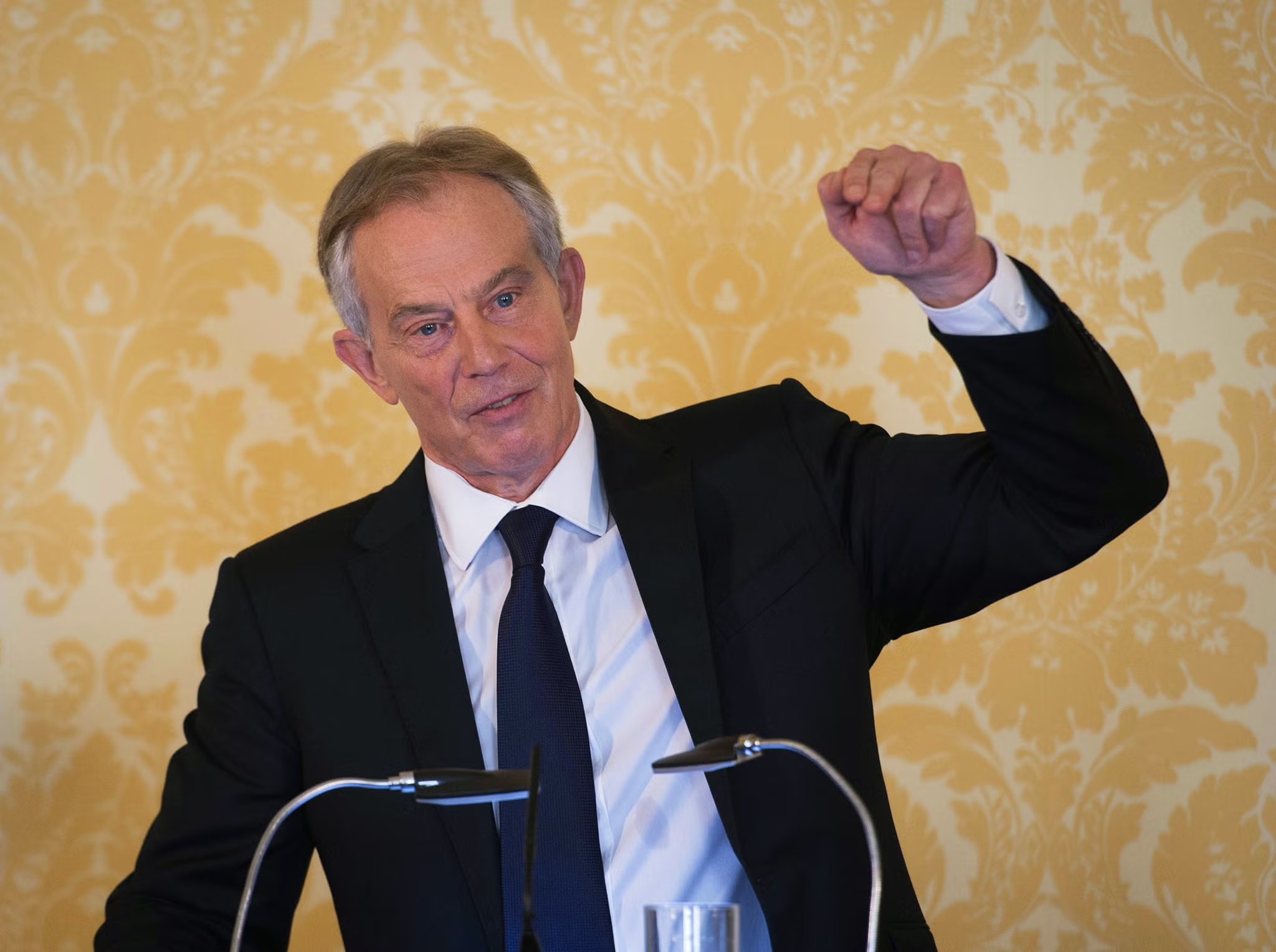
Newly released files reveal that former Prime Minister Tony Blair exerted significant pressure on government officials to ensure that British soldiers accused of beating an Iraqi detainee to death would avoid trial in civil courts. The documents, made public by the National Archives at Kew, shed light on internal communications during a highly sensitive period of the Iraq conflict. They suggest Blair’s determination to shield military personnel from civilian oversight while navigating the complex legal and political implications of the case.
In July 2005, Antony Phillipson, Blair’s private secretary for foreign affairs, wrote to the prime minister detailing that the attorney general had met army prosecutors to discuss the case against soldiers allegedly responsible for the death of Baha Mousa. Phillipson indicated that the case was likely to proceed to a court martial but noted that the attorney general retained the discretion to direct it toward a civil court if deemed appropriate. Blair’s handwritten annotation on the document was emphatic: “It must not!” signaling his insistence on keeping the proceedings strictly within military jurisdiction.

The tragic death of Baha Mousa occurred in September 2003 at a detention center in Basra, where he and other civilians suffered severe mistreatment while hooded and handcuffed. Two years later, Corporal Donald Payne became the first British soldier convicted of a war crime under the International Criminal Court Act 2001. Payne had admitted to “the choir,” a brutal sequence of punches and kicks inflicted upon detainees, turning their groans and shrieks into what he described as music. He was sentenced to a year in prison and dismissed from the army, marking a landmark conviction in the history of British military accountability.
The newly disclosed files highlight Blair’s concerns over how allegations against UK troops might be perceived internationally, particularly regarding civil and ICC oversight. Phillipson recommended that the Ministry of Defence and the attorney general draft notes outlining proposed legislative changes, ensuring that the government would not appear to obstruct operational freedom for troops in conflict zones. Blair’s response was resolute: “We have, in effect, to be in a position where ICC is not involved and neither is CPS. That is essential. This has been woefully handled by the MoD.”
Additional correspondence within the files indicates that the Foreign Office anticipated a formal decision by the ICC prosecutor on whether to pursue an investigation into UK military actions in Iraq. The documents suggest Blair was acutely aware of the legal and reputational stakes and sought to limit exposure to international scrutiny while managing domestic political pressures.
The files also illuminate broader patterns of government handling of military accountability during the Iraq war. Internal memos emphasize the need to prevent public perception that the UK government had deliberately obstructed justice or allowed troops to operate without oversight. Critics argue that these communications illustrate a willingness at the highest level of government to prioritize troop protection over transparent legal processes.
Legal experts and historians have noted that these revelations could shape ongoing debates about the UK’s conduct in Iraq, particularly regarding civilian oversight of military operations. The Blair-era approach, as documented, underscores tensions between military discretion and adherence to international legal standards. Observers highlight that while court-martials like Payne’s were carried out, the limited scope of accountability raised questions about the adequacy of protections for civilians and the role of political influence in determining legal outcomes.

The newly released files arrive amidst renewed scrutiny of the Iraq War, reflecting enduring concerns over transparency, human rights, and governmental responsibility. Analysts note that Blair’s insistence on shielding soldiers from civil jurisdiction exemplifies the broader strategic priorities of the administration at the time, which sought to maintain military morale and operational effectiveness while mitigating potential political fallout.
Civil liberties groups have reacted strongly to the revelations, asserting that the documents reveal a government inclination to circumvent civilian justice mechanisms. Advocates stress that these historical insights are critical for understanding the balance between national security interests and individual rights, and they call for continued examination of policies that may have enabled impunity in conflict zones.
Internationally, the files may influence perceptions of the UK’s commitment to accountability under the ICC framework. The tension between domestic legal protections for soldiers and international obligations remains a recurring issue in post-conflict analysis, particularly for nations involved in complex military operations. Legal scholars argue that these documents provide a rare glimpse into the decision-making process that sought to navigate such competing pressures, revealing the political calculus underpinning legal strategies during wartime.
The disclosure of Blair’s handwritten notes has sparked debate about executive influence over legal processes, underscoring the delicate intersection of politics, law, and ethics in military conduct. Observers suggest that the historical significance of the files extends beyond one case, highlighting systemic challenges in ensuring transparent accountability for armed forces. The Blair-era communications serve as a potent reminder of how political priorities can shape legal pathways and, in some cases, limit avenues for civilian redress.
As the United Kingdom continues to examine its involvement in Iraq, these files contribute to a fuller understanding of the decisions made at the highest levels of government. They provide context for ongoing inquiries into military oversight, human rights compliance, and the mechanisms through which the state seeks to protect its personnel while adhering to international law. Scholars, journalists, and the public alike may draw lessons from these revelations, influencing both contemporary policy discussions and historical assessments of the Blair administration.
The case of Baha Mousa remains emblematic of the broader consequences of military misconduct and the importance of safeguarding legal accountability. With the release of these documents, the debate over executive influence, soldier accountability, and the role of civilian courts in addressing wartime abuses has reemerged, prompting renewed reflection on ethical governance, international obligations, and the pursuit of justice for victims.
Related News:
 British Woman in Iran ‘Losing Hope’ Amid Ongoing Detention
 BBC Journalist Held and Interrogated in Vietnam
 US Super-Rich Are Draining Planet’s Safe Climate Space
 UK Charters Emergency Flights to Evacuate Britons from Jamaica
 UK University Suspends Human Rights Research Following Pressure from China
 Trump Speaks on Prince Andrew’s Royal Scandal Fallout
 UK University Faces Counter-Terror Probe Over China Pressure
 Top Christmas Books Reads: Classics to Cozy Romcoms
 World Whisky Tour: 9 Global Gems
 UPS Cargo Plane Crash in Kentucky Kills Seven
 Just Stop Oil Protesters Convicted Amid Climate Defence Row
China-critical UK academics face ‘extremely heavy’ pressure from Beijing
Just Stop Oil Protesters Convicted Amid Climate Defence Row
China-critical UK academics face ‘extremely heavy’ pressure from Beijing
 Tension and Turmoil at Aston Villa v Maccabi Match
 BBC to Apologise Over Edited Trump Speech Amid Backlash
 Lando Norris Dominates Brazil GP to Strengthen F1 Title Bid
 Britain deploys RAF specialists to assist Belgium with drone threats
 Palace May Restore Hyphen to Andrew Mountbatten-Windsor’s Name
 US Senate Passes Funding Bill to End Historic Shutdown
 Suicide Bombing at Islamabad Court Kills 12, Injures Dozens
 BBC’s Tim Davie to Address Staff Amid Trump $1bn Threat
 Thailand Suspends Cambodia Border Peace Deal Amid Tensions
 Ronaldo Confirms Final World Cup and Plans Retirement
 Ukraine-Russia war latest: Putin’s troops exploit bad weather to force Kyiv withdrawal from multiple towns
 Hamas Fighters in Gaza Tunnels Stall Ceasefire Progress
 Algeria Pardons French-Algerian Novelist Sansal After Year in Jail
 Hitler’s DNA Confirms He Truly Had Only One Testicle
 US Justice Department Files Lawsuit Against California Over Partisan Voting Maps
 Oklahoma Governor Grants Last-Minute Clemency to Death Row Inmate
 US Pushes Global Effort to Stop Arms Flow to Sudan RSF Forces
 Nigerian Education Reversal: Mother-Tongue Teaching Scrapped
 Israel Confirms Returned Hostage as Meny Godard
 Greene Pushes Epstein Files Amid Trump Fallout
 Trump Deploys DHS to Charlotte in Major Arrest Operation
 December Run-Off in Chile as Election Produces No Winner
 Zelenskyy Signs Fighter Jet Deal Amid Russian Drone Attacks
 Orban Says Ukraine Has ‘No Chance’ as EU Support Continues
 Irish Hero Parrott Says Goal Brought First Tears in Years
 Canada Passes Carney’s First Budget in Tight Parliamentary Vote
 Nigeria Misses World Cup Again After Play-Off Loss
 Israeli Strike Kills 13 Near Palestinian Camp in Lebanon
 Zelensky Meets US Envoy in Turkey to Push Ukraine Peace Talks
 Shadow Fleet at Sea: Europe’s Battle Against Illicit Oil Shipping
 Tiny Curacao Makes History as Smallest Nation to Reach World Cup
 Haiti Qualifies for World Cup Despite Coach Never Visiting Country
 Deadly Russian Strikes Hit Western Ukraine, 20 Killed in Ternopil
 Rama Rebukes Mahmood for Targeting Albanian Families
 Russian Vessel Used Lasers on RAF Pilots, UK Claims
 Pentagon Officials in Ukraine to Discuss War End
 Ukraine Peace Plan: Zelensky Ready for Dialogue
 Vietnam Battles Deadly Floods as Rains Continue
 Venezuela Threatens Nobel Winner Machado with Fugitive Status
 At Least Three Dead in Bangladesh Earthquake
 Barcelona Returns to Camp Nou vs Athletic Bilbao
 Royal Navy Shadows Russian Warships Entering the Channel
 Israel Confirms Hamas Returned Dror Or’s Body
 Trump Envoy to Discuss Ukraine Peace at Kremlin
 Twenty-Four Nigerian Schoolgirls Freed After Abduction
 US Suspends Afghan Immigration After White House Shooting
 Two National Guard Soldiers Critically Injured Near White House
 Georgians Defy Government Crackdown After Year of Protests
 Southern Lebanon reels as Israeli strikes shatter communities
 Mbappe Scores 4 as Real Madrid Edge Olympiakos
 Man City Lose, Champions League Risk
 Sri Lanka Floods Leave 56 Dead, Dozens Missing
 India’s Labour Law Overhaul Sparks Fierce Debate
 Video shows Israeli troops kill Palestinians after surrender
 Families wait in agony for missing after Hong Kong tower blaze
 A Colourful Cultural Escape in Mexico’s Querétaro
 Tokyo court rules Japan’s same-sex marriage ban constitutional
 Chinese & Japanese Boats Clash Near Disputed Islands
 Indonesia to Repatriate Two Dutch Drug Convicts
 ‘Extinct’ Antelope Returns to Sahara, Bringing Hope
 King Charles Pledges to Defend Europe Against Russia
 EU plans $105bn Ukraine aid using frozen Russian assets
 Global campaign launched to free Palestinian leader Barghouti
 Starmer’s communications chief to outline media strategy overhaul
 American Mother Extradited From UK to U.S. on Murder Charges
 U‑Turn on Farmers’ Inheritance Tax Sparks Political Firestorm
 Khaleda Zia, Bangladesh’s First Female Prime Minister, Dies at 80
 Starmer Allies Honoured in New Year Awards List