Published: 14 January 2026 | The English Chronicle Desk | The English Chronicle Online
The United States has approved the sale of Nvidia’s advanced artificial intelligence chips to China, marking a significant shift in Washington’s technology export policy and injecting fresh complexity into the already fraught US–China tech rivalry. The decision, confirmed on Tuesday by the Department of Commerce, allows the California-based chipmaker to resume shipments of its H200 processors to Chinese customers under strict conditions.
The H200, Nvidia’s second-most-advanced AI semiconductor, had previously been restricted amid concerns in Washington that cutting-edge American technology could strengthen China’s technology sector and military capabilities. Under the revised rules, however, Nvidia will be permitted to sell the chips to China provided that sufficient supply is available to meet US domestic demand and that Chinese buyers comply with enhanced security and end-use requirements.
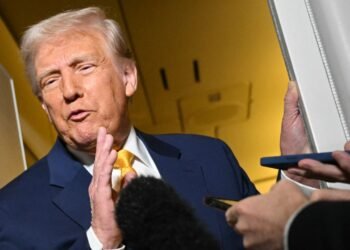
The move follows comments made last month by President Donald Trump, who signalled that his administration would permit sales of advanced AI chips to “approved customers” in China, while imposing a 25% fee on the revenues Nvidia earns from those transactions. The decision underscores Trump’s transactional approach to trade and technology policy, balancing national security concerns against domestic economic interests.
Nvidia welcomed the announcement. A company spokesperson told the BBC that the policy shift would support US manufacturing and protect American jobs, emphasising that Nvidia’s research, development and production ecosystem remains heavily anchored in the United States. For a company that has become one of the most valuable in the world on the back of the AI boom, access to the Chinese market represents a substantial commercial prize.

The Commerce Department’s Bureau of Industry and Security said the revised export controls apply not only to the H200 chips but also to several less advanced AI processors. Chinese customers will be required to demonstrate “sufficient security procedures” and provide assurances that the chips will not be used for military or surveillance purposes. Officials stressed that compliance would be closely monitored and that licences could be revoked if violations are detected.
Crucially, the policy does not extend to Nvidia’s most advanced AI processor, the Blackwell chip, which remains barred from sale in China. Considered the world’s most powerful AI semiconductor, Blackwell sits at the cutting edge of machine learning, data centre optimisation and generative AI applications. By keeping it off-limits, Washington is attempting to preserve a technological gap between the US and its strategic rival, even as it relaxes restrictions on slightly older hardware.
China’s response to the announcement has been cautious but pointed. Liu Pengyu, a spokesperson for the Chinese embassy in Washington, told the BBC that Beijing has long opposed what it sees as the “politicisation and weaponisation of technology and trade issues”. He warned that restrictions on tech exports disrupt global supply chains and undermine mutual interests. “We oppose blocking and restricting China,” Liu said, adding that such measures ultimately harm both sides.
The episode highlights Nvidia’s increasingly delicate position at the centre of the global AI race. As demand for AI chips has exploded, the company has found itself caught between the competing priorities of Washington and Beijing. On one hand, the US government views advanced semiconductors as strategic assets that must be protected from potential adversaries. On the other, Nvidia’s growth depends on global markets, and China remains one of the largest consumers of AI hardware.
This is not the first time Nvidia has had to adjust to shifting US export rules. In July last year, President Trump reversed earlier restrictions on chip sales to China, only to attach new conditions requiring Nvidia to share a portion of its China-derived earnings with the US government. That decision was widely seen as an attempt to turn national security controls into a revenue stream for the federal treasury, blurring the line between economic policy and strategic regulation.
Beijing reacted sharply at the time. According to reports, Chinese authorities instructed domestic technology firms to boycott Nvidia’s China-specific chips and accelerate the adoption of homegrown alternatives. The directive was intended to reduce reliance on US technology and bolster China’s semiconductor industry, a long-standing strategic goal. Yet despite heavy state investment, experts say Chinese chipmakers continue to lag behind their US counterparts in performance, efficiency and manufacturing scale.
The renewed approval of H200 sales could therefore offer short-term relief to Chinese companies struggling to secure high-performance AI hardware, particularly for civilian applications such as cloud computing, autonomous driving research and large language model development. For Nvidia, it opens the door to reclaiming market share that has been under pressure from both regulatory barriers and rising domestic competition within China.
In Washington, the decision reflects a broader recalibration of export controls. While the US remains committed to preventing China from accessing the most advanced military-relevant technologies, there is growing recognition that overly sweeping restrictions can backfire. Critics of blanket bans argue that they accelerate China’s push for technological self-sufficiency, potentially eroding US influence over global standards and supply chains.
At the same time, the policy carries political risk. China hawks in Congress have long warned that even slightly older AI chips can be repurposed for military or intelligence uses, especially when deployed at scale. They argue that monitoring end use in China is inherently difficult and that any relaxation of controls could undermine US security. The Commerce Department has sought to address these concerns by tightening compliance requirements and signalling a willingness to enforce penalties.

For President Trump, the decision fits into a broader strategy of selective engagement with China. While his administration has maintained tariffs on Chinese goods and taken a hard line on issues ranging from Taiwan to industrial policy, Trump has also shown a willingness to strike deals that deliver immediate economic or political benefits. Allowing Nvidia to sell H200 chips while collecting a 25% fee offers a way to claim both economic gain and strategic restraint.
The global implications extend beyond bilateral relations. US export controls have reshaped the semiconductor industry, forcing companies to redesign products for specific markets and prompting allies to navigate conflicting pressures from Washington and Beijing. European and Asian governments are watching closely, aware that US decisions can ripple through their own technology sectors and trade relationships.
For now, Nvidia’s Blackwell chips remain firmly out of reach for Chinese buyers, preserving what Washington sees as a critical technological advantage. But the approval of H200 sales suggests that the boundary between permitted and prohibited technology is increasingly fluid, subject to political calculation as much as technical capability.
As the AI race accelerates, the stakes could hardly be higher. Artificial intelligence is rapidly becoming a foundational technology for economic growth, military power and societal transformation. Decisions about who gets access to advanced chips will shape not only corporate fortunes but also the balance of power in the 21st century.
Whether the latest policy shift leads to a more stable framework or merely another round of tit-for-tat measures remains to be seen. For now, Nvidia finds itself once again navigating a narrow path between two superpowers, its silicon products emblematic of a world where technology, trade and geopolitics are inseparably intertwined.
Related News:
 Poll Reveals China Leads World in Trusting AI Technology
 British AI Startup Outshines Human Forecasters in Global Prediction Contest
 Mortgages and AI Set to Feature in English Schools
 Vibe coding’ named Collins dictionary’s word of the year
 Britain deploys RAF specialists to assist Belgium with drone threats
 Night after night, Belgium is on high alert.
 England schools to receive AI-generated attendance targets
 Stop using ChatGPT to write speeches, AI minister tells MPs
 New laws to bolster UK’s defences against cyber attacks on NHS, transport and energy
 Hitler’s DNA Confirms He Truly Had Only One Testicle
 Ukraine to Get 100 French Rafale Jets in Historic Deal
 Google Chief Urges Caution: Don’t Trust AI Blindly
 Two National Guard Soldiers Critically Injured Near White House
 Putin Intensifies Territorial Demands Before US Talks
 Trump to Recheck Green Cards from 19 Nations After DC Attack
 AI Actress Creator Says Tilly Norwood Won’t Replace Actors
 YouTube Warns Kids Will Be Less Safe Under Australia Ban
 US Defence Chief on Drug Boat Strike: “Did Not See Survivors”
 American Mother Extradited From UK to U.S. on Murder Charges
 Russia losses Ukraine war peace talks intensify amid rising deaths
 US Cities Erupt in Protests Against Trump’s Venezuela Military Action
 Trump Escalates Minnesota Immigration Surge Amid Rising Tensions
 Trump Says US Must ‘Own’ Greenland to Block Russia, China
 Greenland Faces Pivotal Summit Over Arctic Power Struggle
 UK Fighter Jet Purchase Could Breach Nuclear Treaty, Warns CND
 Google at 27: The Untold Story of Ruth Kedar, the Woman Behind the Iconic Logo
 Cooper Unveils £4m Cyber Plan Against Russian Hackers
 Harry and Meghan join global AI leaders urging superintelligence ban
 Experts Warn Russia’s Burevestnik Missile Could Destabilise Arms Control
 Virgin Trains Moves Closer to Challenging Eurostar Monopoly
 UK Bans Fake Numbers: Scammers Lose Their Trick
 Top Christmas Books Reads: Classics to Cozy Romcoms
 Just Stop Oil Protesters Convicted Amid Climate Defence Row
 Patients to Test Health at Home to Ease NHS Winter Pressure
 BBC to Apologise Over Edited Trump Speech Amid Backlash
 Palace May Restore Hyphen to Andrew Mountbatten-Windsor’s Name
 US Senate Passes Funding Bill to End Historic Shutdown
 Northern Lights may illuminate UK skies this week
 Valve Opens the Door for Android Games on Steam
 Working-Class Men with Prostate Cancer Left Behind by NHS
 US Justice Department Files Lawsuit Against California Over Partisan Voting Maps
 Pokémon to open world’s first theme park in Japan next year
 New AI tool could cut wasted efforts in organ transplants
 Greene Pushes Epstein Files Amid Trump Fallout
 Trump Deploys DHS to Charlotte in Major Arrest Operation
 December Run-Off in Chile as Election Produces No Winner
 Zelenskyy Signs Fighter Jet Deal Amid Russian Drone Attacks
 Orban Says Ukraine Has ‘No Chance’ as EU Support Continues
 Canada Passes Carney’s First Budget in Tight Parliamentary Vote
 Sundar Pichai Cautions on AI Hype and Market Risks
 Israeli Strike Kills 13 Near Palestinian Camp in Lebanon
 Shadow Fleet at Sea: Europe’s Battle Against Illicit Oil Shipping
 Tiny Curacao Makes History as Smallest Nation to Reach World Cup
 Haiti Qualifies for World Cup Despite Coach Never Visiting Country
 Deadly Russian Strikes Hit Western Ukraine, 20 Killed in Ternopil
 Healthy Habits in Your 30s That Boost Life in Your 70s
 Pentagon Officials in Ukraine to Discuss War End
 Ukraine Peace Plan: Zelensky Ready for Dialogue
 Vietnam Battles Deadly Floods as Rains Continue
 Venezuela Threatens Nobel Winner Machado with Fugitive Status
 Royal Navy Shadows Russian Warships Entering the Channel
 Coffins Now Too Large to Cremate Amid Rising Obesity Crisis
 US Suspends Afghan Immigration After White House Shooting
 Georgians Defy Government Crackdown After Year of Protests
 Southern Lebanon reels as Israeli strikes shatter communities
 US National Guard Member Killed in DC Shooting
 Sri Lanka Floods Leave 56 Dead, Dozens Missing
 Tokyo court rules Japan’s same-sex marriage ban constitutional
 ‘Extinct’ Antelope Returns to Sahara, Bringing Hope
 EU plans $105bn Ukraine aid using frozen Russian assets
 Facebook Slow to Remove Bondi Attack Praise, Anti-Hate Group Claims
 Australian Cruise Ship Freed After Reef Grounding in Papua New Guinea
 Albanese Opens Door to Bondi Royal Commission Amid Rising Pressure
 Capitol Attack Anniversary Sparks Deep Political Divide
 Iran Protesters Defy Crackdown as Violent Clashes Intensify
 Homeland security agents deployed amid Minneapolis protests
 Minneapolis mayor demands state access to Renee Good probe
 Trump Weighs Response to Iran Crackdown as Tehran Says Communication Open With US
 Minnesota Sues Trump Administration Over ICE Surge
 Trump targets Iran trade with 25% tariff warning