Published: 17 January 2026. The English Chronicle Desk. The English Chronicle Online
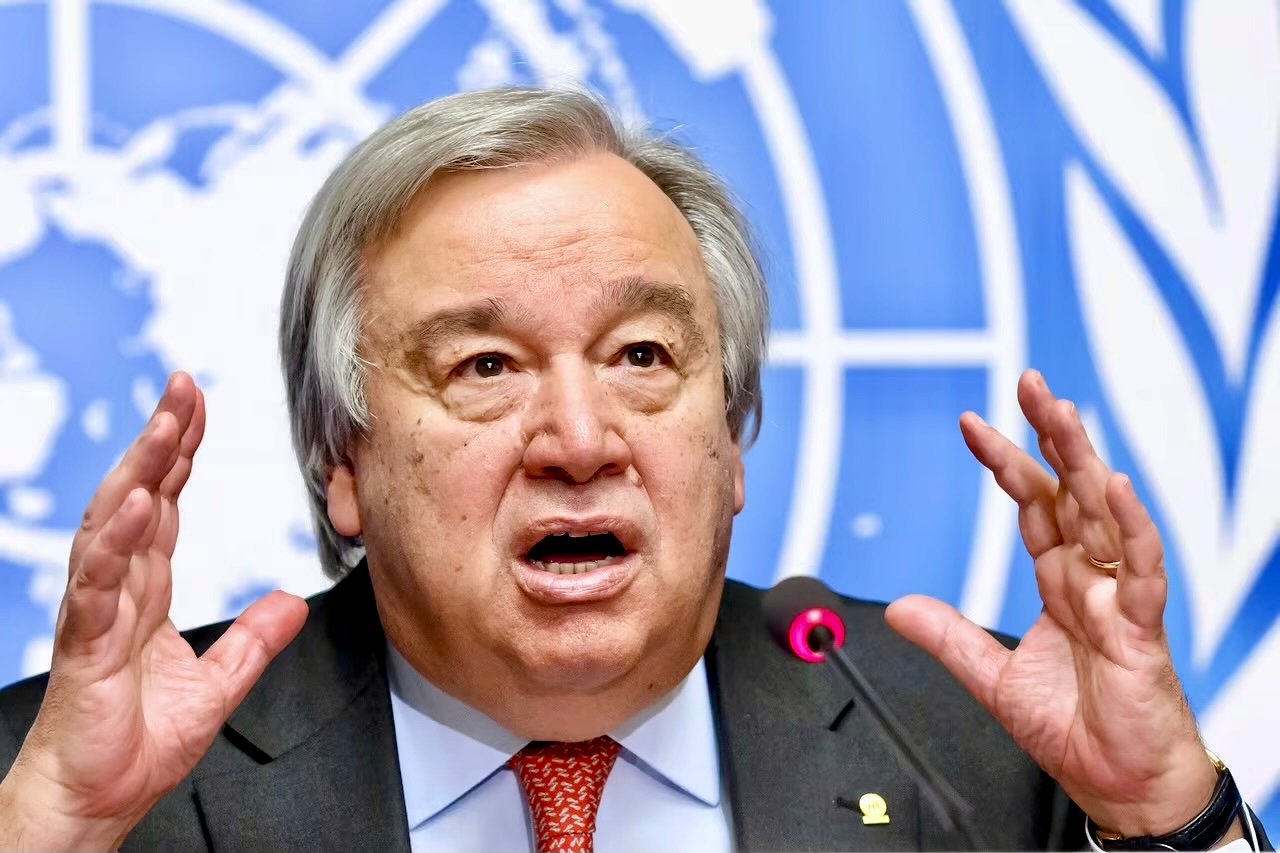
United Nations secretary general António Guterres has issued one of the starkest warnings of his tenure, cautioning that “powerful forces” are actively working to undermine global cooperation at a moment when humanity faces interconnected crises of unprecedented scale. Speaking in London to mark the 80th anniversary of the United Nations’ first major meeting, Guterres delivered an impassioned defence of multilateralism and international law, arguing that the very principles on which the UN was founded are now under sustained assault.
The speech, delivered at Methodist Central Hall in Westminster, carried deep historical resonance. It was in the same hall in January 1946 that delegates from 51 countries gathered for the inaugural session of the UN general assembly, emerging from the devastation of the second world war with a shared determination to prevent future global conflict. Eight decades later, Guterres used the symbolic setting to underline how far the world has drifted from that founding spirit, even as the need for collective action has become more urgent than ever.

Guterres reminded his audience that the general assembly’s first-ever resolution focused on disarmament and the elimination of atomic weapons, reflecting the trauma of a world that had witnessed the destructive power of nuclear warfare. Today, he warned, the threats confronting humanity are broader, more complex and in some cases unimaginable to those early delegates. Climate breakdown, unchecked technological disruption and a renewed global arms race are converging in ways that place enormous strain on international cooperation.
Without naming specific countries, the secretary general pointed to rising militarisation as a clear symptom of this dangerous trajectory. He noted that global military spending reached an estimated $2.7 trillion last year, a figure he contrasted sharply with spending on development and humanitarian assistance. He described the sum as more than 200 times the UK’s current aid budget and equivalent to over 70% of Britain’s entire economy, a comparison intended to highlight what he sees as distorted global priorities.
This massive investment in weaponry, Guterres argued, is unfolding alongside a wilful neglect of the climate emergency. He warned that as the planet continues to break heat records, the industries driving climate change are still being rewarded. Fossil fuel profits, he said, have surged even as scientific warnings grow more urgent and the window for meaningful action narrows. The result, he suggested, is a world sleepwalking towards environmental catastrophe while pouring resources into tools of destruction.
Guterres also devoted significant attention to the growing role of digital technology in shaping politics and society. He warned that cyberspace has become a battleground where algorithms often reward falsehoods, amplify hatred and weaken democratic institutions. In his view, the same technologies that hold the promise of global connection and progress are being exploited by authoritarian forces to entrench control and suppress dissent, further eroding trust between nations and within societies.
The secretary general’s remarks come at a time of acute financial stress for the United Nations itself. The organisation is grappling with chronic funding shortages, largely driven by decisions taken by the United States under President Donald Trump. Washington recently announced that it would allocate just $2 billion to UN humanitarian assistance, a dramatic reduction from its previous role as the organisation’s largest donor. The funding announcement was accompanied by blunt language from the US state department, which warned the UN that it must “adapt, shrink or die”.
The implications of this funding cut are far-reaching. Experts warn that a reduced US contribution will inevitably lead to a smaller and less effective international aid system, with vulnerable populations bearing the brunt. The UN has already acknowledged that existing shortfalls threaten to cripple its global peacekeeping operations, undermining efforts to stabilise conflict zones and protect civilians.
The financial pressure has been compounded by the Trump administration’s subsequent decision to withdraw the US from multiple UN agencies, as well as from a key international climate treaty. Together, these moves have raised serious questions about the future of global governance at a time when cooperation is essential to address shared challenges such as climate change, pandemics, mass displacement and technological disruption.
Despite the bleak assessment, Guterres struck a note of cautious determination. He acknowledged the need for reform within the UN and insisted that the organisation must evolve to remain effective in a rapidly changing world. He pledged that ongoing reforms would make the United Nations more agile, more coordinated and more responsive to the needs of the people it serves. In his view, adaptation does not mean abandoning multilateralism, but rather strengthening it so that it can withstand political pressure and changing global dynamics.
The speech also carried a personal dimension, as Guterres approaches the end of his term as secretary general in 2026. At 76, he is increasingly reflective about the legacy of the institution he leads and the path the world is taking. His warning about “powerful forces” undermining cooperation can be read not only as a critique of specific policies, but as a broader appeal to political leaders and citizens alike to recognise what is at stake.

Observers note that the London address may be remembered as one of the defining speeches of Guterres’ leadership. By invoking the ideals of 1946 while confronting the realities of 2026, he sought to bridge past and present, reminding the world why the UN was created and why its mission remains vital. Whether that message will translate into renewed political will among member states remains uncertain.
What is clear, however, is that the secretary general believes the current moment represents a crossroads. In his view, the erosion of trust, the retreat from cooperation and the prioritisation of narrow national interests over collective wellbeing threaten to unravel decades of progress. The alternative, he argued, is a recommitment to international law, shared responsibility and the belief that global problems require global solutions.
As the United Nations marks its 80th anniversary, Guterres’ warning serves as both a diagnosis and a call to action. The forces undermining cooperation, he suggested, are powerful but not inevitable. Whether the international community chooses confrontation over collaboration, or fragmentation over unity, will shape not only the future of the UN but the fate of the planet itself.
Related News:
 Trump Administration Dismisses 17 Immigration Judges, Sparking Debate Over Judicial Independence
 Ministers Accused of Defamation Over Palestine Action Ban and Mass Arrests
 Father’s Tip Leads to Arrest in Charlie Kirk Murder Case
 Charlie Kirk Killing Used to Mobilise UK’s Largest Far-Right Rally in Decades
 Jailed Georgian Opposition Leaders Warn UK of Iranian Links to Ruling Party
 UK Extradition Law Change Sparks Fears Among Hong Kong Dissidents
 Shabana Mahmood Warns Border Failings Are Eroding Trust in States
 Johnson Approved China’s London ‘Super-Embassy’ in 2018
 China-critical UK academics face ‘extremely heavy’ pressure from Beijing
 Trump Urges Herzog to Grant Netanyahu Full Pardon
 US Justice Department Files Lawsuit Against California Over Partisan Voting Maps
 Trump Deploys DHS to Charlotte in Major Arrest Operation
 Congress Approves Release of Epstein Files, Trump Expected to Sign
 Texas Governor Faces Lawsuit From CAIR
 Chinese & Japanese Boats Clash Near Disputed Islands
 Putin Meets US Envoy Amid Key Ukraine Peace Talks
 Kinnock’s Rebuke Echoes Loudly as Corbyn Allies Launch Left-Wing Breakaway: “A Gift to Farage”
 UK and Norway Forge Stronger Ties Through Joint Sanctions and Enhanced Defence Cooperation
 Modi’s London Visit Seals Historic UK-India Trade Pact Amid Global Tensions
 UK Must Act with Courage and Clarity on Israel-Palestine Conflict, Says Foreign Affairs Committee Report
 Tasers Introduced in UK Prisons to Combat Rising Violence and Protect Staff
 Northern Ireland Family of Three Shot Dead in Maguiresbridge Home Incident
 Trump Threatens 100% Tariff on Nations Importing Russian Oil Amid India Standoff Over Ukraine War
 Netanyahu Announces Plan to Take Over Gaza City, Escalating Conflict Further
 Radioactive Leak at UK’s Nuclear Warhead Base Sparks Outcry Over Safety and Secrecy
 Lammy and Vance Meet in Britain to Advance US-Brokered Ukraine Peace Talks
 Mutual Inconvenience: Why Alaska Was Chosen for the Trump-Putin Summit on Ukraine
 Hong Kong Summons UK and Australian Envoys Following Asylum Grants to Democracy Activists
 Is the UK Ready to Put Boots on the Ground in Ukraine? Assessing Military Capacity and Challenges
 Tanni Grey-Thompson Faces Abuse Over Opposition to Assisted Dying Bill
 Protests Expected as Israeli Arms Firms Join Global Defence Trade Fair in London
 Trump Appears Sidelined as Israel’s Unprecedented Strikes Hit Qatar
 Conservative Influencer Charlie Kirk Fatally Shot During University Debate
 Thousands Gather in London to Protest Donald Trump’s Second UK State Visit
 Channel Crossings Surge: Over 1,000 People Arrive in the UK in Small Boats in a Single Day
 Widow of Charlie Kirk Forgives Killer at Emotional Memorial Service
 Mahmood Pledges Reform of Modern Slavery Laws After Court Blocks Deportation Appeal
 Denmark Investigates Professional Drone Incursions Across Multiple Airports, No Evidence of Russian Involvement
 UK Fighter Jet Purchase Could Breach Nuclear Treaty, Warns CND
 Yvette Cooper Signals Global Momentum Towards Gaza Peace Deal Amid Humanitarian Crisis
 Migrants in UK May Need to Contribute or Face Removal, Home Secretary Signals
 A Third of EU Citizens in UK Report Discrimination by Public Bodies Post-Brexit
 Digital ID Plans Ignite Debate Over £600m Treasury Tax Boost and Privacy Concerns
 Public Trust in SNP Hits Historic Low Amid NHS Concerns
 Johnson Suggests Mandelson Linked to China Spy Controversy
 Rachel Reeves signals welfare reform ahead of key budget
 Nigel Farage’s partner linked to Brussels fraud probe
 Ireland Votes as Two Women Compete for Presidency
 Russia’s Latest Push to Win US Favors Shows Deep Desperation
 Experts Warn Russia’s Burevestnik Missile Could Destabilise Arms Control
 French Taxi Driver Cleared in David Lammy Theft Case After Fare Dispute
 Just Stop Oil Protesters Convicted Amid Climate Defence Row
 BBC to Apologise Over Edited Trump Speech Amid Backlash
 Britain deploys RAF specialists to assist Belgium with drone threats
 WASPI Women May Get Second Chance at Pension Redress
 Major Rent Reform Ends No-Fault Evictions in England
 Peers Flood Assisted Dying Bill with 942 Amendments
 Indian authorities demolish Kashmir home linked to Red Fort blast
 Greene Pushes Epstein Files Amid Trump Fallout
 December Run-Off in Chile as Election Produces No Winner
 Canada Passes Carney’s First Budget in Tight Parliamentary Vote
 Shadow Fleet at Sea: Europe’s Battle Against Illicit Oil Shipping
 Pentagon Officials in Ukraine to Discuss War End
 India’s COP30 Delay Raises Global Climate Concerns
 Venezuela Threatens Nobel Winner Machado with Fugitive Status
 Georgians Defy Government Crackdown After Year of Protests
 US National Guard Member Killed in DC Shooting
 ICC to Rule on Duterte’s Provisional Release
 Tokyo court rules Japan’s same-sex marriage ban constitutional
 ‘Extinct’ Antelope Returns to Sahara, Bringing Hope
 EU plans $105bn Ukraine aid using frozen Russian assets
 Global campaign launched to free Palestinian leader Barghouti
 Russia losses Ukraine war peace talks intensify amid rising deaths
 Zelenskyy Accuses Russia of Sabotaging Peace Talks
 Albanese Opens Door to Bondi Royal Commission Amid Rising Pressure
 Trump Escalates Minnesota Immigration Surge Amid Rising Tensions
 Iran Protesters Defy Crackdown as Violent Clashes Intensify
 Plans to Limit Jury Trials Face Retreat After Mounting Opposition
 Trump Threatens Strong Action If Iran Executes Protesters
 Machado Trump medal gesture reshapes Venezuela power struggle