Published: 20 January 2026. The English Chronicle Desk. The English Chronicle Online.
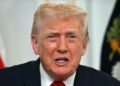
Donald Trump has criticised the UK’s “stupidity” in handing over the Chagos Islands to Mauritius, linking this decision directly to his interest in taking over Greenland. Speaking ahead of the World Economic Forum in Davos, Trump emphasised that Britain’s recent move regarding Diego Garcia, a crucial US military base, demonstrates weakness in international affairs. He stated that the handover signals vulnerability to China and Russia, countries he says only respect strength, and reiterated that the United States under his leadership is uniquely positioned to protect strategic territories.
Trump’s comments came via multiple posts on his Truth Social platform, where he argued that Britain’s decision to cede sovereignty over the islands was unnecessary and strategically reckless. He described the act as “great stupidity” and added that it reinforces the need for the United States to acquire Greenland. According to Trump, the combination of UK missteps and rising global threats provides ample justification for his Arctic ambitions, framing Greenland as an essential asset for American security interests.

The reaction in the UK was immediate and highly charged. Shadow Foreign Secretary Priti Patel echoed Trump’s concerns, warning that Labour’s £35bn Chagos deal undermines national security. She insisted that Prime Minister Keir Starmer should reconsider the agreement, citing potential weaknesses it introduces to the nation’s strategic position. Conservative leader Kemi Badenoch also condemned the surrender, describing it as an act of self-sabotage that compromises UK security and NATO alliances.
Badenoch emphasised that during her discussions with Mike Johnson, the Speaker of the US House of Representatives, she received confirmation that the handover was widely seen as a mistake in Washington. Reform UK leader Nigel Farage similarly welcomed Trump’s public intervention, suggesting it prevents a broader strategic error from taking effect. These responses illustrate growing domestic opposition to the Chagos deal, particularly among political figures prioritising defence and sovereignty concerns.
Despite these criticisms, government officials stressed the legality and necessity of the agreement. Darren Jones, Chief Secretary to the Prime Minister, reaffirmed that the UK’s treaty with Mauritius is fully legislated and ensures the continuation of the joint US-UK military base on Diego Garcia for 99 years. He indicated that Trump’s remarks would not influence the UK’s commitment, highlighting the importance of maintaining orderly diplomatic channels despite public disputes.
Jones further underscored that Prime Minister Starmer remains calm in the face of controversy, advocating for measured diplomacy rather than reactionary responses. He noted that while Trump’s statements are loud and unprecedented, British diplomacy has a proven track record of achieving results quietly, including safeguarding long-term military and intelligence priorities. These comments reflect the UK’s ongoing balancing act between domestic political pressures and international strategic commitments.
The Chagos Islands deal, valued at £3.4bn, has faced scrutiny in Parliament and beyond. Critics argue that the arrangement, while legally supported by UN advisory opinions, risks granting China undue influence in the Indian Ocean due to Mauritius’s growing economic ties with Beijing. Trump’s narrative positions Greenland as a counterbalance to such developments, framing it as an Arctic asset critical to maintaining US supremacy in global security. Analysts suggest that this framing aligns with broader American concerns about expanding Chinese and Russian geopolitical influence.
International reactions to Trump’s statements have varied. While some US policymakers have long supported strategic acquisitions, the public nature of Trump’s commentary has drawn criticism for its diplomatic bluntness. European leaders, including French President Emmanuel Macron, reportedly sought to mediate dialogue at Davos, aiming to clarify positions on Greenland without escalating tensions. The situation underscores the interconnected nature of sovereignty disputes and global security considerations, where small territorial shifts can trigger broader geopolitical debates.
For the UK, the Chagos Islands deal represents both a legal resolution and a potential flashpoint. While the treaty secures long-term use of Diego Garcia, domestic political factions continue to question the wisdom of ceding sovereignty. Conservative and Reform party critiques emphasise national security implications, arguing that the government’s actions could embolden adversaries while weakening NATO cohesion. These arguments resonate with Trump’s public criticism, creating a rare alignment between US and UK political voices focused on strategic caution.

Observers highlight that the Greenland debate extends beyond symbolic gestures, touching on broader Arctic interests such as resource management, military positioning, and climate-related strategic access. Trump’s rhetoric positions the United States as a decisive actor in shaping these dynamics, using perceived UK mistakes as justification for intervention. Meanwhile, UK officials maintain that measured, legally grounded diplomacy, rather than public confrontation, remains the best path for securing both military assets and international credibility.
The continuing exchange of views between Washington and London reflects underlying tensions in transatlantic relations, particularly over military strategy and territorial sovereignty. While the Chagos Islands handover proceeds under existing agreements, Trump’s insistence on Greenland acquisition illustrates a proactive, sometimes controversial, US approach to global security challenges. Analysts caution that public interventions such as these may complicate diplomatic negotiations, even as strategic objectives remain shared across allied nations.
In conclusion, Trump’s criticism of the UK’s handling of the Chagos Islands has intensified debate over global strategic priorities, Greenland acquisition, and the United States’ role in Arctic security. The situation underscores the delicate balance between legal agreements, political optics, and international security, demonstrating that territorial decisions can have far-reaching implications. As the UK defends its treaty commitments, observers continue to monitor how these disputes will shape future NATO and US-UK strategic cooperation. The issue of sovereignty, military positioning, and allied trust remains at the forefront of this ongoing dialogue.
Related News:
 Shock US Raid: Maduro Pleads Not Guilty in Manhattan Court
 Trump Plans Venezuela Meeting, Warns of Cartel Land Strikes
 Mandelson apologises over Epstein ties after public scrutiny
 Rudd successor: Defence chief and former ministers considered
 US Senate rejects resolution limiting Trump military powers
 Trump Calls Greenland Critical for US Security After Denmark Talks
 Trump: Iran Killing Has Stopped, Strike Threats Pulled Back
 Machado Trump medal gesture reshapes Venezuela power struggle
 Trump Receives Machado’s Nobel Medal in White House Meeting
 Iran unrest slows under brutal crackdown and global tensions
 Trump Allies Pursue $200m European Gas Pipeline Deal
 US Considers Asylum for British Jews Amid Rising Antisemitism
 Starmer Challenges US Over Controversial Greenland Deal
 Spoof “Make America Go Away” Caps Rally Denmark Over Greenland
 Green Party Surges Past Labour in Latest UK Poll
 Celebrities and Charities Demand UK Government Act on Child Poverty
 Army Officers Orders to Cut Ties with Men-Only Clubs
 Trump’s UK Ambassador Urges North Sea Drilling to Strengthen US Ties
 FBI Director Kash Patel Defends Girlfriend Amid Government Jet Claims
 French Taxi Driver Cleared in David Lammy Theft Case After Fare Dispute
 Labour immigration crackdown could cost UK £4.4bn
BBC to Apologise Over Edited Trump Speech Amid Backlash
Labour immigration crackdown could cost UK £4.4bn
BBC to Apologise Over Edited Trump Speech Amid Backlash
 Britain deploys RAF specialists to assist Belgium with drone threats
 ‘Reckless’ cuts to victims’ services will cost more than they save
 Millionaires group urge Reeves to introduce wealth tax to ‘lift kids out of poverty’
 Starmer Faces Growing Dissent as Labour MPs Weigh Leadership Challenge
 Reeves rejects £1bn plea for NHS redundancy payouts
 Politics latest: Starmer ‘will fight any leadership coup’ as Streeting denies attempt to oust Labour PM
 PM Condemns Leaks, Vows Loyalty to Ministers and Stability
 Major Rent Reform Ends No-Fault Evictions in England
 Peers Flood Assisted Dying Bill with 942 Amendments
 England’s Special Needs Support Faces Breaking Point
 Senator John Fetterman Hospitalized After Fall from Heart Flare-Up, Keeps Sense of Humor
 US Justice Department Files Lawsuit Against California Over Partisan Voting Maps
 MoD warned over Excel risks before Afghan data breach
 Greene Pushes Epstein Files Amid Trump Fallout
 Trump Deploys DHS to Charlotte in Major Arrest Operation
 December Run-Off in Chile as Election Produces No Winner
 Canada Passes Carney’s First Budget in Tight Parliamentary Vote
 Shadow Fleet at Sea: Europe’s Battle Against Illicit Oil Shipping
 Pentagon Officials in Ukraine to Discuss War End
 Venezuela Threatens Nobel Winner Machado with Fugitive Status
 Most Tories Expect to Support a Farage-Led Government
 Labour MP claims devolution bill is ‘blatant discrimination’ against Cornwall
 Millions Face Higher Taxes Under Reeves New Budget
 Georgians Defy Government Crackdown After Year of Protests
 US National Guard Member Killed in DC Shooting
 ICC to Rule on Duterte’s Provisional Release
 Jordan Bardella: France’s Young Presidential Contender
 Starmer Says Labour’s Economic Plan Needs Years to Deliver
 EU plans $105bn Ukraine aid using frozen Russian assets
 Global campaign launched to free Palestinian leader Barghouti
 Culture secretary to review Telegraph takeover by Daily Mail owner
 Khaleda Zia Death in Bangladesh: First Female PM Dies at 80
 Russia losses Ukraine war peace talks intensify amid rising deaths
 Zelenskyy Accuses Russia of Sabotaging Peace Talks
 Albanese Opens Door to Bondi Royal Commission Amid Rising Pressure
 Trump Escalates Minnesota Immigration Surge Amid Rising Tensions
 Capitol Attack Anniversary Sparks Deep Political Divide
 Saudi Officials Report Zubaidi Flee Before Yemen Peace Talks
 UK Targets in New York Bomb Threat Hoax: Man Jailed
 Gambia Supreme Court Hears Case to Overturn FGM Ban
 Iran Protesters Defy Crackdown as Violent Clashes Intensify
 Homeland security agents deployed amid Minneapolis protests
 Plans to Limit Jury Trials Face Retreat After Mounting Opposition
 Trump targets Iran trade with 25% tariff warning
 Hanson and Joyce Use Rinehart Jet to Tour Flooded Queensland
 Trump Threatens Strong Action If Iran Executes Protesters
 Quebec Premier François Legault Resigns in Surprise Move
 Gulf states warn Trump Iran strikes risk wider Middle East war
 Greenland defence seen as shared Nato duty amid troop arrivals
 Geopolitical football: Iran, Trump and the World Cup clash
 Canada-China trade gains momentum in new strategic partnership
 Right Must Unite After Jenrick Defection, Urges Rees-Mogg
 EU weighs response amid Greenland tariff crisis with Trump
 Syria President Declares Victory as Ceasefire Reached with SDF
 ICE street raids expose a chilling future for public freedoms
 UK Ministers Drop Foreign Student Targets for Global Education Push
 MPs warn AI financial risks threaten UK stability
 MPs warn AI financial risks threaten UK stability