Published: 21 January 2026. The English Chronicle Desk. The English Chronicle Online.
Tensions between Washington and Europe sharpened this week as remarks from a senior US official reignited the Greenland dispute, sending diplomatic shockwaves through global markets and political circles. The comments, delivered during the World Economic Forum in Davos, underscored the growing strain between the Trump administration and several long-standing allies. They also highlighted how a remote Arctic island has become a symbolic battleground over power, respect, and international order.
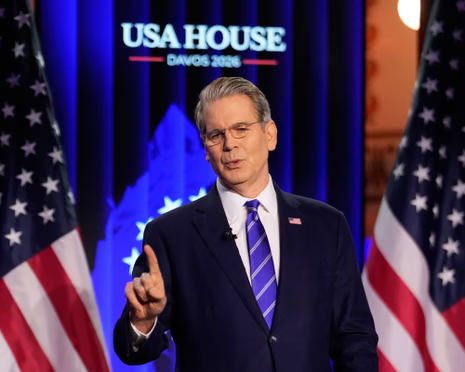
The controversy erupted when US Treasury Secretary Scott Bessent publicly dismissed Denmark as “irrelevant” while addressing concerns about potential European retaliation linked to the Greenland dispute. His remarks came amid speculation that Danish and wider European investors could reduce purchases of US government debt in response to President Donald Trump’s renewed ambition to bring Greenland under American control. The blunt language immediately drew criticism across Europe, where officials viewed it as another example of Washington’s increasingly confrontational tone.
Speaking to reporters on the sidelines of Davos, Bessent argued that Denmark’s financial leverage was negligible. He claimed Danish holdings of US Treasury bonds were worth less than $100 million and insisted they had been declining for years. From his perspective, the Greenland dispute posed no meaningful threat to US borrowing or financial stability. He rejected suggestions that European investors might coordinate pressure on Washington, describing such fears as exaggerated.

Bessent went further, accusing sections of the international media of inflaming the situation. He singled out a prominent financial newspaper for highlighting a Deutsche Bank analysis suggesting European appetite for US debt could weaken. According to Bessent, the bank’s chief executive personally contacted him to distance the institution from the report’s conclusions. This assertion, however, did little to calm European observers already uneasy about the administration’s rhetoric.
The Greenland dispute has been simmering since President Trump revived earlier proposals to acquire the vast Arctic territory, currently an autonomous region within the Kingdom of Denmark. Trump has framed Greenland as strategically essential, citing its mineral wealth, Arctic shipping routes, and military importance. European leaders, by contrast, have stressed sovereignty, international law, and the right of Greenland’s people to determine their own future.
At Davos, those differences were laid bare. French President Emmanuel Macron warned against what he described as bullying tactics in international affairs, arguing that respect and legal principles must prevail over coercion. European Commission President Ursula von der Leyen echoed that message, pledging a firm response should Washington impose tariffs on European countries opposing the Greenland plan. Their statements were widely interpreted as a coordinated European stance against US pressure.
Bessent dismissed both interventions as provocative and unnecessary. He suggested Macron should prioritise France’s domestic economic challenges rather than advocate a Nato presence in Greenland. His remarks struck a nerve in Paris, where officials viewed them as dismissive and inappropriate. The exchange illustrated how the Greenland dispute has widened into a broader clash over leadership, alliances, and the tone of global diplomacy.
The timing of the comments added to the drama. President Trump was en route to Davos but arrived several hours late due to technical issues with Air Force One. Although the delay was logistical, it became symbolic for critics who argue the administration’s approach to allies has been erratic. Bessent attempted to downplay the delay, insisting the president’s message would still resonate once delivered.
Addressing European leaders indirectly, Bessent urged restraint. He warned against what he called reflexive anger and bitterness, encouraging counterparts to hear Trump’s case for US ownership of Greenland. According to Bessent, once the strategic arguments were fully explained, sceptics would be persuaded. That confidence, however, contrasted sharply with the prevailing mood among European delegates.
Beyond Europe, the Greenland dispute has attracted attention from investors and security analysts worldwide. Greenland’s location between North America and Europe makes it a focal point for Arctic defence, particularly as climate change opens new shipping lanes. China and Russia have both increased Arctic activity, heightening US concerns. Supporters of Trump’s approach argue these realities justify a more assertive policy, even if it unsettles allies.
Critics counter that the manner of pursuit matters as much as strategic goals. They warn that dismissive language risks alienating partners whose cooperation is essential for broader security challenges, from Ukraine to the Middle East. The Danish government responded cautiously to Bessent’s remarks, avoiding escalation while reaffirming Greenland’s status and Denmark’s role as a reliable ally.
The dispute also spilled into American domestic politics. California Governor Gavin Newsom criticised Bessent at a Davos event, describing him as out of touch with everyday realities. Bessent responded with a scathing personal attack, mocking Newsom’s image and accusing him of neglecting California’s homelessness crisis. The exchange underscored how the Greenland dispute has become entangled with wider ideological divisions within the United States.
For many observers, the episode reflects a deeper shift in transatlantic relations. The language used by senior US officials signals a willingness to prioritise perceived national interests over diplomatic niceties. While supporters applaud the candour, critics fear lasting damage to trust built over decades. The Greenland dispute, in this sense, is less about territory alone and more about competing visions of global leadership.

As Trump prepared to address the Davos forum, expectations were mixed. Some delegates anticipated a conciliatory tone aimed at reassuring markets and allies. Others expected a continuation of the hard-edged rhetoric that has defined the administration’s foreign policy. Either way, the Greenland dispute ensured his appearance would be closely scrutinised.
Looking ahead, the practical outcomes remain uncertain. Denmark retains sovereignty over Greenland, and any change would require consent from Copenhagen and Greenland’s own government. International law offers little support for unilateral acquisition. Yet the sustained pressure from Washington keeps the issue alive, complicating diplomatic agendas on trade, security, and climate cooperation.
For European leaders, the challenge lies in balancing firmness with engagement. They must defend principles without closing channels of dialogue with a crucial partner. For the Trump administration, the question is whether the strategic gains it seeks in the Arctic outweigh the diplomatic costs incurred through confrontational messaging.
As the Davos meetings continue, the Greenland dispute stands as a vivid example of how rhetoric can inflame geopolitical tensions. What began as a controversial proposal has evolved into a test of alliances, revealing fractures that extend well beyond the icy shores of the Arctic island. Whether those fractures widen or heal may shape transatlantic relations long after the snow melts in Switzerland.
Related News:
 Two National Guard Soldiers Critically Injured Near White House
 Putin Intensifies Territorial Demands Before US Talks
 Trump to Recheck Green Cards from 19 Nations After DC Attack
 US Defence Chief on Drug Boat Strike: “Did Not See Survivors”
 American Mother Extradited From UK to U.S. on Murder Charges
 Russia losses Ukraine war peace talks intensify amid rising deaths
 US Cities Erupt in Protests Against Trump’s Venezuela Military Action
 Trump Escalates Minnesota Immigration Surge Amid Rising Tensions
 Trump Says US Must ‘Own’ Greenland to Block Russia, China
 Greenland Faces Pivotal Summit Over Arctic Power Struggle
 US Clears Nvidia AI Chip Sales to China in Policy Shift
 Trump Threatens Strong Action If Iran Executes Protesters
 Trump Receives Machado’s Nobel Medal in White House Meeting
 British Woman in Iran ‘Losing Hope’ Amid Ongoing Detention
 UK University Suspends Human Rights Research Following Pressure from China
 Top Christmas Books Reads: Classics to Cozy Romcoms
 World Whisky Tour: 9 Global Gems
 Just Stop Oil Protesters Convicted Amid Climate Defence Row
 Tension and Turmoil at Aston Villa v Maccabi Match
 BBC to Apologise Over Edited Trump Speech Amid Backlash
 Lando Norris Dominates Brazil GP to Strengthen F1 Title Bid
 Britain deploys RAF specialists to assist Belgium with drone threats
 Palace May Restore Hyphen to Andrew Mountbatten-Windsor’s Name
 US Senate Passes Funding Bill to End Historic Shutdown
 Suicide Bombing at Islamabad Court Kills 12, Injures Dozens
 Hitler’s DNA Confirms He Truly Had Only One Testicle
 US Justice Department Files Lawsuit Against California Over Partisan Voting Maps
 Oklahoma Governor Grants Last-Minute Clemency to Death Row Inmate
 Greene Pushes Epstein Files Amid Trump Fallout
 Trump Deploys DHS to Charlotte in Major Arrest Operation
 December Run-Off in Chile as Election Produces No Winner
 Zelenskyy Signs Fighter Jet Deal Amid Russian Drone Attacks
 Orban Says Ukraine Has ‘No Chance’ as EU Support Continues
 Canada Passes Carney’s First Budget in Tight Parliamentary Vote
 Israeli Strike Kills 13 Near Palestinian Camp in Lebanon
 Zelensky Meets US Envoy in Turkey to Push Ukraine Peace Talks
 Shadow Fleet at Sea: Europe’s Battle Against Illicit Oil Shipping
 Tiny Curacao Makes History as Smallest Nation to Reach World Cup
 Haiti Qualifies for World Cup Despite Coach Never Visiting Country
 Deadly Russian Strikes Hit Western Ukraine, 20 Killed in Ternopil
 Pentagon Officials in Ukraine to Discuss War End
 Ukraine Peace Plan: Zelensky Ready for Dialogue
 Vietnam Battles Deadly Floods as Rains Continue
 Venezuela Threatens Nobel Winner Machado with Fugitive Status
 At Least Three Dead in Bangladesh Earthquake
 Royal Navy Shadows Russian Warships Entering the Channel
 Israel Confirms Hamas Returned Dror Or’s Body
 US Suspends Afghan Immigration After White House Shooting
 Georgians Defy Government Crackdown After Year of Protests
 Southern Lebanon reels as Israeli strikes shatter communities
 Mbappe Scores 4 as Real Madrid Edge Olympiakos
 US National Guard Member Killed in DC Shooting
 Sri Lanka Floods Leave 56 Dead, Dozens Missing
 India’s Labour Law Overhaul Sparks Fierce Debate
 Tokyo court rules Japan’s same-sex marriage ban constitutional
 ‘Extinct’ Antelope Returns to Sahara, Bringing Hope
 EU plans $105bn Ukraine aid using frozen Russian assets
 Global campaign launched to free Palestinian leader Barghouti
 Khaleda Zia, Bangladesh’s First Female Prime Minister, Dies at 80
 Facebook Slow to Remove Bondi Attack Praise, Anti-Hate Group Claims
 Australian Cruise Ship Freed After Reef Grounding in Papua New Guinea
 Zelenskyy Accuses Russia of Sabotaging Peace Talks
 Albanese Opens Door to Bondi Royal Commission Amid Rising Pressure
 Capitol Attack Anniversary Sparks Deep Political Divide
 Iran Protesters Defy Crackdown as Violent Clashes Intensify
 Homeland security agents deployed amid Minneapolis protests
 Minneapolis mayor demands state access to Renee Good probe
 Trump Weighs Response to Iran Crackdown as Tehran Says Communication Open With US
 Minnesota Sues Trump Administration Over ICE Surge
 Trump targets Iran trade with 25% tariff warning
 Portland man pleads not guilty after Border Patrol shooting
 Gulf states warn Trump Iran strikes risk wider Middle East war
 Machado Trump medal gesture reshapes Venezuela power struggle
 Greenland defence seen as shared Nato duty amid troop arrivals
 EU weighs response amid Greenland tariff crisis with Trump
 Syria President Declares Victory as Ceasefire Reached with SDF
 US Considers Asylum for British Jews Amid Rising Antisemitism
 Sydney Shark Attack Surge Shocks Australia Beaches
 ICE street raids expose a chilling future for public freedoms
 Thousands Flee Cambodia Scam Centres Amid Global Pressure