Published: 21 January 2026. The English Chronicle Desk. The English Chronicle Online.
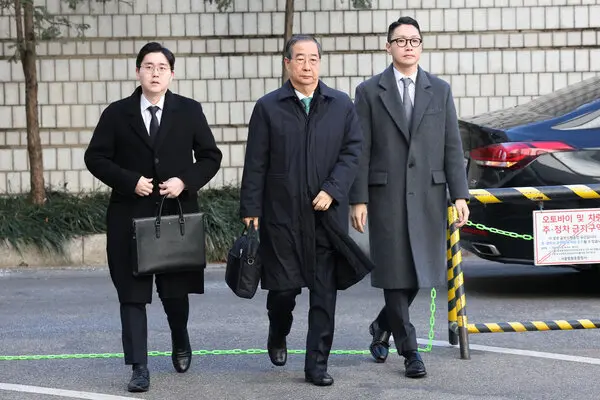
South Korea’s former prime minister, Han Duck-soo, has been sentenced to 23 years in prison for his involvement in the martial law insurrection. The ruling confirms that Han actively participated in a 3 December 2024 self-coup attempt by former president Yoon Suk Yeol, which sought to declare martial law unconstitutionally. Legal experts note that the sentence is unusually severe, reflecting Han’s prominent role and responsibility as the nation’s prime minister. The court emphasized that Han knowingly created false cabinet records to legitimize an unconstitutional decree, making the insurrection appear formally sanctioned.
The presiding judge, Lee Jin-kwan, ordered Han’s immediate detention, stating that his actions violated the democratic framework and legal obligations inherent to his office. Prosecutors had initially sought a 15-year sentence, arguing that Han bore unique responsibility due to his constitutional authority to prevent the decree’s execution. However, the judge rejected prior military coup precedents, categorizing the event as a “self-coup” by elected officials that posed unprecedented threats to democratic stability. Han, 76, now faces imprisonment, though he retains the right to appeal the verdict, according to South Korean law.

The court highlighted evidence of Han’s direct involvement in obstructing proper cabinet deliberations. CCTV footage confirmed that Han was fully aware of the martial law plan hours before Yoon’s televised announcement and actively facilitated a cabinet meeting with only the minimum number of ministers needed for legal compliance. The trial revealed that Han guided officials to destroy backdated documents to conceal his signature, further establishing intent to obstruct justice. Judge Lee described this conduct as a deliberate betrayal of Han’s constitutional duties, noting his continued concealment of evidence and pattern of perjury throughout the proceedings.
Han’s defence claimed he privately opposed martial law and was psychologically shocked by the president’s actions. In court, he repeatedly asserted that he never supported the decree, yet the evidence portrayed a different narrative. Investigators noted his instructions to remove or falsify records, directly contradicting claims of opposition. The court also found Han guilty of multiple offenses, including document falsification, destruction of presidential records, and perjury connected to Yoon’s impeachment proceedings. Legal analysts suggest this case sets a historic precedent, underscoring accountability at the highest levels of government.
Prosecutors emphasized that Han’s long career as a diplomat, serving five consecutive administrations, only heightened his responsibility to uphold constitutional norms. Appointed prime minister in May 2022, he became the longest-serving prime minister under a single South Korean president. Despite this extensive political experience, the court concluded that Han prioritized loyalty over legal duty, enabling the attempted self-coup to proceed. The ruling contrasts sharply with that of Yoon, who remains free pending his own trial, in which prosecutors have demanded the death penalty. Han’s sentencing arrives just five days after Yoon received a separate five-year term for obstructing his own arrest, signaling intensified judicial scrutiny of the 2024 events.
The martial law insurrection trial has drawn international attention, as analysts compare it with historical constitutional crises in South Korea. Scholars point out that while military coups in the past relied on armed forces, this event uniquely involved elected officials attempting to leverage legal authority for personal gain. Observers argue that the ruling against Han sends a strong message regarding the responsibilities of high-ranking officials and the judiciary’s commitment to democratic principles. Human rights organisations have expressed cautious approval, noting that holding senior officials accountable is crucial for transparency and maintaining public trust.
Han’s conviction also raises questions about the broader impact on South Korean politics, particularly regarding cabinet accountability and executive oversight. Experts suggest that future administrations may face heightened scrutiny to prevent abuse of power, while legal reforms could reinforce mechanisms to block unconstitutional decrees. Meanwhile, public reaction in South Korea has been intense, with protests both supporting and opposing the ruling, reflecting deep societal divisions over the 2024 martial law crisis. Analysts warn that political stability may remain fragile until Yoon’s trial concludes in February, when prosecutors will argue for the death penalty for the former president.

The 23-year sentence against Han marks an unprecedented judicial intervention in South Korea’s modern democratic era. Legal commentators highlight that the decision underscores the judiciary’s ability to challenge even the most senior political figures. Observers note that Han’s actions, including falsifying records and aiding the self-coup, directly violated the democratic system he swore to protect. This case serves as a cautionary tale of constitutional accountability and may influence governance standards across East Asia.
As South Korea prepares for Yoon’s sentencing on 19 February, the country remains closely monitored by international media and human rights advocates. The Han Duck-soo trial illustrates the high stakes of political authority misuse, demonstrating that even long-serving, experienced officials cannot evade consequences for undermining democratic order. Legal analysts suggest that the verdict could become a benchmark in comparative studies of constitutional crises worldwide. The ruling reinforces the principle that elected leaders are bound to uphold, not subvert, the rule of law, regardless of rank or tenure.
The sentencing of former prime minister Han Duck-soo underscores the judiciary’s decisive role in defending democratic governance. By holding him accountable, South Korea sets a precedent for scrutinizing high-level complicity in unlawful political maneuvers. Citizens and global observers alike now await Yoon’s trial outcome, which could redefine political accountability standards in the region. The case also highlights the enduring importance of transparency, constitutional adherence, and legal vigilance in modern democracies, serving as a reminder that no official is above the law.
Related News:
 Shock US Raid: Maduro Pleads Not Guilty in Manhattan Court
 Trump Plans Venezuela Meeting, Warns of Cartel Land Strikes
 Mandelson apologises over Epstein ties after public scrutiny
 Rudd successor: Defence chief and former ministers considered
 US Senate rejects resolution limiting Trump military powers
 Trump Calls Greenland Critical for US Security After Denmark Talks
 Trump: Iran Killing Has Stopped, Strike Threats Pulled Back
 Machado Trump medal gesture reshapes Venezuela power struggle
 Trump Receives Machado’s Nobel Medal in White House Meeting
 Iran unrest slows under brutal crackdown and global tensions
 Trump Allies Pursue $200m European Gas Pipeline Deal
 US Considers Asylum for British Jews Amid Rising Antisemitism
 Starmer Challenges US Over Controversial Greenland Deal
 Spoof “Make America Go Away” Caps Rally Denmark Over Greenland
 Trump slams UK ‘stupidity’ over Chagos Islands, eyes Greenland takeover
 UK Presses On With Chagos Handover Despite Trump Criticism
 Kim Jong-un Fires Vice-Premier Over Factory Failures
 Shinzo Abe’s killer receives life sentence in Japan
 Starmer Resists Matching Trump Amid Greenland Tensions
 Netanyahu Accepts Trump’s ‘Board of Peace’ Invitation
 Green Party Surges Past Labour in Latest UK Poll
 Celebrities and Charities Demand UK Government Act on Child Poverty
 Army Officers Orders to Cut Ties with Men-Only Clubs
 Trump’s UK Ambassador Urges North Sea Drilling to Strengthen US Ties
 FBI Director Kash Patel Defends Girlfriend Amid Government Jet Claims
 French Taxi Driver Cleared in David Lammy Theft Case After Fare Dispute
 Labour immigration crackdown could cost UK £4.4bn
BBC to Apologise Over Edited Trump Speech Amid Backlash
Labour immigration crackdown could cost UK £4.4bn
BBC to Apologise Over Edited Trump Speech Amid Backlash
 Britain deploys RAF specialists to assist Belgium with drone threats
 Millionaires group urge Reeves to introduce wealth tax to ‘lift kids out of poverty’
 Starmer Faces Growing Dissent as Labour MPs Weigh Leadership Challenge
 Reeves rejects £1bn plea for NHS redundancy payouts
 PM Condemns Leaks, Vows Loyalty to Ministers and Stability
 Major Rent Reform Ends No-Fault Evictions in England
 Peers Flood Assisted Dying Bill with 942 Amendments
 Senator John Fetterman Hospitalized After Fall from Heart Flare-Up, Keeps Sense of Humor
 US Justice Department Files Lawsuit Against California Over Partisan Voting Maps
 Greene Pushes Epstein Files Amid Trump Fallout
 Trump Deploys DHS to Charlotte in Major Arrest Operation
 December Run-Off in Chile as Election Produces No Winner
 Canada Passes Carney’s First Budget in Tight Parliamentary Vote
 Shadow Fleet at Sea: Europe’s Battle Against Illicit Oil Shipping
 Pentagon Officials in Ukraine to Discuss War End
 Venezuela Threatens Nobel Winner Machado with Fugitive Status
 Most Tories Expect to Support a Farage-Led Government
 Labour MP claims devolution bill is ‘blatant discrimination’ against Cornwall
 Millions Face Higher Taxes Under Reeves New Budget
 Georgians Defy Government Crackdown After Year of Protests
 US National Guard Member Killed in DC Shooting
 ICC to Rule on Duterte’s Provisional Release
 Jordan Bardella: France’s Young Presidential Contender
 Starmer Says Labour’s Economic Plan Needs Years to Deliver
 EU plans $105bn Ukraine aid using frozen Russian assets
 Culture secretary to review Telegraph takeover by Daily Mail owner
 Khaleda Zia Death in Bangladesh: First Female PM Dies at 80
 Russia losses Ukraine war peace talks intensify amid rising deaths
 Albanese Opens Door to Bondi Royal Commission Amid Rising Pressure
 Trump Escalates Minnesota Immigration Surge Amid Rising Tensions
 Capitol Attack Anniversary Sparks Deep Political Divide
 Saudi Officials Report Zubaidi Flee Before Yemen Peace Talks
 UK Targets in New York Bomb Threat Hoax: Man Jailed
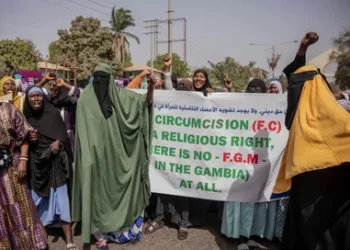 Gambia Supreme Court Hears Case to Overturn FGM Ban
 Iran Protesters Defy Crackdown as Violent Clashes Intensify
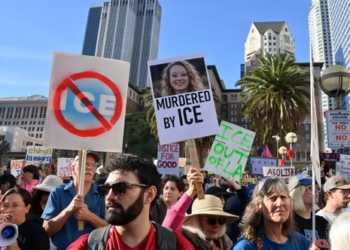 Homeland security agents deployed amid Minneapolis protests
 Plans to Limit Jury Trials Face Retreat After Mounting Opposition
 Trump targets Iran trade with 25% tariff warning
 Hanson and Joyce Use Rinehart Jet to Tour Flooded Queensland
 Trump Threatens Strong Action If Iran Executes Protesters
 Quebec Premier François Legault Resigns in Surprise Move
 Gulf states warn Trump Iran strikes risk wider Middle East war
 Geopolitical football: Iran, Trump and the World Cup clash
 Canada-China trade gains momentum in new strategic partnership
 Right Must Unite After Jenrick Defection, Urges Rees-Mogg
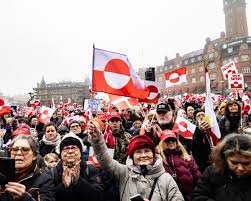 EU weighs response amid Greenland tariff crisis with Trump
 Syria President Declares Victory as Ceasefire Reached with SDF
 ICE street raids expose a chilling future for public freedoms
 UK Ministers Drop Foreign Student Targets for Global Education Push
 MPs warn AI financial risks threaten UK stability
 No Gas Boiler Ban as UK Warm Homes Plan Backs Heat Pumps
 Hugh Grant Joins Call for Under-16 Social Media Ban in UK